10 brilliant bank holiday recipes from top chefs for all weathers
From charred chicken straight off the barbecue to cosy roasts and spicy curries if the clouds roll in, Hannah Twiggs rounds up the best recipes to cook this bank holiday weekend – whatever the weather’s doing outside your window


It’s a bank holiday weekend, which means one thing: nobody has a clue what to cook. The forecast is, predictably, non-committal – a little bit of sun, a whole lot of cloud, and the lurking threat of rain. Do you lean into barbecue mode and hope for the best? Make a salad and pretend you’re in Tuscany? Or go all in on something slow-roasted, comforting and autumnal, just in case?
This lot has you covered on all fronts. There’s smoky gai yang chicken for the hopeful grillers, a sharp-sweet pineapple curry for when the heavens open, and a few clever salad-y things that feel like sunshine in a bowl (even if you’re eating them under a blanket). Recipes range from the properly fancy – roast hake with brown crab from Moor Hall’s Mark Birchall – to the low-effort but high-reward, like Stevie Parle’s feta and watermelon situation, or Shaun Rankin’s nifty way to give leftover Jersey royals a second life.
Whether you’re cooking for friends, family or just yourself and a bottle of something cold, these are the dishes worth making space for. And if the weather turns mid-roast or your BBQ plans get soggy, don’t worry – you’ll be eating well either way.
Watermelon, feta and datterini salad
Recipe by: Stevie Parle, Pastaio
Serves: 1
Ingredients:
150-200g ripe Italian watermelon
50g DOP feta cheese
50g Italian yellow datterini tomatoes
3-4 fresh mint leaves
Maldon sea salt
Extra virgin olive oil
A pinch of chilli flakes
Method:
1. Choose your watermelon wisely – it should feel heavy for its size (full of juice), sound deep and hollow when tapped, and have a uniform shape.
2. Peel carefully, then slice and dice into neat 2cm cubes.
3. Halve the datterini tomatoes and cut the feta into bite-sized pieces to match the watermelon
4. In a bowl, bring everything together: watermelon, tomatoes, feta and torn mint leaves.
5. Dress generously with fine Italian extra virgin olive oil and just a sprinkle of Maldon sea salt.
6. Toss gently, plate with care and finish with a pinch of chilli flakes for a subtle kick.
7. Eat straight away, while the watermelon is juicy, the feta still has bite and the mint is at its most fragrant.
Salt hake, peaches, chickpeas, oregano and chilli
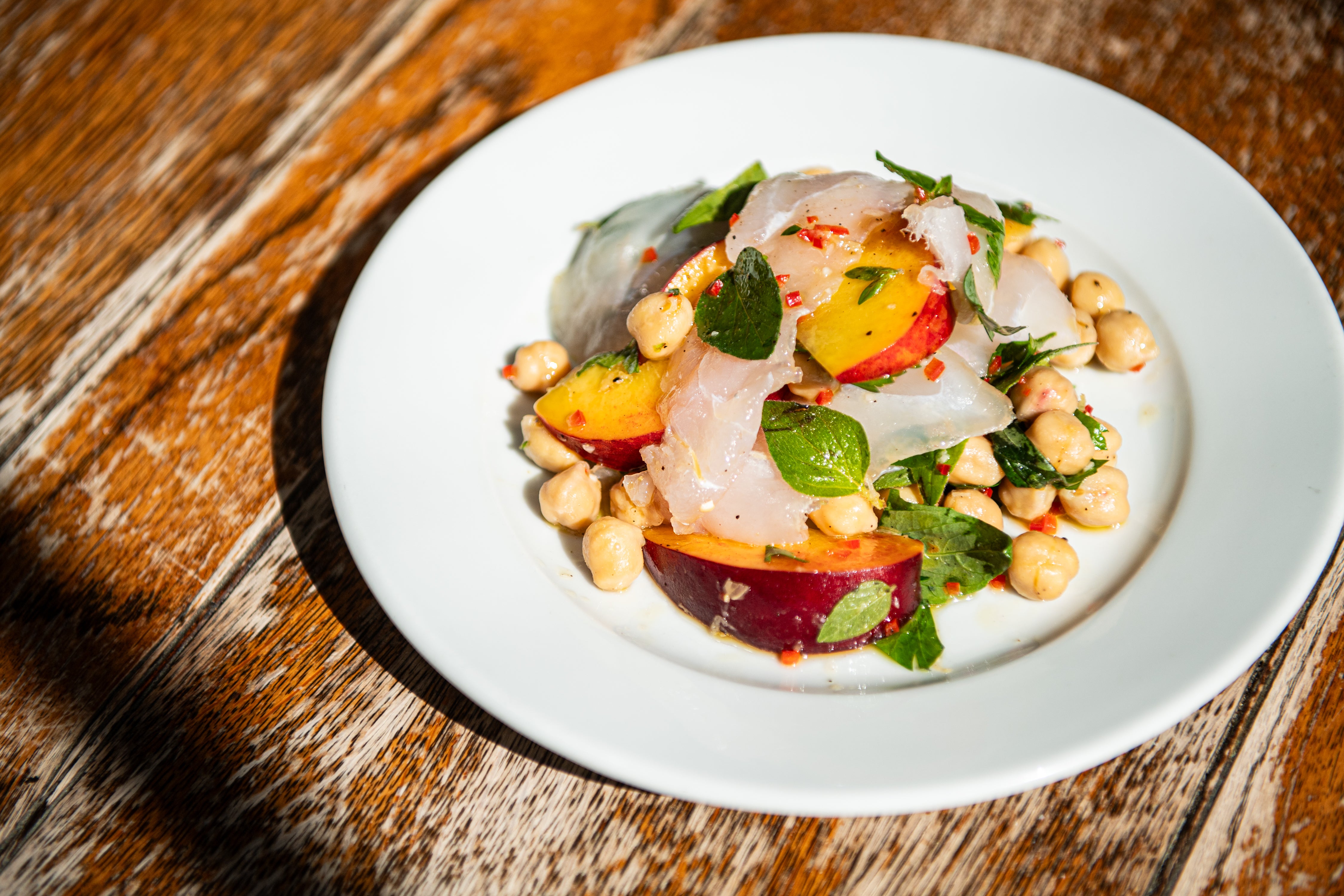
“I used to snub my nose at pre-cooked chickpeas in restaurants, thinking it was always better to cook your own. That was until I worked for Skye Gyngell at Spring. She would buy Navarrico chickpeas from Spain and dress them like a salad, with loads of chilli, lemon zest and parmesan. It totally changed my mind about good quality pre-cooked chickpeas. This is an easy salad for summer. “
Recipe by: Lloyd Morse, The Palmerston.
Serves: 2 as a salad
Ingredients:
1 jar Spanish or Italian pre-cooked chickpeas
2 ripe peaches
250g hake fillet, cod or pollock
1 bunch oregano, leaves picked
½ a bunch of parsley, roughly chopped
1 long red chilli, finely diced, keeping the seeds, depending on how spicy you like it.
Olive oil
1 lemon
5g maldon salt, plus more for seasoning
Method:
1. Generously sprinkle the salt on the fish fillet, place in the fridge and leave for one hour. After the hour, gently wash the fish in cold water and pat dry. Slice thinly, and return to the fridge.
2. Strain the chickpeas, place in a bowl and dress generously with olive oil, lemon juice and zest, diced chilli, salt and pepper. For taste, they should be nicely balanced between the acid, oil and spice. The chickpeas are always best left like this for an hour, so all the flavours can mingle, but it’s not essential.
3. When ready to serve, slice the peaches, and add them along with the oregano, parsley and fish. Gently mix everything together and taste.
Pork chop with borlotti beans, cavolo nero and roast apple
“I love this recipe because it’s packed with big flavours and textures. I like sharing food with people and this is a big plate for two (or four if you add some other dishes with it). I’d do it for a Sunday lunch with the family and pair it with Ferme L’Apogée’s Nasturtium from Dordogne.
“We use Old Spot Gloucester pork from Taste Tradition. The pigs are fed natural, GM-free food and left to burrow outside in their huts. This breed also carries a bit of extra fat, which helps to infuse flavour, brings extra moisture and also helps us get great crackling from the chop.”
Recipe by: Phil White, Leftfield
Serves: 2
Ingredients:
660g pork chops
250g cooked borlotti beans
100g cavalo nero
1 green apple, sliced
1 shallot, finely chopped
A few sprigs of oregano
200ml beef stock
A couple of knobs of butter
Method:
1. Ask your butcher for a pork chop weighing around 600g, which should be enough for two people. Trim off the skin and scrape any fat off. Blanch the skins in hot water and dry off.
2. Add a tiny amount of oil and salt and roast in a hot oven to get some nice crackling.
3. Seal the pork chops in oil in a nice hot pan to render down the fat. When the pork is nicely coloured, add some butter, thyme and a wedge of lemon.
4. Finish off cooking in the oven for about 15 minutes.
5. Meanwhile, pan-fry the apple with some shallots. Add the cooked borlotti beans, beef stock, and a knob of butter, then simmer for 2 minutes. Add the cavolo nero to wilt down.
6. When the pork is cooked through, cut into slices and arrange on a plate. Warm the borlotti mix and pour over pork, top with the crackling and serve.
Gai yang – marinated whole BBQ chicken
Recipe from: Thai in 7 by Sebby Holmes (2020)
“Sweet, salty, spicy grilled chicken is a very common Thai street food snack. Smokey and charred chicken straight from the barbecue is chopped up into bite-sized pieces and served with som tam salad, dipping sauces and sticky rice.
“For this recipe, I have shown how to brine the meat before cooking. By soaking the meat in this salt solution, it allows for the flesh to hold more liquid, resulting in the meat being juicy and delicious, even after cooking on a high heat.
“Despite being a definite upgrade in terms of flavour and texture, it is not essential to brine the meat. If you like, skip this first step and go straight to the marinade.”
Serves: 4, gluten-free
Ingredients:
1 spatchcocked medium chicken, 1.5-2kg in weight
4 garlic cloves
1 tsp ground white peppercorns
1 tsp whole coriander seeds, lightly toasted in a dry pan
1 tbsp red turmeric
2 tbsp oyster sauce
2 tbsp fish sauce
2 tbsp honey, soft brown sugar can be used instead if you like (a separate 50g of sugar is needed if brining the meat)
100g table salt
Method:
1. Firstly, make the brine. In a saucepan add 1 litre of water, 100g table salt and the 50g brown sugar and then heat all together on a medium heat, stirring occasionally until all the solids have fully dissolved. This makes a 10 per cent salt solution, which is quite strong; for example, seawater is 3.5 per cent salt. This intense solution allows for a quick brine; however, I would recommend not tasting this one. Once the brine is ready, allow to cool and then submerge the chicken in the solution and leave in the fridge for 4 hours; you will want a tray to do this.
2. Next, make the marinade. In a pestle and mortar, pound the garlic cloves, turmeric and white pepper to a coarse paste. Next, add the coriander seeds, oyster sauce, fish sauce and honey to this mix and combine using the pestle to grind the marinade together. Taste a tiny bit, it should be sweet and salty. Add a little more sugar if you have a sweet tooth, bear in mind this will taste intense as its purpose is to flavour a whole chicken, not to be eaten alone. When happy, take the marinade and smother the spatchcocked chicken completely, making sure to rub the marinade into the meat. Wrap in clingfilm and then put in the fridge for a further 2 hours.
3. Next, cook the chicken. Either light up the barbecue to a medium grilling heat or pre-heat the oven to 180C. If barbecuing, place the chicken bone side down above the medium heat and leave to seal for 10-15 minutes. This allows the skin side to dry. When golden brown on the cooking side, flip the chicken skin side down and leave for a further 10-25 minutes until the skin is crispy and golden brown with a little char.
4. Baste the meat in the residual marinade towards the end of the cooking process. If cooking in the oven, place the chicken on a baking tray skin side up and roast for 40-45 minutes until golden brown and crispy, baste in the residual marinade towards the end of the cooking process. You can test when the chicken is cooked either with a temperature probe or by checking the colour of the flesh. If you have a probe, place it into the chicken leg; the bone makes it the last part of a chicken to cook, typically, so if the leg meat is cooked, it is safe to say the rest is. If the chicken is 70C or above, remove from the heat, rest for 5 minutes and then serve. If you don’t have a probe, make an incision to the bone on the leg and make sure that the meat is white and the juices are running clear, if this is the case then it is cooked.
5. Lastly, serve. Chop the chicken into eight pieces, making sure to distribute the white and the dark meat evenly into four portions. Serve with sticky rice and some kind of sweet, sour and spicy salad or dipping sauce.
Roast Cornish hake with brown crab and grilled chorizo asparagus
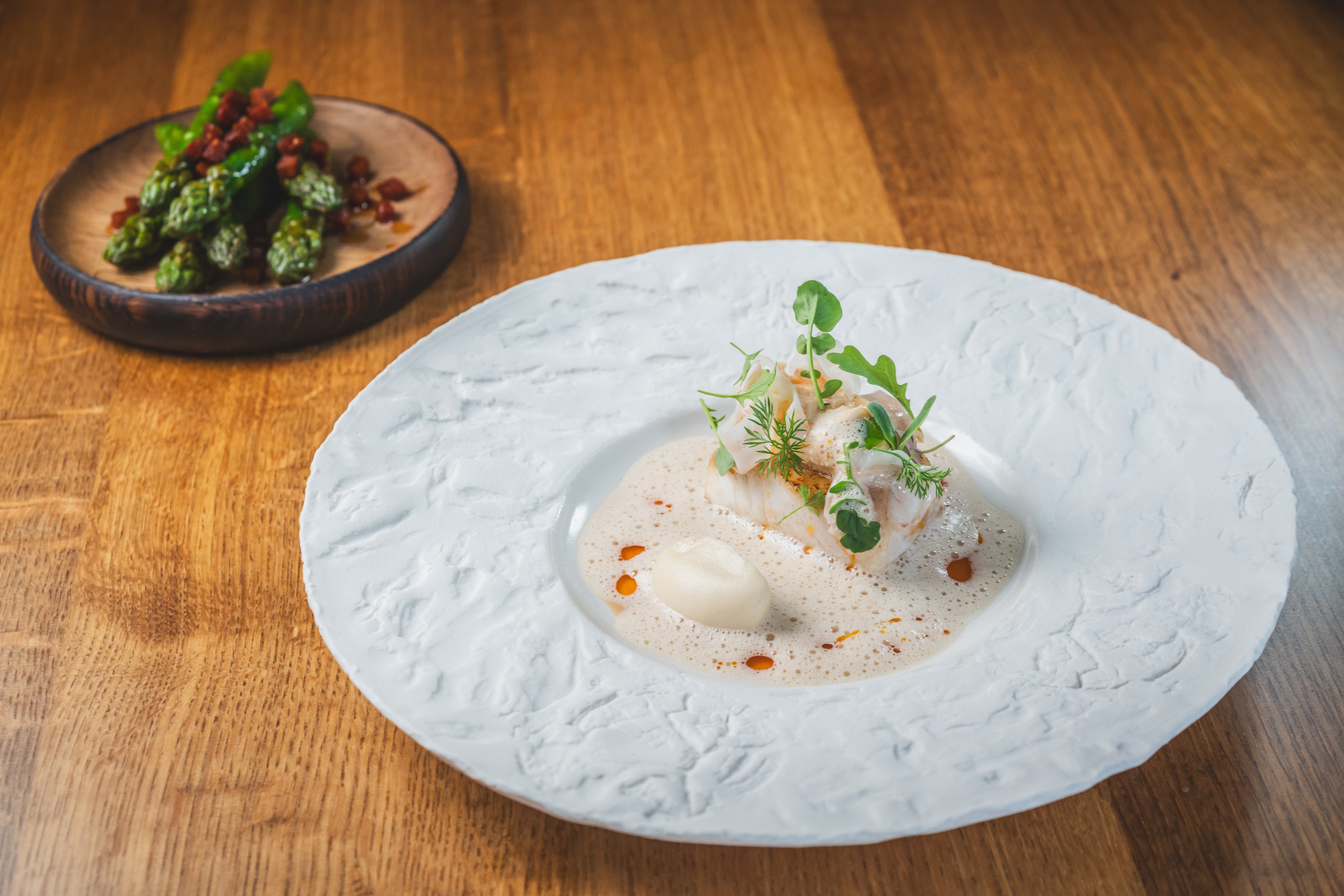
Recipe by: Mark Birchall, Moor Hall
Ingredients:
For the celeriac purée:
1 celeriac
30g of butter
100g water
100ml of whipping cream
For the crab stock:
2kg roasted crab heads
4 litres water
50g lardo, diced
50g caramelised diced celery, onion, leek and carrot
For the crab sauce:
225ml crab stock
75ml mussel or fish stock
50g tomato juice
17g Noilly Prat
17g brandy
30g fennel, finely sliced
1g fennel seeds
1g coriander seeds
½ star anise
7g tarragon
4g fennel tops
¼ red chilli sliced
20g butter
For the whipped butter:
20g diced shallot
25g Noilly Prat
15g roasted garlic
35g Double cream
250g butter
For the chorizo and asparagus:
20 spears of asparagus
100g diced chorizo
For the white and brown crab mixture:
150g white crab meat
150g brown crab meat
2 eggs, boiled for 4 minutes
Lemon juice
Tabasco
100ml grapeseed oil
For the hake:
600g hake loin
Method:
To make the celeriac purée:
1. Peel and thinly slice 1 celeriac.
2. Cook in a large pan with 30g of butter and 100g of water covered with a lid.
3. When the celeriac is soft and all the water has evaporated, add 100ml of whipping cream and cook further until the cream has reduced and the mixture looks glossy.
4. Blend until smooth and season with salt.
To make the crab suquet style sauce (part one – crab stock):
5. Combine all, bring to the boil and simmer for two hours.
6. Skim any impurities during the cooking time and strain.
7. Return to a pan and reduce by 50 per cent. Continue to skim and reserve.
Part two – crab sauce:
8. Add the butter to a sauté pan and foam. Add the fennel and spices and cook for 1 minute followed by the Noilly Prat and brandy – reduce until almost all the liquid has gone.
9. Add the tomato juice and crab/mussel stock. Bring to a simmer, then add the rest of the ingredients and infuse for 5 minutes. Strain.
To make the whipped butter:
10. Sweat the shallot in a pan, then add the Noilly Prat and cook out until almost gone.
11. Add the roasted garlic and cream and reduce by half.
12. Whip the butter until whit,e then add the reduced shallot mixture and chill.
Finish the sauce:
13. Take the finished sauce from “part two” and warm in a saucepan. Season with a touch of salt and lemon verbena vinegar (lemon juice is fine as an alternative) and blend with a hand blender and a spoon of the roast garlic butter to foam the sauce up a little.
To make the white and brown crab mixture:
14. Hand blend the eggs with the brown crab meat, slowly adding the grapeseed oil to make a mayonnaise consistency.
15. Season with salt, lemon juice and tabasco.
16. Add the white crab to the brown crab mayonnaise.
To make the asparagus spears with chorizo:
17. Snap off the woody ends of the asparagus and discard. Peel the spears, leaving the top 4 cm intact.
18. Bring a large pan of salted water to a boil. Blanch the asparagus for 4-6 minutes, depending on thickness, until firm but not crunchy.
19. Transfer immediately to ice water to stop the cooking process.
20. Gently warm the chorizo in a saute pan to release some of the natural fat. Add the cooked asparagus and lightly roast. Season with salt and serve as a side dish.
To make the hake:
21. Brine a 150g portion of hake loin for 3 minutes in a 10 per cent brine solution (50g of sea salt dissolved in 500ml of water). Dry on paper to remove brine.
22. Pan fry with rapeseed oil until golden, then transfer to a deep tray with filled brown butter and bake for 12 minutes in the oven at 48C.
To assemble:
23. Spoon the celeriac puree onto the middle of the plate and place the hake on top.
24. Spoon a generous amount of crab on top of the hake with a couple of slices of the pancetta.
25. Garnish with garden greens. Pour the crab suquet sauce over.
Sun-sweet melon gazpacho with Vesuvius tomatoes, basil and mojama
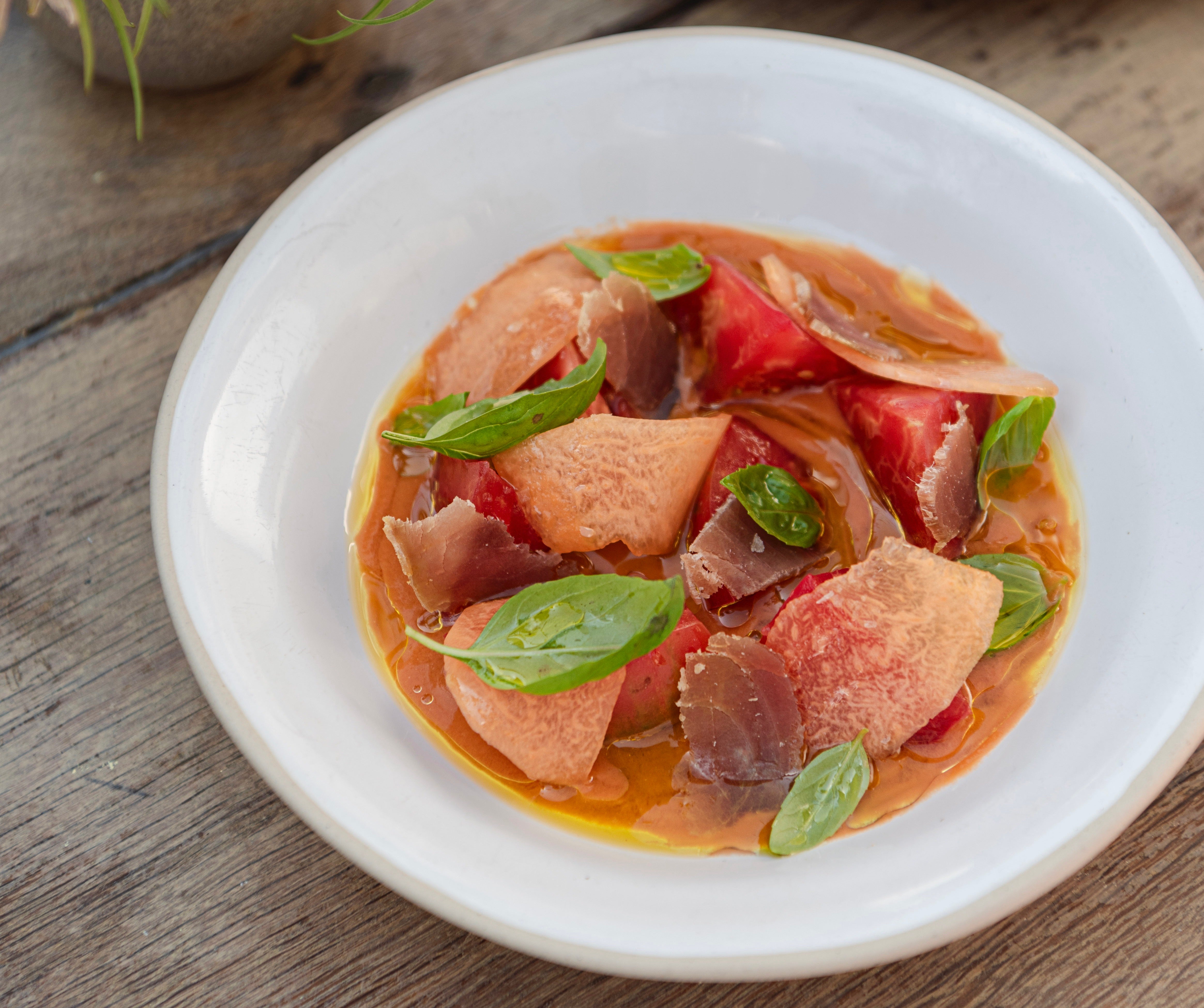
“Mojama is cured, air-dried tuna loin from Spain, not dissimilar to Italian bottarga, and is a perfect way of adding an intense pop of salt to a dish. If you can’t get your hands on mojama, this dish is also really nice with a really good cured ham like Jamón Iberico. This recipe can be made using gluten-free bread or breadcrumbs, and works equally well with watermelon.”
Recipe by: Aaron Potter, Wildflowers
Ingredients:
For the gazpacho:
4 bull’s horn or Romano peppers, deseeded
1 cucumber, peeled
½ red onion
6 over-ripe good-quality tomatoes
½ bunch basil, picked
Pinch of sugar
Pinch of fine sea salt
½ Sun Sweet or Charentais melon, peeled and seeds discarded
Glug of extra virgin olive oil
Sherry vinegar to taste
100g stale bread, crusts removed
1 large clove of garlic
For the garnish:
Vesuvius tomatoes (or other high-quality, seasonal tomatoes)
½ bunch fresh basil
½ Sun Sweet melon
Olive Oil
Mojama (or Jamón Iberico)
Sherry vinegar
Fine sea salt
Method:
1. Peel and finely slice the red onion. Roughly chop the melon, saving the second half for garnishing the gazpacho. Roughly chop the tomatoes, peppers, peeled cucumber and the bread and finely grate the garlic. Place everything into a bowl with the basil and season well with salt, sherry vinegar, olive oil and a pinch of sugar.
2. Squish the ingredients together with your hands, ensuring the vegetables begin to break up, releasing their juices and allow the bread to soften and soak everything up. Leave to macerate for at least one hour.
3. In suitable-sized batches, blend the gazpacho until silky smooth, and pour into a bowl set above another bowl of iced water to chill the soup. Once fully chilled, adjust the seasoning as necessary with salt, sugar and sherry vinegar.
4. Cut the tomato into various shapes and sizes, not being too precise. Season well with fine sea salt, olive oil and a splash of Sherry vinegar. Allow to macerate for an hour before serving at room temperature
5. Before serving, cut the melon into pieces that will fit easily onto a spoon and add to the tomatoes
6. Finely slice the mojama
7. To serve, ladle a portion of gazpacho into a chilled, wide-based pasta bowl or similar, and place some tomatoes around within the soup along with the melon. Top with picked basil and the thin slices of mojama and finish with a drizzle of really good olive oil
Roasted pineapple curry
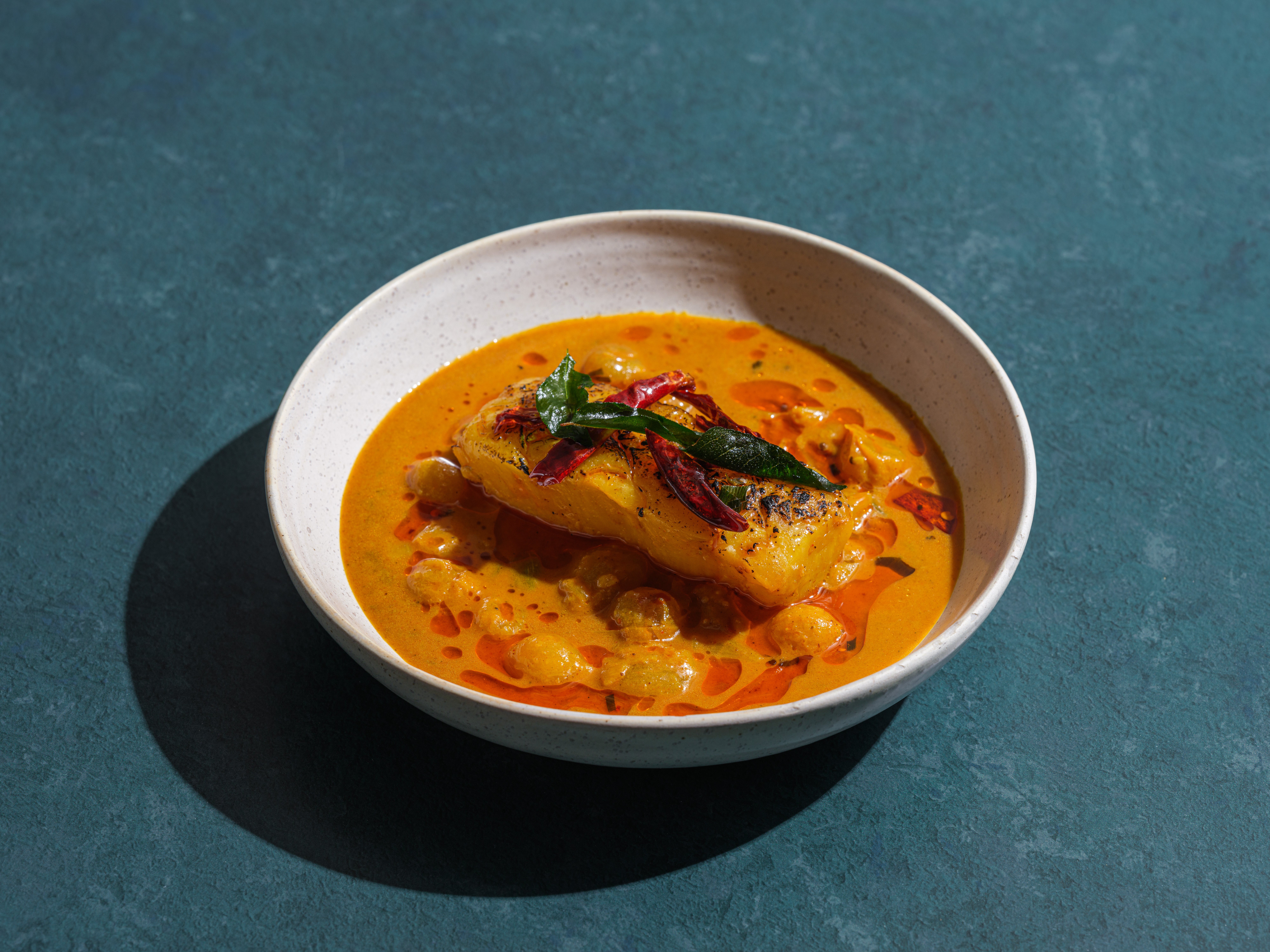
Recipe by: Eroshan Meewella, Kolamba
Serves: 10
Ingredients:
For the roasted curry powder:
2 tbsp fennel seeds
4 tbsp coriander seeds
1 tbsp uncooked rice
5 cloves
1 tsp black peppercorns
2 springs fresh curry leaves
1 tsp mustard seeds
5 cardamom pods, seedly only
½ tsp fenugreek seeds
2 tbsp cumin
For the pineapple marinade:
2 and ½ fresh pineapples, cut into 4
3g tamarind
4.8g chilli powder
9g salt
7.2g unroasted curry powder
3.0g roasted curry powder (recipe below)
9g sugar
3g paprika
For the pineapple reduction:
18ml fresh pineapple purée
400ml pineapple juice
300g shallots, diced
100g silver skin onions
17.5g garlic, chopped
17.5g ginger, chopped
7g mustard seeds
2.1g cardamom, bruised
3.5g cinnamon
2.5g chilli flakes
14g green chilli, sliced
2.5g turmeric
5.6g chilli powder
1.75g curry leaves
3g salt
8.4g unroasted curry powder
3.5g roasted curry powder
7g sugar
290ml coconut milk
10ml lime juice
500ml rapeseed oil
Method:
Make the roasted curry powder:
1. Place a wide-bottomed steel pan on medium heat.
2. Dry roast all the ingredients until the mustard starts to splutter.
3. Turn off the heat and allow it to cool completely.
4. Blend the roasted ingredients into a fine powder.
To make the curry:
5. Put the pineapple into a bowl and add turmeric, curry powder, roasted curry powder, chilli powder, sugar and salt. Mix well and set aside for 10 mins.
6. Heat the oil in a pan, add the mustard seeds and let them pop.
7. Add in the curry leaves followed by onion, cardamoms, cinnamon, garlic and ginger.
8. Sauté until onions are translucent and add chilli flakes.
9. Add the marinated pineapple, cover and cook over a low heat for 10 minutes.
10. Add the coconut milk and sugar, cover and simmer for 15 minutes until the pineapple is soft.
11. Check the seasoning and finish it with lime juice.
Roast Jersey Royals with glazed pear, Roquefort and walnut salad
“This recipe is the perfect way to use up those leftover Jersey Royals in the fridge. It’s so easy and quick to make – and delicious!”
Recipe by: Shaun Rankin, Grantley Hall
Serves: 4
Ingredients:
400g (14oz) cooked Jersey Royal potatoes, cut into slices
3 tbsp olive oil
4 pears, peeled, cored, and cut into quarters
20g (¾oz) caster sugar
2 tbsp Poire William
Knob of butter
60g (2oz) whole walnuts
100g (3½oz) Roquefort cheese
Bunch of watercress
Method:
1. In a large frying pan, sauté the Jersey Royals in 2 tbsp olive oil until golden brown. Remove the Royals from the pan and keep warm.
2. Re-using the same pan, add another 1 tbsp of olive oil and sauté the pears until they start to turn golden brown. Sprinkle with some caster sugar and allow to caramelise, moving the pears so the sugar does not burn. When golden, add the Poire William (take care as the pears may set alight).
3. Finish the pears with the butter. Remove from the heat and mix in the walnuts.
4. Arrange the warm Jersey Royals on plates with the glazed pears and walnuts. Crumble the Roquefort cheese over the top and serve with watercress salad. If desired, pour the leftover pan juices over the salad as a dressing.
Sier Lorgn Hai – Tiger’s Tears steak
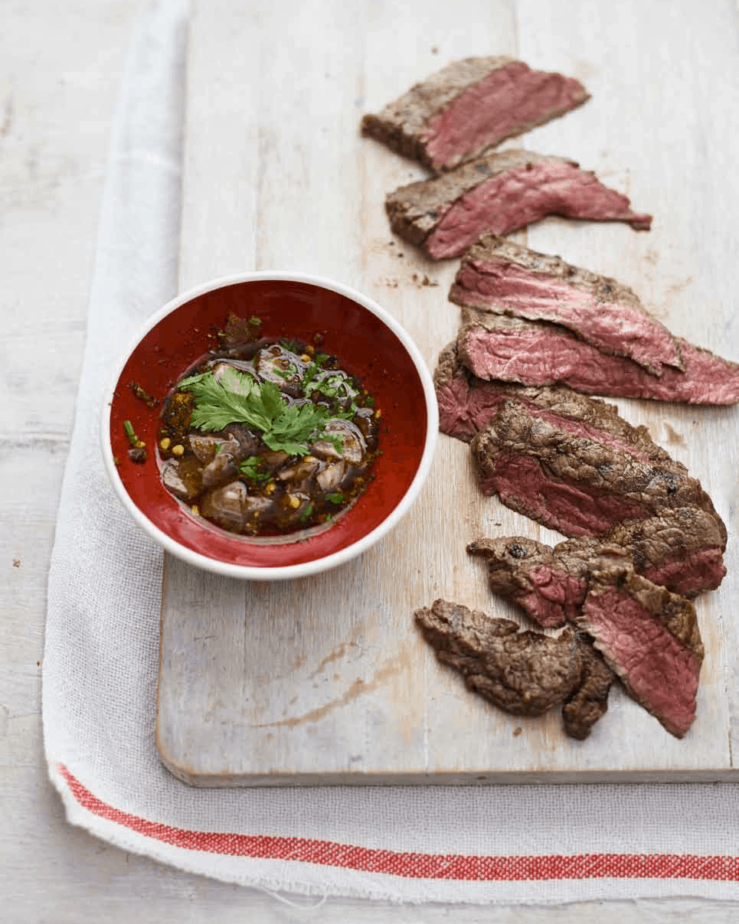
“I will explain why we call this dish Tiger’s Tears. You know when you grill beef on a barbecue and the fat or water drips onto the charcoal and makes a hissing sound? Well, the drops of water represent the tears and the hissing represents the tiger. My dad is absolutely crazy about grilled beef and this is his recipe. It goes so well with Thai whisky.”
Recipe by: Saiphin Moore, Rosa’s Thai
Ingredients:
1 tsp soy sauce
1 coriander root, finely chopped
1 tsp ground white pepper
1 tsp oyster sauce
200g (1lb) beef steak
For the dipping sauce:
2 tbsp nam pla (Thai fish sauce)
3 tbsp lime juice
1 small shallot, finely chopped
1 tsp roasted rice (available from Asian supermarkets)
1 tsp chili powder
1 tsp finely chopped fresh coriander leaves
Method:
1. Mix the soy sauce, coriander root, pepper and oyster sauce in a bowl. Add the beef and mix well. Marinate in the refrigerator for 1 hour.
2. Meanwhile, put all the ingredients for the dipping sauce into a bowl and mix well. Transfer to a serving bowl.
3. Preheat a griddle pan until very hot. Add the beef and grill for about 2-3 minutes, turning once, until cooked to your liking. Slice and serve the beef with the dipping sauce.
Roast pork belly with gochujang and pineapple
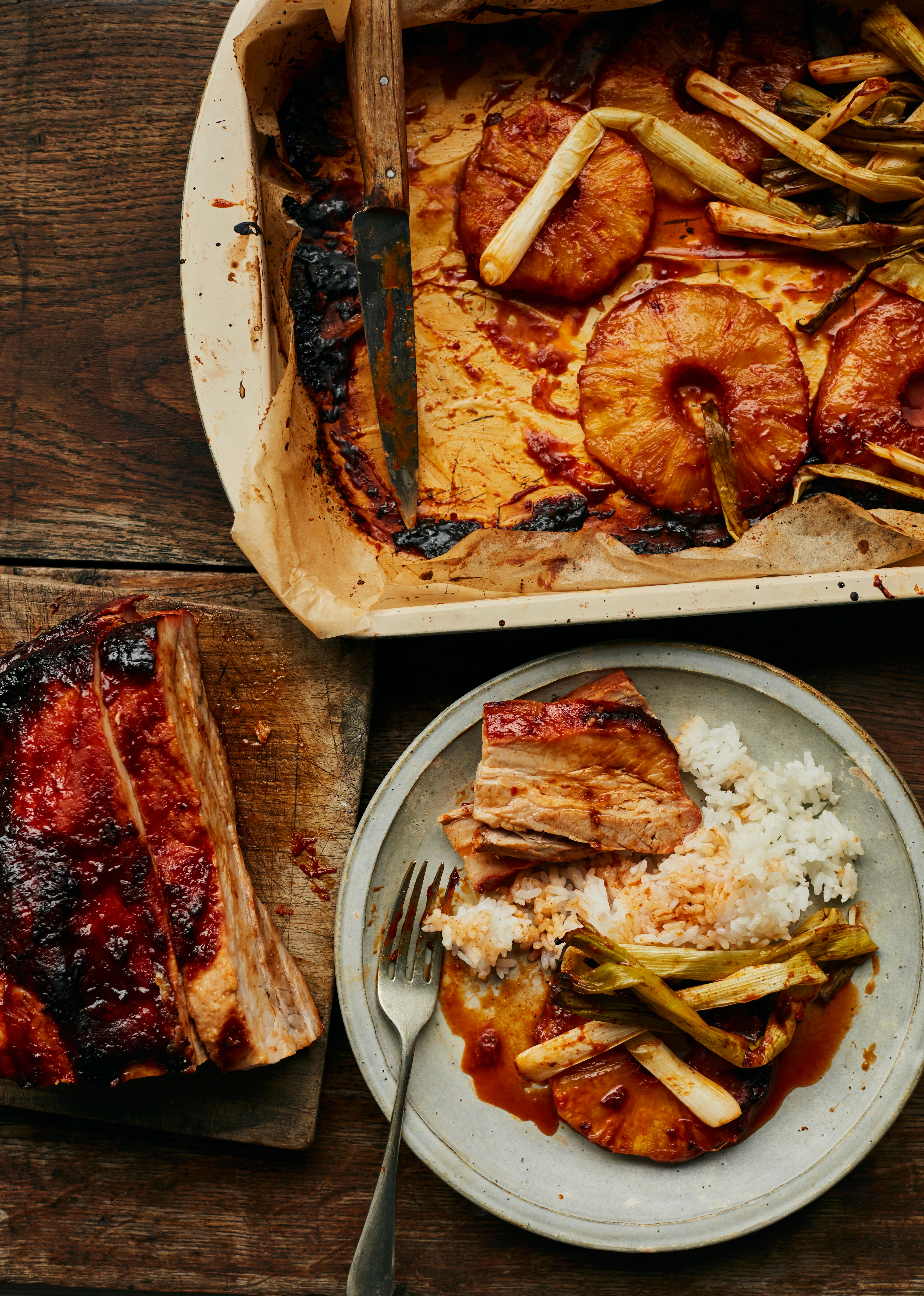
“I am that person, I love Hawaiian pizza. There is just something about acidic sticky caramelised pineapple with salty fatty ham that I just think is great. I know this is a very divisive topic and I will no doubt lose some of you over this, but I would urge you to try it, especially like this with the fiery gochujang (a sweet, spicy, fermented Korean red pepper paste which is the base of so much Korean cooking).”
Recipe by: Rachel Morgan and Emily Cuddeford, Twelve Triangles
Serves: 4-6
Ingredients:
Thumb of ginger
2 cloves garlic
55g gochujang
2 tbsp coconut vinegar
2 tbsp soy sauce
2 tsp caster sugar
1kg pork belly in a whole piece (bones and skin removed)
1 pineapple
12 spring onions (roughly 2 bunches)
Method:
1. To make the marinade, peel and grate the ginger and garlic into a dish that will fit your piece of pork. Add the gochujang, coconut vinegar, soy and sugar and mix it together, then place your pork in the dish. Make sure that both sides get covered in the marinade and leave it for around 3-4 hours. If you plan your meals in advance, marinating it overnight is perfect.
2. Preheat your oven to 160C fan.
3. Peel and core the pineapple and slice into 2.5cm rings, keeping the trimmings for future use. Place these in the bottom of a small roasting tin, one slightly larger than your piece of pork, then place the pork on top and pour the marinade into the dish (not too much marinade on top of the pork, as it is likely to burn). Put this into the oven, giving it a baste every 30 minutes or so to keep the top of the pork belly moist, and after 1¾-2 hours, take it out. If it starts to blacken, cover it with foil to finish cooking.
3. Place the pork belly to one side and allow it to rest. If a lot of fat has come out of the pork, drain this off – you can do this with a spoon and skim it off. The fat will sit on the top, with any juice underneath. Turn the oven up to 200C fan and put the pineapple back in, having turned it over in the marinade and juices from the pork. Check this after 10 minutes – you are looking for the pineapple to start to colour and caramelise.
4. Clean the spring onions and trim off the bottoms, then add these whole to your roasting tin, stirring them into the marinade, and roast for another 5-7 minutes. They will have wilted down and started to pick up some colour around the edges. There won’t be sauce left in the roasting tin, as the pineapple will have soaked it all up by this point.
5. I serve this with rice, sushi or basmati, and slice the pork belly relatively thin, adding some spring onions and a slice of pineapple.
Notes:
This is also great when eaten the way a lot of Korean barbecue is eaten, in a lettuce wrap. A thin slice of meat (the pork belly) in a crisp lettuce leaf, a bit of pickle or kimchi and some of the pineapple, hastily eaten. This is normally accompanied by soju, a clear and surprisingly strong alcohol from South Korea, which is normally fruit-flavoured and gives a vicious hangover.
Coconut vinegar is something I discovered when reading Rambutan by Cynthia Shanmugalingam – she makes an aubergine moju, which is pieces of aubergine deep-fried and mixed with a spice paste and coconut vinegar, and I urge you to try this. The vinegar is a little viscous, not as thin as cider or white wine vinegars; it’s a little sweet and smooth, and it doesn’t taste as harsh as some of our classic vinegars. I love to use it in a lot of my cooking now, from salad dressings to making shrubs, as well as adding it to marinades. If you don’t have it and can’t find it (it’s available to order on the internet, that’s where I get mine) in time, you can use rice wine vinegar.

Join our commenting forum
Join thought-provoking conversations, follow other Independent readers and see their replies
Comments
Bookmark popover
Removed from bookmarks