The hidden salt that may still be wrecking your diet – even if you are a healthy eater
Britain is clamping down on junk food advertising, but new figures suggest adults are still consuming the equivalent of the salt in 22 bags of crisps a day – most of it hidden in everyday foods. Hannah Twiggs looks at how many of us reach the recommended daily limit by early afternoon, simply by eating what appears to be a fairly ordinary, even healthy, diet


Twenty-two bags of crisps a day. That, according to new analysis by the British Heart Foundation (BHF), is the amount of salt the average adult in England is consuming. It’s a stat that’s deliberately designed to shock, and it does it well: crisps are the archetypal junk food villain, shorthand for everything we’re told to eat less of.
The problem is, we know that crisps are salty. We know that we shouldn’t eat 22 bags of them a day. The real issue is far more mundane and far harder to regulate. It is the salt hidden in the food we eat every day, often believing we’re making sensible choices, while quietly blowing past the limit by lunchtime.
“Most of the salt we eat is hidden in the food we buy, such as bread, cereals, pre-made sauces and ready meals, so it’s hard to know how much salt we’re consuming,” says Dell Stanford, a senior dietitian at the BHF.
What that looks like in practice is rarely dramatic, and that’s precisely the problem. A slice of sourdough contains around 0.36g of salt; Warburton’s medium white sliced bread contains 0.39g per slice. Two slices at breakfast, before you’ve even thought about toppings, and you’re already close to 1g. Adding a fairly sparing 20g spread of butter across two slices contributes another 0.34g. A thin scrape of Marmite, at 0.86g per serving, pushes you to nearly 2g of salt before you’ve even left the house. And who’s got time to measure out their butter and Marmite to the gram before work?
None of this feels excessive. It’s toast. It’s breakfast. Yet you’ve already consumed roughly a third of the recommended daily maximum, without anything tasting overly salty and without necking a packet of crisps.
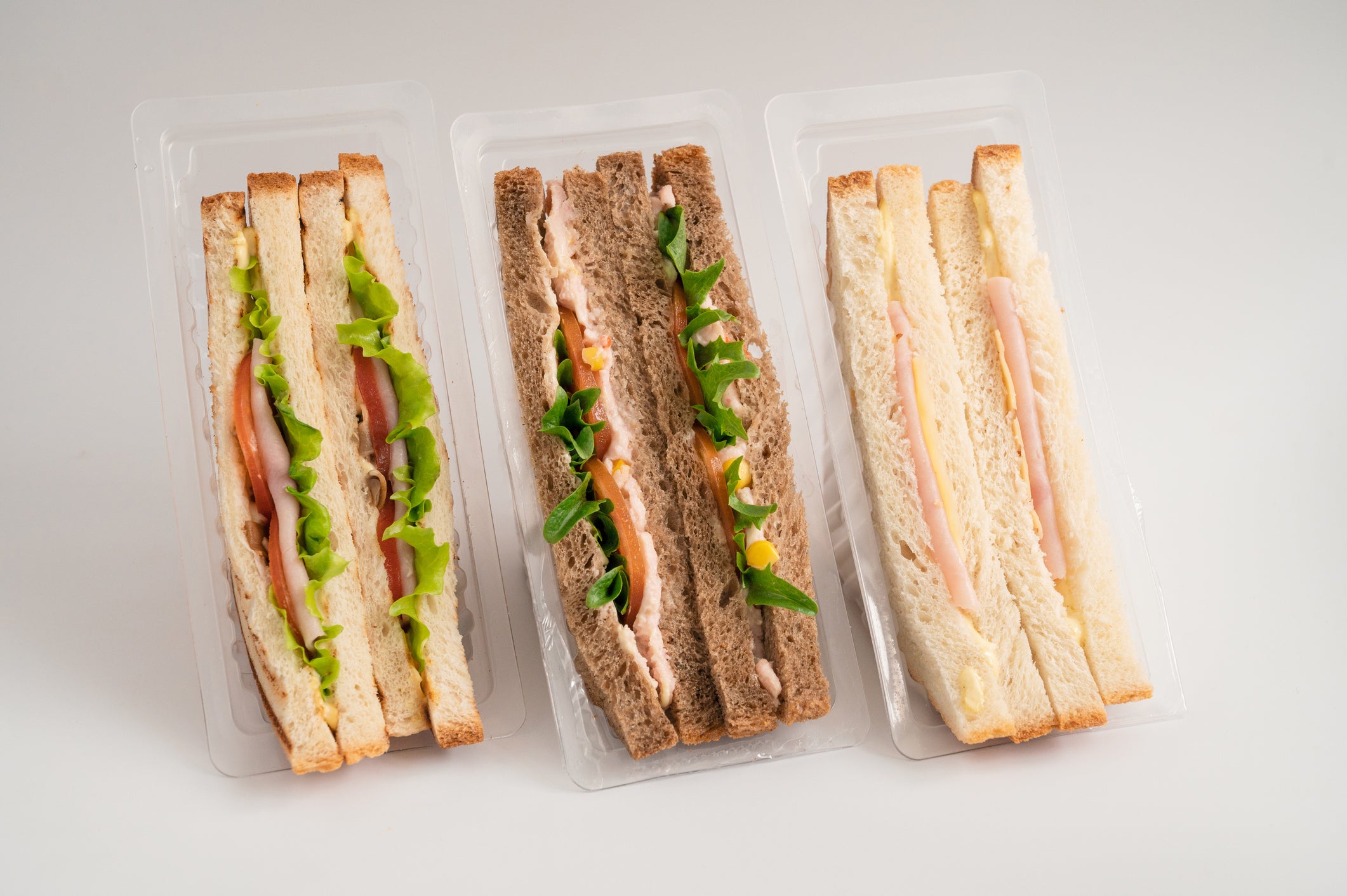
By lunchtime, the numbers stack up. A typical meal deal might be an M&S BLT sandwich, which contains more than 2g of salt, paired with a packet of ready salted Walkers crisps at 0.34g. How about a seemingly healthy chicken and vegetable soup? That’ll be 3g a pot, and then, obviously, you must have it with a half baguette, another 0.98g. Together, that’s already pushing 5g for the day, meaning it’s entirely possible to have consumed most of the recommended daily limit by early afternoon, simply by eating what looks like a fairly ordinary day’s food.
By dinnertime, a jar of pasta sauce can quietly tip you over the edge. Dolmio’s Bolognese contains 0.75g of salt per 112g serving, while Loyd Grossman’s tomato and roasted garlic sauce contains 0.79g per 100g. Add pasta, mince, cheese and garlic bread (1.56g) and dinner alone could swing you over the threshold without raising any alarms.
Opt for a ready meal instead and the numbers climb faster. Tesco’s chicken and bacon pasta contains 2.33g of salt per pack, its Finest cottage pie contains 1.64g – around a quarter to a third of the recommended daily maximum in a single sitting. That’s before you get to Jamie Oliver’s loaded lasagne, which packs a whopping 3.3g punch.
It’s easy to see how a completely ordinary day of eating can push total intake well beyond 6g, without a takeaway, without heavy seasoning and without anything that looks or feels like “junk food”.
What makes salt so difficult to tackle is it doesn’t announce itself. It doesn’t sit in one villain category. It accumulates, quietly, across meals that feel normal, sensible and familiar. By the time the crisps comparison makes sense, the damage has already been done.
“This is bad news for our heart health, as eating too much salt significantly increases the risk of high blood pressure, a major cause of heart attacks, strokes and other serious diseases,” Stanford adds.
Adults in England consume an average of 8.4g of salt a day – around 40 per cent more than the UK’s recommended maximum of 6g and equivalent to about 22 small bags of crisps, according to the BHF.
Excess salt intake is estimated to contribute to at least 5,000 deaths a year from heart attacks, strokes and other cardiovascular diseases. Around three in 10 adults have high blood pressure, with millions unaware they even have it.
None of this is new. What is new is the policy context in which these figures are landing.
Over the past two years, the government has introduced some of the toughest ever restrictions on foods high in fat, sugar and salt. Junk food advertising has been curtailed on TV and online. Volume price promotions on less healthy foods have been restricted. Supermarkets are now required to report on healthier food sales. On paper, it looks like decisive action.
Most of the salt we eat is hidden in the food we buy, such as bread, cereals, pre-made sauces and ready meals, so it’s hard to know how much salt we’re consuming. This is bad news for our heart health, as eating too much salt significantly increases the risk of high blood pressure, a major cause of heart attacks, strokes and other serious diseases
The problem is, around 85 per cent of the salt we consume is already in the food we buy. This is why the focus on consumer choice – and on visible junk food – only gets us so far. You can skip crisps, avoid adverts and ignore multi-buy offers and still consume more salt than recommended simply by eating normally.
This is not a failure of awareness. We already know that too much salt is bad for us. It’s a structural problem, embedded in the way our food is made.
The UK once led the world on salt reduction. In the mid-2000s, voluntary targets for manufacturers helped drive a genuine decline in average salt intake. Then momentum stalled. Responsibility shifted between departments, pressure on the industry softened, and progress slowed. Since around 2014, salt consumption has been creeping back up.
Salt reduction only works when the food itself changes. Advertising restrictions can reshape what we see. Promotion bans can influence what we buy. But neither alters what is actually in the product. Reformulation does – but at scale, that only happens when targets are enforced.
Public health groups have been clear on this point. Voluntary efforts have not delivered sustained reductions. Many everyday products still contain surprisingly high levels of salt, including meals marketed as balanced or better for you. Some ready meals contain close to, or more than, an adult’s full daily allowance in a single serving. The burden of navigating this landscape has been pushed onto consumers, who are expected to read labels, make trade-offs and self-regulate in an environment stacked against them.
This is why HFSS regulation, while not misguided, risks missing the point on salt. It is tackling the theatre of unhealthy eating, the visible excess, while leaving the most pervasive source of harm largely untouched. We are regulating what looks bad, not what actually does the damage.
The irony is that salt reduction is one of the simplest, cheapest public health wins available. Modelling by the BHF suggests that cutting average intake by just 1g a day could prevent thousands of heart attacks and strokes each year. Meeting international guidelines could mean millions fewer people developing high blood pressure over the coming decade. These are not radical lifestyle overhauls. They are small shifts with outsized impact.
What would make the difference is not another consumer campaign, but mandatory reformulation targets across key food categories, with clear timelines and consequences for non-compliance. Stronger front-of-pack labelling would help, but only alongside rules that ensure healthier defaults, rather than relying on individual vigilance. Salt substitutes, cautiously used, may also have a role, but again, only if adopted at scale by manufacturers, not left as a niche option for motivated shoppers.
None of this requires banning foods or stripping pleasure from eating. Salt is not the enemy. It is a tool that has been overused because it is cheap, effective and largely unregulated. The goal is not to eliminate it, but to use it intelligently, and to stop pretending that personal choice alone can solve a systemic problem.
Twenty-two bags of crisps a day makes for a striking headline. But if we keep focusing on crisps, we will miss the real story – and the real opportunity. Salt isn’t hiding anymore. The question is whether policy is finally ready to stop looking the other way.
Join our commenting forum
Join thought-provoking conversations, follow other Independent readers and see their replies
Comments
Bookmark popover
Removed from bookmarks