The Independent's journalism is supported by our readers. When you purchase through links on our site, we may earn commission.
Ozempic regret: the side effects that people aren’t posting on Instagram
Stomach paralysis. Cyclical vomiting. Foul-smelling sulphur burps. After years of investigating the hidden costs of the so-called ‘miracle drug’, Aimee Donnellan argues that increased use of GLP-1 medication has been a rapid and unprecedented healthcare experiment – one in which patients bear the risks while doctors learn in real time


Emily was 33 at the time of her yearly check-up in 2018. Unlike most women her age, she was finding it hard to keep up with her students in the school she taught at in Toronto, Canada. Her knees and hips were aching, and her weight seemed like it was out of her control. At 280lb (20st), she knew she was approaching a point of no return. Her doctor listened to her ailments and then delivered his own set of bad news. She had type 2 diabetes. They needed to act fast to get her illness into remission.
Emily was not a fan of taking medication. But her thoughts drifted to her uncle, who’d had diabetes and suffered from a litany of painful complications like arthritis until he died in his fifties. She would do everything she could to avoid his fate, so when her doctor told her about a great new drug that had just been approved for diabetes, she didn’t ask too many questions. As for many in her situation, this seemed like a lifeline, and she’d be crazy not to take it.
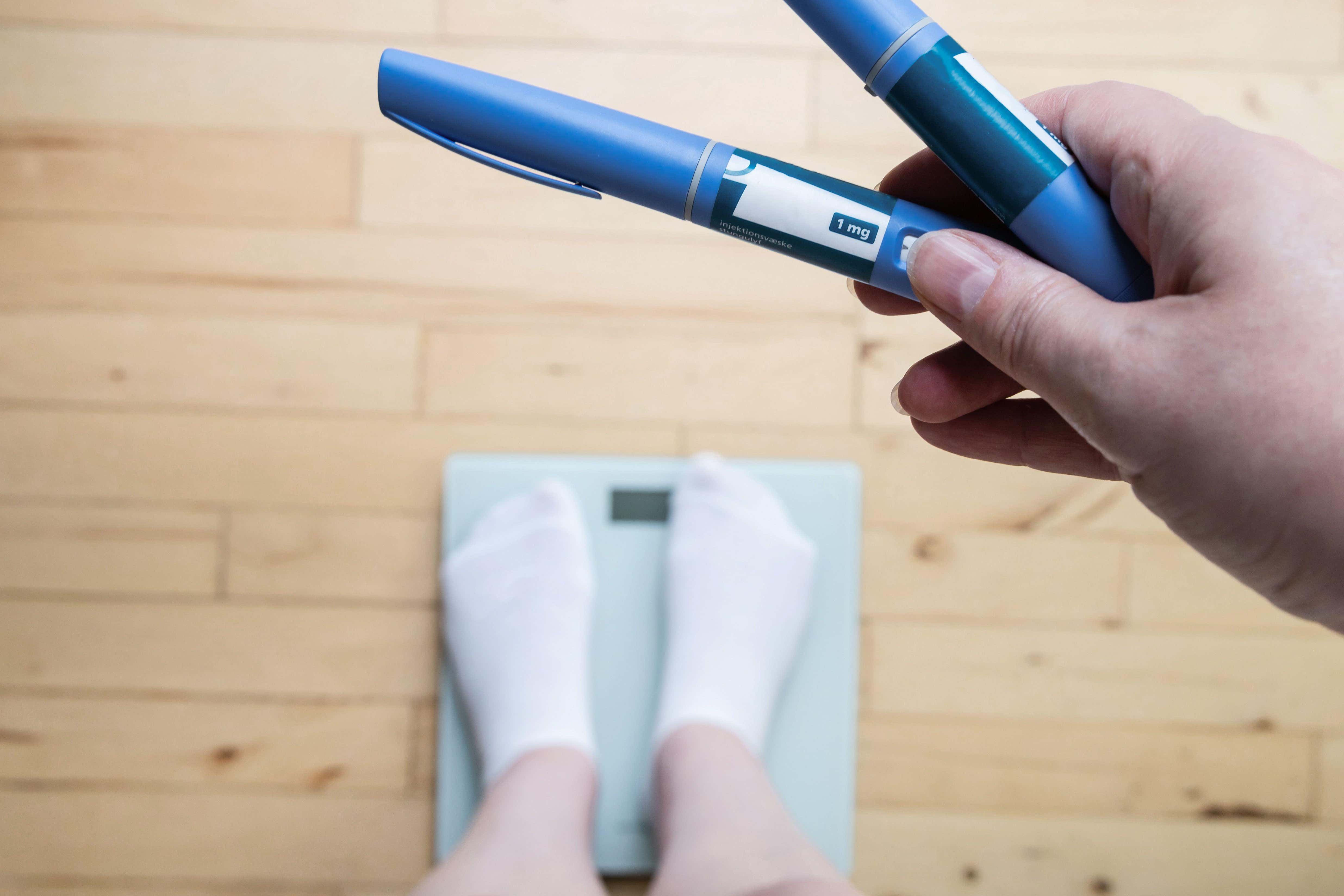
Emily’s doctor explained how the medication, Ozempic, was a game-changer because, unlike drugs like metformin, she wouldn’t have to take a pill every day, just a once-a-week shot. It offered blood sugar management, but it was also likely to bring down her blood pressure, help her body manufacture the right amount of insulin, and might even lead to some weight loss.
The nausea struck almost immediately. Her doctor had not mentioned any side effects when he’d prescribed the medication. She vomited frequently in the two to three days after taking the drug, even though she was only taking the lowest level available. Then there were the headaches. When her doctor increased her dosage to 0.5 milligrams, as per the instructions of the manufacturer Novo Nordisk, she endured blinding migraines like nothing she had ever experienced.
But eventually the headaches eased, and Emily felt like she could live with the nausea, which had moderated. It didn’t last all day. It was kind of like what she imagined morning sickness would feel like. She began adjusting her morning routine, setting her alarm an hour earlier to factor in some vomiting first thing in the morning, then she would get on with her day.



The reason she was willing to live with the nausea was that her blood sugar levels had normalised. And, to top that off, she had lost 10 pounds in the first couple of weeks. The sick feelings continued. She felt assured when her doctor said that some level of nausea was normal. But it was affecting her quality of life. The Ozempic had led her to eat less, but she started to reduce portion sizes further in the hope that it would limit the vomiting. This worked for the first 18 months. Emily was thrilled to lose 80 pounds during this period. But then the foul-smelling burps started.
In class, she would try to stifle a belch, swallowing the vomit that was gushing up from her stomach. But the teenagers she was teaching began asking why there was a smell of rotten eggs in the room. When Emily would get home, her husband would politely relocate from the couch to a faraway armchair.
Emily also started to feel bloated again. Embarrassed by her students’ and husband’s reaction to her new digestive symptoms, she discussed going off the drug with her doctor. But he warned her that the latest research on Ozempic suggested that patients had to stay on it to keep diabetes at bay and maintain the weight loss.
Shedding 80 pounds had made Emily’s life so much better. Her knees no longer hurt when she walked, and she also felt more confident to connect with her students on a different level.
Emily agreed to stay the course with the drugs and live with the unpleasant side effects. But then they got even worse. Two years after she took her first shot of Ozempic, the vomiting that had previously occurred in the morning began to occur in the middle of her workday. While she was teaching, she would vomit and have to hold the sick in her mouth until she could find a place in the classroom to spit it out.
Emily booked another appointment with her doctor. But when she described the sulphur burps and the intense and more frequent vomiting, he didn’t connect it to Ozempic and instead referred her to a gastrointestinal doctor who started investigating whether she might be suffering from irritable bowel syndrome (IBS).
The doctor ordered a colonoscopy and diagnosed her with microscopic colitis, a form of extreme diarrhoea. She changed her diet, avoided acid-based foods like tomato sauces, garlic, and onions, and reduced portions even further.
Her doctors continued running tests for the next two years but found no connection to Ozempic. In September 2022, she was admitted to hospital with extreme dehydration. She had been vomiting for 30 hours straight. In the waiting room, Emily’s panicked husband frantically messaged her parents to say he thought Emily was dying. He had been watching his wife vomit multiple times a day and hoped she just had a stomach flu that would eventually go away. Doctors ran more tests, and she was then diagnosed with cyclical vomiting, a condition where someone is unable to stop being sick. Still, nobody suspected that Ozempic was the cause. Every time she was admitted to the emergency room, she would tell the doctor on call that she was taking Ozempic.
They prescribed anti-nausea medications, which failed to help, and then haloperidol, a medication used to treat schizophrenia that also blocks messages from reaching the brain’s medullary vomit centre.
Emily’s weight continued to plummet. She lost 50 pounds during the cyclical vomiting episode – her weight was now 150 pounds, and she had to take a leave of absence from work. She was then referred to a new gastroenterologist, who finally said he thought her symptoms were related to Ozempic. He told her he had been noticing that a number of his patients still had undigested food in their stomachs during endoscopies. This was surprising given that patients typically fast for eight hours before the procedure.
He was particularly concerned that Emily was vomiting up undigested food and that she also had undigested food in her stool, which meant that her intestines were not functioning and that she was not absorbing any nutrients from her food. He instructed her to stop taking Ozempic and enrolled her in a gastric emptying study. He wanted to see how quickly food got from her stomach to her colon. The movement was extremely slow, indicating that Emily had developed a new condition – stomach paralysis.
By early 2023, Emily was vomiting up to 200 times per week. She dropped to 130 pounds, the lowest she had ever been in her adult life. A month later, a cocktail of powerful medications designed to control her vomiting allowed her to be discharged from the hospital. She was able to reduce the vomiting episodes from 200 times per week to 75. While this was progress, she was still vomiting, on average, 10 times per day.

One month later, in March 2023, Emily’s doctor asked her to do one more test. He asked her to swallow a mechanical pill that would follow the path of her digestive system to see the extent of the damage to her intestines. The test revealed what her doctor suspected. Her gastric paralysis was so severe that her bowels had stopped working.
Emily couldn’t work. She was embarrassed by her smell, constant throwing up, and bowel problems. She could no longer eat foods she once loved, and her dinner shrank to the size of a granola bar. She was increasingly isolated; she couldn’t even attend her family’s Christmas dinner for fear that she’d vomit. Her doctor had also explained that due to the extent of the damage to her body, there was a 99 per cent chance she would never recover. All she could do was adapt to her new way of life and use medications to try and control her symptoms.
Today, she grieves for the life she had before Ozempic. She wanted to be an educator and change the world, but now she feels like a financial burden to her partner and she’s unable to work. She often thinks about how excited she was to lose all the weight when she first started taking the medication but now wonders what was so wrong with her old body. It worked and she was happy.
Emily finds solace in the support group she has set up for people who developed gastroparesis after taking Ozempic or other GLP-1 drugs. She currently has around 500 members. She often counsels people in these forums that being thin is not everything. She thinks about society and how much value is placed on being the right weight. In her dark days, she wonders what she could have done to deserve the life she now has. And although it sounds trite, when she looks back at her old self, she realises she had everything.


Doctors have come a long way since Ozempic was first launched. Many are now insisting that patients embark on weight training programmes and significantly increase their protein intake to counteract the loss of muscle mass. Others are keeping patients on the lowest dose of the drugs to help them adjust to the side effects, which often ease within a month of the first injection. But they have had to learn on the job, as the launch of GLP-1 drugs has been a rapid and unprecedented healthcare experiment.
Emily’s story raises questions about the impact of these drugs on an unfortunate minority of users. Like many medications, side effects are often not visible until a drug is tested on a large population that includes patients who may have underlying ailments or genetic flaws that make them more vulnerable to damaging side effects. But her case also raises a much bigger dilemma about GLP-1s. Although these drugs have been on the market for more than 20 years, they have not been tested in the elevated doses we are now seeing used in Wegovy, Zepbound and Mounjaro.
Join our commenting forum
Join thought-provoking conversations, follow other Independent readers and see their replies
Comments
Bookmark popover
Removed from bookmarks