The Independent's journalism is supported by our readers. When you purchase through links on our site, we may earn commission.
The big mistake people make when walking 10,000 steps per day
Walking is an accessible way to increase your weekly activity levels, writes Harry Bullmore. But the science around how many steps you need to do is changing all the time. Here is the easy way to significantly improve your wider fitness in 15 minutes a day.


Walking 10,000 steps a day is no bad thing, but it isn’t the health and fitness panacea it’s often made out to be either.
The body doesn’t have an in-built pedometer which releases untold benefits when you hit five figures for the day. Instead, this daily target is simply a way to encourage you to move more – that’s where the true magic lies.
Walking’s appeal lies largely in its accessibility; it’s low impact, most people can do it and you don’t need any specialist equipment. Researchers from University of Sydney (Australia) and Universidad Europea (Spain) analysed data from 33,560 adults aged 40–79 who generally walked less than 8,000 steps a day. They found those who walked in uninterrupted stretches of 10–15 minutes or more had significantly lower risks of cardiovascular events (heart attack or stroke) and death compared with those whose walks were mostly under 5 minutes.
The study suggests it’s not just how many steps you take, but how you take them (duration of each walk) that matters. In a world where time is a hot commodity, being able to squeeze some more movement into your day this way is an appealing prospect. But having walking as your only source of exercise can leave holes in your health and fitness.
For this reason, walking 5,000 steps while doing a few weekly strength training sessions or Pilates classes will likely deliver a more robust body than trekking 10K steps per day. Likewise, a keen cyclist might walk a relatively small amount, but still have a healthier heart and lungs than someone who is a slave to their step count.
Below is expert advice to help you design a more well-rounded, yet still time-efficient, weekly exercise plan to benefit as many areas of your health as possible.
 Scientists reveal the small lifestyle changes that can reduce your risk of heart disease and add 10 years to your life
 Four science-backed ways to make your daily walk even better for your health
 Experts say including more of this in your diet can help you live a longer, healthier life - and it’s not protein or fibre
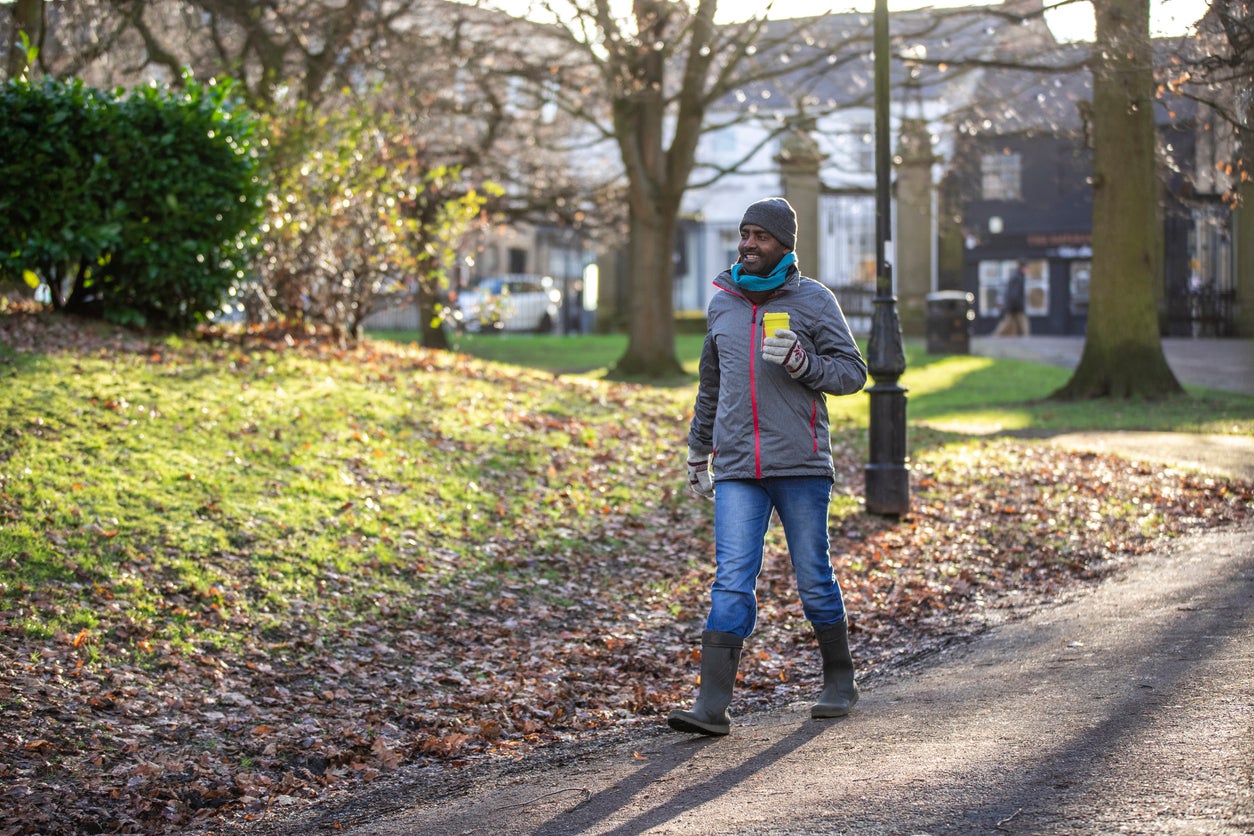
How many steps should you do per day
Walking is the most accessible movement option, and something most of us have to do in our day-to-day life anyway. As such, it should represent most of your weekly movement – the base of the pyramid, if you will.
Accumulating a decent volume of daily walking can offer impressive benefits, from improved heart health and mobility to weight management and a more robust body. Larger volumes of walking have also been linked to reduced incidences of lower back pain – leading spine expert Dr Stuart McGill previously described walking as “a non-negotiable activity for spine health”.
But how much should you be walking?
As you probably know by now, the 10,000 steps per day goal comes from a marketing pain for a pedometer in Japan called the Manpo Kei – roughly translated as the “10,000 steps metre”. This is a nice, round number, but lacks scientific rationale.
Walking 10,000 steps per day also represents a 90-minute commitment – time many people struggle to spare. The good news is that, “if we focus on the risk of dying from cardiovascular disease, most of the benefits are seen at around 7,000 steps per day”, according to 2023 research from the University of Granada. Separate studies have also associated much lower walking totals with significant health benefits.
Case in point: Recent research published by the European Society of Cardiology found that, compared to a daily step count of 2,300 steps, every extra 1,000 steps was linked to “a 22 per cent reduction in heart failure, 9 per cent reduction in risk of heart attack and 24 per cent reduction in risk of stroke”.
The University of Granada study goes on to add that “the more steps you take, the better, and there is no excessive number of steps that has been proven to be harmful to health”. But many people are pressed for time, and after a point there will be diminishing returns. For these reasons, a goal of 7,000, rising to 9,000, “is a sensible health goal for most people”.
Alternatively, if you struggle to hit this figure, just check your current average daily step count on your phone and aim to increase it by 10 per cent each week until you reach 7,000. Or you could try using the methods below for a more efficient health boost through walking.

How to get more out of the steps you already do
If you don’t have time to walk several thousand steps each day, you can enjoy bonus health perks by improving the quality, not quantity, of your activity levels, according to research from the University of Sydney.
“We focussed on vigorous-intensity physical activity in our research programme because it is by far the most time-efficient form [of activity for achieving various health benefits],” says lead researcher Professor Emmanuel Stamatakis says.
“It is the ‘physiological language’ the body best understands – the extra effort acts as a signal for the body to make adaptations and improvements in, say, how the heart functions or how the body absorbs and transports oxygen to the muscles. For these beneficial health adaptations to happen, the body needs to be pushed regularly, even if it is for a short period of time under one minute.”
The study concluded that significant health benefits can be seen from five to 10 daily 60-second bouts of vigorous-intensity activity – recognisable by a faster breathing rate and an inability to say more than a few words without pausing for breath. This intensity was achieved through incidental daily activities such as climbing the stairs, carrying shopping, playing with your children and even vigorous gardening.
“This seems to be associated with between 30 and 50 per cent lower risk of cardiovascular conditions, cancer and mortality,” Professor Stamatakis adds.
There are several variables you can tweak to increase the intensity of walking; load, conditions and pace. You could add load to your walk by carrying a weighted backpack or rucking, climbing stairs or a steep hill, or increasing your pace to a fast walk or run. Vigorous-intensity activity will also look very different for different people depending on individual factors such as their fitness level, so it pays to play around and find what works for you.
Beyond this, if you can consciously up the pace during incidental daily walks, such as a pop to the shops or journey from your car to the office, you may also see increased health benefits, particularly if you currently lead a sedentary lifestyle.
“The research in this area suggests that most of the benefits [from walking] accumulate at a moderate or higher intensity,” explains Dr Elroy Aguiar, an associate professor of exercise science at The University of Alabama.
During moderate-intensity exercise, your breathing rate is raised, but you can still hold a conversation – this usually equates to a cadence of roughly 110 steps per minute.

Move regularly
Some people squeeze all of their daily movement into an hour of their day, then sit at a desk and lead a sedentary lifestyle for the remainder. Exercise in any form is to be encouraged – something is always better than nothing – but there are drawbacks to this approach.
“Interestingly, data supports the importance of low-intensity activity throughout the day,” says Emily Capodilupo, senior vice president of research, algorithms and data at wearable giant WHOOP. “A lot of that is believed to be mediated by the lymphatic pathway.”
The lymphatic system transports lymph fluid – a liquid that carries nutrients to, and clears harmful substances from, your cells and tissues – through the body. However, unlike blood, it doesn’t have an active pumping system like the heart, and instead relies on the contracting of nearby muscles to funnel it onward. This is triggered by our movements.
“It’s like the sewer system of your body,” Capodilupo explains. “If you don’t contract all of your muscles by moving, you don’t circulate this stuff and it stagnates. You quite literally get stagnating wastewater in the body.”
For this reason, she prescribes regular movement throughout the day – not just during dedicated exercise sessions.
This could mean using a standing desk or walking treadmill at work, performing a few bodyweight exercises like squats, lunges and press-ups every now and then to break up longer sedentary periods, doing a couple of stretches or keeping a kettlebell under your desk – ”At WHOOP HQ, swinging a kettlebell is totally normal, but in some office settings that might be considered eccentric”.
Alternatively, on the Andrew Huberman podcast, spine expert Dr Stuart McGill suggests office workers use an adjustable height desk and employ a formula of 20 minutes of sitting, 30 minutes of standing and 10 minutes of walking each hour.
The common denominator here is the importance of moving your entire body regularly, and avoiding staying in any one posture for a prolonged period of time. Aim to change posture and move at least once every hour, taking inspiration from the routines below.
- These expert-approved five-minute daily workouts can improve flexibility, strength and longevity
- Five stretches you should be doing every day, according to a flexibility expert
- The 5-minute daily bodyweight workout that can boost fitness and mental health when you sit down all day
- I tried ‘the best kettlebell workout’, and it was surprisingly simple yet effective in just 10 minutes

Structured exercise
Exercising isn’t normal. Or rather, it didn’t used to be – it was unlikely your ancestors pencilled in a 10K or gym session around their physically-demanding livelihoods.
“There is no doubt that structured exercise is extremely powerful for preventing, managing and in some conditions reversing diseases, but it is an artificial behaviour,” Professor Stamatakis tells me. “It is an adaptation. Our civilisation, for the sake of convenience, speed and other associated reasons, has removed the need to be physically active in day to day life, and our bodies pay a price for that.”
Exercise is the remedy to this. Moving more, through walking, is a great place to start; walking faster on occasion is an excellent next step; but at some point our bodies need a more direct stimulus to trigger positive physiological changes.
This is because the body adheres to the SAID principle, which stands for specific adaptations to imposed demands. Simply: if fuelled and rested adequately, it adapts to become more efficient at the things we consistently ask it to do.
If you lift progressively heavier weights, you will become stronger; if you run further or faster each week, your heart and lungs will become more efficient at delivering fuel to the working muscles.
“Walking 10,000 steps a day is a good starting point, but ideally we want people to progress [from here] and start to engage in exercise beyond just walking, such as moving on to other forms of moderate-vigorous exercise that elevate your heart rate and oxygen consumption,” says Dr Aguiar.
Personal trainer and longevity specialist Ollie Thompson recommends trying to accumulate 150 minutes of cardiovascular exercise – any cyclical activity that raises the heart rate – per week, as per World Health Organisation and NHS guidance.
Of this, 80 per cent can be performed at lower intensities – think walking and similar moderate-intensity activities. The remaining 20 per cent should challenge you with higher intensities.
“This combination builds both a wide aerobic base and a high aerobic peak – known as VO2 max – which is strongly associated with better health, longevity and reduced all-cause mortality,” Thompson says.
He recommends using interval training to achieve this – there are three sample sessions below which all take 30 minutes or less. They can be performed with walking, running, skipping, full-body exercises like burpees or on an exercise machine of your choice (such as an exercise bike or rowing machine) for a lower impact alternative.
Workout one – complete the sequence below four times:
- Four minutes at a fast pace for you (7-8/10 effort)
- Three minutes of rest or recovery at a slow pace (2-3/10 effort)
Workout two – complete the sequence below 10 times:
- 30 seconds at a fast pace for you (9/10 effort)
- 30 seconds of rest or recovery at a slow pace (2-3/10 effort)
Workout three – complete the sequence below five times:
- Three minutes at a relaxed pace (2-3/10 effort)
- Three minutes at a fast pace for you (8/10 effort)

Strength training
Walking will build strength in your legs and core if you are new to exercise. However, there will soon come a time where dedicated strength training is needed to see further fitness improvements – and there are plenty of them on the table.
Not only does strength training build strength and muscle, countering age-related losses in these areas, but it also increases tissue tolerance in your tendons, ligaments and bones, leaving you with healthier joints that are less susceptible to injury. Done correctly, it can have a significant positive impact on your physical capacity, mobility, coordination, stability, body composition and metabolic health too. In short, it can help you live life better.
“Muscle tissue is metabolically important in so many ways that I think are under appreciated,” says Capodilupo. “It’s one of the greatest predictors of your ability to live independently in older age. After the age of about 30, you lose one per cent of muscle mass every year unless you intervene to prevent that.
“Your muscle tissue can also absorb sugar, so every pound of muscle mass that you gain can buffer against more sugar,” she adds.
“[...] If we don't have a lot of muscle mass, we're forced to only use insulin [to regulate blood sugar] – that's when you can get an over reliance on that part of the system. That fatigues over time, leading to insulin insensitivity and eventually metabolic dysfunction and type 2 diabetes.”
Strength training does not necessarily mean lifting weights. The phrase encompasses any activity where you are repeatedly contracting your muscles to overcome resistance, whether that’s using dumbbells, barbells, kettlebells, resistance bands or bodyweight exercises – your body doesn’t know the difference, it just understands the need to generate force.
For beginners in particular, two full-body workouts per week will deliver the benefits listed above, so long as you use appropriate weights. A full-body workout means working the muscles in your chest, back, shoulders, arms, legs and core – something you can do in 20 minutes with just four moves if you choose your exercises smartly.
“When you're a novice, you can go into the gym and do a pushing exercise for your upper body, a pulling exercise for your upper body, something like a squat or lunge for the front of your legs, something like a deadlift for the back of your legs, and then you can walk out after four exercises having worked every major muscle group,” says seasoned strength and conditioning coach Danny Matranga.
“[...] If time is of the utmost importance and you want the most gains from the least number of trips to the gym, total body programmes are very effective.”
The other important fixture to factor into your strength training sessions is progression. The body follows the SAID principle, so to see continued results you need to ask it to do gradually more demanding tasks, in line with your increasing strength and fitness levels.
This might mean performing one more set of an exercise than you did the week before, one more repetition per set, or very gradually increasing the weight you are lifting from session to session. As long as your form is good and the set feels challenging, it will be effective.
If you want to introduce strength training into your routine, you can use the dumbbell workout and exercise demonstrations in the video above, or make your own dumbbell workout using the formula below.
Exercises | Sets | Reps | Rest |
Lower body push (goblet squat, alternating goblet lunge, dumbbell step up, Bulgarian split squat, cyclist squat, lateral lunge, curtsy squat) | 3 | 10-15 | 60 seconds |
Lower body pull (dumbbell deadlift, Romanian dumbbell deadlift, single-leg Romanian deadlift, B-stance Romanian deadlift, glute bridge, hip thrust, single-leg hip thrust, good morning) | 3 | 10-15 | 60 seconds |
Upper body push (press-up, incline press-up, decline press-up, chest press, floor press, shoulder press, dip) | 3 | 10-15 | 60 seconds |
Upper body pull (bent-over row, single-arm dumbbell row, pull-up, inverted row, dumbbell pullover) | 3 | 10-15 | 60 seconds |
Move in varied ways
“The body is always trying to help us and be more efficient in what we ask it to do,” says Ash Grossmann, a human movement expert and founder of The Training Stimulus.
“If we are sitting behind a computer for eight, 10, 12 or 14 hours per day in a flexed hip position, it thinks that holding that hip flexed is saving us energy and therefore doing us a favour. Tight hip flexors are actually an adaptive change to the way the muscles sit.”
In other words, the body operates on a rough “use it or lose it” basis. If we do an activity regularly, the body will adapt to make it easier for us; if we rarely do a movement, we might lose access to it.
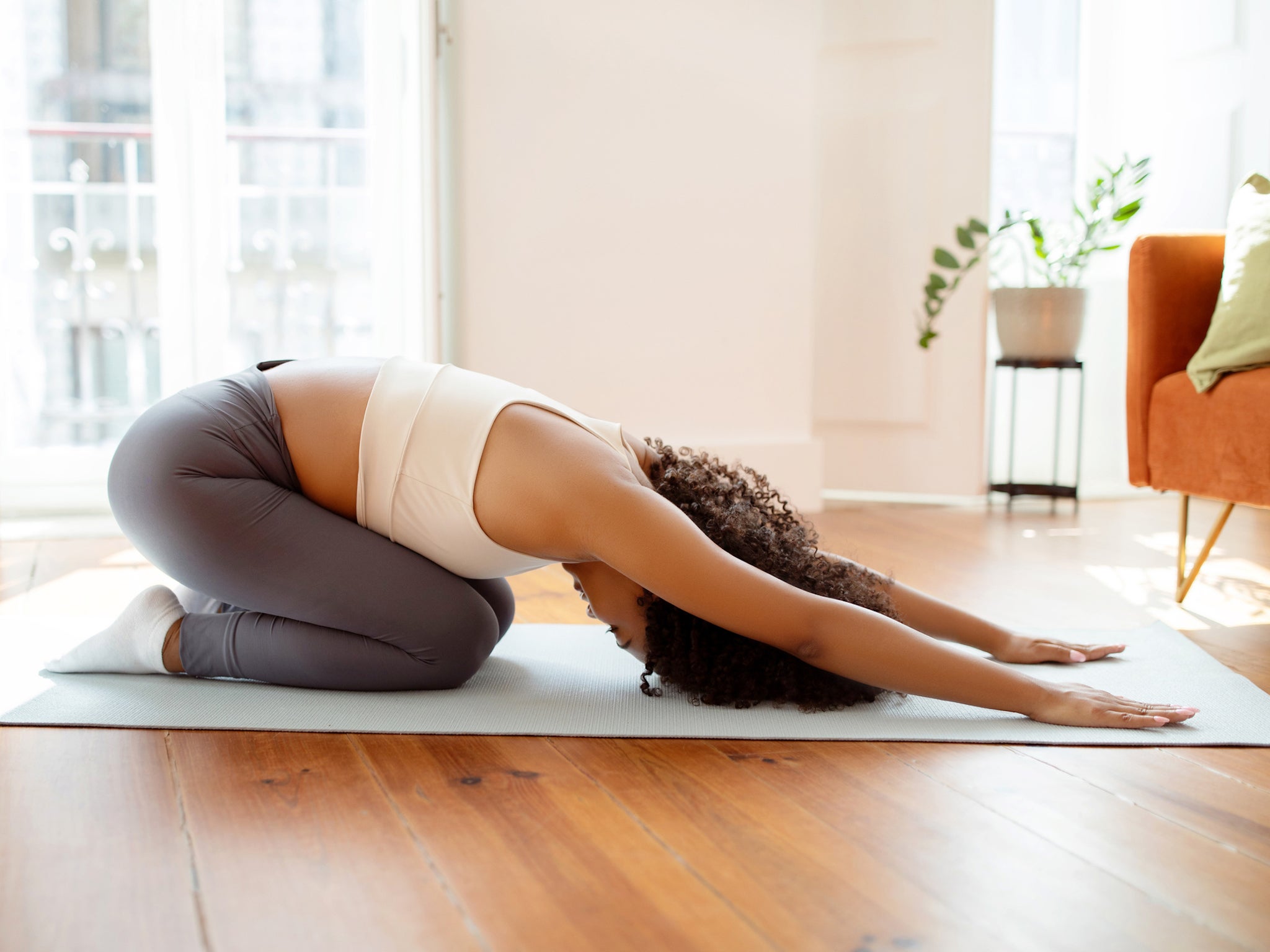
“Varied movement is important,” Grossmann continues. “We want to maintain as many movement options as possible, so that means moving as many joints as possible in as many directions as possible. Doing things like side bends and rotations; they all contribute to a body that feels limber and loose.”
New positions, or those you might not have accessed for a while such as twisting and bending, should be reintroduced gradually – you would not squat 200kg on your first day in the gym, so don’t go straight into a demanding yoga or Pilates routine. However, including varied movements in your week where possible, whether through sport, strength training, yoga, Pilates or other practices, is a good way to maintain freedom of movement.
The plan
- Build up to at least 7,000 steps per day.
- Include short bursts of faster walking where possible – aim for five to 10 daily bouts of incidental vigorous-intensity movement, whether that’s climbing stairs, gardening or playing with your kids.
- Include regular movement breaks throughout the day – try not to stay in the same position, such as sitting at your desk, for more than an hour at a time.
- Do one or two structured sessions of cardiovascular exercise per week, each lasting 10-30 minutes. These should include intervals of vigorous- and moderate-intensity activity.
- Complete two 20-minute full-body strength training sessions per week.
- Move in varied ways wherever possible.
If you can stick to the recommendations above each week, chances are you will be fitter than most people. Even if you fall short of the daily step goal and simply move as and when the opportunity arises, the other activities will stand you in good stead while taking up roughly an hour of your week. As far as bang for your buck is concerned, I’d say that’s pretty good.
Read more: How to start weight training – with this simple formula for strength and longevity
Join our commenting forum
Join thought-provoking conversations, follow other Independent readers and see their replies
Comments
Bookmark popover
Removed from bookmarks