From back pain to heart health – Experts reveal how to counter the negative effects of too much sitting down
Excessive sitting down, or sedentary time, has been linked to reduced mobility, age-related muscle loss and decreased heart health – Harry Bullmore looks at the evidence, then asks the experts what you can do to combat these effects


Sitting down has become humanity’s unofficial default position. For most of us, work means sitting at a desk, travel means sitting behind the wheel of a car and unwinding at the end of a long day means sitting on the sofa. We are rewarded for this behaviour, too. Hustle culture applauds long hours at our desks, while screens deliver feel-good dopamine hits with just the push of a button or swipe of a thumb.
The issue here is that the body is built to move, and doesn’t do well when asked to stay in the same position for long periods of time. The act of sitting down isn’t inherently dangerous – the human body needs a balance of rest and exertion to be at its best – but consistently spending large chunks of the day stationary can hold health risks.
Excessive sitting has been linked to a greater risk of developing chronic diseases such as cardiovascular disease and type 2 diabetes, as well as dying early. It is also thought to “slow the metabolism, which affects the body’s ability to regulate blood sugar, blood pressure and break down body fat”, according to the NHS.
To find out more, I took a look at the science around how much sitting down is too much sitting down. Then I enlisted the help of a few experts to find accessible ways to offset its negative effects.
 This one thing could be ruining your sleep – and you were probably told it would help it
 Scientists reveal the small lifestyle changes that can reduce your risk of heart disease and add 10 years to your life
 Four science-backed ways to make your daily walk even better for your health
 I’m a trainer specialising in longevity – these are the five changes that have the biggest impact on my clients
What are the negative effects of too much sitting down, and how much sitting ?
Much of the available evidence links spending less time sitting down with more favourable health outcomes. A figure of more than 9-10 hours of sitting down per day is repeatedly used as a reference point for negative impacts in areas such as age-related muscle loss and heart health. Spending nine, 10 or more hours sitting down each day has also been found to be par for the course for many people in the UK.
However, the reality is that there isn’t a certain amount of daily sitting that suddenly triggers unwanted effects. The NHS says, “there is currently not enough evidence to set a time limit on how much time people should sit each day”, and the reality is that the relationship between excessive sitting and its negative health implications exists as a spectrum, which will vary from individual to individual.
The common denominator is that a lower total tends to be better. This is what the research says on the matter.

Muscle and strength loss
A large-scale study published in the Archives of Public Health journal this year looked to establish how much daily sitting time was associated with an increased prevalence of sarcopenia.
Monitoring a pool of 9,998 participants, it found that those with a daily sitting time of more than or equal to nine hours had a 90 per cent greater risk of sarcopenia – the age-related loss of strength and muscle, which can lead to decreased physical function – than those who sat for less than four hours per day.
While correlation does not always equal causation, the research reported that “smooth curve fitting analysis showed a linear correlation between [daily sitting time and sarcopenia]”.
“Compared to those who actively participate in vigorous activities, individuals who lack recreational activities also have a higher prevalence and risk of sarcopenia,” it adds.
In summary, this study suggests that regular movement and limiting sitting time could limit the effects of sarcopenia. It also highlights the importance of exercise that gets your body moving and your blood pumping – strength training in particular has the power to pump the brakes on sarcopenia, in many cases thanks, to its tissue-strengthening benefits.
Joint stiffness and pain
Sarcopenia is not the only potential physical impact of excessive sitting. The body adheres to the SAID principle, which stands for specific adaptation to imposed demand – in other words, it adapts to get better at the things you consistently do.
If you spend a lot of time in one position, you will adapt to become more efficient at this. When sitting for long periods each day, for example, it is likely to tighten the hip flexors to hold your thigh in that raised position more easily.
However, over time, straightening your leg and lengthening the muscle will begin to feel tight. This can lead to discomfort and injury as surrounding muscles try to chip in and compensate for the dysfunctional muscle.
A study of 447 office workers, published in the Journal of Lifestyle Medicine, found they spent an average of 6.29 hours of their eight-hour shift sitting down.
Of those surveyed, 48.8 per cent did not feel comfortable in their workstations, and more than half reported symptoms of neck (53.5 per cent), lower back (53.2 per cent) and shoulder (51.6 per cent) problems.
Heart health
Another recent study of 89,530 people, published in the Journal of the American College of Cardiology, reported a median sedentary time of 9.4 hours per day over the course of a week.
The top quartile was associated with greater risks of heart failure and cardiovascular mortality – in other words, death caused by diseases of the heart or blood vessels – with “an inflection of risk at 10.6 hours per day of sedentary time.
“Higher sedentary time was also associated with greater risks of incident atrial fibrillation [an irregular heartbeat] and myocardial infarction [heart attacks], with an approximately linear relation,” the report continues.
“Associations with heart failure and cardiovascular mortality persisted among individuals meeting guideline-recommended moderate to vigorous-intensity physical activity levels.
“Among individuals with more than 10.6 hours per day of sedentary time, reallocating sedentary behaviour to other activities substantially reduced the excess cardiovascular risk conferred by sedentary behaviour.”
These differences were observed after decreasing sedentary time by as little as 30 minutes per day. Therefore, even if you exercise regularly, this research suggests that spending 10 or more hours each day sitting down is still a behaviour worth adjusting for improved heart health.

What can you do to reduce the effects of sitting?
Research published in the British Medical Journal, which monitored almost 12,000 people aged 50 and above for 13 years, suggests that exercise could offset some of the negative impacts of excessive sedentary time.
“Sedentary time was associated with higher mortality risk, but only in individuals accumulating less than 22 minutes of moderate to vigorous high-intensity physical activity (MVPA) per day,” it reports. “Higher MVPA levels were associated with lower mortality risk irrespective of the amount of sedentary time.”
“Ideally, you should have little sedentary time and then also do some aerobic or resistance training exercise – that’s the ideal combination,” says Dr Elroy Aguiar, an associate professor at the University of Alabama. He also recommends taking regular breaks within sedentary time.
“You don’t need to think about those breaks as ‘exercise’,” Aguiar adds. “It’s purposeful movement in between bouts of doing things. For example, parking your car a little bit further away from your office, or using public transport and getting off one stop early.”
Read more: The science-backed exercise method that can help fight the effects of ageing
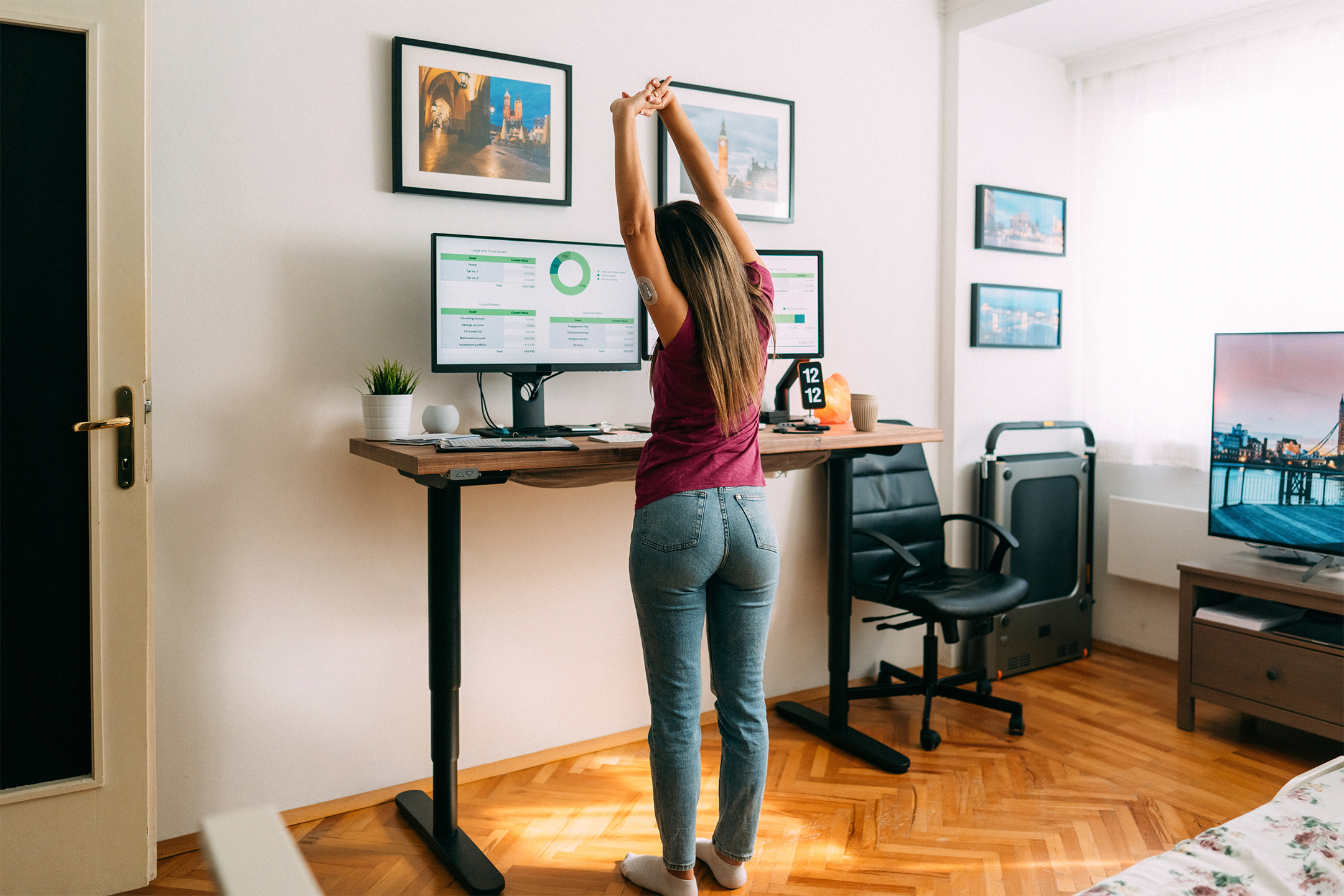
Research from the University of Leicester’s Sedentary Behaviour Research (LSBR) team found that those studied spent an average of nine to 10 hours sitting each day. It also reports how people who spend a large portion of their day sitting down are at a greater risk of developing chronic diseases such as cardiovascular disease and type 2 diabetes, as well as dying early.
"Initially, it was thought that this was independent of the amount of exercise people did, which was worrying,” writes Professor Charlotte Edwardson in an article for the University of Leicester. “More recently, we’ve come to understand that doing moderate-to-vigorous physical activity may reduce the risk associated with high sitting time, but it may require anywhere between 30-75 minutes of moderate-to-vigorous activity every day.”
The LSBR also found that incorporating short but frequent – five-minute every half-an-hour – bouts of light activity into sedentary time “considerably improved markers of cardiometabolic health such as glucose, insulin and blood pressure”. This approach is often referred to as exercise snacking.
Further research from the LSBR team, in collaboration with researchers at Loughborough University, found that helping office workers reduce their sitting time by 80 minutes per day, through methods such as height-adjustable desks, education on the benefits of breaking up sitting time, saw them improve their job performance, occupational fatigue, musculoskeletal issues, sickness absence and quality of life.
Read more: Five stretches you should be doing every day, according to a flexibility expert

Best exercises for reducing the effects of sitting
For those seeking actionable ways to counter the effects of excessive sitting, I spoke to experienced personal trainer and Well to Lead founder Ollie Thompson, who specialises in helping clients move freely and comfortably throughout their lives.
These are the tips he has found work best:
Change the way you sit
“I’m a strong believer that being too sedentary is pro-ageing, just as much as exercise is anti-ageing,” Thompson says. “In my experience, simply changing how you sit can go a long way.
“Much of the physical discomfort we feel from excessive sitting comes from staying in a fixed position for hours on end. Changing your sitting position every 15-30 minutes can be especially beneficial for your joints. For example, try sitting cross-legged, kneeling, side sitting, or sitting on the ground with your back supported against the wall.
“This simple method gives your body exposure to different shapes and helps you avoid getting stuck in one static position for hours.”
Stretch
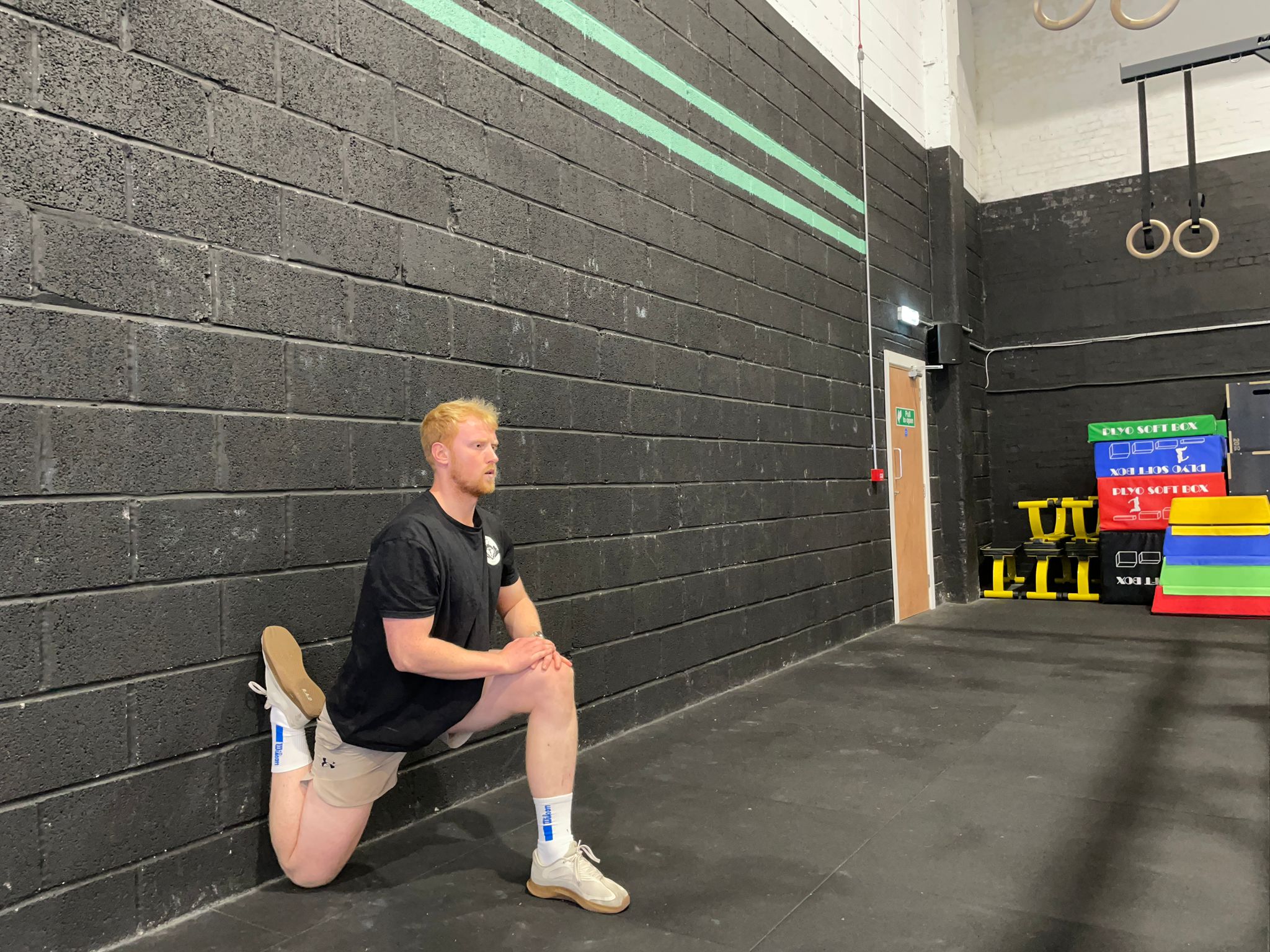
“A stretch I often prescribe to clients who spend a lot of their week sitting is the couch stretch. In my opinion, it’s one of the best – alongside the 90/90 – for really getting into the tissues of the hips and freeing up some of the stiffness that long days at your desk can create.”
Hold fast
Isometric hold exercises involve maintaining tension in your muscles without moving. The plank is perhaps the best-known example.
“They are an effective strategy for breaking up long periods of sitting, lowering blood pressure, maintaining muscle tone and improving overall circulation,” Thompson says.
Accessible options include pressing your palms together forcefully, lifting yourself off your chair with straight arms or holding a wall sit for 30-plus seconds.
“These will activate your muscles and stimulate circulation without requiring much space,” explains Thompson. “Isometric holds are also excellent for joint health, making them a smart addition to your day for physical longevity.”
Strengthen
Strength training is an effective way to combat sarcopenia and joint stiffness, strengthening tissues such as muscles, bones, joints and tendons while moving the body to maintain mobility. The Bulgarian split squat is Thompson’s top recommendation for those who spend a lot of time sitting.
“It does an excellent job of getting your back leg into hip extension, a position where your rear leg is behind your hip, your glute is engaged and the tissues at the front of your hip are lengthened,” he explains.
“Hip extension is a movement many of us lose over time if we’re sitting a lot and not spending time in that position. When your body loses the ability to move effectively into hip extension, areas like your lower back start to take on extra strain, which can lead to pain over time.”
Active procrastination
If you work from home, you are likely no stranger to procrastination. But rather than spending the time on your phone, Thompson suggests a more productive alternative.
“Create a short ‘procrastination task list’,” he says. “This could include things like changing your dog’s water bowl, separating laundry, fluffing the cushions, vacuuming, weeding the garden or packing your gym bag for later.
“Rather than doing all these tasks before you start work, sprinkle them throughout your day whenever you fancy a quick break to encourage regular movement that gives your joints, eyes and mind a much-needed reset.”
Join our commenting forum
Join thought-provoking conversations, follow other Independent readers and see their replies
Comments
Bookmark popover
Removed from bookmarks