Forget Mounjaro – these new weight loss treatments could change everything
When you lose the lbs there can be a hidden price – along with fat, people lose muscle and bone density. But a new generation of medication could be about to change all that. Leah Hardy reports


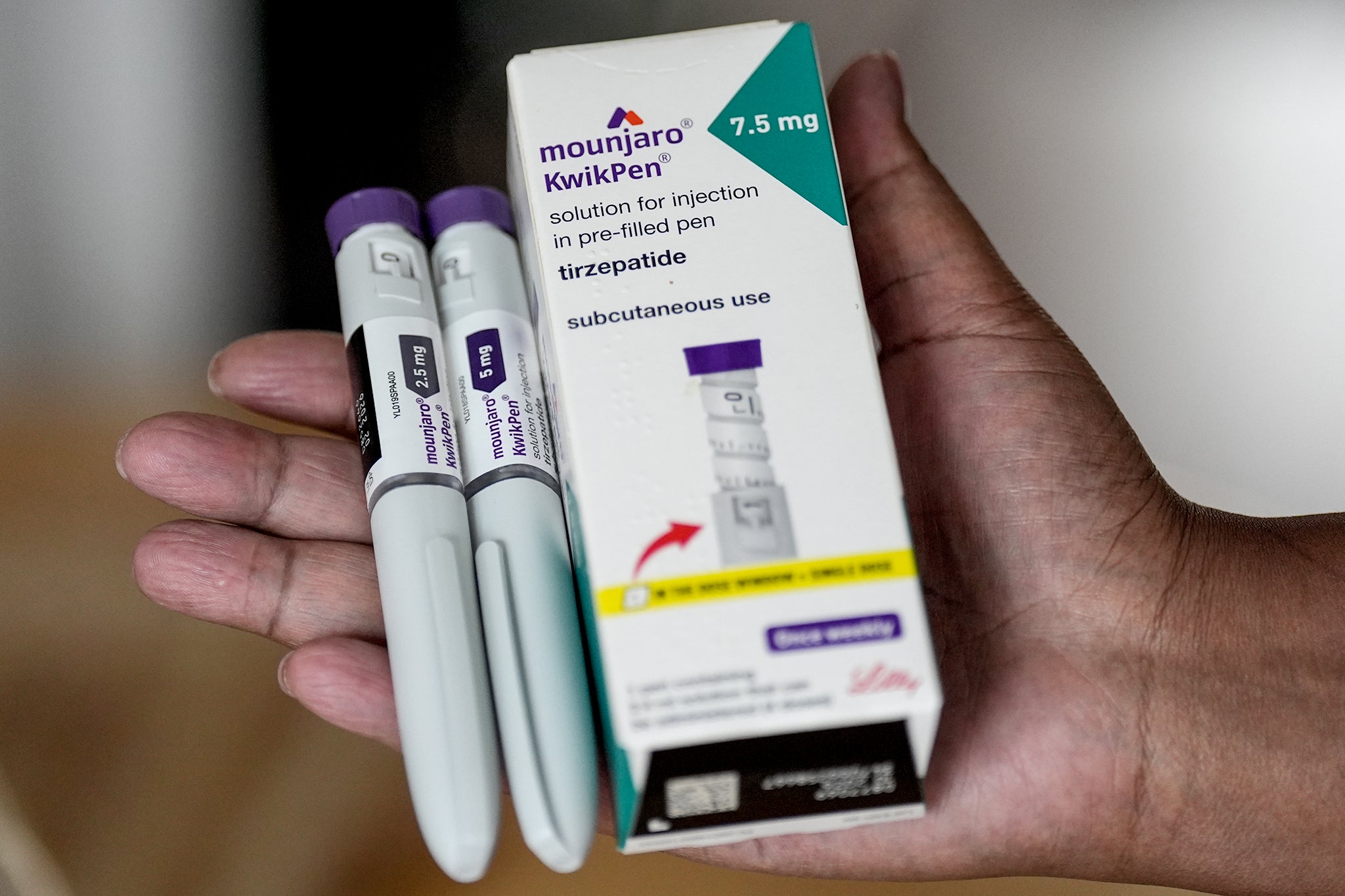
Blockbuster drugs such as semaglutide (Wegovy) and tirzepatide (Mounjaro) have already transformed the weight-loss landscape. These injections suppress appetite and reshape cravings so effectively that people can shed 15 to 20 per cent of body weight in a year, often with little effort. No surprise, then, that demand is booming.
A survey by the National Pharmacy Association found that more than one in five adults in the UK tried to access one of the new drugs in the past year and the manufacturer of Mounjaro has suspended sales of the jab to UK wholesalers this week, after users started stockpiling in anticipation of the upcoming price rise.
But the global scientific race is shifting. The next frontier is not just about greater weight loss, but about healthier weight loss: stripping fat while protecting muscle and bone. The key, researchers say, lies in cocktails.
No, not this summer’s Hugo spritz, but carefully engineered drug combinations that encourage muscle growth, turbo-charge metabolism and even reprogramme how fat itself behaves. The reason is simple. Both traditional and medicated weight loss carry a hidden price: taking the drugs means you’re not just losing fat – you’re losing muscle and bone density, too.
Carel Le Roux, professor of metabolic medicine at Ulster University, says, “For every 3kg of fat loss, people tend to lose around 1kg of muscle.”


With the dramatic reductions seen while using GLP-1 drugs, that matters more than ever because muscle is more than gym strength: it regulates blood sugar, fuels mobility and keeps metabolism humming. Bone density underpins healthy ageing and lowers the risk of frailty and fractures.
Fresh research illustrates the risk. At the Endocrine Society’s annual meeting in June, a study found that after three months of semaglutide, 47.5 per cent of the weight lost was lean mass compared with 35.7 per cent in patients relying on diet and lifestyle alone. Older adults and women, the researchers warned, are particularly vulnerable to losing muscle.
The implications are stark. A fit young man might have 50kg of muscle, burning nearly 500 calories daily at rest. An older woman may have just 13kg, burning only 120. Even a 10kg gap equates to a difference of 100 calories every day. That may sound minor, but over the years, it can decide whether someone maintains a healthy weight or drifts into obesity.
Not all fat is equal either. Visceral fat, the type that accumulates around abdominal organs, is especially destructive. Louis Aronne, professor of metabolic research at Weill Cornell Medicine in New York, calls it a source of “metabolic mayhem”, fuelling insulin resistance, inflammation, type 2 diabetes and eventually heart attacks and strokes.
“This is a revolution unfolding in front of our eyes,” says Le Roux. “Next-generation medications will allow even more weight loss in safer ways.” His colleague, Professor Alex Miras, also at Ulster, predicts: “We will have truly personalised obesity medicine. Patients will be matched to the drug most likely to work for them based on biology, genetics and personal goals to achieve the best results with the fewest side effects.”
Move over Mounjaro
One eye-catching candidate is bimagrumab, nicknamed “the gym in a jab”. Unlike semaglutide, which curbs appetite, bimagrumab acts directly on muscle. It blocks myostatin, a protein that halts muscle growth, allowing the body to build lean tissue while burning fat, mimicking the effect of resistance training.
In trials, patients taking bimagrumab lost 10.8 per cent of body weight in 48 weeks, all from fat, while gaining lean mass. When combined with semaglutide, the effect was striking: 22.1 per cent body weight lost, almost entirely fat. By contrast, semaglutide alone reduced both fat and muscle.
Aronne, who helped run the trial, says the combination is especially powerful at targeting visceral fat. Patients on the highest dose cut their waistlines by an average of 22cm, “equivalent to 8.5 holes on a belt.”
Encouragingly, weight did not rebound quickly after treatment stopped. A 2023 study tracking patients for 12 weeks after bimagrumab found no regain. “Our hope is that we will see better maintenance of weight loss over that period of time,” Aronne said at a press conference.
Bimagrumab is the frontrunner, but other anti-myostatin drugs are also in development. Early evidence suggests they may preserve up to 80 per cent of the lean mass that would otherwise be lost on semaglutide. Trials are still underway with results due in January 2027, which will be followed by larger safety and efficacy trials. An approved drug is therefore still several years away.
Reprogramming metabolism
Another promising candidate is CagriSema, a combination of semaglutide and cagrilintide. The latter mimics amylin, a pancreatic hormone that regulates satiety and fat metabolism.
In trials, CagriSema delivered an average weight loss of 22.7 per cent over 68 weeks, outperforming both Wegovy and Mounjaro. Almost 40 per cent of participants lost at least a quarter of their body weight, results usually seen only after bariatric surgery.

Though not as muscle-preserving as bimagrumab, two-thirds of the weight lost came from fat. There are also hints that it may protect bone. “Amylin has been shown to have a preservation of bone mass – an effect you don’t see with GLP-1s,” said Dr Thomas Lutz at a diabetes conference. Larger studies are underway, with results due in 2028.
Most intriguing of all, cagrilintide appears to prevent the body’s metabolic slowdown that sabotages most diets. “When people lose weight by dieting, the body defends its fat stores by slowing metabolism,” explains Le Roux. “Cagrilintide persuades the body it is supposed to be at a lower weight, so these mechanisms don’t kick in.”
In animal studies, rats given CagriSema could eat 25 per cent more than calorie-restricted rats yet lost the same amount of weight, without hunger. Novo Nordisk plans to submit it for approval in 2026, and NICE would need to approve it for NHS use after that.
Metabolism booster
Perhaps the most eagerly awaited drug is retatrutide, developed by Eli Lilly, the maker of Mounjaro. Dubbed the “triple G” jab, it stimulates three receptors: GLP-1 and GIP, which reduce appetite, and glucagon, which increases calorie burning.
In a 2023 trial published in the New England Journal of Medicine, patients on the highest dose lost 24.2 per cent of body weight in 48 weeks. “This is the next blockbuster drug,” says Miras. “To see this weight loss in under a year without surgery is remarkable. This raises the bar. This is way beyond my wildest dreams.”
Retatrutide does not shield muscle like bimagrumab, but it targets another hidden danger: liver fat. Fatty liver disease affects one in five British adults and can progress to cirrhosis or liver cancer. “This effect seems independent of weight loss,” says Miras. “Meaning the drug could be used for liver disease alone.”

However, the challenge is tolerability. “Glucagon can be tricky to tolerate,” says Miras. “It can trigger nausea and vomiting.” Le Roux notes: “Glucagon increases energy expenditure, which is a novel mechanism, so trials need to show this is safe.” Still, retatrutide is now in its final phase three trials and could reach the UK within 18 months.
What you can do now
Even as pharmaceutical science gallops ahead, lifestyle choices remain vital. The best way to shed fat rather than muscle or bone is still a combination of protein intake and exercise, especially resistance training.
A 2005 study in Obesity Surgery showed that people who exercised after bariatric surgery lost 28 per cent more fat and gained 8 per cent more lean mass than those who did not. Eating sufficient protein makes a difference too. Medical societies, including the Obesity Society, now recommend that patients on GLP-1 drugs aim for 1.2 to 1.6 grams of protein per kilogram of body weight daily, ideally spread evenly through the day. A 2017 review in Advances in Clinical Nutrition found this strategy, combined with resistance exercise, was especially protective.
Yet experts caution against people who are overweight being overly worried about losing some lean tissue. People with obesity often have plenty of muscle but it’s marbled with fat, like a steak, reducing its strength. After weight loss, even if there is less lean mass overall, the muscle can be better quality and people are stronger and healthier.
The next generation of “cocktail” drugs may change obesity treatment forever, making weight loss more powerful, more sustainable and healthier. But whether achieved through medicine, diet or exercise, the aim is the same: not just to be lighter, but to be stronger, fitter and more resilient.
Join our commenting forum
Join thought-provoking conversations, follow other Independent readers and see their replies
Comments
Bookmark popover
Removed from bookmarks