The uncomfortable truth about building muscle and eight golden rules for strength training in midlife
As you get older, experts advise increasing strength training to help burn calories and keep your metabolism firing. But if you want stronger arms and perkier pecs, there are some non-negotiable workout rules you need to follow that will deliver the best results, says Harry Bullmore


Building muscle is no longer a niche fitness goal for ardent gym-goers. Studies have cemented building lean muscle as the key to longevity, and strength training has since been adopted by the masses. Given its impressive benefits, this is no surprise.
Muscle tissue is metabolically active, costing energy to maintain and aiding weight management; it protects against falls and injuries while improving physical capacity and helps regulate blood sugar levels to prevent diabetes. It is even associated with a lower risk of several chronic diseases. In short, it helps you live better for longer.
So, how do you build more of it? Ed Haynes, an experienced strength and conditioning coach and owner of Coastal Fitness gym in Hong Kong, says while most people lift weights because they are looking to either be stronger or gain more muscle, what people don’t often realise is: “The human body is incredibly evolutionary, so to adapt it you need to consistently ask it to do something that’s just beyond its comfort zone.
“If you do that, your body will realise this is a task you want it to be able to do, and it needs to figure out a way to do it better [ie building muscle]. If the task is easy, there is no need to adapt.”
Unfortunately, this means most people can’t simply coast through strength training sessions and expect to see impressive results. But, as Haynes reveals, there are some basic rules that you can follow which serve as a roadmap to building muscle in a healthy and efficient way.


Step one: Commit to regular strength training sessions
The best way to build muscle is strength training, which covers everything from lifting weights to bodyweight exercises like press-ups. This is also the best way to build strength in other bodily tissues such as your bones, ligaments and tendons, creating a more robust body.
For successful strength training, consistency is king. Haynes recommends working up to at least three strength training sessions per week – “That is a gold standard that is going to help 99 per cent of the population.”
If you can set aside consistent weekly time slots for these strength training sessions and forge a strong exercise habit, even better.
Read more: We’ve overcomplicated fitness – these six simple things will make you healthier than most people
Step two: Select your workout split
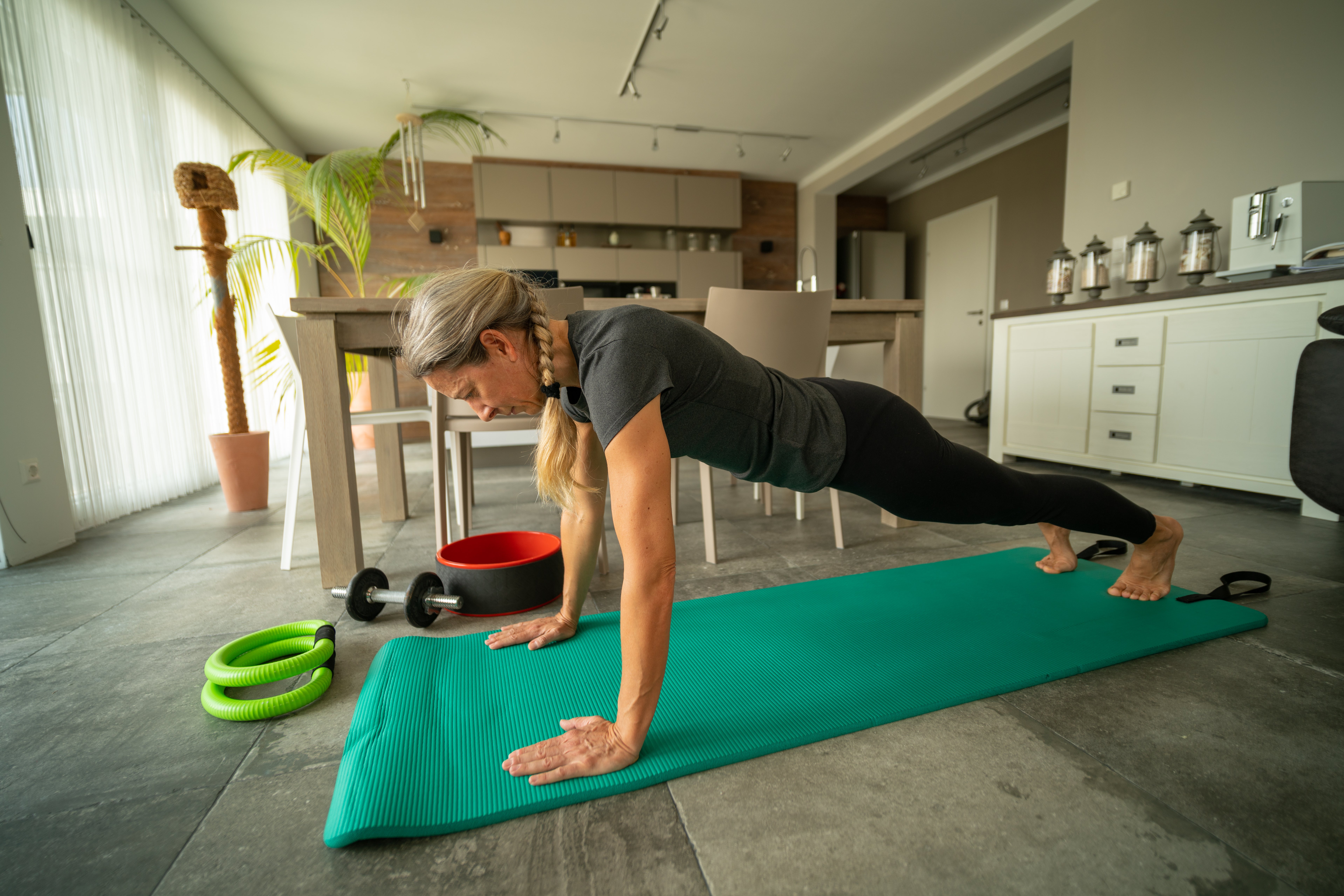
People often split their weekly muscle-building workouts up to place emphasis on different parts of the body – leg day being the best-known example. One of the most simple and effective ways to do this is with three weekly full-body training sessions.
“Full body resistance training works really well for most people,” he says. “For busy professionals, even if they miss one of the weekly sessions, they are still working all muscle groups [the legs, back, shoulders, chest, arms and core] multiple times within a seven-day window. Higher training frequencies are associated with greater muscle growth.
“This split also allows for intensity, nervous system demand and recovery to be spread evenly across the sessions. And by pairing upper and lower body exercises, the heart has to work harder to redistribute blood around the body, meaning we get an added cardiovascular training effect and burn more calories.”
Most people, and beginners in particular, will likely want to leave at least a day between workouts to allow their bodies to recover and adapt.
Read more: The secrets to building muscle and exercising for a longer life

Step three: Select your exercises carefully
Compound exercises that work multiple muscles at once offer the best bang for your buck. They should be placed at the start of your workouts as they require the most energy, so it is best to do them while you’re at your freshest.
These exercises often mirror fundamental human movement patterns. For example, squatting, lunging, hinging at the hips (as in a deadlift or hip thrust), pressing and pulling.
Isolation exercises, which hone in on individual muscles, can be added later in your workouts if there is a particular area you want to grow. These include moves like leg extensions, hamstring curls, biceps curls, triceps pushdowns and chest flyes.
For beginners, the four-move format below works well for recruiting muscles across the entire body in a time-efficient manner.
Choose one of each of the following:
- An upper-body pushing exercise, such as dumbbell bench press or press-up
- An upper-body pulling exercise, such as a cable lat pulldown, machine row, dumbbell bent-over row or inverted row
- A lower-body pushing exercise, such as a goblet squat or leg press
- A lower-body hinging exercise, such as a dumbbell deadlift, Romanian deadlift, glute bridge or hip thrust
When you want to progress this simple four-move formula, Haynes recommends upgrading your workouts by adding a single-leg squatting movement such as a weighted lunge or step-up, a targeted core strengthening element and a second upper body pulling exercise. For slightly more experienced lifters looking to build muscle through full-body workouts, a format of two or three compound exercises followed by two or three isolation exercises can be a good approach.
To start, Haynes recommends adding a single-leg squatting movement such as a weighted lunge or step-up, a targeted core strengthening element and a second upper body pulling exercise to the format above.
“I tend to create a bias towards upper body pulling movements to balance out the fact that most of our life is spent doing pushing movements, or with our shoulders and limbs forward – just picture yourself sitting at a desk,” he explains.
“Training more pulling movements allows us to achieve more structural balance, leading to fewer injuries and less pain.”

Step four: Think about your risk-reward ratio
“My stance is that no exercise is off the table,” says Haynes. “Every exercise is potentially beneficial for someone, but any exercise can be bad if done wrong.”
For this reason, he recommends considering exercises based on a risk-reward ratio.
“For example, a barbell back squat can be a great exercise, but a lot of people do it with bad technique because it’s a very unnatural movement, so we might do a leg press instead,” he says.
“Both exercises are training the knees and hips in a flexed position – they’re bending, then they’re straightening. But with a barbell squat, we have higher skill and stability components.”
If you are able to perform the barbell back squat well, and the reward is great enough – enjoyment, muscle growth and improved strength – then have at it. If you are less confident when lifting weights, the leg press is likely a better option.
“Safer exercises like goblet squats and leg presses are great,” says Haynes. “But the brain craves complexity. If you can throw in a new exercise or novel concept, and do it safely, that could be the little spark that helps you keep enjoying your workouts.”
Step five: Select your target number of reps and sets
“You can build muscle with any number of reps, provided the set is challenging enough, but there’s a cost to whatever rep range you choose,” says Haynes. “If you lift a heavy weight for a low number of reps, your nervous system is going to take a bit of a beat-down and it’s going to take you a long time to work up to that set. So, if you’re time poor, it’s not a good choice.
“If you lift lighter weights for a higher number of reps, there’s going to be an aerobic training element to that as well.”
In other words, you need to make sure your muscles are working harder than your lungs, as the organ that is pulling the most weight is likely to draw on more of your body’s adaptation energy.
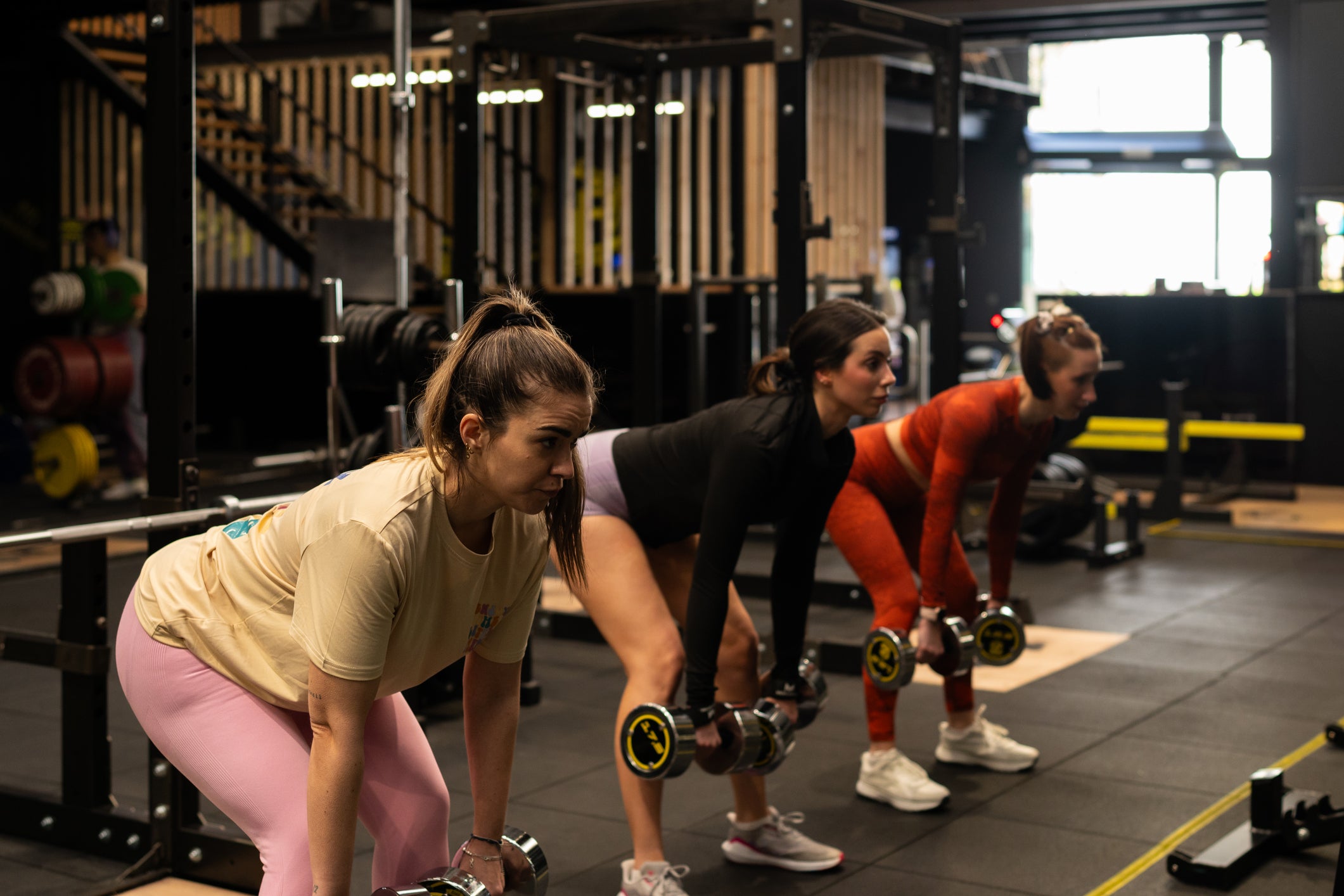
For beginners, Haynes recommends higher-rep sets of each exercise. This might look like two or three sets of 15 repetitions per exercise. “Working with a lighter weight for a higher number of reps is safer and allows you to teach your brain how to coordinate your joints for each lift,” he says.
“People forget that weight training is a skill. When you’re learning a new skill, like kicking a football, you have to do a lot of reps to teach your body how to do it. It’s the same with lifting weights – you have to learn it first by doing lots of easy reps.
“As time passes, you will be able to start increasing the load you are lifting and decreasing the target number of repetitions per set.”
For example, you might graduate to three or four sets of five to 12 repetitions per exercise in your workouts.
When you reach this level of competency, Haynes also recommends mixing up your rep ranges on a semi-regular basis to prevent progress from stalling. “If you’ve been lifting heavy weights at low reps and you’ve plateaued, go and do some high rep work for a while,” he suggests. “If you’re doing really high rep work at low loads and you’re not seeing progress, go and do some heavy work for a while. It’s that simple.”
Read more: The three short weekly workouts that can transform your fitness

Step six: Hit the common denominator behind building muscle
The success of your strength training efforts not only depends on the exercises you do and the frequency you are doing them – it also comes down to the way in which the weights are lifted.
To stimulate muscle growth successfully, the exercises in your workouts need to create a sufficient level of mechanical tension – the force placed on your muscle fibres while lifting weights. This is the common denominator that underpins all training for muscle growth, and the reason why you can’t expect to pack on mass while coasting through your workouts.
Luckily, there is a simple litmus test you can use to check if you are pushing an exercise hard enough.
“An easy way to explain this is, as you’re pushing through your set, there must be an involuntary slowing down of the speed of the lift, even with full effort,” says Haynes. “When you’re doing a biceps curl, if you reach a point where you’re still trying just as hard but you can’t lift the weight as quickly, you’re probably doing a good enough job to stimulate muscle growth.”
However, you should not just grab the heaviest dumbbells you can find. Instead, the weight and number of sets and reps should be just outside your comfort zone, and you should be able to maintain good form throughout your set.
“It shouldn’t scare you,” says Haynes. “You can walk away from a great strength training session having plenty of energy and not limping down the stairs. There will be a little bit of discomfort, but in most cases it actually feels pretty good in your body.”
Read more: The science-backed exercise method that can help fight the effects of ageing

Step seven: Fuel effectively and recover well
Your actions in the gym are what trigger muscle growth, alongside several other positive health and fitness adaptations. But it is during your time outside the gym that these changes actually occur.
Your body requires energy to fuel the muscle-building process, so plenty of quality sleep and a nutrient-dense diet that meets your calorie needs are crucial.
To achieve this, Haynes recommends focusing on four pillars: sleep, hydration, protein intake and eating a colourful diet.
- Eight hours of sleep per night is the gold standard. If you are currently sleeping less than this, increasing your nightly slumber by any margin will likely move the needle in the right direction when it comes to your health
- A colourful diet rich in wholefoods such as fruits, vegetables, nuts, beans, seeds, legumes and pulses ensures a high fibre intake and contributes to improved gut health
- Aiming for at least 35ml of water per kg of body weight each day can improve cognitive function and reduce inflammation
- Eating a protein-rich diet [1.6g-1.8g/kg of bodyweight for active individuals, according to experts I’ve interviewed] provides the building blocks your body needs to repair, maintain and grow muscle, alongside other bodily tissues such as bones, tendons and ligaments

Step eight: Apply progressive overload
At the start of our call, Haynes and I compare our surroundings. He is sitting in a brightly lit office with Hong Kong sunshine pouring through every window; I am in my Bristol kitchen, relying on a ceiling light to subsidise the greyness outside.
“It’s OK, I’m ginger, these conditions are probably a better fit for me,” I joke. “Even gingers can evolve to sunlight,” he laughs. “Your dose tolerance is incredibly low, but you can adapt with slowly increasing exposure.”
This might seem like an odd tangent, but this progressive overload principle applies to most bodily systems, including the process of building muscle.
When you first start lifting weights, completing 10 goblet squats with a 16kg kettlebell might feel tricky, providing sufficient mechanical tension for you to build bigger, stronger legs. But over time, this task will start to feel easier.
The body will only adapt if it recognises a consistent challenge it needs to adapt to, so it is important to make your workouts more difficult over time, in line with your increasing fitness levels.
This can be done by adjusting variables such as your exercise selection, the weight you’re lifting and the number of sets and repetitions you perform per workout. For example, you might swap from a goblet squat to a split squat, switch the 16kg kettlebell for a 20kg one, or perform 12 reps rather than 10 in each set.
As long as you consistently fuel yourself correctly and achieve adequate mechanical tension in each exercise, you will see continued progress. The rate of progression will slow, naturally – the longer you do anything, the harder it becomes to progress. But most people can continue making incremental gains for decades to come.
Join our commenting forum
Join thought-provoking conversations, follow other Independent readers and see their replies
Comments
Bookmark popover
Removed from bookmarks