Renewed calls for Aung San Suu Kyi to be released after she completes 20 years ‘buried alive’ in Myanmar detention
Myanmar’s democracy icon has now spent two decades incarcerated or under house arrest. Shweta Sharma reports on another grim milestone for a country wrecked by brutal military rule and embroiled in a spiralling civil war
Aung San Suu Kyi lived a quiet life in the UK, far removed from Myanmar’s fraught politics, raising two children with her husband. She had no intention of getting into politics even when she returned to her country in 1988 to care for her dying mother. It was only after witnessing the bloody suppression of mass protests by her country’s military rulers that she realised she could not remain on the sidelines.
A year later, in the summer of 1989, she was first arrested by the military government. It was the beginning of a cycle of imprisonments, house arrests and periods of release that would come to define her life.
This week saw Suu Kyi reach a grim milestone – a total of 20 years spent in detention in Myanmar. Her repeated incarcerations, from that first house arrest to her current situation of deep uncertainty, are a testament to the army’s determination to retain control of the country at any cost.
“My mother has spent a cumulative 20 years in military detention for her commitment to a democratic and prosperous Burma,” her son Kim Aris says, using the name for the country that predates the military government’s unilateral decision in 1989 to switch it to Myanmar.
“Today, at 80 years old, she remains in prison, in total isolation, buried alive in a system devoid of transparency and justice.
“Guided by her philosophy of peace and practical steps towards reconciliation, she’s the only figure with the moral authority and popular mandate to bridge the nation’s divides,” Aris tells The Independent. “The military junta must release her as a first step to bringing back peace in Burma.”
The military has seen Suu Kyi, daughter of modern Myanmar’s founding father Aung San, as a threat to its power since she first entered politics.
It was during her first detention that Suu Kyi became a global symbol of peaceful resistance. In 1991, while still under house arrest, she was awarded the Nobel Peace Prize in recognition of her non-violent struggle for democracy and human rights in the Southeast Asian nation.
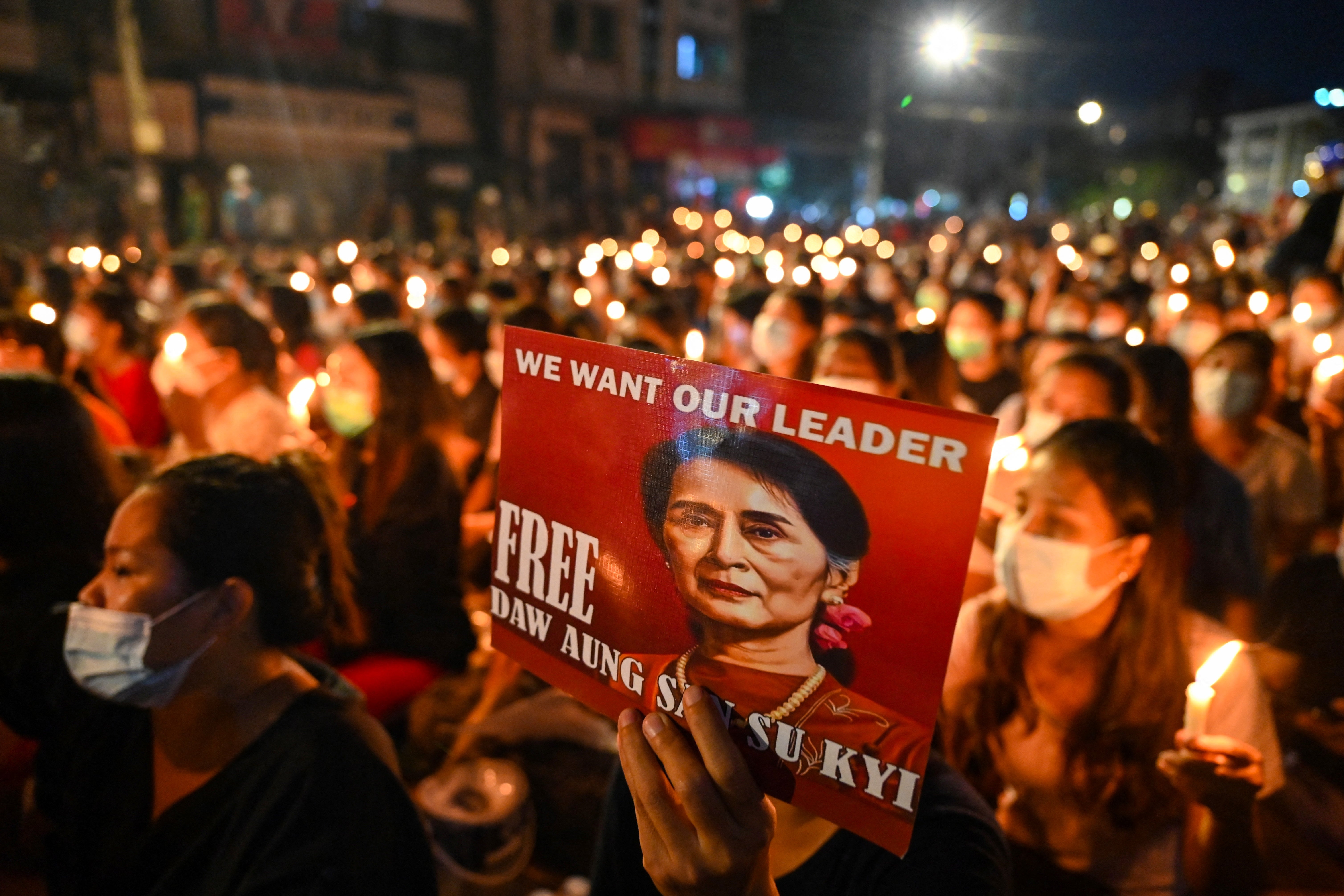
Such was Suu Kyi’s widespread appeal that despite her isolation, her party, the National League for Democracy, won a landslide victory in the 1990 general election – a result the military refused to honour.
Suu Kyi was released from house arrest in 1995, but her movement outside Yangon remained restricted.
She was arrested again in September 2000 after attempting to travel outside Yangon to meet supporters and was held under house arrest for around 20 months.
In May 2003, following an attack at Depayin which saw a pro-military mob ambush her convoy, Suu Kyi spent more than seven years in confinement, including an extended term in 2009 after an American man swam to her lakeside home. She was let out after the 2010 election.
Her most recent detention began in February 2021, when the military overthrew her government in a coup and the country descended into a deadly civil war. She has not been heard from in public since.
Suu Kyi was ousted after her party secured a landslide election victory. The episode, as well as the collapse in international support that emboldened the military to consolidate its power, features in a documentary by The Independent released in late 2024.
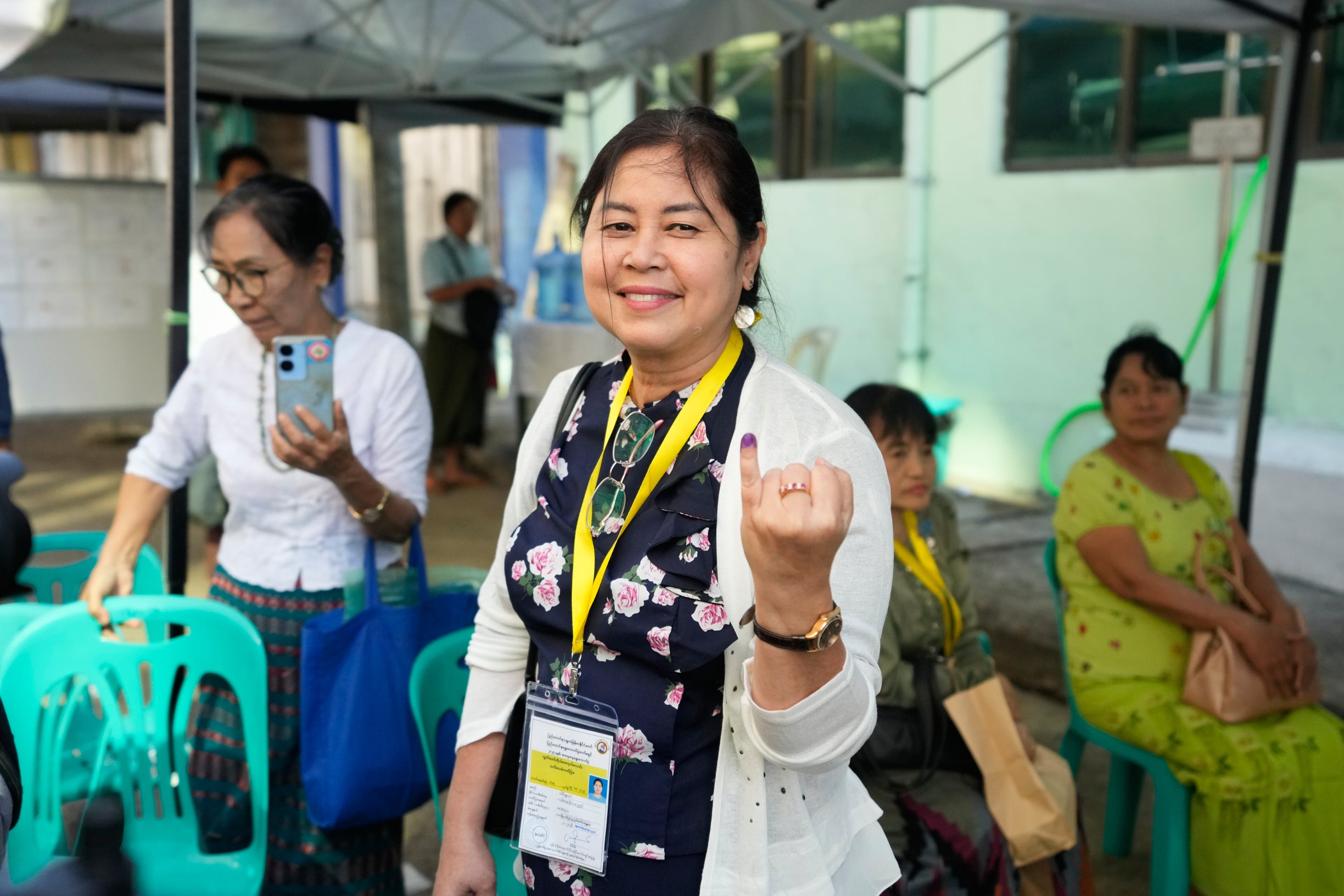
The same generals are now holding elections that analysts say are designed to cement military rule through proxy parties, after purging their only serious rival – Suu Kyi’s party – from the political arena.
In the November 2020 elections, the NLD had secured 82 per cent of the contested seats, comfortably defeating the Union Solidarity and Development Party backed by the military.
A major turning point in Suu Kyi’s political career came in 2017, when Myanmar’s military launched a brutal crackdown against the Rohingya Muslims in Rakhine state.
Her global standing as a human rights defender was severely damaged when she not only failed to condemn the operation – which led to mass killings and displacement of over 700,000 Rohingya – but even defended the military against charges of genocide.
Suu Kyi stood before the International Court of Justice at The Hague in 2019 and argued the allegations against the military presented an “incomplete and misleading factual picture” and instead accused the Arakan Rohingya Salvation Army, an ethnic militia, of triggering what she described as an “internal conflict”.
Six years later, the court convened this week to hear a landmark case brought by the Gambia in 2019, alleging that Myanmar’s military deliberately targeted the minority Muslim community.
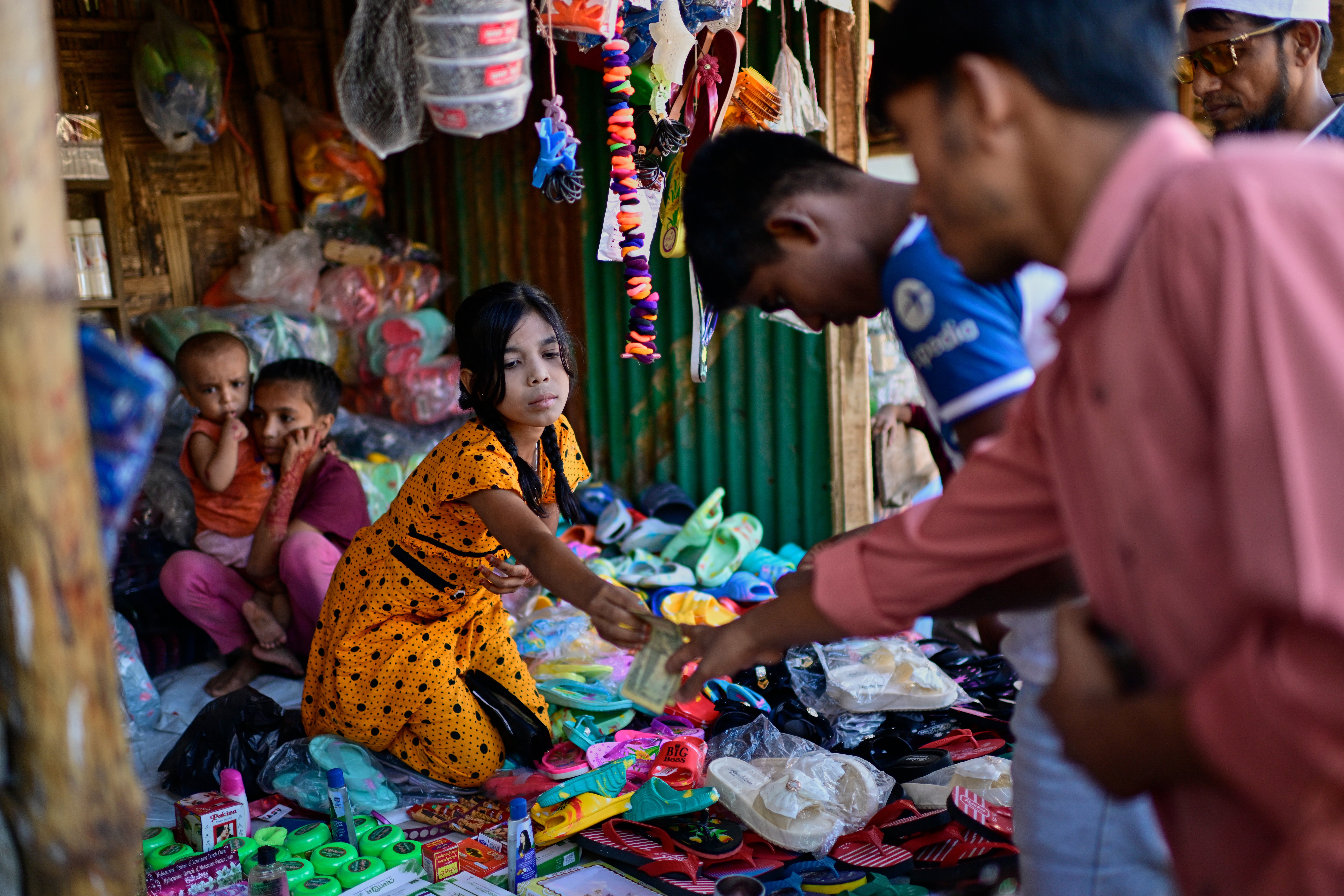
The Independent visited one of the largest Rohingya refugee camps in Cox Bazar, Bangladesh, and heard testimonies of the community’s continuing persecution in Myanmar.
Some spoke of their changing views of Suu Kyi, saying that she was a victim of the military like them.
Detention | Key details |
1989-1995 | First imprisonment following her emergence as leader of the pro-democracy movement; awarded the Nobel Peace Prize in 1991 while still under detention. |
2000–2002 | Rearrested after attempting to travel outside Yangon to meet supporters and held for around 20 months. |
2003–2010 | Detained after her convoy was ambushed by a pro-military mob in Depayin; detention extended in 2009 after an American man swam to her home. |
2021– | Arrested following the military coup that overthrew her government; initially held under house arrest and later transferred to a military prison in Nay Pyi Taw. |
Unlike her previous incarcerations, the situation today is more critical. Almost nothing is known about the state of her health or the conditions in which she is held, though she is thought to be detained in a military prison in the capital Naypyidaw.
“For all I know she could be dead,” Aris said recently.
The ruling junta insists that Suu Kyi is in good health.
“She’s devoted almost 40 years to her country’s struggle for democracy, spending half that time in detention. The military regime has plunged the country into an escalating conflict with dire humanitarian and human rights consequences, for which it must be held accountable. Its sham elections, which are designed solely to legitimise and rebrand the dictatorship, are not the answer,” says Benedict Rogers, senior director at Fortify Rights and author of three books on Myanmar.
“The release of Ms Suu Kyi, all political prisoners, and an end to attacks on civilians are vital first steps if Myanmar is to move forward from this horrific cycle of repression and war.”
Her son previously told The Independent his mother was suffering from a worsening heart condition. “It’s deeply distressing to have heard my mother’s health has taken a turn for the worse. She has had ongoing heart complications, which have undoubtedly been exacerbated by the conditions under which she is being held,” Aris says. “She needs to see, and has asked to see, a cardiologist from outside the prison. I have no way of knowing if this has been granted.”
The National Unity Government, the government-in-exile composed of pro-democracy and anti-junta groups, said the fact that Suu Kyi had spent 20 years in prison was “a profound injustice that we feel with a heavy heart every single day”.
“It’s a deliberate, slow-motion act of cruelty by a terrorist military that fears her influence even from behind bars.”
Issuing a call for global action, the government-in-exile said they didn’t just want concern from the international community but concrete measures to secure her release. “Her release, along with the release of over 20,000 other political prisoners, is a non-negotiable step towards ending this conflict.”
Join our commenting forum
Join thought-provoking conversations, follow other Independent readers and see their replies
Comments
Bookmark popover
Removed from bookmarks