India cancels key trade mission to US over Trump tariffs chaos
Visit by Indian trade delegation was due to begin on Monday but has now been postponed indefinitely after US Supreme Court ruling on Trump’s tariff regime
India has postponed a high-stakes trade mission to the US after the US Supreme Court struck down much of Donald Trump’s tariff regime.
The three-day trip was due to begin on Monday, with Indian and US negotiators aiming to finalise a much-vaunted interim trade agreement between the two countries.
But both sides have agreed to call off the plans after a ruling by the US Supreme Court on Friday that found key elements of former president Donald Trump’s sweeping tariff programme had been improperly imposed under emergency powers.
Officials familiar with the matter have said that the visit to Washington will now be rescheduled to allow both sides to assess the implications of the court’s decision and how it will impact the emerging deal.
“The decision to defer the visit was taken after discussions between officials of the two countries,” the source, speaking under conditions of anonymity, told Reuters. “No new date for the visit has been decided.”
The Independent has contacted India’s trade ministry for comment.
On Friday, Trump said he would impose a new global tariff regime under alternative powers. Initially, he announced a 10 per cent levy, and then on Saturday raised it to 15 per cent.
The Supreme Court ruling has cast doubt over the legal basis for a range of duties introduced during Trump’s second administration and unsettled trade negotiations with other countries.
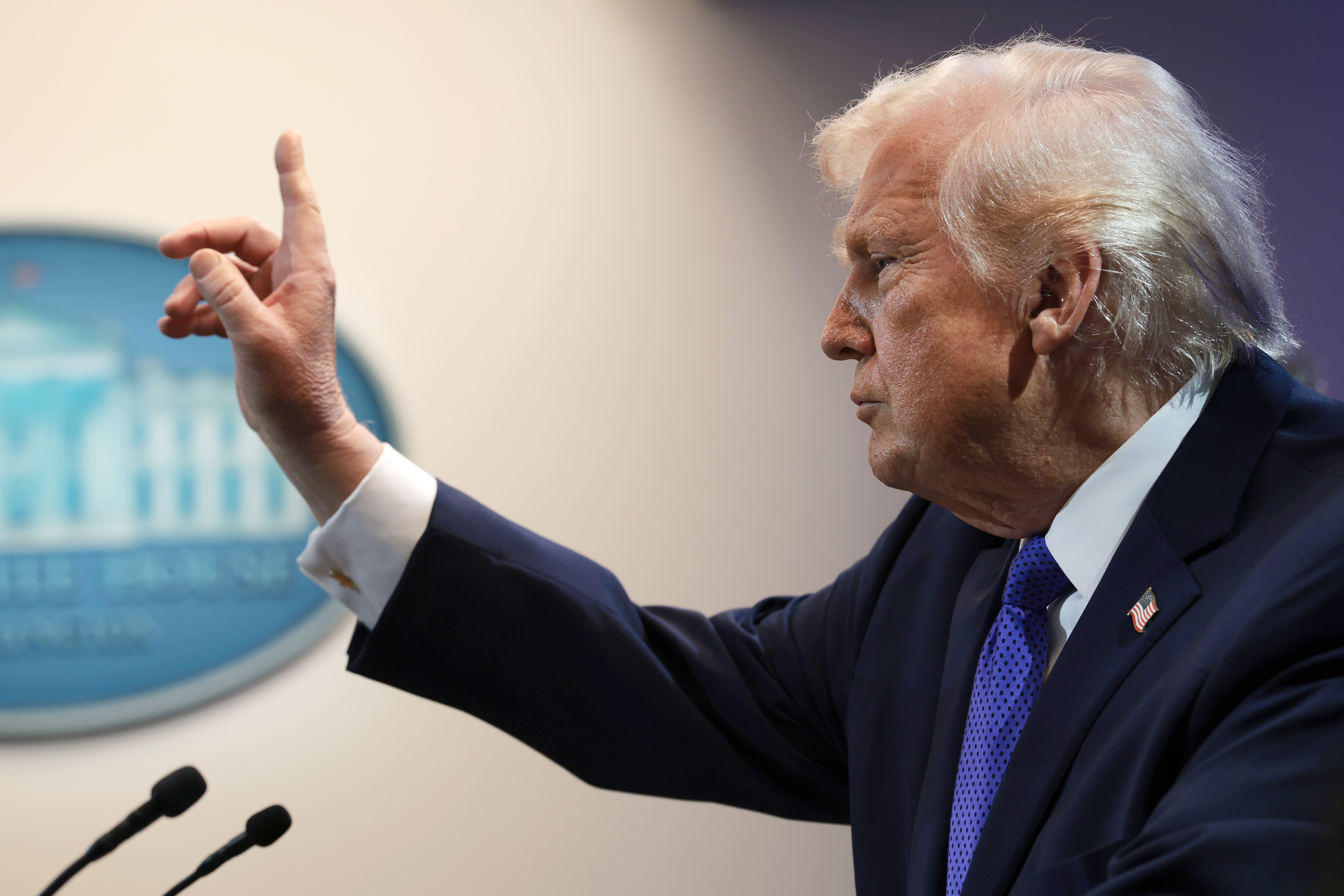
Under the original tariff regime, Indian goods were subject to a 10 per cent levy, which was later raised to 25 per cent. At one stage, a further 25 per cent penalty linked to India’s continued purchases of Russian oil pushed the effective tariff burden on some products as high as 50 per cent.
On 3 February, Trump announced in a social media he had agreed with Narendra Modi on a trade deal that would see American tariffs on India lowered from 25 per cent to 18 per cent.
He also said Mr Modi had agreed India would stop buying Russian oil and, in turn, Washington would lift the punitive 25 per cent levy.
But the lack of proper details on the agreement – and the fact it was supposedly arranged over the phone – led to scepticism over how much had really been achieved. India has made no subsequent public commitment to stop Russian oil purchases, and observers now see the outcome as a preliminary framework rather than a binding trade deal.
While the US Supreme Court judgement will have a global impact, it also comes at a particularly delicate point in trade talks between the Trump administration and China.
Trump’s original tariff programme had imposed duties of up to 25 per cent on about $250bn of Chinese imports, along with 7.5 per cent tariffs on another $110bn of Chinese goods. China retaliated with tariffs of up to 25 per cent on roughly $110bn worth of US goods, targeting agricultural exports such as soybeans, and filed complaints at the World Trade Organization.
Some analysts suggest the ruling could shift the balance in the dispute, with Trump due to travel to China from 31 March to 2 April to meet President Xi Jinping and thrash out a bilateral agreement. But while the decision might appear to strengthen Beijing’s hand, others expect both sides to preserve a delicate truce until then.
“It will give China a moral boost in their negotiations with Trump’s team ahead of the summit, but they are prepared for the scenario that nothing actually changes in reality,” Sun Yun, director of the China program at the Stimson Center, a Washington-based think tank, told the Associated Press.
“In general, I think it will just bring in a new period of high uncertainty in world trade, as everybody tries to figure out what the US tariff policy will be going forward,” Varg Folkman, analyst at the European Policy Centre think tank, told Reuters. “In the end it’s going to look pretty much the same.”
Join our commenting forum
Join thought-provoking conversations, follow other Independent readers and see their replies
Comments
Bookmark popover
Removed from bookmarks