‘She’s the queen of Ireland’: Inside the first ever Marian Keyes TV show
The Irish literary treasure has sold more than 35 million books worldwide and yet it has taken nearly three decades for any of her beloved tales to reach the screen. Annabel Nugent hears from the author and cast about how ‘The Walsh Sisters’ finally came to be

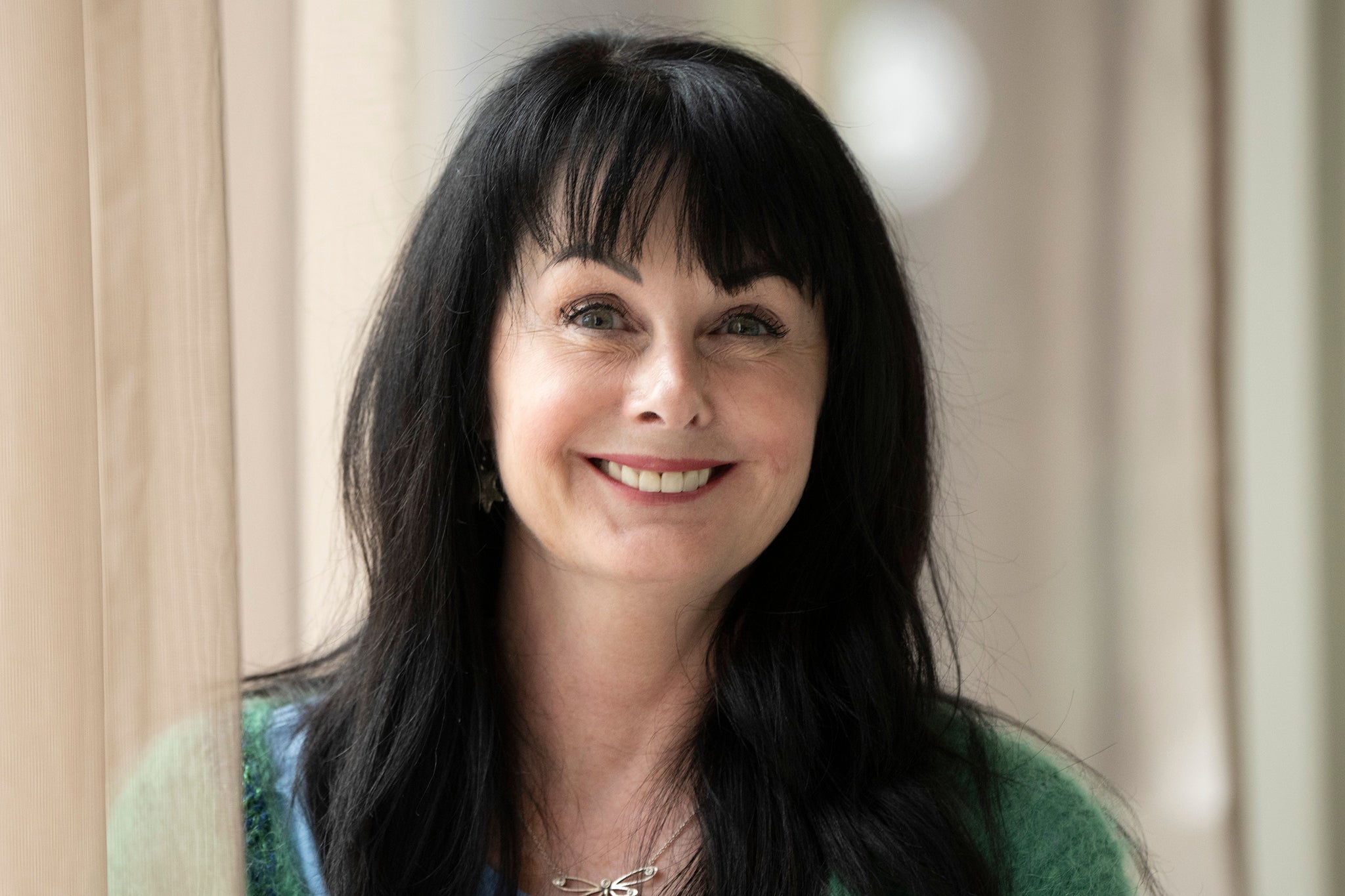
When Marian Keyes introduced the Walsh sisters to the world in 1995, the five siblings arrived bound in a pretty pastel book jacket and marketed under the somewhat patronising label of “women’s fiction”. What readers found instead was a novel full of hard truths about marriage, motherhood, addiction, depression, abuse, and loss – all told with Keyes’ trademark warmth and wit.
Across seven books and three decades, the Walsh sisters and their creator have worked their way into the hearts of millions of readers around the world. The question “Which Walsh sister are you?” has become a sort of Rorschach test of its own in certain circles: there is the adrift Claire, chaotic Rachel, goody two-shoes Maggie, wry Anna, and lovely Helen. Beyond the fab five are, of course, favourites like dozy Daddy Walsh and Mammy Walsh, who never cooks but always keeps the freezer stocked wall-to-wall with Magnum ice creams. Plus, dishy Luke in the too-tight leather trousers.
Now, a new six-part series is bringing these beloved characters to the screen with Derry Girls’ Louisa Harland, alongside Caroline Menton, Danielle Galligan, Mairead Tyers and Stefanie Preissner, taking on the lead roles. It is the first ever Marian Keyes novel to make the leap to telly, if you can believe it. A second one, Grown Ups, is already on the way from Netflix, with Aisling Bea and Adrian Dunbar attached. “My novels have been optioned over and over but nothing has been made for 27 years. I just got used to it,” says Keyes at an early London screening of the series. “My hopes were zero! And then things started happening… very slowly.”
Already out in Ireland, The Walsh Sisters started gathering real pace when Stefanie Preissner (of the hit RTE show Can’t Cope, Won’t Cope) came aboard as the show’s writer alongside Kefi Chadwick (Rivals). Needless to say, it was a big job – and a big responsibility. “Our country is not a monarchy but Marian Keyes is our queen,” jokes Preissner. “We have a portrait of her in our national museum. Her fans are evangelists and I knew if I got this wrong, they would come for me at nighttime.” On top of the writing, Preissner also plays Maggie. How did she do it all? “Antidepressants, painkillers and a childminder!”
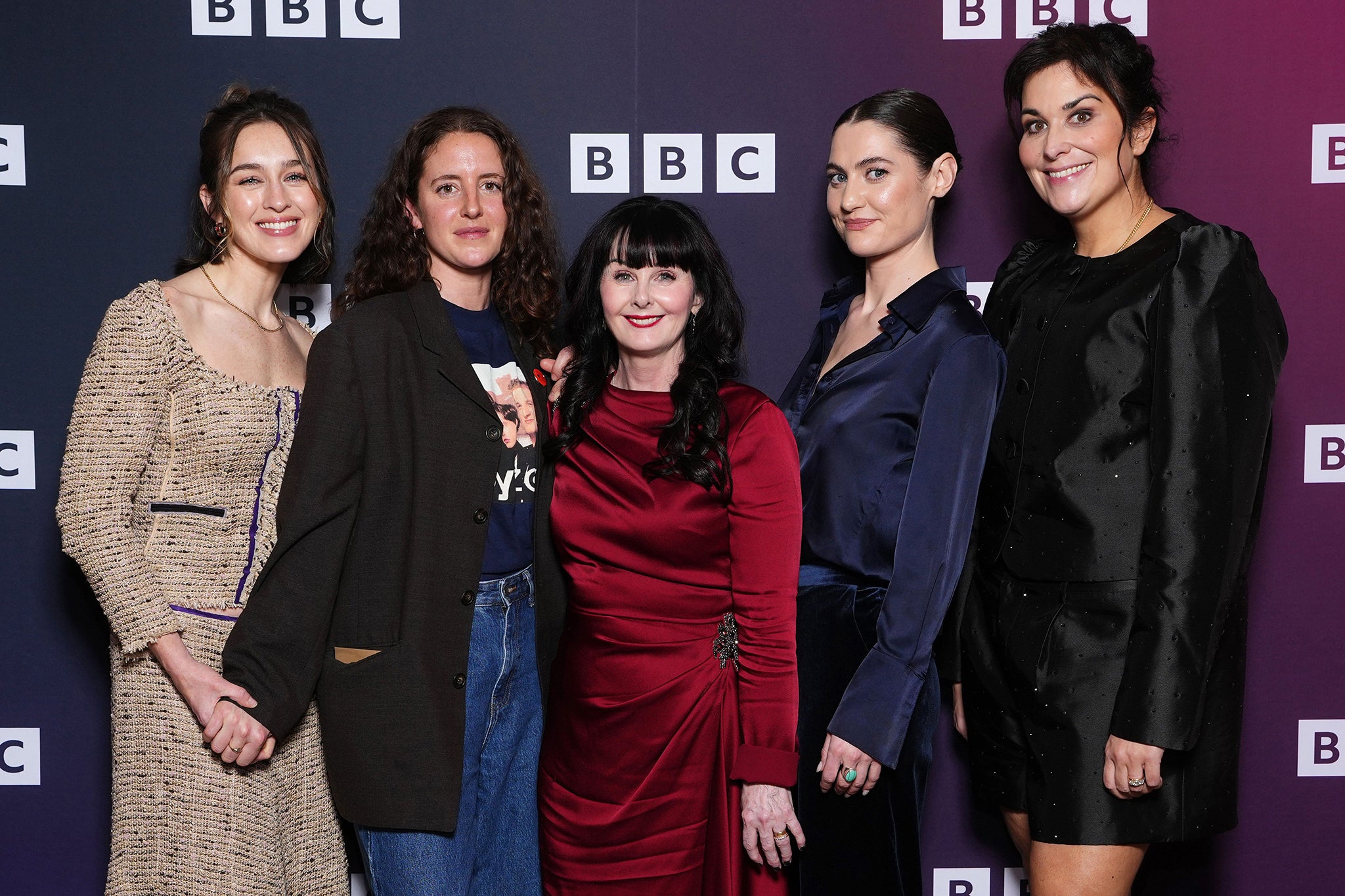
Preissner noticeably shares Keyes’ sense of humour: the kind of self-deprecating candour that fosters an intimate, immediate connection with anyone listening. Both are like that kindly stranger you pour your heart out to in the bathroom of some random bar and never see again. Getting that tone right was essential in appeasing the Keyes acolytes, says Preissner, a group in which she counts herself.
“I needed to capture the sense of what it feels like to read a Marian Keyes book – where you feel so seen and accepted through these characters,” she says. “You’re laughing out loud and then you’re crying on the Tube and you don’t know why – we wanted to capture all of that.” It’s a very Irish sensibility, she and Keyes agree, that happy-sad balance founded on the belief that the best comedy is rooted in despair. “I was very clear to our British producers that [death and addiction] can’t be too sad – Irish people are not allowed to be sad for too long. After a while it’s like, come on! Up you get!”
Feeling seen is part of the appeal of any Marian Keyes book, of which close to 40 million copies have been sold worldwide. The author has a knack for shining a light on your deepest insecurity, most deeply held shame and making you feel OK about it. There is, for example, Maggie’s IVF journey, depicted as gruelling and expensive and lonely. It was important to Preissner, who had undergone treatment and had multiple miscarriages herself, to show how isolating a process it can be. “I think about Gogglebox a lot when writing: what are people on the couch going to be talking about?” she says. “And I think there will be women watching and really relating to Maggie sitting on couches alongside people who don’t know what they’re going through. And that’s what really upsets me.”
Take Claire’s character too, whose experience of being a mother is complicated, controversial even, but by no means singular. She loves her daughter, but she also loves to go out and have fun. In one scene, she lies about having a child to a man she meets. “The dichotomy is handled really well,” says Galligan, who plays her. “She has a really strong, loving relationship with her child but her relationship to motherhood is tenuous and difficult and that’s OK. I think a lot of women have probably felt that in their lives, so to be able to give a voice to that stigma felt important.”
Men tend to bond by doing ‘men things’ like golf and Everton and fixing stuff, but my uncle and his son sat down every Sunday when ‘The Walsh Sisters’ was on in Ireland and watched it together
“The expectations on motherhood and fatherhood are not the same, and it is so unfair and unjust. You know, I’ve said in the past, ‘I just want to be a dad! Why can’t I be a dad?’” says Preissner, who recalls plenty of people in Ireland criticising Claire for her actions as a mother. “But I’m happy to fight that fight. I’ll take anybody on.”
While the books treat the sisters like a revolving door of protagonists, the series zeroes in on Rachel as her addiction to drugs and alcohol spins her life out of control. All the while, she bats it off as the average life of any party-loving twentysomething. Menton’s performance here is visceral and naturalistic, ironically driven by what sounds like a fastidiously academic approach. “She arrived at the audition and it was like she had been studying for a PhD,” says Preissner. “It was a brilliant audition.” After securing the part, Menton went on to meet with psychologists who specialise in addiction, and had the chance to speak with someone who was in treatment in real-time. Her key takeaway? “Don’t ask, ‘Why the addiction?’ Ask, ‘Why the pain?’” she says.
Casting Menton was, Keyes adds, the final piece of “the big jigsaw” they had created with the rest of the actors. “The chemistry was indescribable. You’d swear they had come from the same gene pool,” says the author. It comes through on screen, too, that sense of complete comfort and steadfast love, but also the underhanded jibes and devastating cruelty you’d never dream of inflicting on anyone but your sister.
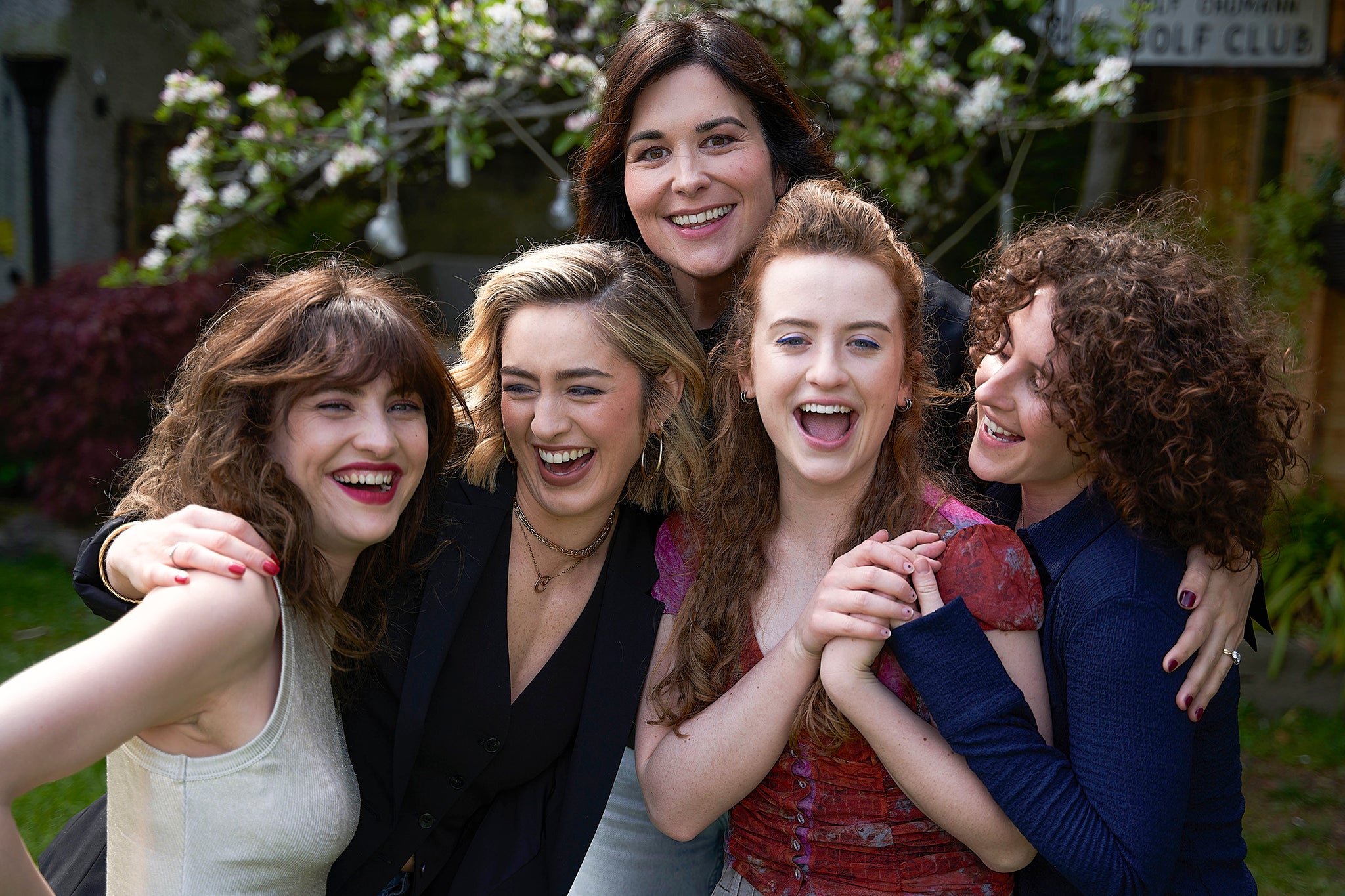
The cast and creators hope the series will go some way in redressing that age-old sexist chatter surrounding Marian Keyes books – that hers are guilty pleasures meant solely for the beach and the airport. It’s a process that has already started, in fact. “Men tend to bond by doing ‘men things’ like golf and Everton and fixing stuff, but my uncle and his son sat down every Sunday when The Walsh Sisters was on in Ireland and watched it together,” says Galligan. “It was their father-son bonding activity of the week. And I love the journey that these books have taken from being ‘fluff’ to being the thing that my uncle Michael and little cousin Michael Jr use to bond over.”
As for Keyes, she is delighted with this first adaptation of her work. “I cried a phenomenal amount and it was this cleansing crying. It was like something left me and became something else,” she says. “And that feeling had nothing to do with me – this was Stephanie’s version – but also at the same time, it had a lot to do with me.” It’s no small feat making Marian Keyes, patron saint of the cathartic cry, tear up herself. “I can die happy,” says Preissner. “Marian Keyes liked it: put that on my grave.”
All episodes of ‘The Walsh Sisters’ will be available on BBC iPlayer on 21 February, and BBC One will air the series weekly starting 9.15pm the same evening
Join our commenting forum
Join thought-provoking conversations, follow other Independent readers and see their replies
Comments
Bookmark popover
Removed from bookmarks