Dracula review – Cynthia Erivo is run ragged in overwrought one-woman show
The ‘Wicked’ star does her best but her vocal power and charisma are lost amid tech-heavy staging
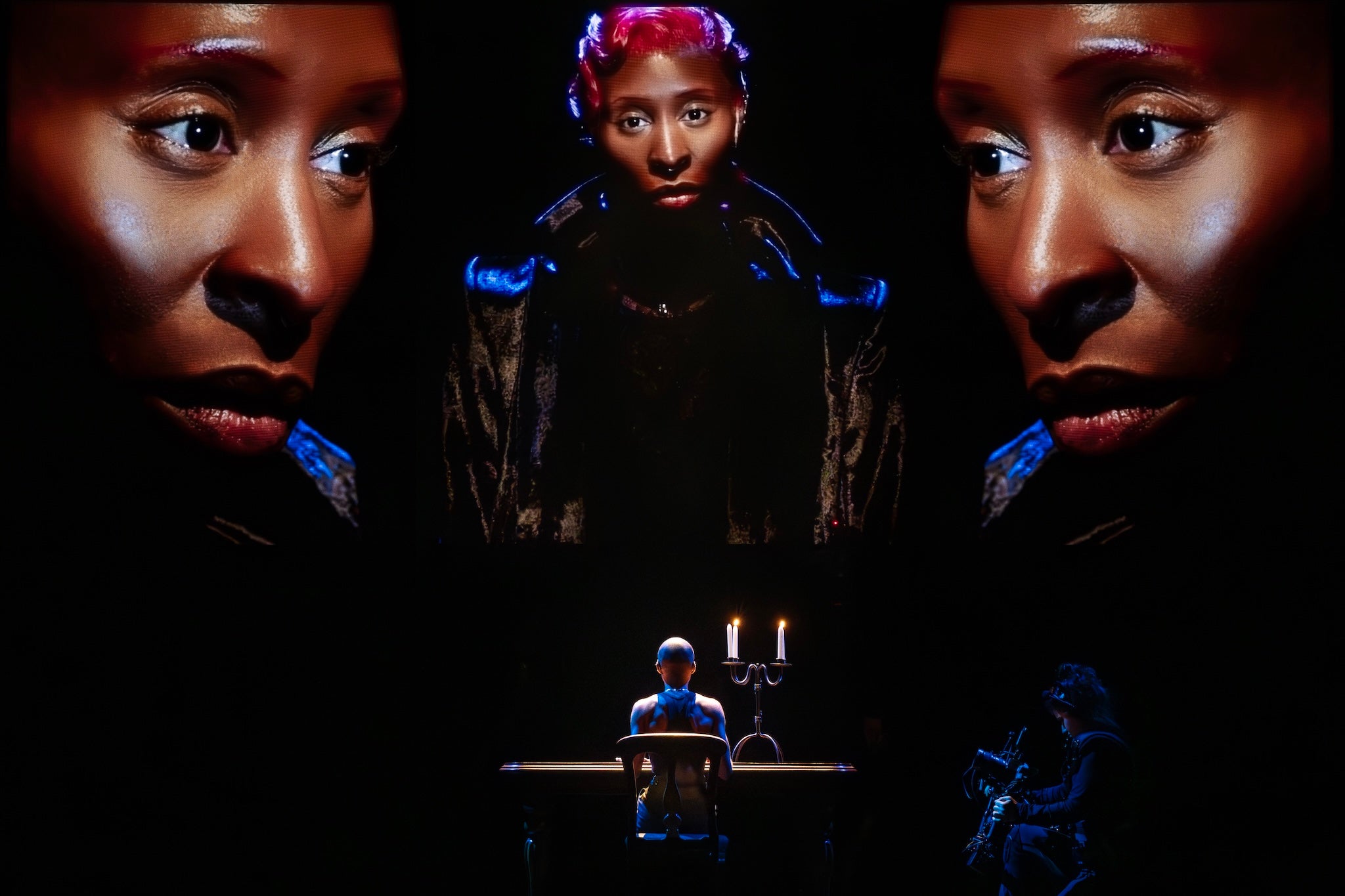
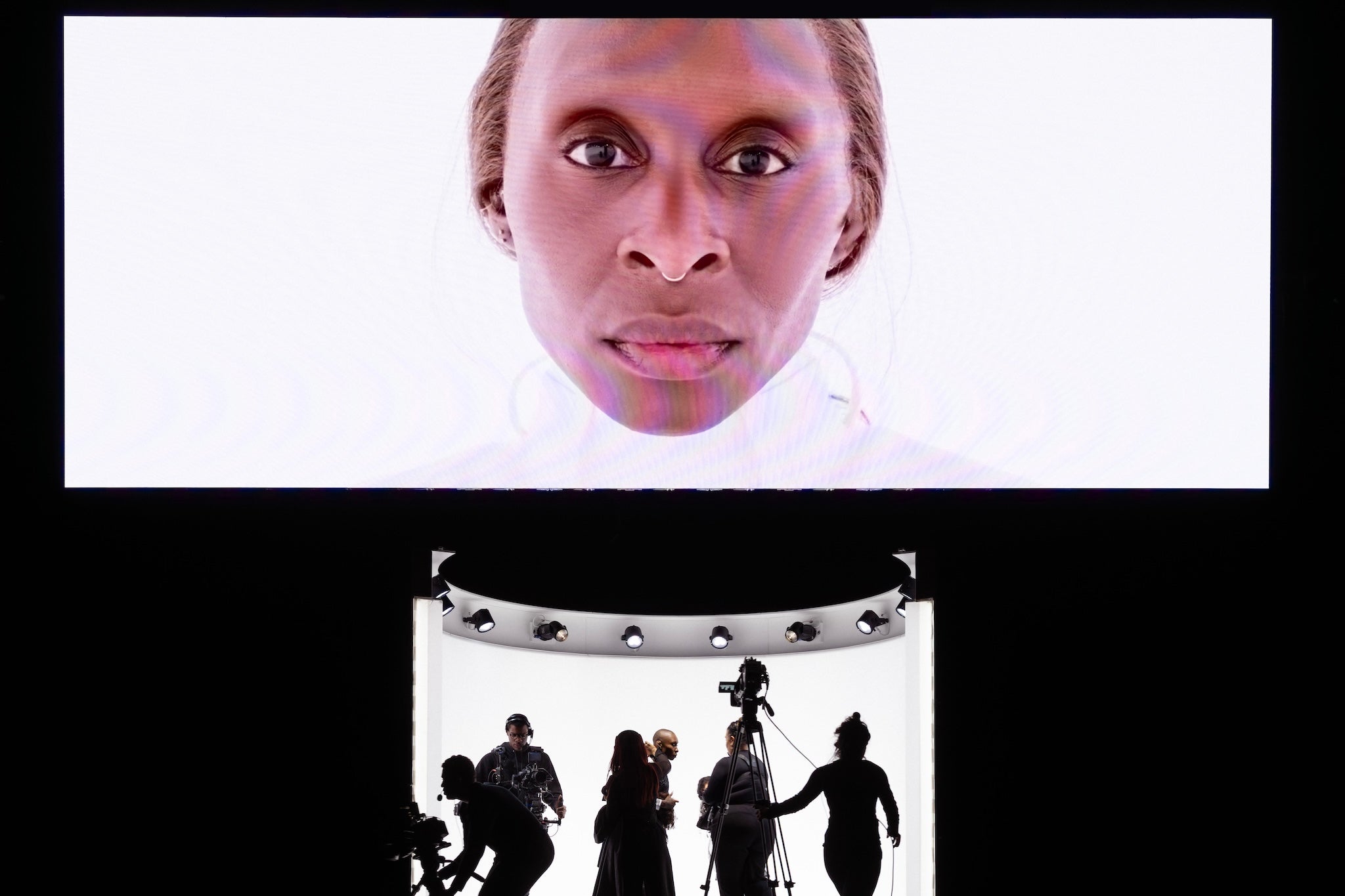
Victorian author Bram Stoker penned his chilling masterwork Dracula in the gaps between gruelling shifts working at the West End’s Lyceum Theatre – its story was inspired by his experiences toiling for a boss he worshipped, but was metaphorically (if not literally) sapping his lifeblood. There’s probably not much he’d recognise about this bracingly 21st-century take on his tale, staged just a few streets away at the Noël Coward Theatre. But perhaps Stoker would have some respect for how hard its star Cynthia Erivo (Wicked) is working, as she attempts to embody all 23 characters in this tale, while hounded by film cameras, corralled by stage crew and oppressed by blinding white lights.
Director Kip Williams has brought out the same cinematic toolbox he used for sumptuous, Sarah Snook-starring 2024 hit The Picture of Dorian Gray. Alas, this time it feels effortful rather than fluent – and Erivo seems too stressed to offer more than the odd glimpse of Dracula’s coolly gothic allure.
Watching this take on Dracula is an odd experience, even if you’re used to avant-garde theatre’s love affair with screens. A huge, cinema-style display hangs over the stage, showing footage that’s being shot on the fly by technicians scurrying around below. A lot of the audience will have been lured by the prospect of seeing Erivo in the flesh. They’re likely to be disappointed. Weirdly, she’s often barely visible as stagehands change her wigs, or camera operatives wheel round her to get a close-up on her worried face.
-Noah-Mullins-(_the-Balladeer)-Jenna-Russell-(Maureen-Fry)-Tris.jpeg?quality=75&width=230&crop=3%3A2%2Csmart&auto=webp)
Instead, Williams directs us to look at the big screen, where she interacts with pre-filmed versions of herself decked out as the other roles in the story: truth-seeking lawyer Jonathan Harker, his brave wife Mina, the troubled Lucy, and ludicrously wigged vampire expert Van Helsing. We open in the dimly-lit gloom of Dracula’s castle, where Harker finds a suave monster sleeping in the earth of his ancestral castle. Then, Williams transports us to the dazzling brightness of the Whitby seaside, where Mina tries to understand her friend Mina’s sudden sickness and strange wanderings.
Williams’ methodology in Dorian Gray and its follow-up The Maids was all about creating beautiful, treacherous surfaces that show us the dangers of an image-obsessed society. There’s less of an obvious thematic fit between story and approach here. Instead, it feels like Williams is mainly interested in excavating the queer metaphor encoded in Stoker’s tale. He emphasises how characters are irresistibly drawn to Dracula, even though he’ll destroy them – just as Stoker (widely believed to be a closeted gay or bisexual man) was lured into intense, hero-worshipping relationships with men in the homophobic London he lived in.
It's refreshing to see Erivo get to own her queerness on stage, too, licking her lips lasciviously as a lace-decked Lucy who’s in sexual thrall to an androgynous Dracula – or strutting confidently in a masculine vest with silver chains (a welcome escape from her feminine get-ups in Wicked). She unleashes her ethereal voice to haunting, vulpine effect in the final scenes, where she finally gets to embody Dracula’s power on a bare stage, unobscured by tech and crowds.
It’s a glimpse of how much better this show could be if it called on Erivo’s formidable vocal power and charisma, instead of testing her memory. Williams has taken a completist approach to Dracula, cramming in all the novel’s twists and turns even when they don’t add much to the experience. Erivo’s delivery is often halting (in early performances, she was rumoured to have used an autocue). And it’s understandable, when she’s forced to plough her way through Stoker's long narrations and dash from mark to mark, barely pausing for breath.
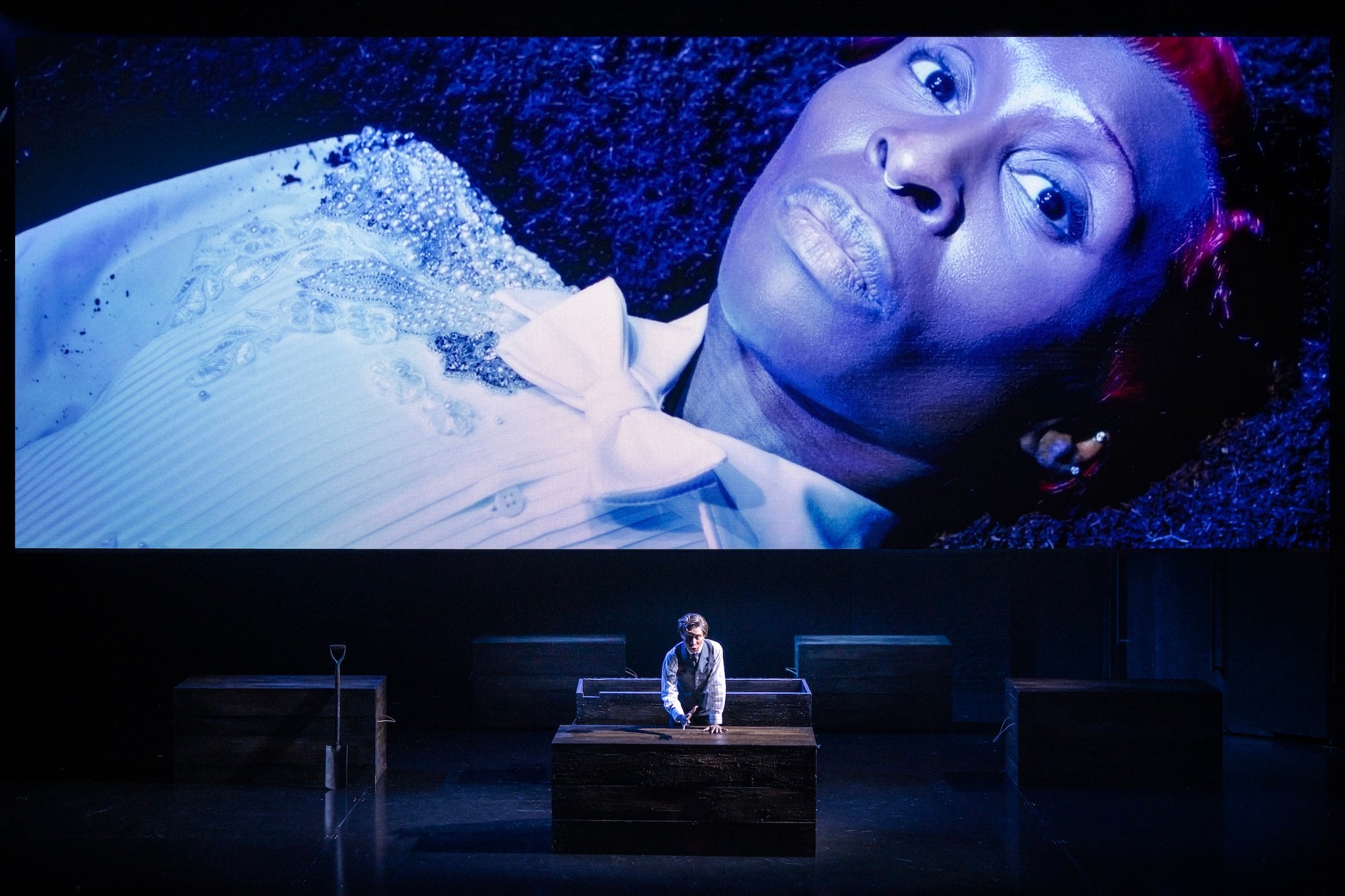
A solo show should be a chance for an actor to show an audience what they can do – and who they are. Williams doesn’t always let Erivo do that. Instead, he subjects her to the theatrical equivalent of the beep test (the terror of school PE lessons), in service of an overly elaborate production that’s not satisfying either as a play or as a film. But there’s a lethal potency to the moments where she does make this Dracula her own: a Nigerian-accented, androgynous monster in a blood-red wig who knows that it’s when people love that they’re at their most vulnerable.
‘Dracula’ is at the Noël Coward Theatre in London until 30 May
Join our commenting forum
Join thought-provoking conversations, follow other Independent readers and see their replies
Comments
Bookmark popover
Removed from bookmarks