I’m Sorry, Prime Minister, review: The Yes Minister universe has finally lost the plot
Johnathan Lynn’s trilogy of sitcom-to-stage adaptations culminates in a slow, implausible satire of modern politics and the age of ‘woke’


“We’re in the dustbin of history,” says retired civil servant Sir Humphrey (Clive Francis), bitterly mourning the loss of his hundreds of minions and innumerable paths of political influence. Former prime minister Jim Hacker (Griff Rhys Jones) doesn’t have time to agree – he’s waddling hurriedly to the bathroom before everything really goes to pot. This is the messy world of I’m Sorry, Prime Minister, the final instalment in a trilogy of Yes Minister screen-to-stage adaptations, which vividly captures what it feels like to lose the power you spent your whole life chasing. It’s undeniably poignant. But ultimately, its directionless satire of woke politics doesn’t just lose the plot – it forgets it was meant to be looking for one.
I’m Sorry, staged at the Apollo, is the handiwork of the original series writer Jonathan Lynn (his co-author Antony Jay has since passed away), who shifts the action from the rat-ridden labyrinths of Westminster to the fresher air of Oxford. Like many a political titan before him, Hacker has bought himself a comfortable retirement as master of a college. But the students don’t find his man-of-the-people bluntness bracing. They find it repellent, and they want him gone. Sophie (Stephanie Levi-John) has the unenviable job of representing everything Hacker dislikes and misunderstands: she’s a Black lesbian working-class English graduate who reckons that statues of Cecil Rhodes should be torn down. And even worse, she’s his care worker, so she has to wash his greying underpants too.
Yes Minister the sitcom prided itself on not taking political sides, but in the programme note, Lynn admits ruefully that it was Thatcher’s favourite show. And even though this play does make Sophie’s perspectives naive but broadly reasonable, it’s impossible to give them a fair hearing when the very mention of trigger warnings is enough to get the audience guffawing. At least it’s hard to be offended by Hacker’s seemingly ghastly views when they’re so clearly just laziness and opportunism. “Is that really what you think?” asks incredulous college legal bod Sir David (William Chubb), quizzing him on his idly colonialist take on India. “It depends who I’m talking to,” Hacker admits. Rhys Jones captures all the harrumphing self-importance of a man who’s held together by charm and establishment approval, not principles. But it’s Francis who really gets to showboat as Sir Humphrey, a man who’s left the civil service without it ever leaving him. He delights the audience by rattling off fluent masterclasses in jargon, or by clambering messily over a sofa in search of a briefcase that turns out to contain the wrong kind of briefs.
If this were TV, you’d be sure that Sir Humphrey had some kind of ingenious plan to save Hacker from his enraged adversaries. Unfortunately, this two-hour show has less plot than your average 30-minute episode. The first half feels like an elaborate, fiddly setup for something that’s taking far too long to happen. Then, the second half seems to completely abandon the idea of knocking over its dominoes – settling instead for a daytime telly chat show feel where the characters ask each other softball questions about their views on various political issues.
There’s a hint of welcome acerbity when Sir Humphrey calls the France-loving Hacker out for semi-accidentally triggering Brexit – this political opportunist couldn’t resist stirring up the masses by frothing against the threat of the EU renaming the British sausage “emulsified high-fat offal tube”. There’s a truth, too, in Lynn’s explorations of the new, gloves-off political landscape, where no indiscreet aside is truly private, and politeness is no longer an effective weapon.
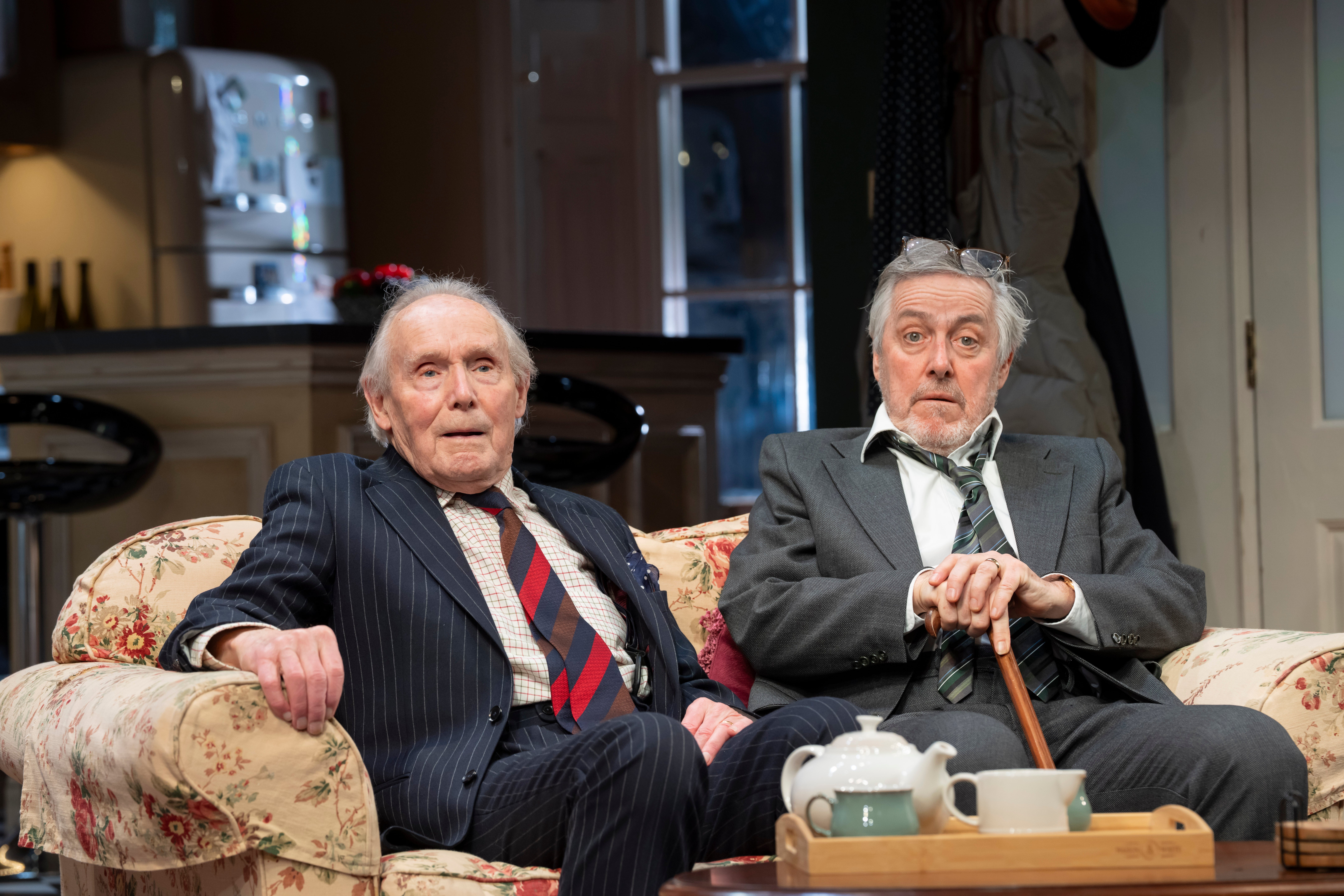
Ultimately, though, chatting about these issues isn’t half as exciting as seeing them actually play out would have been. Lynn’s play feels trapped and claustrophobic in its single-room setting, with Lee Newby’s set design stuffed with framed pictures and boxes of books – all the oppressive clutter of Hacker’s fading prestige. Its ending is both cosy and utterly implausible: like an electric coal fire, it emits a hollow kind of warmth.
‘I’m Sorry, Prime Minister’ is at London’s Apollo Theatre until 9 May
Join our commenting forum
Join thought-provoking conversations, follow other Independent readers and see their replies
Comments
Bookmark popover
Removed from bookmarks