Books of the Month: What to read this January, including the final book from Julian Barnes
Martin Chilton shares his reading highlights for the beginning of 2026


Russia’s machinations are likely to fill the news in 2026 and the country’s approach to foreign and military policies “confounds and worries Western nations”, according to journalist Kenneth R Rosen in his troubling, revealing book Polar War: Submarines, Spies and the Struggle for Power in a Melting Arctic (Profile Books). Rosen details how the 830-mile border separating Russia from Finland will be a key tension point. Putin’s government has, according to Polar War, forced around 1,300 migrants a year into Finland “to provoke disruption”. Rosen adds that Finland has built 50,500 bomb shelters to shelter its population, including 5,000 in the capital, Helsinki, calling it “a veritable underground city in its own right”.
A dismal, unflattering portrait of the hidden side of British life is contained in the details of Eloise Moss’s well-researched The Secret Life of the Hotel: Sex, Crime and Protest in British Guesthouses Since 1981 (Bloomsbury Academic). Racism was common in the early 20th century. Moss details how even noted Black actor and singer Paul Robeson was refused entry to the famous Savoy Hotel in 1929. Our hotels were also perilous places for chambermaids. As well as being at huge risk of sexual assault, working conditions for female domestic staff were appalling. Although hotels were often sites for adulterous assignations, they were less welcoming to LGBTQ customers. As late as 1976, the English Tourist Board refused to include a hotel near Littlehampton in its guidebook because it “welcomed homosexuals with open arms”. The Secret Life of the Hotel is an eye-opening publication.
January is normally a strong month for fiction and among the releases I would highly recommend are Camille Bordas’s imaginative, wry short story collection One Sun Only (Serpent’s Tail); poet Neil Rollinson’s beautifully written, dark debut novel The Dead Don’t Bleed (Vintage); Daniyal Mueenuddin’s moving This is Where the Serpent Lives (Bloomsbury), which is set in Pakistan; and Rob Doyle’s dazzling and inventive Cameo (Weidenfeld & Nicolson), a deft satire about literary ambition.



The choices for biography, novel and non-fiction book of the month are reviewed in full below.
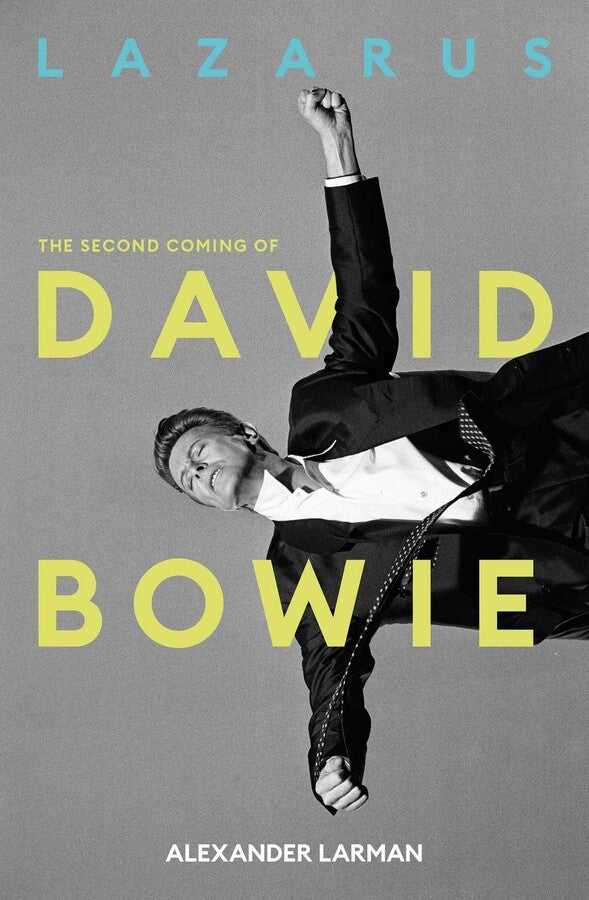
Biography of the Month: Lazarus: The Second Coming of David Bowie by Alexander Larman
★★★★☆
There is a flurry of books about David Bowie coming out early this year to mark the 10th anniversary of the musician’s death at 69 in January 2016. Although writer and historian Alexander Larman is clearly a Bowie devotee – he calls him “the greatest British musician of the postwar era” – his study of late-career Bowie is judicious, sharp and balanced.
Lazarus: The Second Coming of David Bowie covers the 12 albums from 1989’s Tin Machine to 2016’s Blackstar finale. Larman describes Tin Machine as being, in parts, “an ugly, hectoring noise” and dismisses 1997’s Earthling as “in places, all but unlistenable”. There were triumphs in this period, too, including the underrated The Buddha of Suburbia album for the BBC television series of the same name. The story of how he collaborated with playwright Hanif Kureishi on that soundtrack is engagingly told.
The book also covers Bowie’s connection with author William Boyd, who provides some astute insights into the Bowie circus. The singer would never tell the writer his address – instead instructing him to get in touch by writing to an address in Geneva and labelling letters to a “Mr Schmitt”.
Larman pieces together an intriguing portrait of a musician who could be quixotic, cynical, kind and cruel – sometimes to the same person. Bowie also had a sharp tongue (he once said “I’m bemused by the whole Robbie Williams aspect of British pop. It all looks like cruise ship entertainment”) and there are amusing stories about his painful encounters with Lucien Freud, Morrissey, Terry Wogan and Andy Warhol. Bowie was an unreliable narrator of his own life (and skilled at manipulating interviewers) and his guitarist Eric Schermerhorn stated bluntly that Bowie could sometimes be a “sh*tty, p*ssy little asshole”. However, the same bandmate also told Larman about the star’s remarkable kindness in securing work for him with Chrissie Hynde and Iggy Pop.
Larman offers an intriguing account of Bowie’s uneven screen career. Although Bowie shone in movies such as The Man Who Fell to Earth and Merry Christmas, Mr Lawrence, Hollywood star Andy Serkis said the singer “felt like he was slightly an imposter” when acting. Bowie was witty about his own flops, too, remarking of his role as a Prussian gigolo in a David Hemmings film that it was “my 32 Elvis Presley movies contained in one”. Another surprising titbit is that Bowie and Mick Jagger were interested in partnering up for a film that was eventually turned into Dirty Rotten Scoundrels, starring Michael Caine and Steve Martin.
Lazarus is an entertaining, enlightening glimpse into the strange world of David Bowie, a boy from Brixton who became a global phenomenon. I ended the book with respect for Bowie’s exacting standards about his craft, and despite his flaws I also came away feeling a measure of warmth towards a superstar whose simple backstage rider was a ham baguette.
‘Lazarus: The Second Coming of David Bowie’ by Alexander Larman is published by New Modern on 1 January, £25
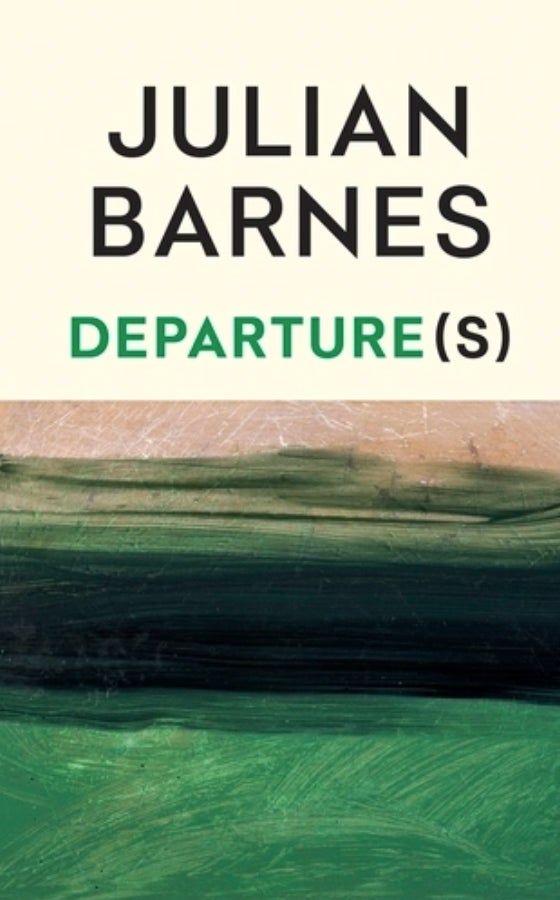
Non-Fiction book of the Month: Departure(s) by Julian Barnes
★★★★☆
Departure(s), which comes out three days after Julian Barnes turns 80, will be the final book from an author with a glittering back catalogue.
The vagaries and deceits of memory are a major theme of a moving, engaging book from an author who admits that he is “sure of fewer things nowadays”. He believes that when it comes to writing there is a lot to be said for cutting to the chase, and this book is only 157 enriching pages long.
Departure(s) deals with the author’s own failing body through wry and insightful anecdotes and reflections. It covers his own experiences of navigating Covid in the midst of a blood cancer diagnosis. It’s possible I have more in common with his “gloomy old sod” personality than younger readers, but I did laugh aloud at his admission that when lockdown started he bought a 30-DVD box set of Ingmar Bergman films. Some of Barnes’s friends thought this weird, if not actively morbid, he admits.
Amid personal ruminations about life coming to an end and the utter indifference of the universe, Barnes tells the fictional/possibly true story of a couple he knew named Stephen and Jean who fall in love when they are young – and again when they are old. Barnes was apparently central to their two periods together and his delicate, humorous narrative explores the effect of time on love, the consistency of emotional hurt and the mischievous nature of recollection.
Barnes states that novelists “want to entertain, to reveal truth, to move, to provoke reverie” – and Departure(s) certainly does all that. It’s a rather lovely swansong.
‘Departure(s)’ by Julian Barnes is published by Jonathan Cape on 22 January, £18.99
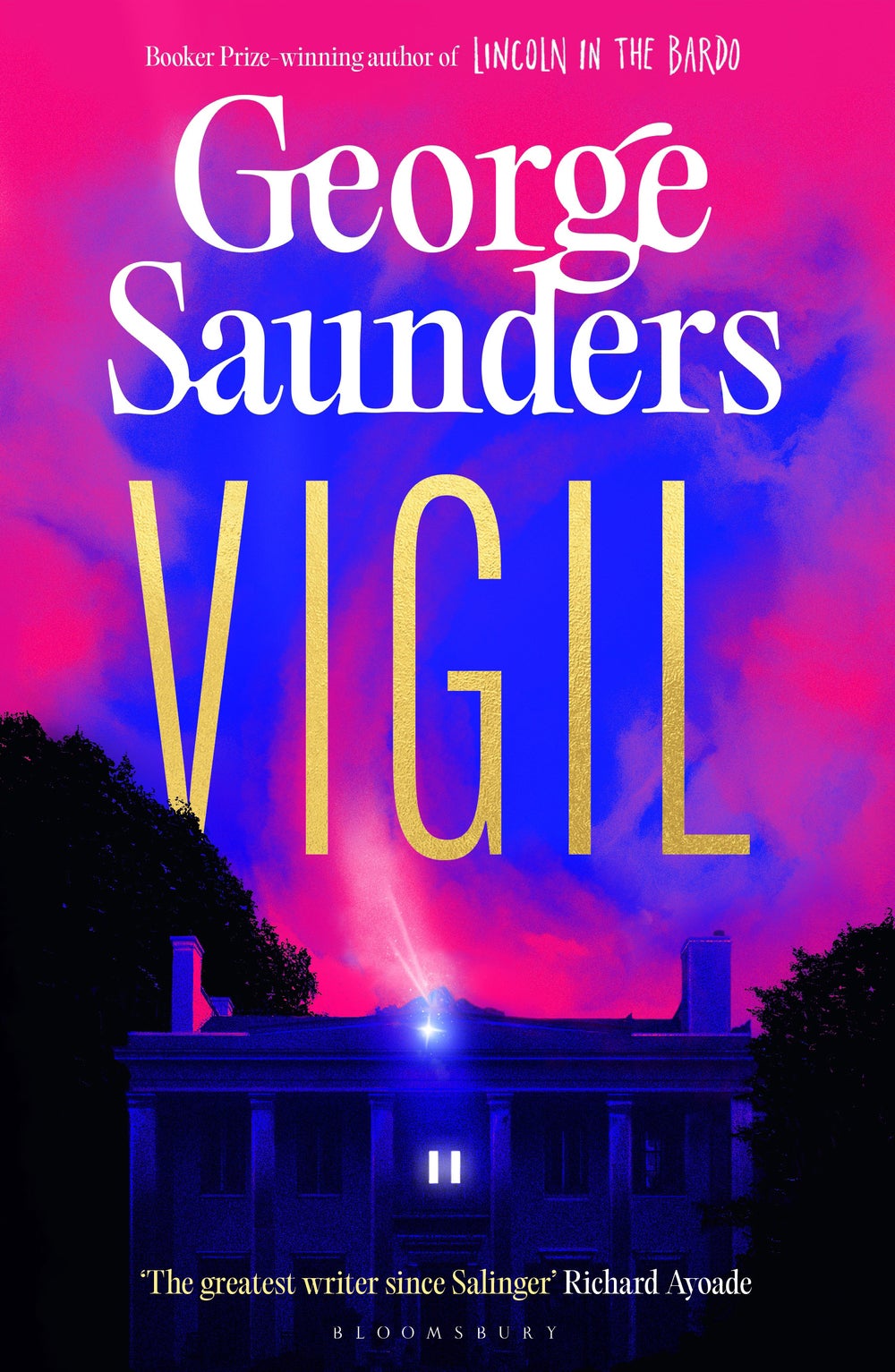
Novel of the Month: Vigil by George Saunders
★★★★☆
George Saunders’ new novel Vigil opens with powerful oil baron KJ Boone on his deathbed in one of his many mansions. We get a measure of his colossal ego through the items ghost narrator Jill “Doll” Blaine spots: suits of armour, expensive, gilt-framed paintings and photographs of Boone with the rich and powerful. There is even one image on the table of him in the Rose Garden of the White House (presumably before Donald Trump had the lawn removed and replaced with stone tiles to mirror his Mar-a-Lago estate).
Over the course of one evening, it is Jill’s task to help Boone make the crossing to the spirit realm – something she has achieved 343 times previously with other terminally ill people and always with the expectation that her charge will find peace or reckoning with their misdeeds. But when she deals with Boone – and has access to his thoughts – she begins to hate this misogynistic, self-centred, boorish man.
Saunders wrote brilliantly about death and the spirit realm in Lincoln in the Bardo. Vigil, while posing thought-provoking questions about guilt, justice, hypocrisy and salvation, moves into even more anarchic and funny territory than that 2017 Booker-winning masterpiece with this new novel’s unhinged spirits and pitiful ghosts. There are amusing scenes involving Boone’s family – his deluded daughter thanks the Lord “for the gift of this man” – as the novel carefully dissects an example of a modern success story with such a “limited capacity for self-examination”.
As Boone’s immoral behaviour is laid bare, Saunders creates a meditation on the manipulative nature of modern language (among the fake energy think tanks the oil magnate has set up to blur the truth about climate damage was the deliberately wholesome-sounding Healthy Earth Alliance) and the sort of words the money-making ultra-wealthy use to demean their detractors (“panty twisters”, “doom sobbers” and “libdopes”, for example).
Although narrator Jill’s own story is striking – she was murdered at a young age by a bomb intended for her husband sent by a killer who lives into old age and “rationalises” his crime – the book’s main focus is Boone’s end-of-life experience. He knows the extent of his crimes and is not being shocked or ashamed by any of them. He is, after all, “a bully, a ruiner, an unrepentant world-wrecker”.
Although the novel’s subject is a tough one to contemplate, Saunders has his own fun with the final grim hours of Boone, who hates the fact that he is in diapers and being treated by a foreign carer he derides as a “chubby bimbo, a squat incompetent”. He still believes he is going home to “his dear God”. Saunders has other things in mind, though.
I enjoyed this irreverent, sly novel, which resonates deeply in our fractious, selfish age. In Saunders’ biting phrase, Boone ends up as just “an ugly old conglomeration of flesh”, rather like the real orange abomination who now hobbles over a certain paved rose garden.
Ultimately, Saunders leaves us to consider for ourselves whether to hope that our day of reckoning truly comes.
‘Vigil’ by George Saunders is published by Bloomsbury on 27 January, £18.99
Join our commenting forum
Join thought-provoking conversations, follow other Independent readers and see their replies
Comments
Bookmark popover
Removed from bookmarks