Rare self-portrait by Artemisia Gentileschi as ‘one of history’s most courageous women’ up for auction
Gentileschi’s work and life have become a greater source of fascination in recent years

A rare self-portrait by the Italian Old Master painter Artemisia Gentileschi, completed when she was just 20 years old, will be auctioned next month and could fetch up to $3.5m (£2.6m).
One of the most notable figures in the history of art, Gentileschi’s life has been the subject of as much fascination as her work, as she rose to fame across Europe in the 17th century at a time when few women artists were formally recognised.
Trained in Rome with her father, the painter Orazio Gentileschi, she lived a secluded life while rapidly developing her talent and skills, working contemporaneously with Caravaggio.
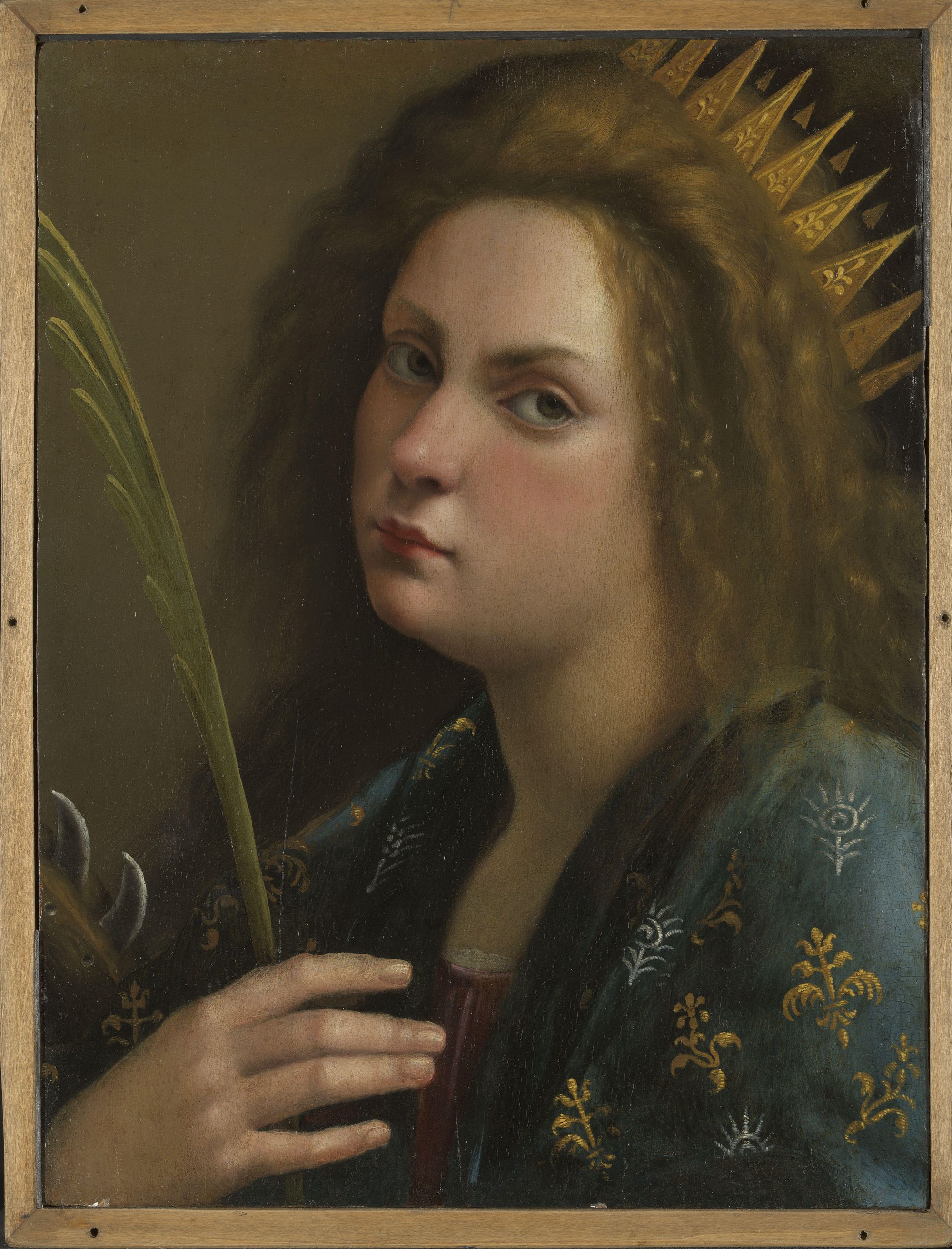
In the self-portrait being auctioned by Christie’s in February, she represents herself as the fourth-century martyr saint Catherine of Alexandria – a depiction she would repeat in another painting a year or two later, which currently hangs in the National Gallery in London.
In both, she can be seen holding a symbol of martyrdom, the palm frond, and wearing a crown, pointing to Catherine’s royal birth.
Recounted in Jacobus de Voragine’s collection of 153 hagiographies, The Golden Legend – compiled around 1259 – Catherine’s story goes that she successfully defended her faith to more than 50 esteemed philosophers summoned by the Roman emperor Maxentius, and converted them all.
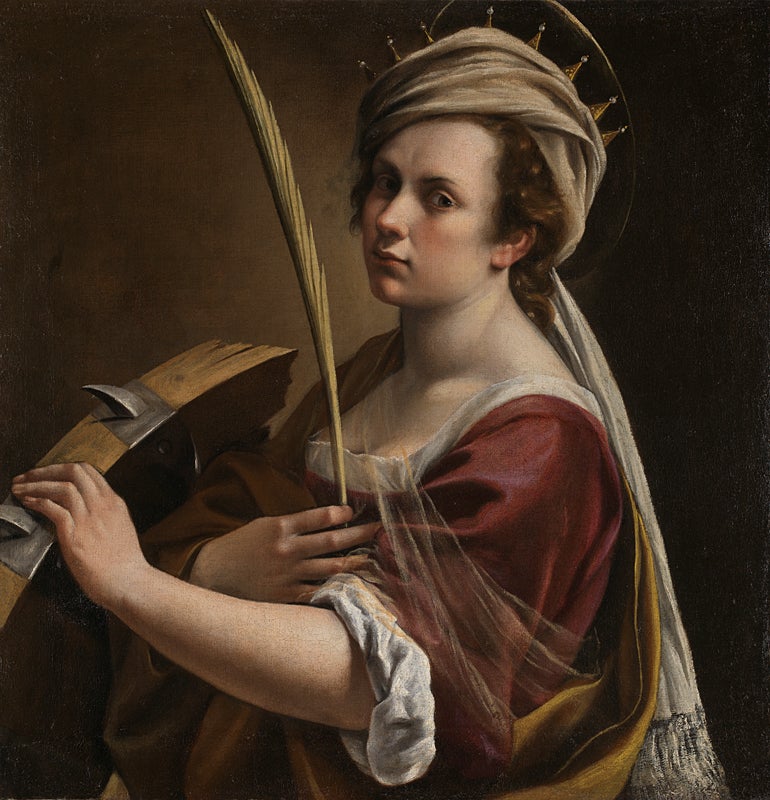
She was sentenced to death, bound to revolving wheels studded with spikes, but was freed by divine intervention.
Letizia Treves, the global head of research and expertise in Old Masters at Christie’s, said that by endowing Saint Catherine with her own features, Gentileschi created an intimate union between artist and subject.
“Many of Artemisia’s paintings feature women from the Bible and ancient history as their main protagonists,” she said. “Such subjects were by no means unusual at the time, but Artemisia brought a particular realism and psychological depth to her heroines’ strength, passion and vulnerability.”
Gentileschi left Rome following the notorious trial in which fellow painter Agostino Tassi, who had been invited into the family home as her tutor, was found guilty of raping her but not forced to serve his sentence.
The case, in which the 17-year-old Gentileschi and her father pressed charges against Tassi, was unprecedented at the time and widely publicised; she was tortured during the seven-month trial and cross-examined by her attacker.
She asserted herself as a formidable artist upon arriving in Florence, where she established her own studio and gained a measure of independence upon marrying a little-known Florentine artist, Pierantonio Stiattesi.
There, she secured commissions from important collectors, including members of the Medici family. In July 1616, she was made the first female member of the Accademia delle Arti del Disegno in Florence.
However, her work, which was frequently misattributed or neglected for centuries, was not propelled into contemporary mainstream discourse about art until the 1970s, following the publication of Linda Nochlin’s essay Why Have There Been No Great Women Artists?
Since then, and particularly in the wake of the MeToo movement, her work has become a source of study and fascination, while her life has also been made the subject of novels, plays and films.
Particularly, her work Judith Beheading Holofernes (1612-1613) has led to her being dubbed a proto-feminist icon, thanks to its powerful image of a woman beheading a powerful man.
In 2020, she was the subject of a landmark exhibition at the National Gallery, helping to propel her into the public consciousness.
The self-portrait will be auctioned by Christie’s during Classic Week at Christie’s New York on 4 February 2026, and be on view to the public from 29 January at Christie’s Rockefeller Center Galleries.
Join our commenting forum
Join thought-provoking conversations, follow other Independent readers and see their replies
Comments
Bookmark popover
Removed from bookmarks