Rishi Sunak was right: Britain needs to bring back national service
If the UK is as concerned about the threat of Russia as France and Germany are, it needs to get serious about spending – there wasn’t an extra pound for defence in the Budget, for pity’s sake, says Mary Dejevsky


The name Lossiemouth is from another era. The home of the main RAF base in the north of Scotland was a legendary bastion of UK and Nato defences during the Cold War.
Then suddenly – or so it seems – here it is in today’s news, in from the cold, the backdrop for the prime minister and his Norwegian counterpart to celebrate a new bilateral agreement on joint operations designed to track Russian submarines with sights on our undersea cables.
This was the morning after the King had hosted a state banquet for the German president, where he had spoken of the UK and Germany being determined to “stand with Ukraine and bolster Europe against the threat of further Russian aggression”. If there is one thing the Brits know, it is how to put on a show.
But, if anything, a year and a half of this government has seen national defence fall further down the pecking order of priorities. Any reference to defence in last month’s otherwise much-trailed and debated Budget was conspicuous by its absence. Spending on all sorts is going up, but there are no extra pounds for defence, beyond the modest amounts already pledged.
This leaves an increasing mismatch between the UK’s Cold War reputation as the most powerful military player among European countries – something a general lack of curiosity has allowed it to somehow retain – and reality.
The UK, in fact, ceded the laurels of biggest European contributor to Nato in cash terms last year to Germany – although the UK still leads in terms of percentage of GDP. If current pledges are to be honoured, however, Germany will soon overtake the UK here, too.
Most marked – and almost least remarked upon – is that the UK has managed to sidestep Donald Trump’s demand for the Europeans to do much more to pay their way: up to 5 per cent of GDP to go to Nato, for instance. While others, notably Germany, are sharply increasing their spending, the UK government reached only a measly 2.3 per cent this year. It is committed to only 2.6 per cent by 2027.
The goal of 3.5 per cent by 2035 for European Nato members appears ever less realistic. And this is not a good look for a country that continually claims to “lead” – most recently, the still nebulous “coalition of the willing”.
A similar listlessness attaches to the conclusions of this year’s spending defence review. Of the broader recommendations – which include improved coordination between defence requirements and industry, more technology, streamlining the separate services, and a far greater focus on civil preparedness, as well as more effective communication with the public – the country has heard little to nothing. Nor has there been the slightest hint of the sort of contingencies – such as national service – currently being mooted in France and Germany.
Current plans for national service in Germany are modest, comprising little more than compulsory registration of 18-year-olds and medical checks, and it should be noted that even these tentative plans have drawn furious objections – not only from the young.
But the subject is out there, as it is in France, where the army chief of staff caused an outcry by warning that the country should be prepared to “lose its children” – meaning that it should be preparing to contemplate losses in war. But there has not been a word about such possibilities in the UK.
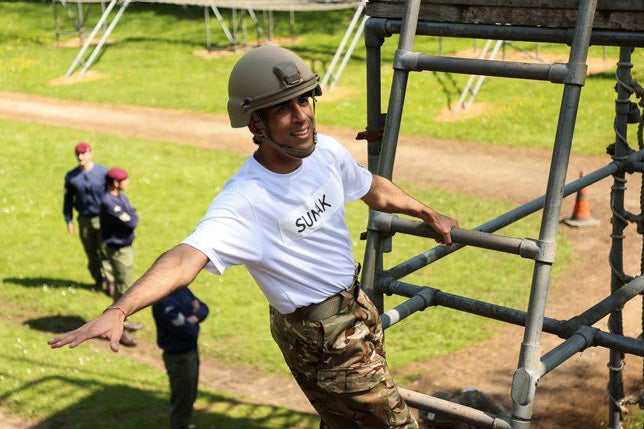
The prospect of national service in some form was proposed by Rishi Sunak before the last election, and occasionally floats back into view, sometimes supported by the argument, advanced in Sweden, that compulsory national service (not necessarily military) could become a powerful and desirable project to foster social and ethnic cohesion. But it has never featured in any government discussion, even as a hypothetical.
With the UK almost silent on defence spending, civil preparedness and conscription – let alone the comprehensive reform of forces structure – it might be expected that there would be at least some whispered misgivings on the part of these allies about British backsliding.
But this is not the case. An explanation offered to me was that the overriding priority of France and Germany is to keep the UK, which is still a big contributor, anchored in Nato and European defence, rather than risk its departure, possibly into a closer defence relationship with the US. This may be true, but how long can such a situation last, as the German government, in particular, strives to sell its hard-pressed population on the need to spend more on defence?
Will there come a time when this UK government starts to open up a public debate about defence? It still seems far away, and in current circumstances, it carries risks. The overall amount that goes from the domestic budget to Ukraine, for instance, is quite difficult to divine. And it is a choice. In a recent speech at the Chatham House think tank, the armed forces minister spoke of the resources being spent by the UK on Ukraine, noting that it had an effect on the cost of living. But his intended inference appeared to be that the blame for that rested with Russia.
Spending on defence, whether Ukraine is included in that bill or not, is nonetheless a choice for any government.
Whether under pressure from our neighbours or in response to queries from a less quiescent public, however, there may come a day when that reticence will end, and that would only be a positive for the country’s democracy.
Join our commenting forum
Join thought-provoking conversations, follow other Independent readers and see their replies
Comments