How did Tunbridge Wells become the spa town that ran dry?
Without running water, the Kent town is unable to flush its loos or have a shower, and its famously ‘disgusted’ residents are fast becoming ‘disgusting’. The episode should shame all of our greedy water companies – and highlight the government’s failure to stop them, says local Neil Armstrong


Tunbridge Wells is the only spa town in south-east England – and one that has had precisely no running water since Saturday.
Nobody here is remotely surprised that a promise to have the supply restored by this morning came and went. At 8.30am, the South East Water website was insisting that the water would be back on at… 8.00am. It’s the fifth conflicting guesstimate in almost as many days.
Thanks to an “issue” at a water treatment works on Saturday afternoon, 24,000 people across Kent and East Sussex went without water. Unable to flush the loo, brush our teeth, clean dishes and launder clothes – and denied a hot shower – the famously “disgusted of Tunbridge Wells” are in danger of becoming, well, “disgusting”.
Schools across the area have been shut for two days. Residents have resorted to filling buckets with rainwater to flush toilets, while pets – cats, dogs and guinea pigs – have been given bottled mineral water to drink. Such has been the severity of the outage and the water company’s catalogue of errors in trying to rectifying it, the BBC has started a rolling-news blog.
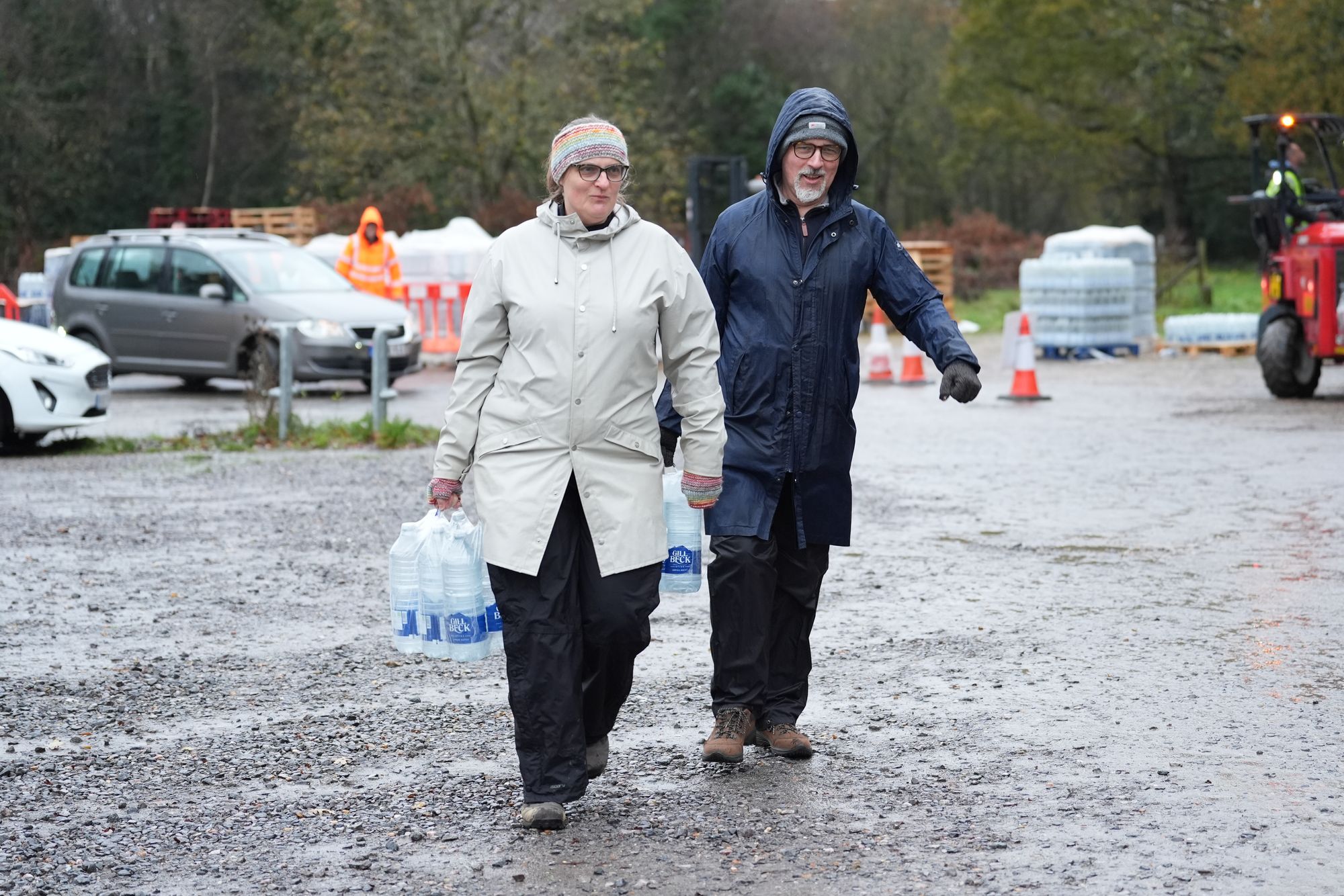
South East Water, which initially claimed only 6,000 people were affected by the outage, set up a bottled water station – but in the similarly named town of Tonbridge, some five or six miles away, where the water supply is fine. Any Tunbridgian hoping to make use of this facility could avail themselves, but they had to be quick: announced at 7.48pm, the taps were turned off at 10pm.
The Tunbridge Wells MP, Mike Martin, has described South East Water’s emergency response as “chaotic” and its leadership “a total failure”. He had to strong-arm the company into setting up three bottled water stations in the right town. In the absence of accurate information from the utility company itself, Martin has done sterling work keeping residents informed and hydrated.
You might have thought a debacle of this scale would prompt the leader of the organisation that caused it to offer an explanation, outline a plan and show some actual leadership. But CEO David Hinton has kept a low profile throughout this emergency. Perhaps by earning a mere £450,000 a year, he feels no compulsion to descend from on high to address those pesky customers. Martin has called for Hinton to resign – a sentiment echoed by his party leader Ed Davey, who has also urged the government to deploy the army to help on the ground.
When the BBC asked incident manager Matthew Dean if he wanted to comment on the call for Hinton to step down, Dean said: “We are very sorry to all our customers in Tunbridge Wells who have been experiencing issues with their water supply. Our focus is entirely on returning supplies to our customers as soon as possible.”
And when might that be? No one knows. Another minion, Steve Andrews, South East Water’s head of operations, asked that frustrated customers “bear with us through this really challenging incident”, and what was really needed was greater investment. More money? I’ve paid South East Water £449.14 this year – and I live in a small flat.
This isn’t the first time such chaos has occurred. In 2022, at around the same time of year, the area was left without water for six days. That was also on Dismal Dave’s watch. He promised lessons would be learned. Of course he did.
The economic and social impact of all this is significant. At the start of the Christmas season, restaurants and hotels have lost thousands in revenue thanks to closures. Care homes have been left without a water supply, GP surgeries have had to close. Bottled water stations have been opened around Tunbridge Wells, yet elderly residents have difficulty reaching them, relying on the goodwill of neighbours, as home deliveries have largely failed.
For most of us, this shambolic clown-show of a utility is more than a huge inconvenience. It is emblematic of the chronic lack of investment by the regional private monopolies whose focus, since the sector was privatised in 1989, has been shareholder dividends rather than customer service. It is also a reminder that the government’s much-heralded reforms of the industry – which include offering new consumer protections, championed by a new regulator, and with greater oversight of water company ownership and governance – cannot come soon enough.
And yet our bills are expected to jump by 30 per cent by the end of the decade. The Labour administration promised to “make sure water bosses are properly held to account”. Firing dismal Dave Hinton would be a good start.
Join our commenting forum
Join thought-provoking conversations, follow other Independent readers and see their replies
Comments
Bookmark popover
Removed from bookmarks