Don’t scrap student fees, but give the system a serious hygiene test
Graduates are a powerful voting group, and leaving those in their twenties and thirties saddled with increasing debt, while they are attempting to build families and careers, is a recipe for political and economic disaster, writes the former universities minister Jo Johnson


Scrapping tuition fees would undoubtedly be a mistake, but unless ministers fix the system now, they risk losing a generation of graduates.
A good university funding system has always had to balance three objectives. It must provide sufficient resources to sustain a world-class higher education sector; share costs fairly between the general taxpayer and the individual student; and it must remove barriers to access, so that those from disadvantaged backgrounds are not locked out.
Measured against those goals, the system of time-limited and income-contingent graduate contributions, which Tony Blair introduced over a quarter of a century ago and seven successive governments have retained, remains the least bad option. It has allowed universities to expand without imposing upfront costs on students and protected access by linking repayment to earnings rather than ability to pay. And, by sharing costs between graduates and taxpayers, it eventually gave the Treasury the confidence to remove student number controls altogether.
Lifting the cap on student numbers did more than any other single reform to open up universities and drive social mobility over the past quarter-century. That said, there are important changes that must be made. We definitely need to fix the interest rate on the old Plan 2 loans, which were taken out by students who started their studies between 2012 and 2022. When the system was reformed prospectively at the tail end of the last Conservative government, it was a mistake to leave existing borrowers behind on the old terms.
The beauty of the new Plan 5 loans, which charge just RPI [Retail Prices Index], rather than RPI plus up to 3 per cent, is that no one will repay more than they borrow in real terms. Changing the interest rate for the Plan 2 borrowers will be very expensive – a one-off increase to public sector net borrowing that will cost the chancellor billions and mainly benefit middle and higher-earning graduates.
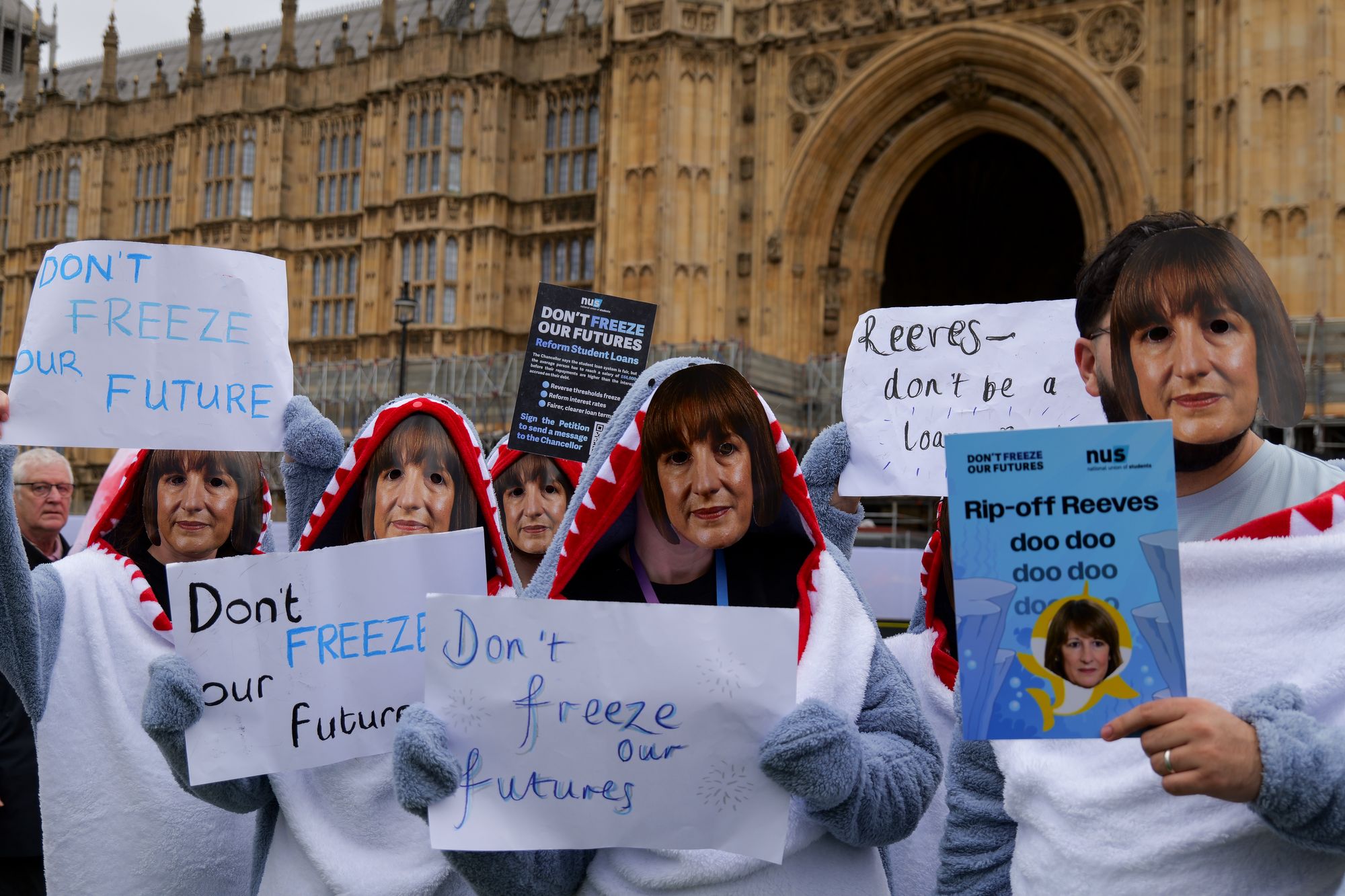
A surprising priority, perhaps, given the dismal fiscal position and all the other claims on public spending. But the political cost of allowing the current resentment to fester may prove greater. The system cannot survive while debts appear to grow even as graduates repay them. Negative amortisation works for no one, not even the Treasury, since the loans pile up on the government balance sheet and much of the accumulated interest is ultimately written off by the state.
Around eight million borrowers are on Plan 2 terms, and are mostly aged in their mid-20s to mid-30s. Many are forming families, taking on mortgages and facing high childcare costs. They matter electorally, too. Graduates vote more reliably than students and non-graduates, have not yet locked into fixed party affiliations and are in the swing-voter phase of the voting life cycle.
The post-graduation experience of this cohort of Plan 2 students is of critical importance for the system put in place to support the UK’s competitiveness as a knowledge economy. It is the first mass group asked to pay for expansion and the first to test whether the promise of mass higher education funded in this way delivers on its side of the bargain.
Other than that, I have one additional suggestion. The freezing of the domestic undergraduate tuition fee for the best part of a decade was a massive mistake. This government is thankfully fixing that by promising to uprate fees each year. Brave move – and it deserves credit for that. It has missed a trick, however, by failing to create a visible link between what students pay and the quality of education they receive.
The solution briefly adopted in the mid-2010s – tying fee increases to teaching quality as assessed by the Teaching Excellence Framework (TEF), which looked at hard metrics such as drop-out rates and qualitative factors such as student satisfaction with teaching and feedback – was an attempt to align the interests of students, taxpayers and providers.
Institutions delivering strong teaching and outcomes would be rewarded; those that did not generate good outcomes, as per the TEF, would not be. That principle should be restored. If fees are to rise with inflation, students must see that quality rises too. It’s a basic hygiene test.
Make those changes, and I see no reason the system Blair introduced over a quarter of a century ago shouldn’t survive another seven prime ministers.
Join our commenting forum
Join thought-provoking conversations, follow other Independent readers and see their replies
Comments
Bookmark popover
Removed from bookmarks