Labour should forget about mansion tax and look to growth
Labour would be better off replacing its imminent tax plans with centrist policies to boost growth, writes Sean O’Grady


Why is the Labour government so unpopular? Books could, and one day will be, written about the curious collapse in its popular support as witnessed in opinion polls, by-elections and local elections, and a sort of media chorus of gloom.
It’s complicated, obviously, but if one word had to suffice to explain this multifaceted political phenomenon, it would be a short one indeed: “tax”. If Sir Keir Starmer’s administration is to survive, let alone win a (currently highly improbable) second term, that must change.
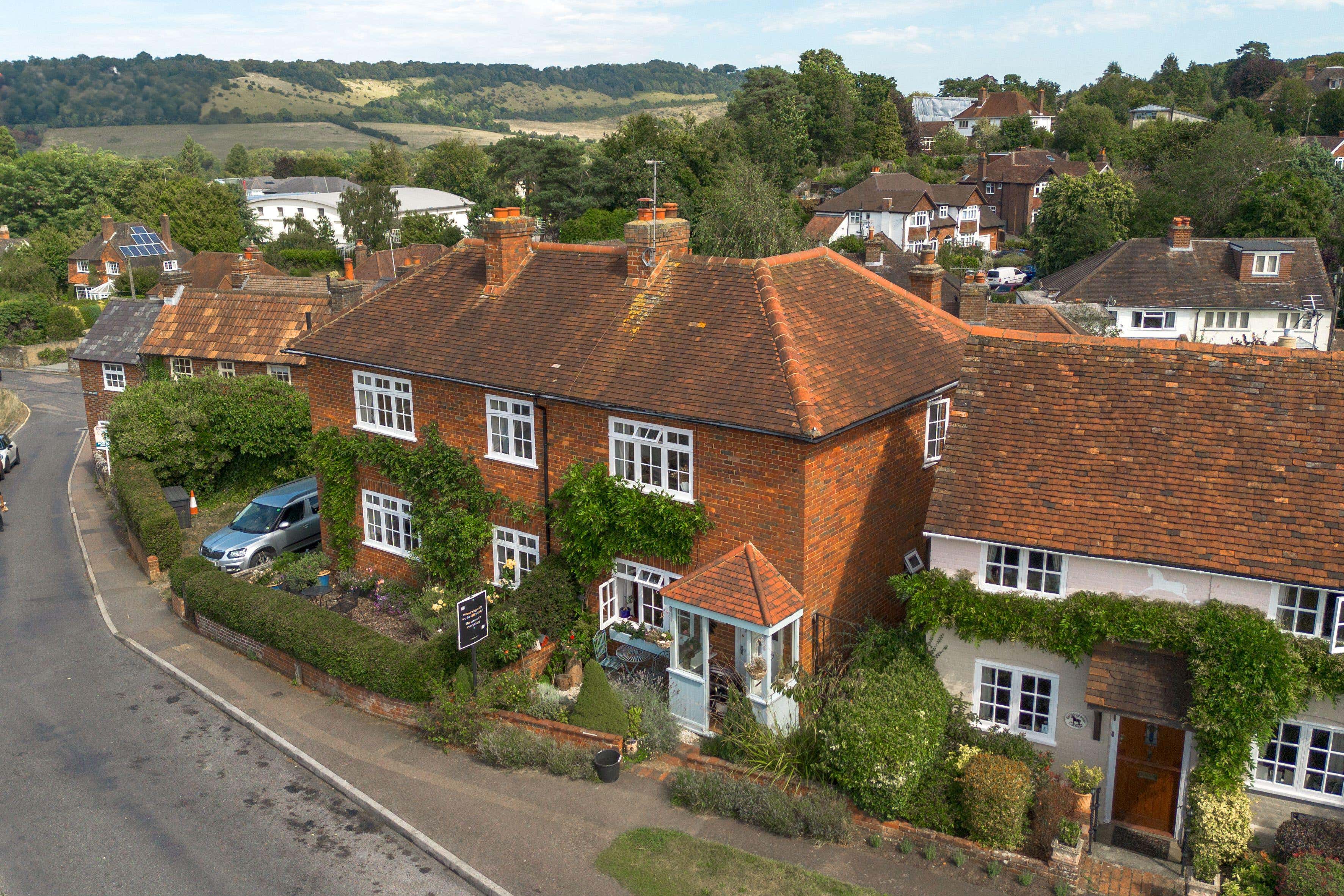
Sadly, that doesn’t seem likely in the short term. As the chancellor approaches her Budget in a month’s time, there are plainly no good options facing her, and some very bad ones appear to be circulating in government circles. The so-called mansion tax, for example. Superficially, this seems an attractive idea. In the version that has leaked into the public domain, it targets people with homes worth £2m or more, with a levy of 1 per cent to be paid on the excess over that threshold. So someone with a property valued at £3m would be assessed on the basis of 1 per cent of the £1m over the threshold – so £10,000. Sounds great, you might think. Yet it doesn’t frankly feel quite right and fails on a number of grounds, including fairness, as it happens.
Most glaringly, it assumes that the £3m valuation has no debt attached to it. In some cases, the lucky occupants may have inherited the place, but in others it will have a hefty mortgage attached, and the actual net wealth held in equity in the house may be relatively small, and below the notional threshold. But if you made the tax liability net of the mortgage, you merely incentivise people to take out more debt to neutralise the tax or otherwise keep the mortgage artificially high.
For those who were fortunate to buy their magnificent homes decades ago, and relatively cheaply, a “mansion tax” would amount to a random tax based on inflation as well as capital gains, for which there are better approaches. Obviously, like any wealth, the property levy takes no account of income and ability to pay, and makes the tax system even less rational.
A mansion tax is also an added complication to an already complex system of taxing property. Despite the commonly held impression, Britain already has a wealth tax, or rather a web of sometimes inconsistent and arbitrary levies, duties and taxes that are the product of centuries of different governments trying to balance the books with a quick fix and a politically driven agenda: “Soak the rich” is a practice that long pre-dates the Starmer government.
David Lloyd George introduced “death duties” to pay for dreadnoughts and the old age pension before the First World War, while we once taxed homes on how many windows they had. As the former governor of the Bank of England, Mervyn, now Lord, King points out: “Property taxes are an interaction between stamp duty, council tax, capital gains tax and inheritance tax. You don’t solve that problem by just adding another wealth tax to it.”
Far better, therefore, to institute a more comprehensive and careful study of the UK’s unduly random system of taxing personal wealth – not just residential property – to make it both economically efficient and fairer. That would include introducing a Land Value Tax, an economically neutral levy, and would be the mark of a reforming government wanting to “renew Britain”.
Of course, aside from “sin taxes”, all taxes are unpopular, but some are more politically suicidal than others. The British public is peculiarly averse to taxes on “aspiration” and on properties, which is why inheritance tax (paid at any scale by few estates) is so hated and why the poll tax of 1990 triggered riots. People who can’t afford a starter home won’t like the mansion tax any more than the plutocrats of Kensington and Chelsea will; folk can be irrational, and not every voter is a class warrior.
Any politician who fails to recognise that reality in favour of some theoretically pure and perfect paper system of a property levy shouldn’t really be in the electoral game at all. It may be no coincidence that the “mansion tax” seems to have emanated from the supercharged brain of Torsten Bell, a former think-tanker once instrumental in Labour’s 2015 general election defeat, commemorated by the ludicrous “Ed Stone” of Miliband-brand socialism.
For one reason or another, including some of her own making, others, such as Donald Trump’s tariff war (the one conflict he’s shown no sign of wanting to stop), Rachel Reeves will need to find some £40bn or £50bn next month to fill the infamous “fiscal black hole”. Some of that will inevitably have to come from tax increases. But too much, unfortunately for the economy and for Labour’s electoral chances, is coming from tax hikes rather than from cuts to public spending – and specifically reforms to social security. The public will be even less convinced by the need for them to pay more to the Treasury if they resent the fact that Labour MPs willfully veto their own government’s modest attempt to make the welfare bill for an ageing population sustainable.
If Reeves is, as usual, just looking for a way to balance the books in a hurry and wants to appease her left wing by aiming at wealthier homeowners, she should follow the excellent advice of tax expert Dan Niedle and introduce an additional higher band for the council tax, which hasn’t been reviewed since 1991. That would look much more sensible and less vindictive.
If she wants to boost savings and investment, then she ought to cut consumption and raise VAT, but that would be a deeply unprogressive move that would hit the poorest hardest. More palatable, albeit a breach of a manifesto promise, would be to increase income tax, especially at higher rates of earnings. That, and some overdue increases in fuel duty, gambling taxes and, more debatably, a high-fat and sugar levy on certain food producers, should be sufficient for now.
Whatever Reeves does come up with, she cannot keep raising taxes and inventing new ones at every Budget for the rest of the parliament without even touching public spending or ever boosting growth. If not, then, like the Tories before them, Labour risk an extinction-level event at the next election.
Join our commenting forum
Join thought-provoking conversations, follow other Independent readers and see their replies
Comments
Bookmark popover
Removed from bookmarks