Why 2025 was the year I finally fell out of love with Pret
The sandwich shop I once revered is Britain’s story in microcosm, says Jack Burke: once outward-looking, inventive, and full of flavour, now overpriced, overpackaged, a fitting byproduct of this land of the bland

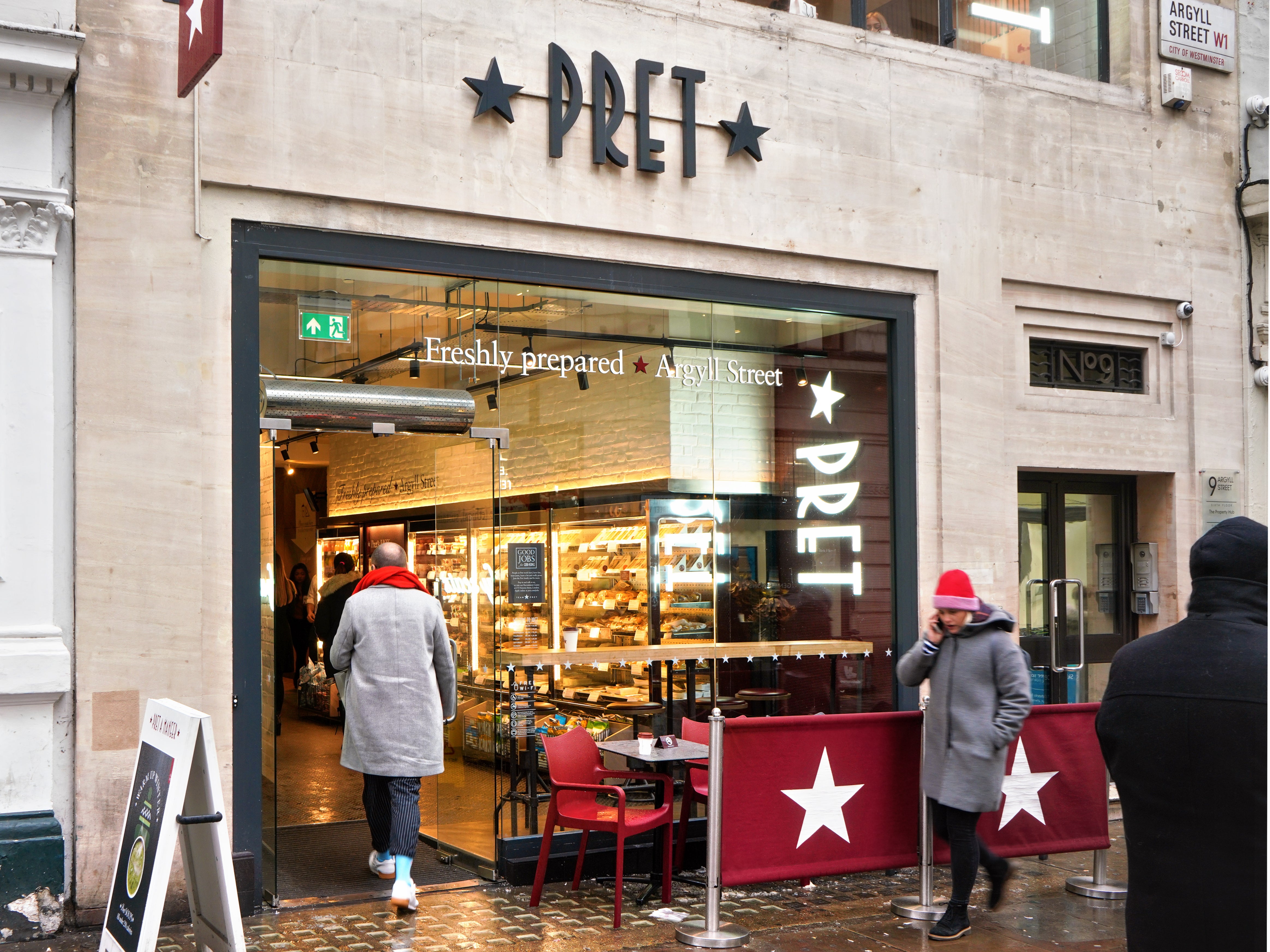
When was the last time you actually enjoyed something from Pret?
Once upon a lunchtime, it was good, tasty – cheap, even. A welcome mirage in the desert of mid-2010s London dining options. It made the British sandwich feel almost continental. The jambon-beurre – thick ham, salty butter and three cornichons stuffed in a sourdough roll, yours for three quid – was one of the last miracles left on a homogenising high street. Then one day it vanished, taking with it the last of Pret’s soul.
The decline since has been slow but absolute. What began as a quirky Soho sandwich shop has curdled into a beige cathedral of culinary capitalism. Nothing tastes of anything. Everything costs too much. And yet the faithful still file in.
What’s left is Pret as a metaphor: Pretflation. The inflation not just of prices, but of blandness itself. The gustatory flattening of a nation that once prided itself on regional quirk and curiosity, now numbed by habit and frozen bread. Pretflation is Britain’s story in microcosm: once outward-looking, inventive, full of flavour; now overpriced, overpackaged, a hackneyed shell of its former self.
In 2025, Britain stopped making things and started reheating them. Television is a carousel of reboots, spin-offs and celebrity revivals; films exist almost exclusively as IP maintenance exercises; even festivals and exhibitions are franchised versions of former selves. Nothing new is trusted to stand on its own. Like Pret, culture has become a logistics operation: minimise risk, maximise familiarity and sand off anything that might surprise. Originality costs too much; blandness scales better.
Once you start noticing it, this flattening is everywhere. High streets where every café now serves the same pistachio pastry, the same miso caramel brownie, the same £4.80 flat white. Even places have become bland: railway stations, food halls, hotel lobbies – they’re all converging on the same blonde-wood, house-plant aesthetic, as if Britain were being clothed by one risk-free interior designer. Nothing is actively bad. Nothing is good enough to remember.
And so it with Pret, which was once the taste of London modernity: the avocado (for which they claim responsibility for introducing to Britain), the blond-wood Scandi chairs, the smug moral glow of “made fresh every day”. In the 2000s, it was the sandwich of social mobility: the same lunch for banker and intern alike. Now, Pret has become shorthand for office-drone fatigue: the same wrap, the same soundtrack, the same lunchtime pilgrimage to mediocrity.
This, unfortunately, is the inevitable endgame of private-equity-fuelled expansion. Pret, after all, is owned by JAB Holdings, an offshore conglomerate that also owns Krispy Kreme and Panera Bread, two patron saints of globalised glucose.
They favour a slow death by ubiquity, the high-street fatigue that comes when a brand becomes both background and punchline. Pret’s omnipresence – 450 stores and counting – has turned the lunchtime dash into a kind of liturgy. What once felt cosmopolitan now feels compulsory. Sameness rots the soul, and any remnants of excitement have calcified into a lanyard-toting habit.
The saddest part is that it has worked for so long. Pret taps into something deep and specifically British: our masochistic relationship with lunch. The hunched-over-keyboard lunch, the al desko inhalation of something quick and healthy. Pret has perfected the ideology of edible efficiency, whilst managing to signal itself as something more.
But the spell only works as long as it’s good value. Once the numbers stop adding up, the illusion collapses. What used to be a modest indulgence now looks like an act of financial self-harm. You won’t get much change from a tenner for a baguette in central London. Soup creeps up by a quarter every year. Your same regular Pret order now costs as much as a sit-down lunch used to.
Even Pret’s once-famed coffee subscription has been quietly gutted. It began as a messianic promise of unlimited caffeine for £30 a month; now, you pay a fiver for half-price drinks, the corporate equivalent of charging admission to your own addiction. You go blinking back onto the pavement holding an oat latte like a consolation prize.
I still go, of course. Because sometimes the only thing worse than Pret is whatever else is available.
Join our commenting forum
Join thought-provoking conversations, follow other Independent readers and see their replies
Comments
Bookmark popover
Removed from bookmarks