Using pepper spray in youth prisons is not a solution – it’s an admission of failure
In response to rising violence in young offenders institutions, the High Court has ruled that an incapacitating chemical can be used on teenage inmates – but rather than reducing levels of harm, it will deepen trauma and distrust, says Andrea Coomber, chief executive of the Howard League for Penal Reform


Last year, the Howard League for Penal Reform began receiving calls about children incarcerated in English prisons who had been sprayed in the eyes by prison officers armed with a new kind of synthetic pepper spray.
We heard of children who had been left rolling around and screaming in pain. The number of messages on our legal advice line was also confirmation that Pava spray – a chemical irritant classified as a prohibited weapon under the Firearms Act 1968 – is becoming routinely used in prisons holding children as young as 15.
At the same time that these calls were coming in, at the end of last year, we were in the High Court, opposing the rollout of the incapacitant. Last April, Shabana Mahmood, then secretary of state for justice, had authorised the use of Pava spray in Feltham A, Werrington and Wetherby prisons for 12 months, in response to rising violence against officers and children in detention.
With our decades of experience providing legal support to young offenders, we sought judicial review of the decision.
We submitted that the government’s decision was unlawful because, far from making the three prisons safer for staff and inmates, it undermined critical relationships of trust and confidence. In this respect, Pava – short for pelargonic acid vanillylamide – is likely to increase harm and violence. The government’s own impact assessments showed that, just as is the case in the adult male estate, the introduction of Pava was expected to disproportionately impact Black and Muslim children, and those with disabilities.
And yet the high court ruled this week that the use of Pava spray in young offenders’ institutions is, in fact, lawful.
During the litigation, we learned that, in trialling the use of Pava on children – it has been available to specially trained prison officers on the adult prison estate since 2018 – the government had understood that it would not reduce overall levels of violence and harm in young offender institutions. It accepted that, in fact, it may cause a “long-term escalation and rising tenor of violent behaviour”.
Mahmood also understood that it would likely be used in a racially disproportionate manner, and declared that this was her “red line” – that she “would not defend disproportionality in use”.
Which makes it all the more frustrating that our claim has been dismissed.
In taking the decision, the government heard from a wide range of stakeholders; the Youth Justice Board, the Children’s Commissioner, HM Inspectorate of Prisons, NHS England and more. Every single one, bar the Prison Officers’ Association, expressed their concern at using Pava against children in custody.
I have lost count of the number of prison officers I have met on wings who have privately shared their opposition to Pava being used in in young offenders’ institutions. It will, in their view, do little more than breed distrust and feed anxiety in already traumatised kids.
Our legal claim was about how the government reached its decision; not whether it was wrong or right. The judge, like the secretary of state apparently, was reassured by officials promising that Pava spray will be used extremely rarely, and only ever as a last resort. While it has only been in use for a few months, already this seems not to be the case.
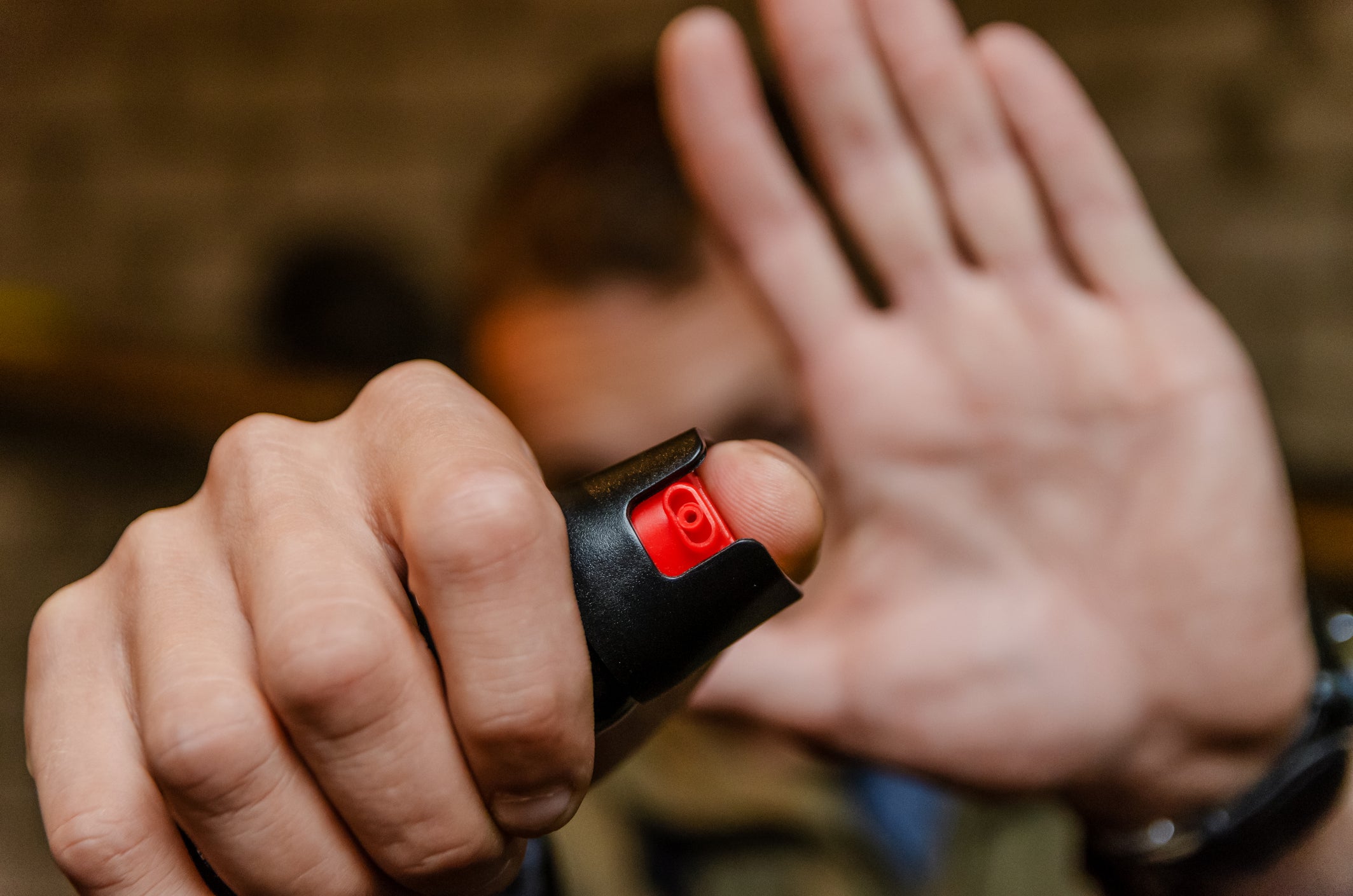
It is our firm view that this is the wrong decision, as a matter of principle as well as practicality. Rather than weaponising young offenders’ institutions, the government should be exploring why these prisons are so violent, and addressing the causes of that violence.
The YOIs are a model of failure. In Feltham A, Werrington and Wetherby, many children are locked up in their cells for 20 hours a day, more on weekends. They are seldom close to getting their statutory entitlement of 15 hours a week of education, and little effort is made to engage them in purposeful activities. High numbers of children feel scared, alone and forgotten. It’s worth remembering that nearly half of them are on remand – not yet convicted or sentenced. Most of this group will be acquitted or sentenced to less time than they have served.
Charlie Taylor, chief inspector of prisons, himself a former head teacher at a special educational needs school, has been damning in his assessment of many staff’s capability to de-escalate conflict and their propensity to use force unnecessarily. Last year, in his report on Feltham A, for example, Taylor noted that, despite the very high use of force in the prison, body-worn cameras were not consistently turned on by staff, and inquiries into incidents limited, with a failure to ask children what had happened. When he spoke to children, he was told that the violence was the result of frustration at unpredictable regimes and not having their basic needs met.
No one should work or live in fear, and something needs to be done to quell violence in children’s prisons. But Pava isn’t the answer. It is a cheap fix that will only make things worse.
Ministers should be taking steps to dismantle a system they know has failed children for decades – but that will take political will and funds to invest in alternatives. Until then, ministers must accept that already traumatised and vulnerable children will continue to be further harmed in the care of the state.
Andrea Coomber KC (Hon.) is chief executive of the Howard League for Penal Reform
Join our commenting forum
Join thought-provoking conversations, follow other Independent readers and see their replies
Comments
Bookmark popover
Removed from bookmarks