This cowardly Budget marks the death of New Labour
At a stroke the chancellor has junked the sensible principles that made New Labour great and buried them beneath an eye-watering bill for welfare that has set the party back decades, writes John Rentoul


There was a time not too long ago when it looked as if the influence of New Labour on Keir Starmer’s government was strong. Rachel Reeves took advice from Tony Blair and Gordon Brown before writing her Budget. She acted on Brown’s advice, offered in public, to end the two-child limit on benefits, but inevitably his suggestion that it could be paid for by higher taxes on gambling turned out to be unrealistic. Most of the cost will be met from other taxes.
Blair’s advice was given in private, and so we can only guess at what it might have been. But one thing we can be sure of is that whatever Budget he urged her to deliver was not the Budget she set out yesterday.
Indeed, this Budget marks the death of New Labour. Despite Blairites in key posts at all levels of the government, like sentinels of an empire in exile, the dynamo of a Blairite prime minister is missing. Reeves even name-checked Alan Milburn in her Budget statement; Jonathan Powell is the real foreign secretary; and Morgan McSweeney, the No 10 chief of staff, is a Blue-Labour-tinged Blairite (he ran Liz Kendall’s leadership campaign a decade ago, after all). But Starmer is not a Blairite.
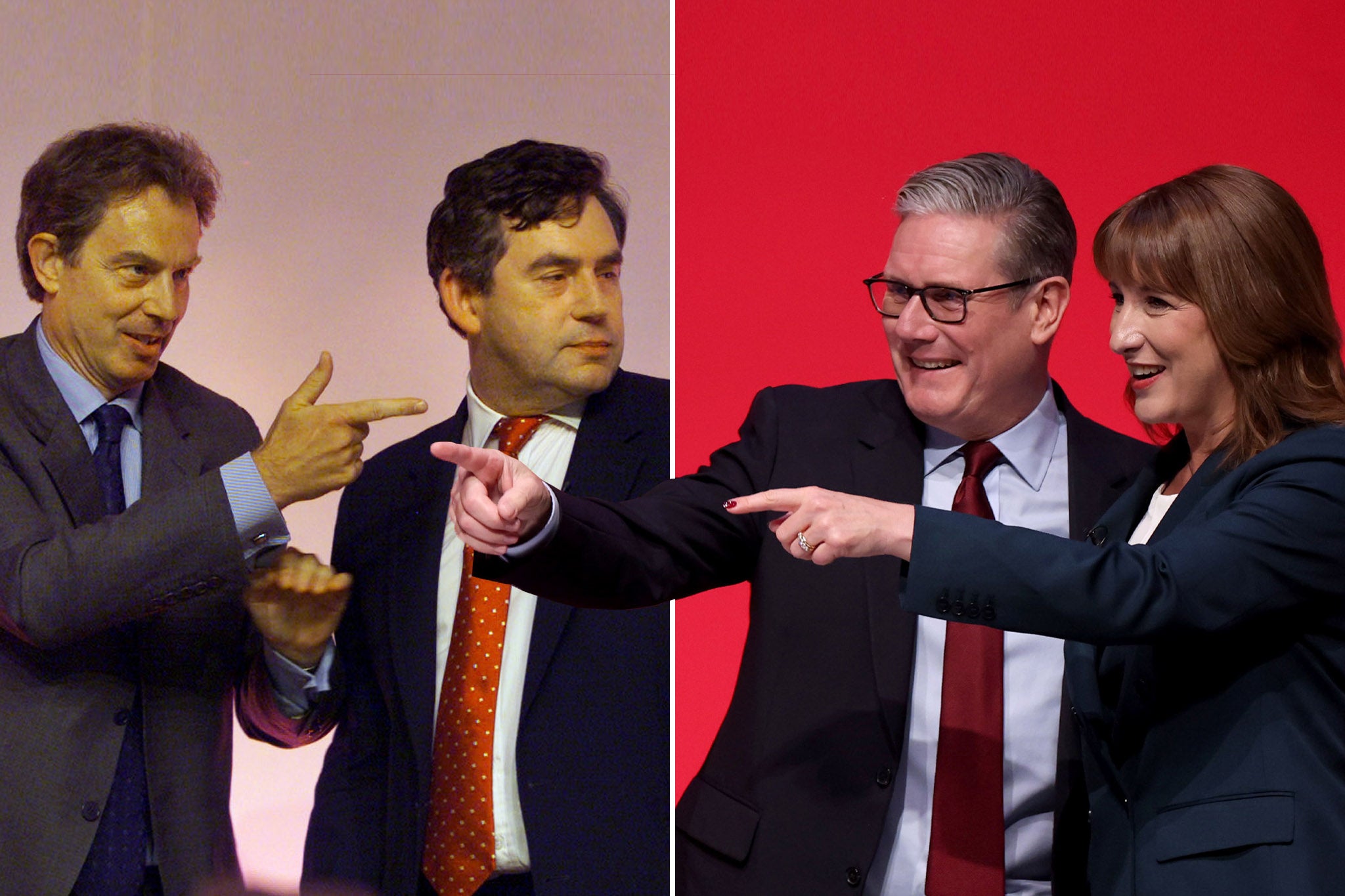
If Reeves is like Brown as chancellor, Starmer is like Brown as prime minister. He wants to be like Blair, because he recognises that an unrelenting focus on the median voter is the way to win re-election, but that approach to politics doesn’t come naturally to him.
Brown as chancellor might have wanted to design a Budget like this week’s, increasing taxes to pay for higher welfare spending, but Blair would have stopped him. And even Brown might have baulked at not just breaking a manifesto promise but putting up a tax that he said he wouldn’t the year before – which is what Reeves did when she extended the freeze in income-tax thresholds.
The one time that Brown put up taxes for the broad mass of taxpayers was when he raised national insurance to pay for the NHS in 2002. That was something for which he and Blair prepared the ground painstakingly and successfully. It remains the textbook example of a tax rise that was popular – admittedly at a time when the economy was growing strongly.
It was an example of how New Labour worked, marrying fiscal responsibility with improved public services while promoting aspiration and wealth creation.
Reeves has done the fiscal responsibility (the gilt market responded well to the Budget because the tax rise lends credibility to her determination to control debt). But the rest of the New Labour prospectus is missing.
Above all, the New Labour message on aspiration has been lost. That a forward-looking Labour Party understands people who want to better themselves, who take risks to create wealth and who want to run successful businesses. That it doesn’t just understand them, it approves of them, it celebrates them and wants them to succeed.
New Labour would never have taxed parents who choose private schools, or non-doms (it might have taxed farmers – the Countryside Alliance was one of the earliest departures from the big tent). But it would also have had different spending priorities. It was never the heartless grinder of the faces of the poor as it was caricatured. It was Blair, after all, who set the utopian goal of abolishing child poverty. But it might have gone about it differently.
It was telling to hear David Blunkett, New Labour to his core, on BBC radio this morning, trying his hardest to be loyal, but unable to endorse in full the lifting of the two-child limit on benefits. He would lift it for disabled children and in cases of bereavement, but otherwise would use the money to rebuild Sure Start centres as a more effective means of tackling child poverty.
And there is no way that New Labour would have raised taxes to pay for a disability benefits bill that is rising out of line with the underlying trends in long-term illness.
Almost the whole point of New Labour was to combine wealth-creation and compassion, on the basis that the first paid for the second. It was about getting people off welfare and into work.
At the first sign of trouble from Labour MPs over welfare reform, however, Starmer and Reeves turned tail and ran away. This week, Reeves presented the bill for that act of old Labour cowardice. The New Labour path was the only way this government could hope to be re-elected – but now it has come to an end.
Join our commenting forum
Join thought-provoking conversations, follow other Independent readers and see their replies
Comments
Bookmark popover
Removed from bookmarks