I woke up in hospital – now I know why resident doctors are on strike
After a 50-year career in medicine, retired obstetrician John Cullimore was himself saved by the NHS. Now, having experienced the overstretched health service as a patient, he says he finally understands why staff have voted to continue their industrial action


The resident doctors’ decision to continue striking for another six months makes the heart sink. But it has also crystallised for me how far the medical profession has drifted from the one to which I devoted my life.
After 50 years in obstetrics and gynaecology, I retired three years ago. I have since returned to the NHS – this time, as a patient. Having experienced the health service from both sides, I realise I no longer recognise it.
When I recently developed a sharp right‑sided chest pain, I dismissed it as a muscle strain from having lifted a heavy piano keyboard. It eased, only to return with a vengeance on the other side of my rib cage. Anything more than shallow breathing was agony.
By the early hours, I knew I needed a doctor. My wife reminded me that I had to be on the phone with the surgery before 8.30am if I wanted any chance of an appointment. I rarely troubled my GP, but this was different.
The receptionist must have heard something in my voice and offered me a slot. My GP did not hesitate either: he could not exclude a pulmonary embolus. Two phone calls later, I had an urgent scan and, after a last‑minute cancellation, a mid‑afternoon slot.
By 6pm, I had been diagnosed with bilateral pulmonary emboli and admitted to the acute cardiac unit. It was the evening before the scheduled strike action. The clinicians were excellent. The NHS saved my life.
Yet the institution I encountered felt unfamiliar, fragmented and oddly depersonalised.
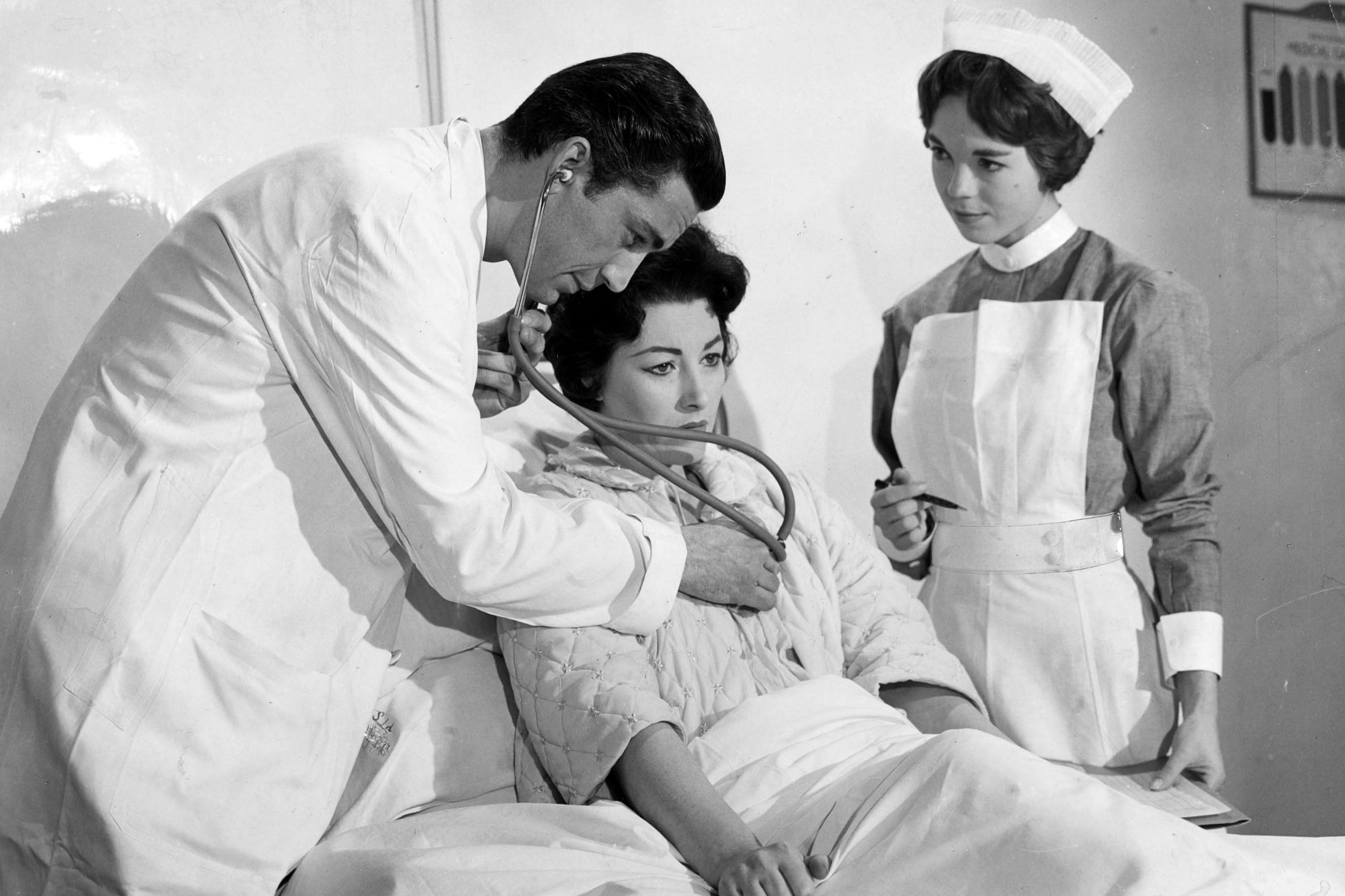
The admission was nurse‑led: observations, cannula, bloods, and then a long electronic questionnaire on a handheld device. Questions I had never once asked a patient in 1978 – “Have you been abused?”, “Are you demented?”, “What is your opinion of your mental health?” – was now routine. No pens, no paper, everything tapped onto a screen.
In my day, much of this would have fallen to the house officer – a doctor embedded in the ward, known to nurses, patients and consultants alike. Yet no such doctor appeared.
I now understand why the doctors’ strike has drawn most support from foundation doctors – those in their first two postgraduate years. They are newly qualified, not yet committed to a speciality, still finding their feet.
That set me thinking about how medical apprenticeships have changed. When I trained, students were attached to nursing teams. We fed patients, helped move them, and learned the rhythms of ward life. After qualification, we joined a clinical firm – one consultant, a small group of juniors – working punishing schedules (106 hours a week) but forming close bonds. We lived on site, in a hospital mess that provided social glue and mutual support. Those bonds created identity and loyalty – to the profession, the NHS and to each other.
Today’s juniors work shifts, live off‑site, and often seem transient – less absorbed into the institution, less certain of their place. Much of what we did – bloods, admin, results chasing – is now done by others. Performing those tasks embedded us in the hospital’s structure; they gave us a clear role and a sense of belonging.
Watching footage of small groups of striking doctors chanting outside hospitals, I found myself wondering whether that public solidarity is now their main source of cohesion. If so, it should worry us.
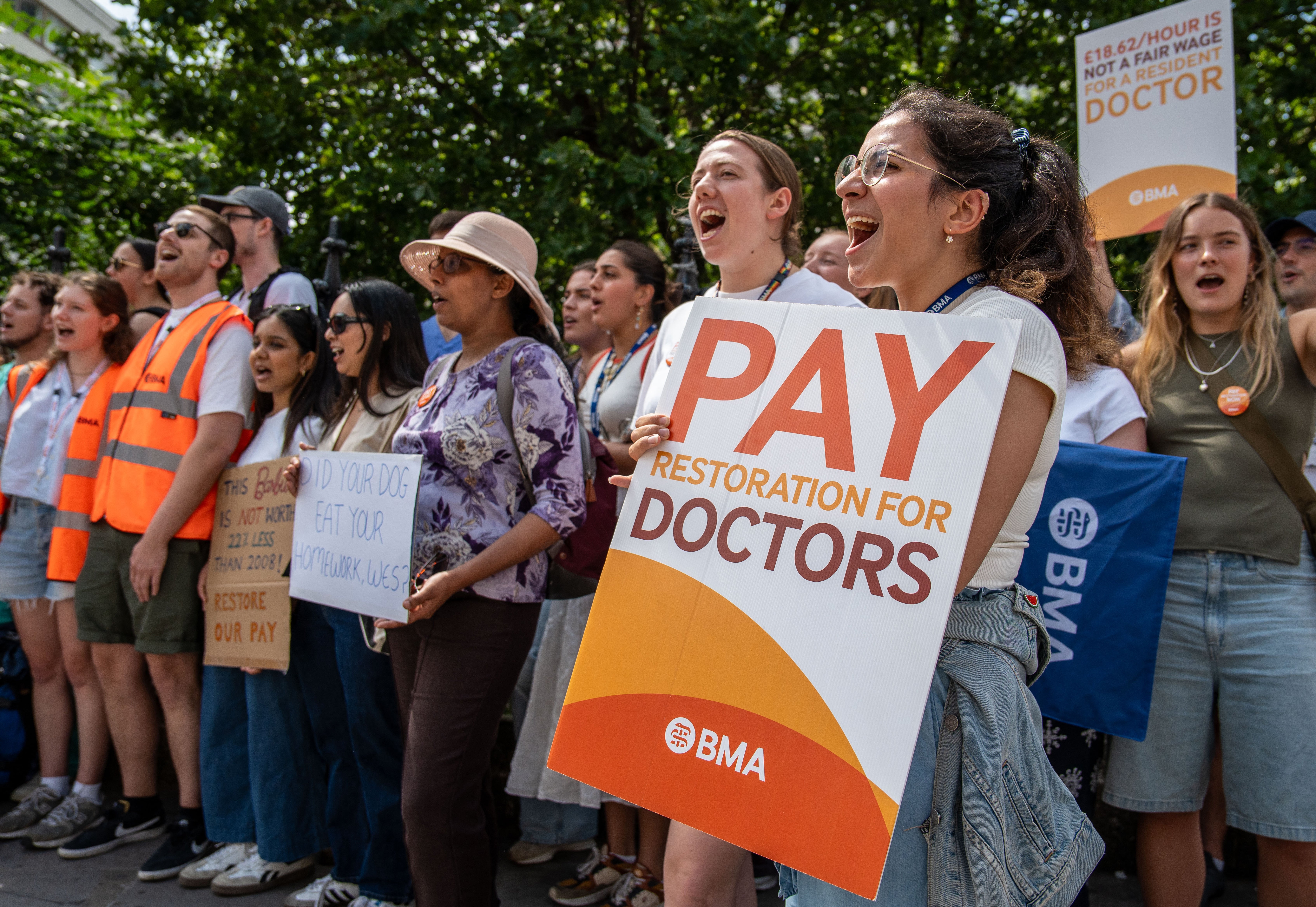
During the most recent run of strikes – which resident doctors in England have voted to continue for another six months, as part of their ongoing row over pay and jobs – senior staff stepped in to cover much of the foundation doctors’ work, cancelling elective activity to do so. That raises uncomfortable questions about how well defined those early roles are and whether the current structure truly serves either doctors or patients.
Perhaps an earlier commitment to a career path might provide clearer identity, purpose and belonging. Perhaps we need to rebuild the early‑career structures that give young doctors a stake in the institution.
During my time as an inpatient, I noticed smaller, telling details. Food arrived, decent and free – and I found myself wondering why it is considered heretical to suggest that patients who can afford it might contribute something towards meals when many happily pay more than £4 for coffee downstairs.
I was discharged clinically by late morning, but waited hours for the pharmacy to re-label my medications. Minutes after I reached home, the ward clerk rang to say I’d left my phone and iPad charger by the hospital bed. A minor irritation, but it was reassuring that the system functions.
The NHS saved my life through skill, dedication and, yes, luck. But the institution I returned to as a patient is not the one I joined as a young doctor. It feels more procedural, more fragmented and less rooted in the mutual obligations that once made medicine a calling, rather than merely a job.
If we want doctors to commit their lives to this service, rebuilding that sense of belonging – from the very first day of training – matters as much as contracts and pay. Otherwise, the six‑month strike vote will be remembered not just as an industrial dispute, but as a symptom of a profession that is losing its way.
John Cullimore is a retired consultant in obstetrics and gynaecology
Join our commenting forum
Join thought-provoking conversations, follow other Independent readers and see their replies
Comments
Bookmark popover
Removed from bookmarks