Navalny’s poisoning confirms that we cannot deal with Putin
As far-fetched as Alexei Navalny’s means of death might sound, Russia has a history of using rare poison against its opponents dating back 100 years, and this time it could have severe consequences for the war in Ukraine, says Mark Almond


It is the type of story that could run under a “You couldn’t make it up” heading in a tabloid newspaper.
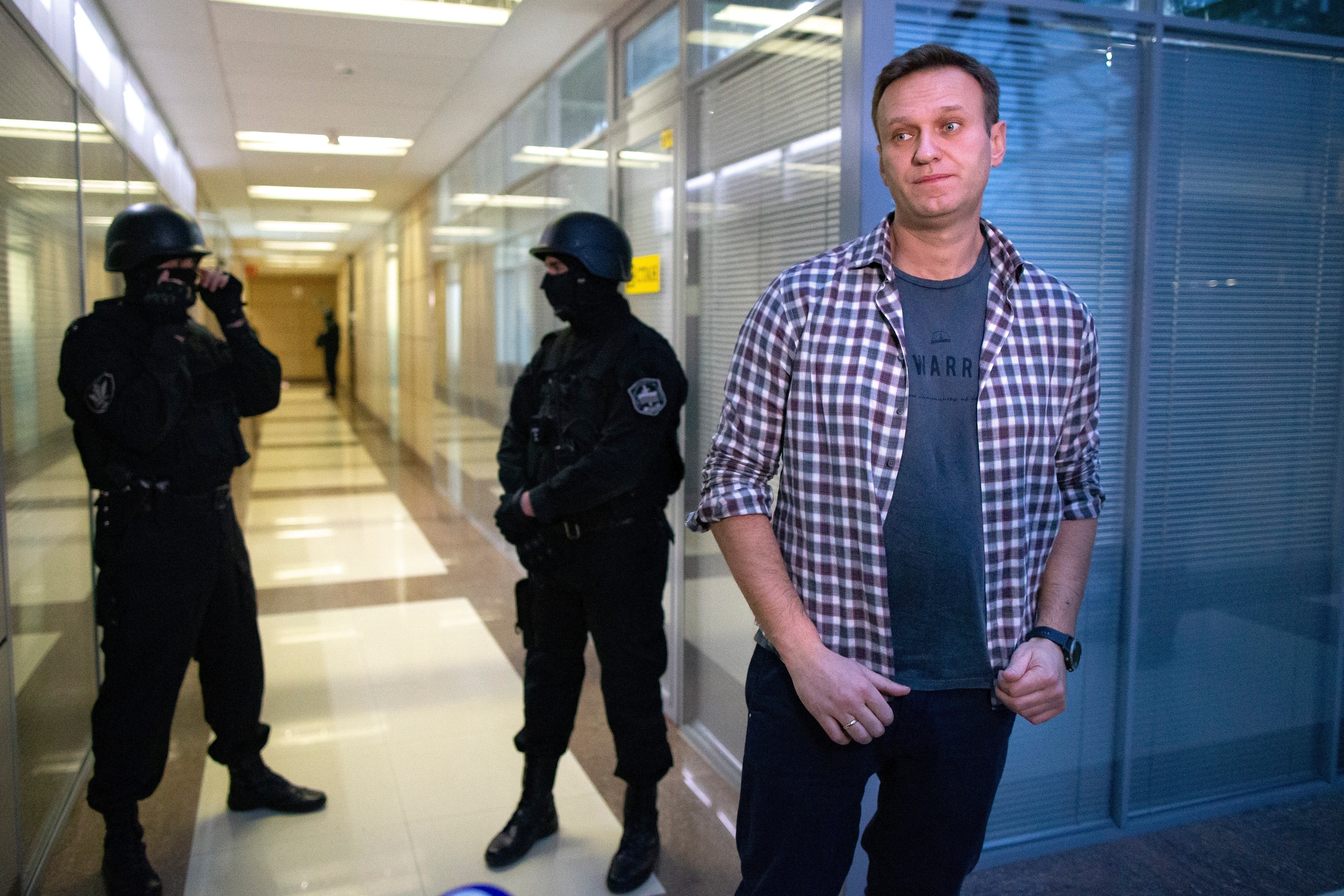
Yesterday foreign secretary Yvette Cooper and four of her European counterparts announced that their countries’ intelligence services and chemical weapons experts had concluded that the Russian dissident Alexei Navalny had been killed by poison derived from the very rare Ecuadorian dart frog.
What might have seemed an echo of the plot of Conan Doyle’s The Sign of Four, where darts with poison from the remote Andaman Islands puzzled even Sherlock Holmes, turns out – it seems now – to be the latest example of the Kremlin’s use of rare poisons to target political dissidents.
Reaching back deep into the Soviet past, from Stalin’s rule onwards, poison has been the Kremlin’s tool to dispose of inconvenient people.
Stalin’s pharmacist-turned-secret police chief, Genrikh Yagoda, was accused of developing a poisons laboratory by Boris Bazhanov, Stalin’s personal secretary, after Bazhanov defected in 1928. Ironically, when Yagoda fell from grace in 1937, poisoning loyal Stalinists was one of the charges that led to his execution.
This might have seemed ancient history, until the lingering agony of the runaway Russian agent, Alexander Litvinenko from radioactive polonium poisoning in London in 2006. The radioactive trail left traces on flights to and from Moscow.
Wasn’t that a public relations disaster for Vladimir Putin? Why do it again and risk adding to the sinister reputation of the man in the Kremlin?
Caligula’s remark about the people of Rome, “Let them hate, so long as they fear”, is probably the mental calculation behind the perverse mix of top-secret poisons and high-profile deaths. Making your domestic opponents’ flesh creep is a good tactic even if it confirms foreign rivals’ suspicions of your regime.
It was Alexei Navalny’s bold return to Russia after his first poisoning with novichok – the Salisbury toxin used in 2018 – that was a deadly challenge to Putin. Once in exile abroad, dissidents tend to lose their resonance at home. Many exiles who returned after the collapse of Communism across the Soviet bloc found that their years of opposition outside their country meant that those who lived through the decaying regime regarded them as privileged outsiders rather than principled dissidents. Navalny’s return to Russia meant that his survival, especially as a prisoner in the remote labour camp to which he was sent, gave him a status that posed a lingering threat to the Kremlin.
Navalny’s mysterious death was a warning to others. The revelation of the alleged method will send a shiver down the spine of Russians known to doubt Putin.
Unlike a shooting, poisonings and simulated suicides by strangulation are always murky. Poisonings and strangulation require a post-mortem to clarify them. That takes time and that gives time both for the perpetrators to escape the scene of the crime but, more importantly, for speculation and rumours to run riot. In our age of social media, a flood of genuine questions and dubious theories can be exacerbated by targeted bots.
Sceptics point out that the revelation was made at the gathering of Western security officials and analysts at the Munich Security Conference two years on from the announcement of Alexei Navalny’s death at the same annual event. The good guys make propaganda, too.
Alexei Navalny is dead, but his legacy lives on. Yagoda used to say “No person, no problem”, and Putin may have assumed that in the midst of the mass slaughter his invasion of Ukraine had caused, no one would notice or care about the sudden death of one dissident in an Arctic prison camp.
But as Stalin understood, “One death is a tragedy. A million deaths is a statistic.”
Alexei Navalny’s fate personalises the cost of opposing Putin but also puts a face to the victims of Putin’s ruthlessness.
In the past, rumours of poisoning hanging in the air had two advantages for the Kremlin. On the one hand, its propagandists could play on the “lack of evidence” for Western suspicions, to undermine criticism of Putin. But at home, the thought that poison could be used so easily struck fear into people.
Across the old Soviet bloc, the Communist secret police – in which Vladimir Putin was a junior cog – had departments manufacturing rumours which, precisely because they were not official communiques, seemed more plausible. The internet maximises the spreading of rumours to upset and even paralyse dissent. The belief that regime agents could strike down dissidents with invisible and undetectable poisons can make any sudden ailment – a high temperature or aches – sinister.
Putin has poisoned his own legacy, not least by launching a bloody and indecisive war on Ukraine, but also by seemingly trying to smother the memory of his best-recognised opponent through their death. But in dying as he did, Alexei Navalny’s memory will haunt Vladimir Putin for however long he lives. And most in the West can never accept him as a partner again.
In the short term, the main international consequence of the Navalny revelation will be to make it impossible for the USA’s European allies to swallow any Trump peace plan for Ukraine that rewards Putin. Poison, it turns out, can be a boomerang.
Join our commenting forum
Join thought-provoking conversations, follow other Independent readers and see their replies
Comments
Bookmark popover
Removed from bookmarks