Mark Zuckerberg is taking an almighty bet on AI. Will it pay off?
The Facebook founder and his fellow tech titans are investing big money in the potential of AI, writes Chris Blackhurst. But if the bubble bursts, it will be ordinary people left paying an extraordinary price

Head-scratching time. The year ended with the US market on a high, with the S&P 500 recording, for the third year running, double-digit gains. That confident mood was followed elsewhere, albeit to a lesser degree. Buoyed by strong company profits and the belief that AI investments will yield smashing returns, many investors, it seems, are full of optimism heading into 2026.
Sorry to be the party pooper, but at the same time headlines are reporting good times, elsewhere other reports are striking an altogether different note. They are relaying how Morgan Stanley analysts are predicting AI will cause the loss of 200,000 jobs in European banking by 2030. Hardest hit will be roles in back and middle offices.
Of course, some may regard that as a price worth paying, taking the view that AI will remove costs (in this case, people) and boost profits. This, don’t forget, is only one region of one sector – across the world, across banking and all industries, the human impact on employment will be a large multiple of that number.
Still, those who have poured funding into the new technology will doubtless cheer and say that is precisely what it is designed to achieve. But the financial, social and health-related misery engendered will be colossal, and it will hit economies and markets hard.
If that does not provide pause, then another, shorter-term worry surely should. It’s the likelihood of that money devoted to AI being lost, of the tech rush proving to be a bubble, similar to those seen throughout history, and exploding. Right now, the glass-half-full folks are seeing it as cash well spent. Equally, though, there is a half-empty brigade that holds the opposite opinion.
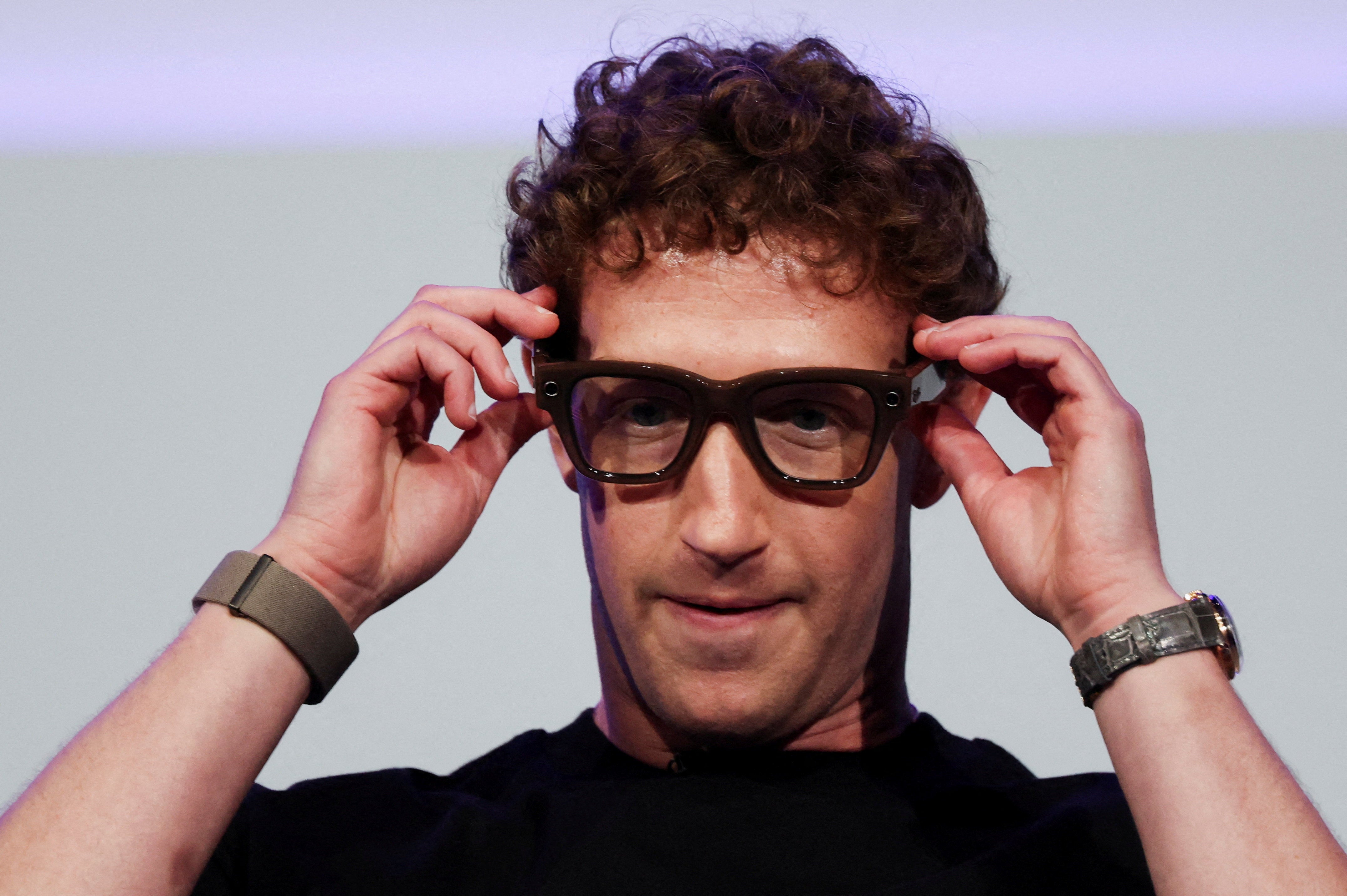
Firmly in the former category is Mark Zuckerberg. Announcing his company’s earnings in October, the Meta chief unveiled plans that could see Meta’s spend more than $100bn in 2026 on AI projects. Last year, Meta’s capital expenditure was $70bn, the year before it was $35bn. He’s going all out on AI, to a degree that has never been witnessed previously. He may win; he may lose. Either way, the outcome will be spectacular.
Zuckerberg is not alone. In the past 12 months, US tech companies are reckoned to have pumped $350bn into creating AI infrastructure. Again, one country, one section of the commercial world – but in this instance, a nation, a place, in Silicon Valley, that is totally committed to the furtherance of AI, to the exclusion of almost everything else, and dwarfing the investment of any other nation (China, by contrast, is estimated to have spent $100bn.)
America is effectively mirroring Zuckerberg and taking one almighty gamble, betting the farm on AI coming good. On this side of the Atlantic, we can gawp at US firepower, as we often do, but we should remember that where America leads, we usually follow. In the case of AI, there will be no escape – such is the dominance of the tech behemoths and their bro bosses.
To give some idea of where that could take us, it is worth revisiting the last time a bubble burst, which, funnily enough, was also tech-related (funny, too, how what happened then appears to have been forgotten or discarded, certainly by the new titans). The 2000 dotcom crash instantly wiped $1.755 trillion off the values of internet stocks. Subsequent corporate scandals, including Enron, and the 9/11 terrorist attacks, added to a stock market downturn that by the end of 2002 had cost a total of $5 trillion. Hundreds of companies worldwide went under, and tens of thousands lost their jobs.
Even though that was not so long ago, the dotcom disaster seems almost quaint by comparison to what could unfold if AI follows suit. The figures then were huge, but they were nothing to the unravelling that would occur today.
That’s why the half-empty camp comprises a growing number of central bankers, regulators and non-AI devotees, alarmed at what may prove to be the biggest headlong rush of all.
The exposure, ours and everybody’s, is frightening. Shares in one AI company, Nvidia – it makes the processors that power the essential data centres – are worth $4.6 trillion. Nvidia is one of the “Magnificent Seven” tech monsters – along with Alphabet, Amazon, Meta, Tesla, Apple and Microsoft – that account for 36 per cent of the S&P 500. The US share index comprises more than 60 per cent of global equities. That’s how bad it could get.
Some in the half-full fraternity maintain the losses will be affordable, that the world is in a stronger place than 2000, that there is more wealth to go around. OpenAI boss Sam Altman acknowledges that some people will lose “a phenomenal amount of money”. Jeff Bezos has said similar.
They choose to see this as a good bubble – Bezos has said that whatever transpires, AI will deliver “gigantic benefits” to society. That may be so, and he, for one, is in a position to ride out the consequences. The rest of us are not so lucky. Ideally, we would prefer for sense to prevail, although it is probably too late. Anyway, there is no sign of that happening; witness Zuckerberg. All we can do is watch and pray.
Join our commenting forum
Join thought-provoking conversations, follow other Independent readers and see their replies
Comments
Bookmark popover
Removed from bookmarks