If one man made me who I am today, his name is Jesse Jackson
I was just 21 when I first heard the US civil rights leader preach in my local church in Tottenham, says deputy prime minister and justice secretary David Lammy – and he was one of the first to call after the 2011 London riots. His moral clarity shaped my life, and it was a privilege to know him


The death of Jesse Jackson marks the passing of one of the great moral figures of our time.
He was a formidable civil rights leader. He was also one of the movement’s enduring voices – a bridge between the generation that marched with Dr Martin Luther King Jr and those who continue the struggle for justice and equality today.
For me, this loss is also deeply personal.
Jesse Jackson was one of the first people to call me after the 2011 riots, which began in my own constituency of Tottenham. At a moment of great tension and uncertainty, he reached out with his characteristic wisdom and solidarity. Like all great leaders, he understood the importance of showing up when it mattered most.
He was also a dear friend of my predecessor as MP for Tottenham, Bernie Grant – a towering figure in the struggle for racial justice here in Britain. The bond between them reflected something powerful: that the fight for equality transcends borders, and that greater progress is possible when we learn from one another.
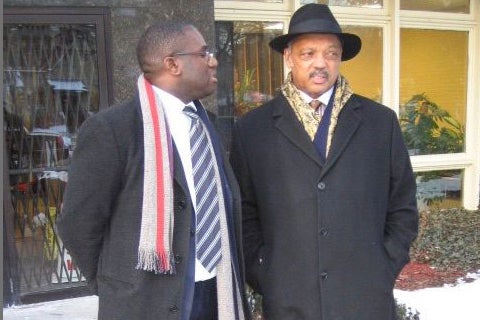
I was just 21 when I first heard Jesse preach in my local church in Tottenham, standing alongside Bernie. I can still hear the conviction in his voice. His words move me to this day.
This moment came not long after the unforgettable image of Jesse and Bernie greeting Nelson Mandela upon his release from prison – an image etched into history. Even now it remains one of the most poignant and powerful moments of my life.
Over the years and throughout my time as MP for Tottenham, I had the privilege of spending time with Jesse in London and in Chicago, the city he called home for many years. His private persona was no different from his public one. He was thoughtful, measured, kind, and deeply committed to the idea that justice is not an abstract concept – it must be experienced in people’s daily lives.
That conviction shaped his life’s work. And it profoundly influenced my own.
For Jesse, the law was a shield – a protection for those without power. He understood that societies cannot flourish if opportunity is determined by race, wealth, or circumstance. And he never allowed cynicism to dull his belief that progress was possible – no matter how hard won it had to be.
Recent history reminds us why his message remains so important. Around the world, democracies face renewed pressure. Public trust in institutions is fragile. Inequality persists. In times like these, principled voices like Jesse Jackson’s are essential.
He knew that protest and politics must work together. That moral clarity must be translated into institutional change. And that achieving justice requires both courage and discipline.
Historians will assess the full extent of Jesse’s legacy. But for those who knew him well, worked alongside him, or simply drew inspiration from his example, some things will always stand out: he never stopped speaking truth to power or believing that society could be fairer and more humane.
With Jesse Jackson’s passing, we have lost one of the civil rights movement’s greatest leaders. I take comfort in knowing that his voice will continue to echo down the generations. We honour him not only with tribute but with action – by continuing to fight for equality, for dignity, and for accountability.
David Lammy MP is Deputy Prime Minister and Justice Secretary
Join our commenting forum
Join thought-provoking conversations, follow other Independent readers and see their replies
Comments
Bookmark popover
Removed from bookmarks