A record number of homeless people died last year. Why don’t we care enough to prevent them?
Britain’s housing crisis is not just a policy failure but a moral one, says Bradley Hillier-Smith. When we treat the homeless as ‘nuisances’ and ‘pests’, we deny their humanity – and our own


Anthony Marks died in hospital, two weeks after he was beaten up by passers-by while sheltering in a bin in the freezing early hours of the morning. He was just one of over 1,600 homeless people who died last year, the highest number ever recorded – a report that broke this week with little fanfare. This kind of thing never does.
This tragedy is deeply unsettling, especially in a society as affluent as ours: the sixth richest nation on the planet. Homelessness is entirely preventable. We have the policies and resources to address it. Yet we, as a society, have unforgivably come to accept homelessness as an inevitable and acceptable feature of our social landscapes.
The harms of homelessness are huge, from increased vulnerability to cardiovascular and respiratory diseases, undernourishment, chronic depression and high suicide rates, to facing extreme violence, including beatings, sexual assault and murder. As a result, the average age of death for a homeless person in England and Wales is just 44 years old.
What I believe is that this neglect stems from homeless people being stigmatised simply because they are homeless. In other words, they are dehumanised. Too often, homeless people are not viewed as individual and equal human beings with needs, hopes and dreams like everyone else, but as something less, as “nuisances”, “tramps” or even social “pests” or “parasites”.
Think about that for a moment. This dehumanisation is happening every day. Many of us walk past homeless people who are often directly asking us for our help, ignoring them even if we have spare change in our pockets – although fewer of us do – or could donate to support groups. This treats them as if they do not matter.
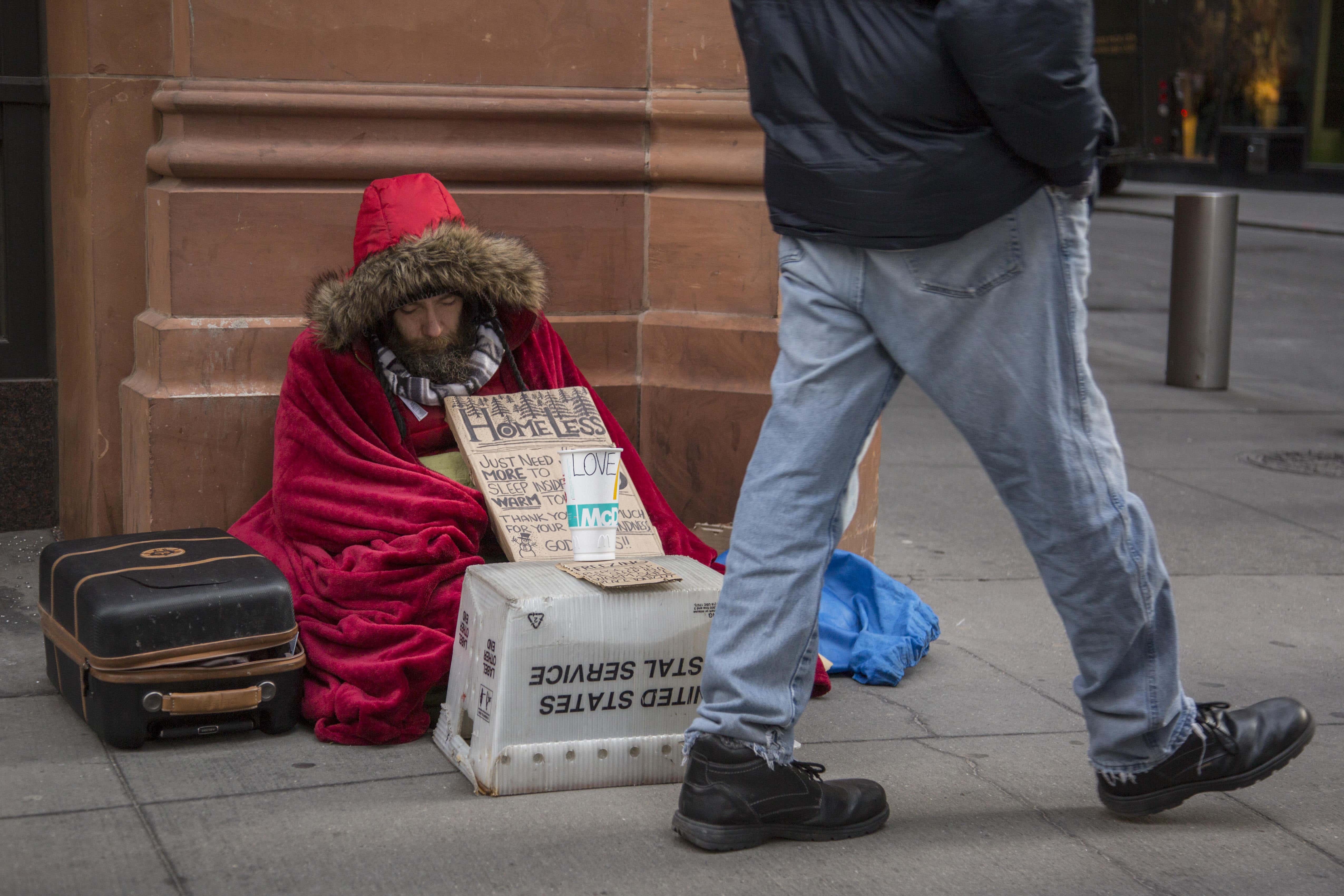
Many homeless people report feeling “invisible”. As John Sparkes, chief executive of Crisis, notes, “not being acknowledged or treated as a fellow human being can be just as painful as the physical hardships”. And homeless people are treated as “drains on society” or “scroungers”, as they themselves report: people “look at you like you’re a piece of dirt” or “like I’m a piece of s*** on your shoe”.
Such neglect is lethal. In 2019, Mark Mummery died in Grimsby, and his body lay on the street for hours before anyone did anything.
Those sleeping rough are 17 times more likely to experience violence – they face verbal abuse, harassment, threats, having their belongings vandalised or stolen, and their collected change stolen. They are spat on, urinated on, physically and sexually assaulted, and even set on fire while asleep. This treatment of our fellow human beings is sickening.
Dehumanisation extends to policy. Hostile architecture – anti-homeless spikes, divided benches, deliberate noise pollution and “wetting down” of spaces with water – tries to prevent homeless people sleeping in public. Local authorities sell public spaces to private companies whose security guards move people on for sleeping or “looking scruffy”. UK police use “enforcement measures” to force homeless people out of urban areas, and even destroy their tents and possessions. The previous Conservative government introduced a bill to criminalise “nuisance begging” and “nuisance rough sleeping”, offences which include causing “excessive noise, smells, litter or waste”.
Rather than treat the homeless as equal human beings and address their urgent needs, these practices treat them with hostility and contempt, as if they were pests, and make their situation worse.
And when the state treats homeless people with hostility and contempt, this emboldens the public to do the same, creating a vicious cycle of persecution and marginalisation.
It does not have to be this way. Homelessness is avoidable. Proven policies include early interventions for at-risk individuals, increased housing allowance, widening access to public funds, increased funds to local authorities to provide supported temporary and permanent accommodation, and longer-term increases in affordable and social housing supply. “Housing First” schemes that provide unconditional housing with social support are incredibly effective. Such schemes have eradicated homelessness in some European cities.
If we fail to adopt these policies, and instead continue to allow homeless people to suffer and die on our streets, then we will be treating them as unequal, as if they do not matter, as if their lives are not worth investing in.
If we instead, as a society, recognise the equal humanity of our fellow citizens facing homelessness, then we would respond with the urgency required and implement the policies at our fingertips, so that homelessness and death on our streets are no longer accepted features of our social landscapes – and never again will be.
Join our commenting forum
Join thought-provoking conversations, follow other Independent readers and see their replies
Comments
Bookmark popover
Removed from bookmarks