Winter in Gaza has washed away the memory of my childhood comforts
Winter used to be comfortable and joyful in Gaza, says graduate Khaled Al-Qershali, writing from the city. Now floodwater and biting winds demand resilience from all who live there


Ever since I was a child, I have loved winter. As soon as black clouds covered the sky and raindrops hit the ground, the family would gather at my grandparents’ house. I would sit next to my grandfather while he started the fire and my grandmother put the teapot on to warm. For us, winter was a season of comfort. We had never felt cold.
By day, my cousins and I would run barefoot through the puddles which dotted the streets, playing ghommemeh – hide-and-seek – slipping behind walls and trees while the rain soaked us from head to toe. I remember my mother shouting at us to come back inside before we got sick. By night, my grandfather would tell us stories of his travels in the 1960s.
As I got older, I started spending more winter time with friends and talking about our future dreams and the goals we hoped to pursue after graduating. Sometimes Khaled, Mahmoud, and I would meet at Mohammed Hamo’s home – he is dead now; may he rest in peace. We would lay a fire and make our favourite drink, tea, on the firewood and play cards, or watch films and TV series.
At home, if the sound of raindrops filled the air or I felt overwhelmed with my studies, I would step out onto my bedroom balcony to watch the rain and enjoy the cold wind. It used to be my habit to watch the sunset from that balcony. What made the view even more wondrous in winter were the migratory birds returning along the coast, painting brief, beautiful patterns across the sky.
The Israeli invasion of Gaza destroyed all the good feelings I had towards winter. My family was evacuated on 13 October 2023, without bedding or winter clothes. Eventually, we were able to buy a few blankets. Each cost us around $35. My younger brother and I had only one blanket to cover us both. A few weeks later, we were sleeping in the backyard of a school. The winter’s wind swept over us mercilessly. I woke up shivering from the cold to find my blanket was drenched just from the soft rains. I have hated winter since that day.
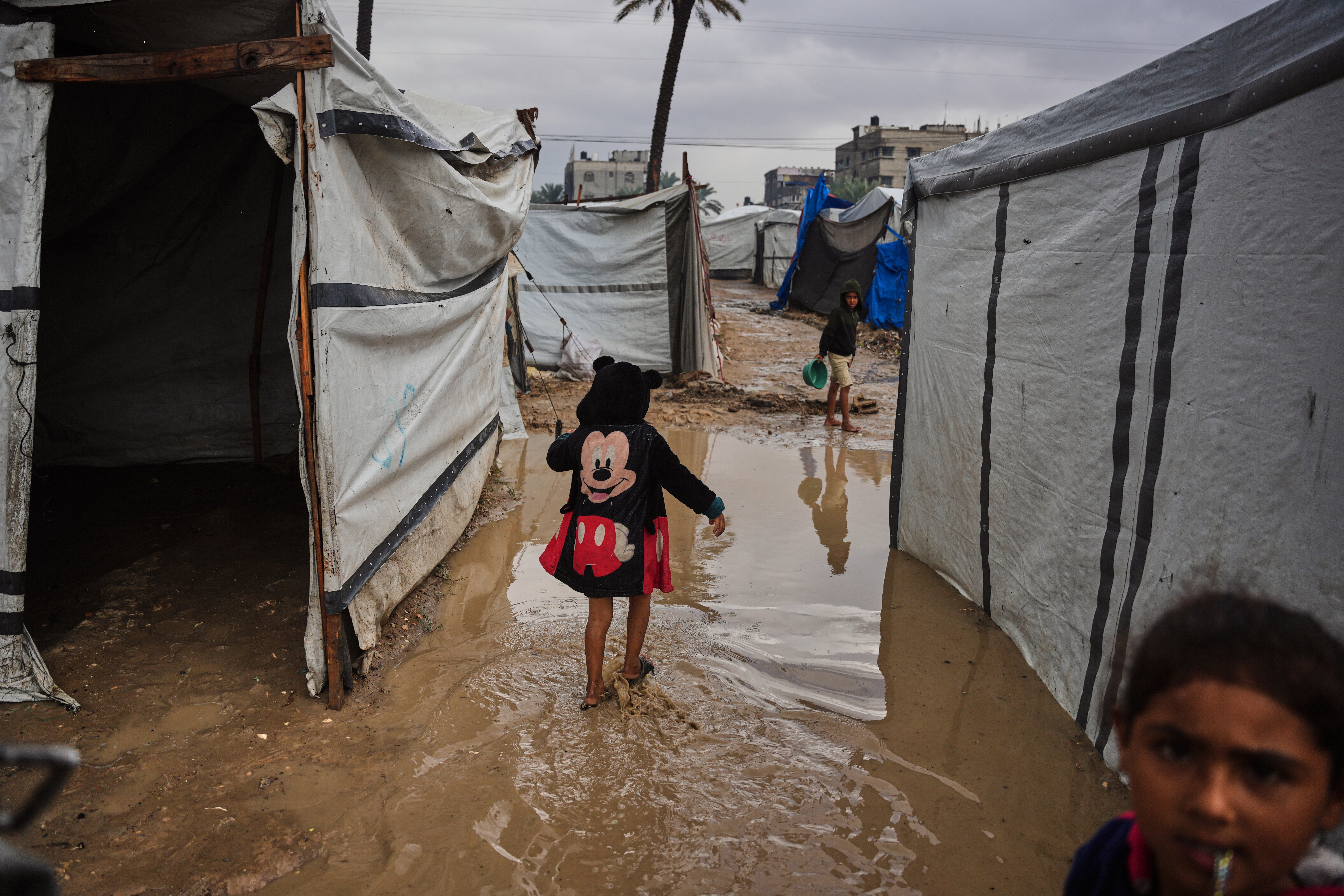
Thousands of families have had experiences like ours. Ismail Abed, 19, who lived with his 14-member family in a small makeshift tent of blankets sewn together, had woken several times soaked by water. The family used to go to their neighbour's tent for some respite from the weather.
“We were drowning whenever it rained until we received a tent from UNRWA,” Ismail told me – they shared it with another unhoused family group. “This new tent protected us from the rain but the biting cold the wind brought, combined with not having enough blankets to cover ourselves, was truly unbearable.”
In our own tent, there were so many of us that we did not have space to set a fire to warm us up. Even cooking food was harder during winter. We didn’t have cooking gas as the Israeli occupation prevented it from entering the Strip. The place we used to set the fire for cooking was not covered, so whenever it rained, the fire would be extinguished.
Living in a tent meant that we had to go shopping for food every day, as we did not have a refrigerator or any safe place to store food from rats and cockroaches. Sometimes, we had to walk for around two hours in the rain to bring home essentials like flour or rice from the market.
Mohammed Abu Al-Mehza, a friend in northern Gaza, has been displaced during the winter several times. In December 2023, Mohammed’s family had to evacuate from Al-Shati camp, western Gaza, to Al-Sheikh Redwaan neighbourhood, walking on foot in the rain.
“All my family, including me, was sick the next day,” he told me. “We remained so for more than 10 days as medicine was so scarce.”
Osama Adas, 23, evacuated to southern Gaza from the north in September with his family. They didn’t know anyone in the south, so put up a tent about 20 metres from the sea. The coastal wind was bitingly cold at night, so the family waited for the day they could return to the north.
When the ceasefire was announced, Osama returned home to find the whole four-storey building destroyed. Instead of being able to prepare for the family’s return, he had to walk south immediately, asking his father to search for a better place to set up the tent. The family are still displaced without a safe shelter. Their new tent in the Al-Mashaala area, eastern Deir Al-Ballah, can better protect them from the rain, but the wind sneaks in through the gaps. “I do not know how I will survive this winter,” Osama told me. “The heavy rains have not arrived yet, but even so, rain is already falling inside the tent.”
I have prayed for this season to end since the first drop fell. Winter used to be a season of warmth, laughter, and fleeting beauty, but in Gaza, it has become a time of fear, struggle, and endurance. Winter now tells a story of resilience: of lives uprooted, of survival against all odds, and of a hope that, one day, the season will return to its old comfort, and Gaza’s children will run barefoot in the rain again without fear.
Join our commenting forum
Join thought-provoking conversations, follow other Independent readers and see their replies
Comments
Bookmark popover
Removed from bookmarks