The Independent's journalism is supported by our readers. When you purchase through links on our site, we may earn commission.
The BBC has no choice but to teach Trump a lesson about free speech
The BBC has no choice but to defend the preposterous libel claim brought against it by the US president, writes Alan Rusbridger. It may have lost a director general – but it needs to prove it retains a spine


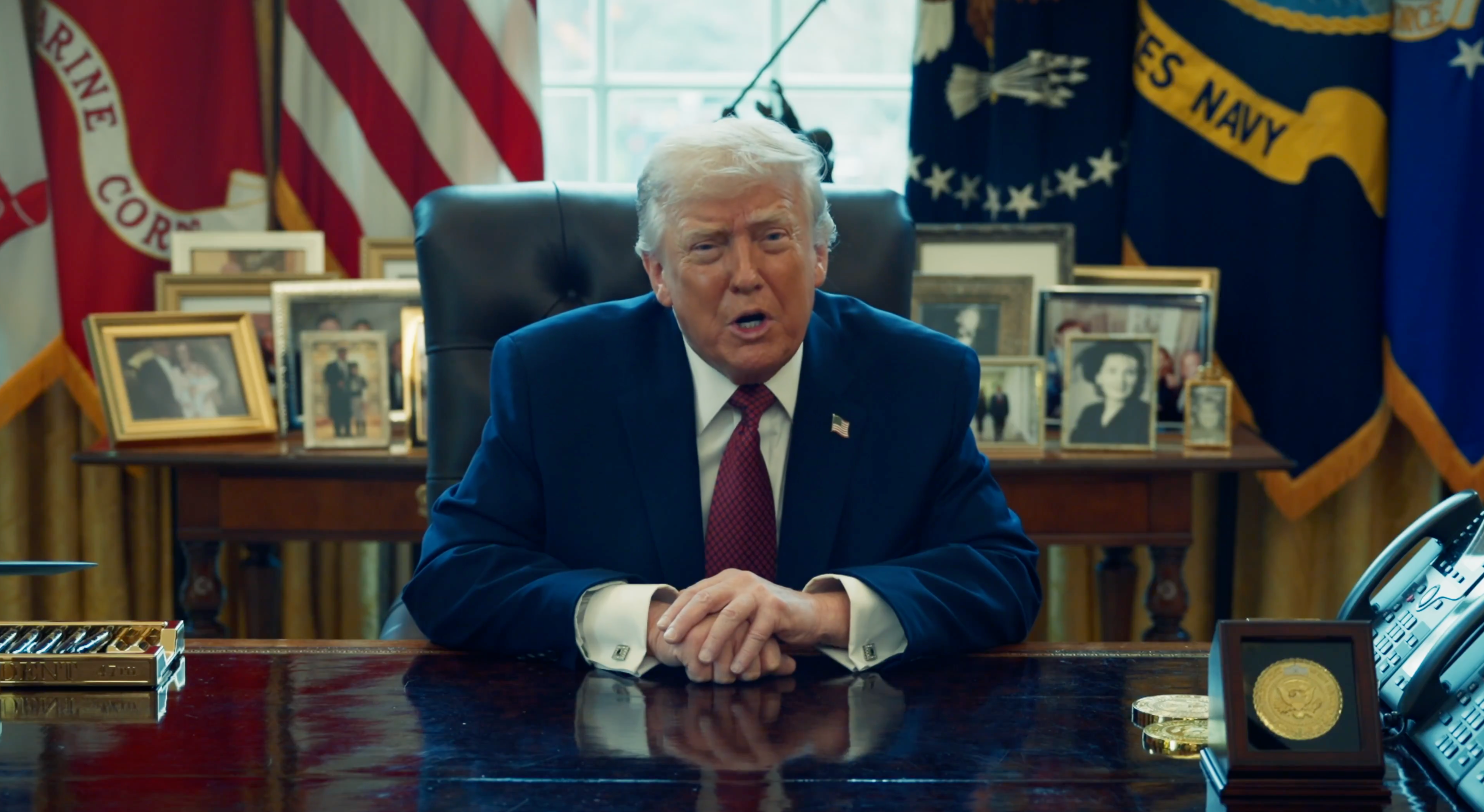
So, Donald Trump’s Big Beautiful BBC writ has finally arrived, and it does not disappoint. We are invited to believe that the US president is a man of almost saintly virtue whose unblemished reputation – and business prospects – have been irreparably tarnished by one lousy Panorama programme.
Trump’s legal team assert that the BBC had the “express intent of interfering with [the 2024 presidential election] and trying to undermine President Trump’s odds of winning re-election”. He wants “compensatory and punitive damages” of no less than $5bn (£3.7bn) – and, depending on how you read his claim, as much as $10bn (£7.5bn).
Some twerps on the right of British politics, so blinded by their hatred of our national broadcaster, have piped up in support of the US president. Rupert Lowe MP, who was elected on a Reform ticket and now sits as an independent, tweeted: “Trump is suing the BBC. Good luck to him, I say.”
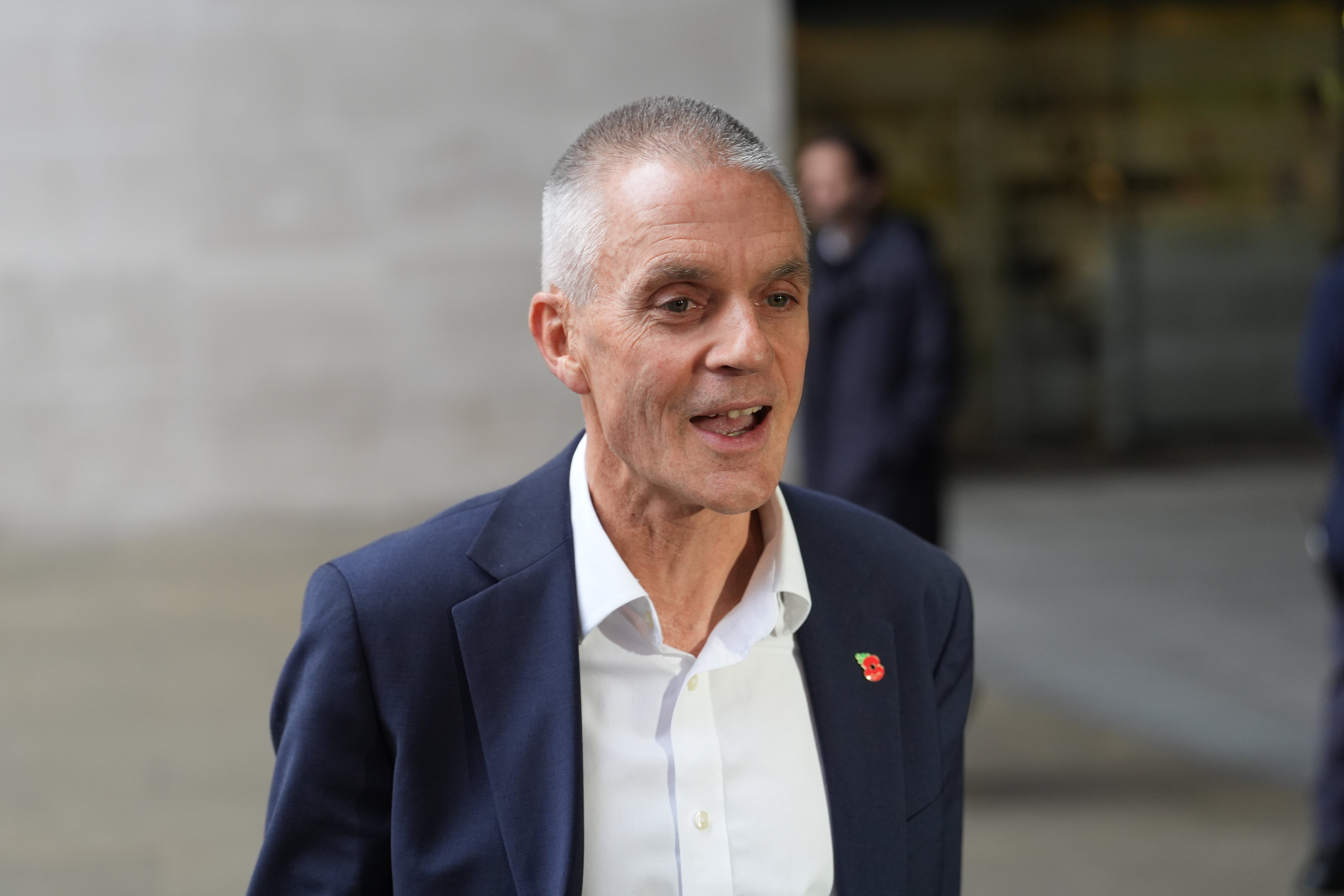
The writ refers to the outgoing director general Tim Davie as “disgraced”, and quotes with some glee the opinion of the BBC’s former editorial adviser, corporate PR man Michael Prescott, that the programme was “neither balanced nor impartial – it seemed to be taking a distinctly anti-Trump stance”.
So, well done, whoever chose to leak Prescott’s memo to The Daily Telegraph. In addition to toppling a respected DG and causing institutional meltdown at the BBC, you’ve also landed the corporation with the enormous expense of defending a specious defamation suit.


I look forward to Prescott being called as a witness on behalf of Trump, a habitual liar and incorrigible denigrator of truthful media as “fake news”. The squirming will be exquisite.
In Trump’s first year, we have seen a tsunami of cowardice in which previously grand institutions – in the media, law and academia – have cravenly bent the knee, as though the 47th president were some kind of medieval monarch.
The BBC has no choice but to defend this preposterous claim. The corporation is not a subject in the quasi-feudal estate of Trump’s fantasies. Unlike those institutions that have crumbled, it is not reliant on favours from the ruler and his unlovely cronies.
And in any case, the law is on its side.
Let me let you into a secret: journalists make mistakes. The Daily Telegraph makes mistakes: I will not embarrass it by listing some of its more egregious ones. The Guardian certainly made mistakes under my editorship. The Sunday Times, when Prescott was working there [he was political editor from 1991-2001], was singled out in 2000 for its ethical failings by Roy Greenslade, then a media commentator for The Guardian and subsequently a professor at City University.
“I’ve received more unsolicited complaints about The Sunday Times than any other paper,” he wrote in July that year, citing “many ... instances of alleged inaccuracy, distortion and misrepresentation”.
He continued: “The Sunday Times appears to have lost its credibility among the nation’s opinion-formers ... According to the host of complainants I have spoken to, the paper is reluctant to admit any wrongdoing.”
I should emphasise that Greenslade did not single out Prescott for any criticism, but the point stands: that even the most august news organisations are fallible. And journalists making mistakes and not promptly correcting them is not necessarily a sign of malice or institutional bias.
By way of illustration, this week I attended a showing of Cover-up, a film profiling one of the most distinguished reporters of our age, Seymour Hersh. It’s set for release on Netflix on 26 December, and is well worth a watch.
Hersh, now 88, broke some of the most impactful stories of his generation, from My Lai to Abu Ghraib, via Watergate and Vietnam. Over the course of nearly six decades he exposed brutality, deception, torture, illegal surveillance and much else. His work makes an inspiring case for public-interest journalism.
But he has also made some howlers along the way. He fell for forged documents relating to JF Kennedy, and his reliance on unnamed sources led to – how can one put it kindly? – vigorously contested positions on Syria, the death of Osama bin Laden, and who bore responsibility for the sabotage of the Nord Stream pipeline. “If I ever made the claim to be perfect, I now withdraw it,” he says in the film.
The BBC’s error in the Panorama film that has so upset Trump is footling stuff by comparison. Much of that film – contrary to the impression given by Prescott – gives voice to Trump’s most passionate supporters. The disputed 20-second segment of the 55-minute programme would have caused little comment if the director had inserted a white flash to indicate that two separate sentences from Trump’s speech on 6 January 2021 had been joined together in the editing suite.
Bill Keller – a former executive editor of The New York Times, and a rather more distinguished journalist than Prescott – said of the mistake: “It was an unnecessary own goal. By focusing on an ethical misdemeanour, the debate overlooks the indisputable reality that Trump inspired, energised and then celebrated a violent attempt to thwart an election.”
But this is where the BBC – assuming it holds its nerve – should find that American law is on its side. In 1964, around the time that Hersh began uncovering the Pentagon’s dirty laundry, the US Supreme Court came out with a unanimous, ringing first-amendment judgment that enshrined two important principles.
It held that, absent any evidence of “actual malice”, journalists should have an extraordinary degree of protection in attacking or criticising public officials – and there is no more important public official in the world than the US president.
Secondly, it held that journalists are bound on occasion to make honest mistakes, and that doing so should not undermine the shield that allows them to do their job of holding those in public life to account. It found that “erroneous statement is inevitable in free debate, and that it must be protected if the freedoms of expression are to have the ‘breathing space’ that they need ... to survive”.
Justice Brennan channelled the British political philosopher John Stuart Mill in pronouncing: “Even a false statement may be deemed to make a valuable contribution to public debate, since it brings about ‘the clearer perception and livelier impression of truth, produced by its collision with error’.”
On the awarding of libel damages, the court was equally firm, describing how the fear of the expense involved would chill journalism: “The pall of fear and timidity imposed upon those who would give voice to public criticism is an atmosphere in which the first amendment freedoms cannot survive.”
At least one of the judges, Justice Black, petitioned for even greater protection, arguing for an “unconditional right to say what one pleases about public affairs”. He wanted “absolute immunity” for anyone criticising public officials. A supposed free-speech absolutist such as Elon Musk would surely approve.
The Trump administration talks a good game on free speech, extolling America as one of the last remaining countries in the world where free expression is the bedrock of democracy. It recently pronounced that Europe faces “civilisational erasure” as it curbs political liberties and freedom of expression.
How pleasingly ironic it would be for the British Broadcasting Corporation to remind Americans what their first amendment is all about. The BBC may be about to lose a director general, but it still has a spine. I hope.
Join our commenting forum
Join thought-provoking conversations, follow other Independent readers and see their replies
Comments
Bookmark popover
Removed from bookmarks