David Lammy’s jury lay-offs aren’t swift justice – they’re a sellout
The justice secretary says he is not going as far as plans leaked last week to abolish almost all jury trials, but why is he trying to restrict the right to trial by jury at all, asks John Rentoul


Sources close to David Lammy deny that he was engaged in what Rachel Reeves called “scene-setting”: namely, allowing people to believe that he was going to do something terrible, so that when he did something that was only bad, everyone would be mightily relieved.
That got the chancellor into a whole pile of trouble. Instead of managing expectations, she made things worse for herself and an opinion poll today confirmed that most people thought she had not been “honest” in the way she presented the state of economy in the run-up to the Budget.
Last week, it was reported that the justice secretary planned to abolish almost all jury trials, except for charges of rape, manslaughter and murder. The suspicion was that when he came before the Commons today to announce a less dramatic restriction in the right to trial by jury, he hoped that MPs would unite in approval of a more modest reform.
His people insist that they did not leak the maximum restriction plan, which was one of a range of options.
But when Lammy made his statement, he presented himself as the Great Blairite Reformer, pursuing a third way between extreme action and inaction. He had a good line, which sounded like authentic New Labour, about coming to parliament not to scrap jury trials but to save them.
And he had a plausible argument about our ancient liberties, saying that he recognised that Magna Carta enshrined the right to trial by jury, but that it also says that justice shall not be delayed.
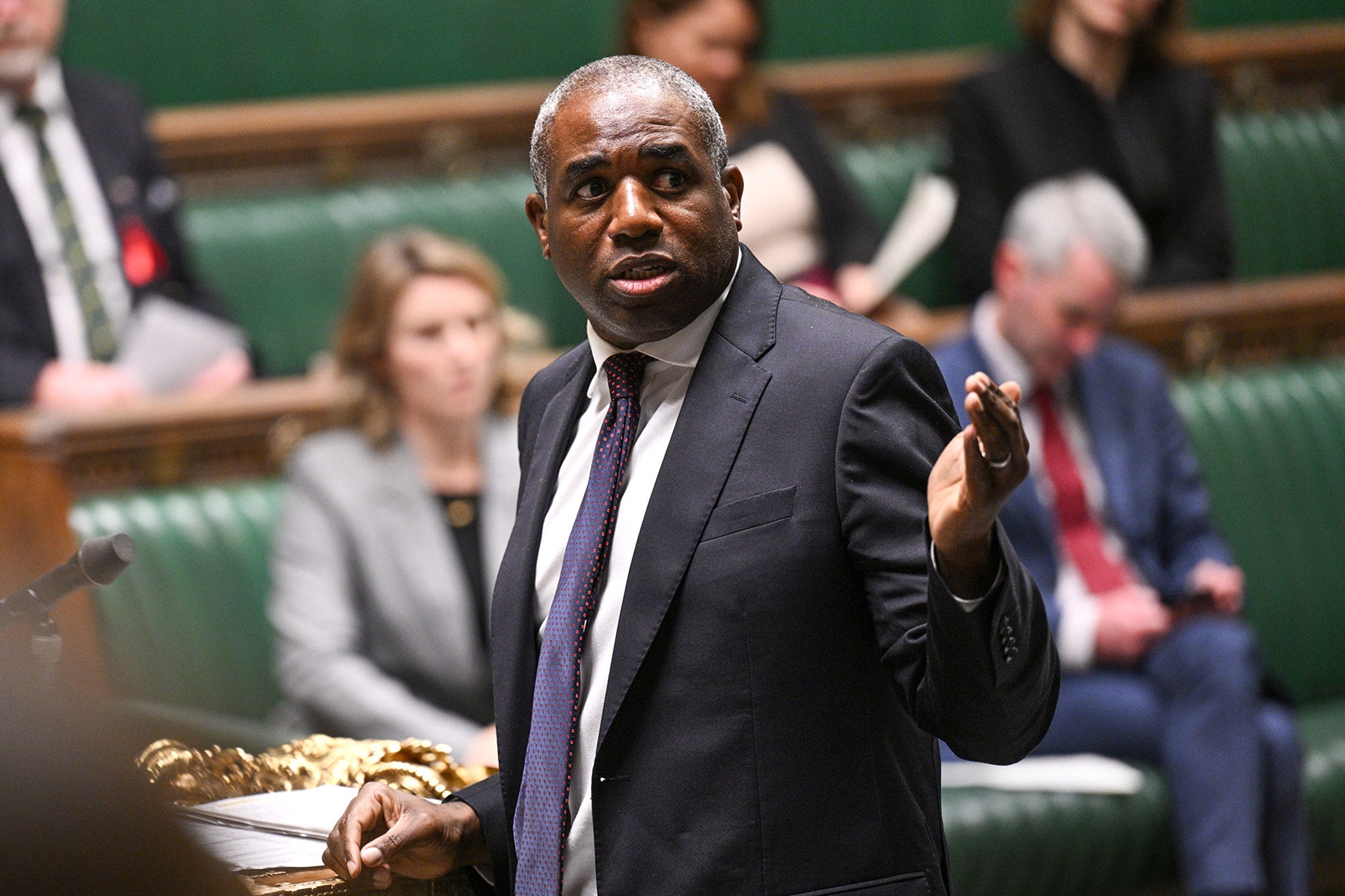
Therefore, he said, it makes sense to restrict jury trials a bit in order to speed up the courts and clear the backlog.
His argument has a surface plausibility – leaving aside the myth that the right to a jury trial was codified in Magna Carta, which it was not, but that is what most people believe so there is no point in a reforming minister getting pedantic about it.
Lammy’s more serious problem is that his argument fell apart under a moment’s scrutiny, and he has hardly any support for his plan from Labour MPs.
As several MPs pointed out, if only 3 per cent of trials are heard in front of juries, reducing that number to, say, 1.5 per cent is hardly going to speed things up significantly.
There must be more effective ways of reducing the backlog. Shouldn’t the government be looking at the causes of court cases first, asking whether there is too much legislation and too many offences, and whether people should be going to court for posting things that upset other people on social media?
Then the courts could be made more productive. The gains of the greater use of video links, which happened during Covid lockdowns, seem to have been dissipated already.
It seems surprising that Brian Leveson – on whose report Lammy based his reforms, and on whom the justice secretary lavished praise, calling him “one of the foremost judges of his generation” – started with jury trials, and will be writing a second report later on courts’ “efficiency”.
Shouldn’t he be looking at the incentives in the system, including lawyers paid by the hour who have an interest in stringing things out? Or, if late changes of plea are a problem, as Lammy suggested several times, should ways not be found to encourage early ones?
I doubt that Lammy would have leaked the maximum plan in the hope of persuading his colleagues that his only mission in life was to save jury trials from the inevitable pressures of demand.
But he must have been worried that only a handful of Labour MPs supported him in the Commons today. And, as Kieran Mullan, a shadow justice minister, pointed out, one of the few supporters of his plans that the deputy prime minister quoted was the victims’ commissioner, who “sadly passed away weeks ago and cannot possibly have seen these proposals”.
Join our commenting forum
Join thought-provoking conversations, follow other Independent readers and see their replies
Comments
Bookmark popover
Removed from bookmarks