We’re in deep trouble – everything about our armed forces is yesterday’s war
In a recent military exercise, British armoured vehicles were wiped out by Ukrainian drones. As a Russian shadow fleet is spotted off Sweden, military chiefs fear the UK is woefully unprepared for what could come next, writes Owen Matthews


Over the last few days, warnings that Nato is unprepared to defend itself from a Russian attack have been coming thick and fast. Speaking at the Munich Security Conference over the weekend, Sir Keir Starmer called for Britain to “build our hard power, because that is the currency of our age” and warned that the UK “must be able to deter aggression – and, yes, if necessary, we must be ready to fight, to do whatever it takes to protect our people, our values and our way of life.”
Air Chief Marshal Sir Richard Knighton and General Carsten Breuer, chiefs of the Defence Staffs of Britain and Germany respectively, published a joint essay warning that “it’s clear that the threats we face demand a step change in our defence and security”, while announcing new cooperation agreements on stepping up defence-industrial production. “We cannot deter if we cannot produce,” wrote the defence chiefs. “People must understand the difficult choices governments have to take in order to strengthen deterrence.”
Europe, after years of enjoying a post-Cold War peace dividend and free-riding on US defence spending, has finally got the message that money has to be diverted from welfare to warfare. But many military experts are warning that Nato’s armed forces are dangerously ill-equipped not just in terms of personnel and equipment, but in their fundamental understanding of how the war being waged on Europe’s eastern frontier is actually being fought.
Gathering in a private dining room in Rome last week, senior Nato military officers embarked on an informal discussion of the alliance’s profound vulnerabilities with a handful of government analysts and journalists.
“Nato has the budget but lacks the imagination and the experience,” said one European general, who spoke on condition of anonymity. “Ukraine has the imagination but lacks the budget … but somehow they have achieved more in preparing an effective modern war machine than we [Europeans] have.”


One word kept cropping up in the conversation: Hedgehog, the codename of a major spring 2025 joint military exercise conducted in Estonia and involving 16,000 Nato troops from 12 nations, including a battalion from the British Army.
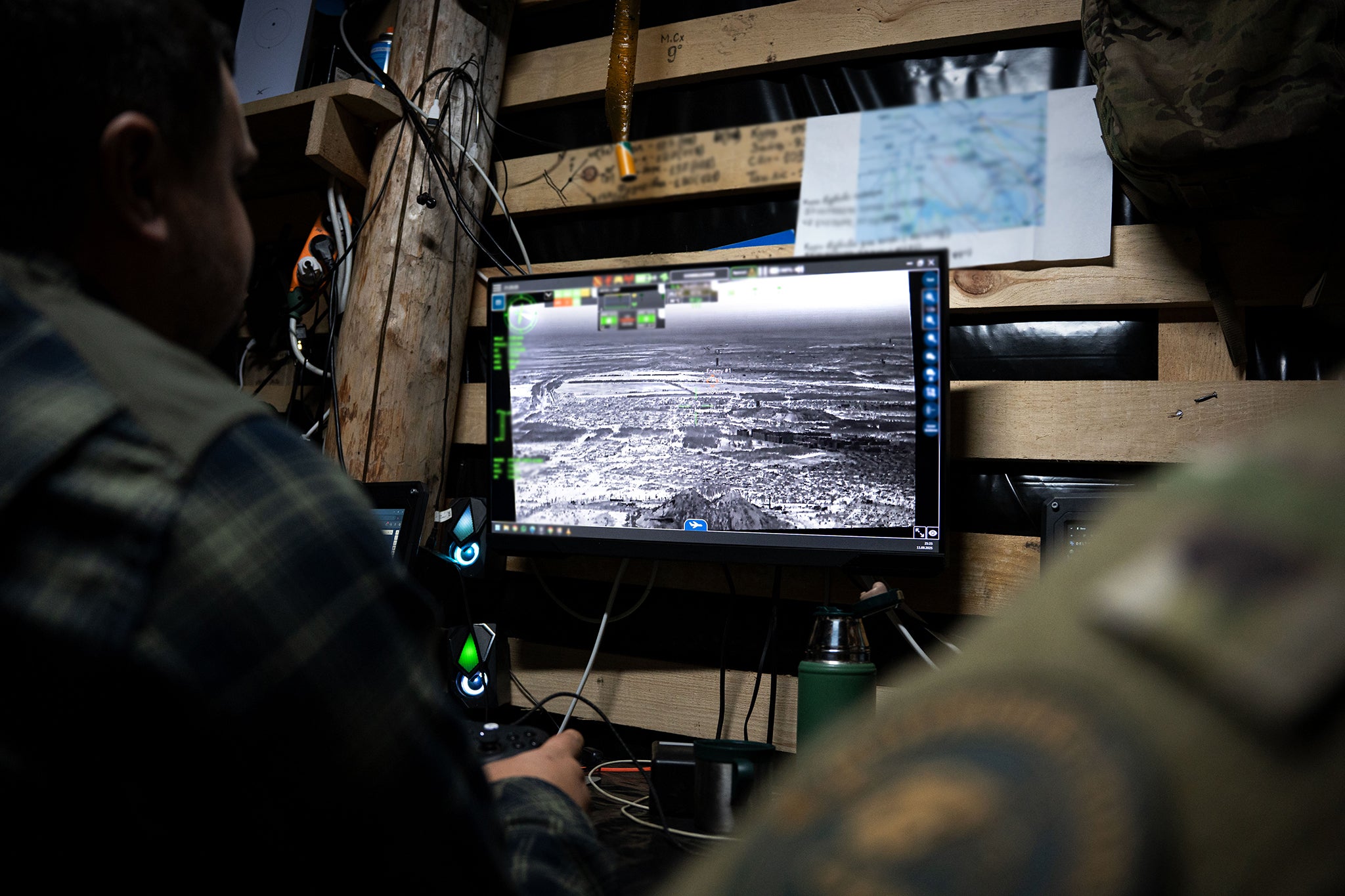
Playing the Russian army was a detachment of Estonians – and a team of 10 Ukrainian drone operators armed with a wing of the kind of cheap battlefield observation, bomber and kamikaze drones routinely deployed on the battlefields of the Donbas. Plus their secret weapon: Ukraine’s sophisticated, AI-powered battlefield management system. Known as Delta, the system is capable of analysing battlefield data, identifying targets, coordinating strikes and issuing precise firing instructions. Delta’s so-called “kill-chain” – the time between spotting a target and destroying it – operates in single-figure minutes or less. In about half a day, the Ukrainian team succeeded in mock-destroying 17 armoured vehicles and making 30 strikes on other targets – despite having a drone saturation less than half of that typical on Ukrainian front lines.
“The Ukrainians handed us our backsides” during Hedgehog, said one senior British officer who had participated in the exercise as a control-room commander, and believes we’re in deep trouble. “It was a very eloquent message about our unpreparedness for this kind of battlefield.” But, worryingly, it’s a message that military planners in Nato capitals have “not really taken on board”, said the officer.
"The Russian-Ukrainian war has completely changed the nature of warfare,” wrote General Valeriy Zaluzhny, Ukraine’s former commander-in-chief, soon after the Hedgehog exercise. Zaluzhny predicted that the wars of the future would be won by countries that “concentrated resources on drones, electronic warfare and artificial intelligence” – not by those with the most tanks.
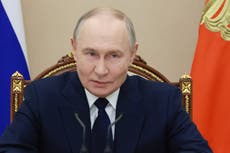
“There is not a single tank that could survive a first-person-view drone attack,” Major Robert “Madyar” Brovdi, the legendary commander of Ukraine’s Unmanned Systems Forces, told a packed room of Nato officials last year.
Yet most Western militaries – and the politicians who direct and fund them – remain mired in outdated procurement systems that see billions poured into useless and badly designed big-ticket military toys like tanks, armoured personnel carriers and manned fighter jets.
The situation is not helped by the fact that Europe’s biggest defence contractors – such as Britain’s BAE Systems or Germany’s Rheinmetall – are not only major local employers and powerful political lobbyists, but also provide lucrative career opportunities for retired politicians and military commanders.
“Military spending is the ultimate political pork barrel,” said one senior military analyst present at the Rome meeting, which followed an event at Nato’s staff college in the same city. “Every member of parliament wants their local factory to get a fat [government] contract, even if what is being produced is useless.”
In Britain, successive governments have been criticised for the fundamental unfitness for purpose of Ministry of Defence (MoD) strategies. There have been accusations that the effectiveness of drones in Ukraine has been ignored and widespread criticism of Ajax, and its £5.5bn contract to supply the British Army with next-generation reconnaissance vehicles, which have proved to be anything but. Not only was the delivery horrendously late, but vibration and noise from the vehicles was so bad that tinnitus and permanent hearing loss ensued among servicemen.
Europe spent an estimated €381bn on defence in 2025, compared to the US’s €828bn. But while overall troop numbers are comparable, Europe’s nations (including the UK) maintain 28 separate General Staffs, use different (and not always practically interoperable) weapons systems, have their own national procurement chains and military doctrines.

The practical result is that as the US has stepped back from supporting Ukraine’s war effort, Europeans have had to buy key weapons systems such as HIMARS and ATACMs rocket artillery and Patriot missiles from Washington for lack of a feasible European-produced alternative. For all of Starmer and French President Emmanuel Macron’s talk of putting a peacekeeping force on the ground in Ukraine, in practice, the UK and France would struggle even to keep a contingent of 7,500 on rotation in the country.
As for drone technologies and strategies, Nato remains mired in a culture of big spending and slow delivery. In March 2022, the US government shipped over 700 Switchblade 300 drone systems, made by the Virginia company AeroVironment, to Ukraine at a cost of $60,000–$90,000 (£44,000-£66,000) per unit. Most were quickly destroyed by Russian electronic warfare. The US tried the heavier Switchblade 600 at $100,000–$175,000 each, and they succeeded in taking out one Russian SA-15 Gauntlet air defence system worth an estimated $25m. But, overall, the expensive US drones were massively outperformed by cheap Ukrainian FPV drones costing between $300-$700 for routine targeting of soldiers and vehicles.

As Major Brovdi, Ukraine’s drone army commander, told Nato commanders last July, “You should also understand that our experience is super valuable for all of you here, as none of the countries have this kind of experience nowadays.”
Modern war has changed. Ukraine has learnt that the hard way. But are the British Army, and our Nato allies, learning fast enough?
Join our commenting forum
Join thought-provoking conversations, follow other Independent readers and see their replies
Comments
Bookmark popover
Removed from bookmarks