Most novelists believe AI will ‘entirely replace’ their work. The scary truth is, I think they’re right
Jonathan Margolis argues that, because people love formula-driven stories, AI will likely ransack the books industry. But, he says, there will remain some aspects of storytelling that robots can never master


In a frighteningly short couple of years, it has become the conventional wisdom that authors of fiction are doomed because of the onslaught – the word is no hyperbole – of generative AI.
More than half of the 258 published novelists in Britain recently questioned for a Cambridge University study, along with 74 industry figures, believe the technology is likely to entirely replace their work. Romance, thriller and crime writers feel they are the most threatened.
It’s not just the main consumer apps – ChatGPT, Claude etc – that are threatening to satisfy the limitless human appetite for telling and hearing stories, which has been undiminished in 5,000 years of our recorded history, and probably goes back much further.
Apps specifically made to automate novel writing include Sudowrite and Novelcrafter for brainstorming and editing, while Qyx AI Book Creator and Squibler are being used to draft full-length books, and Spines to do the design and publishing for you.
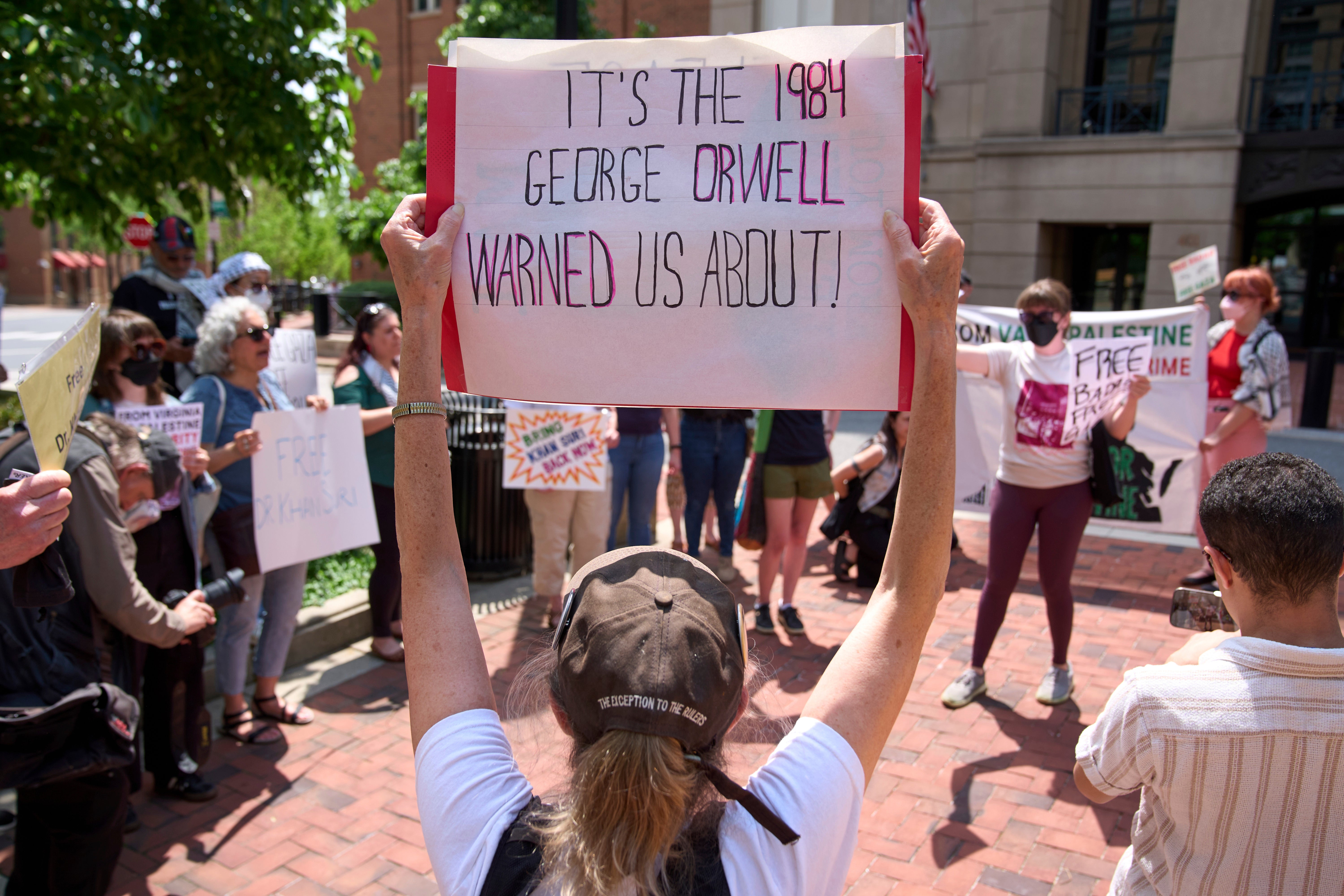
If this real-life version of the novel-writing machines envisioned by George Orwell 78 years ago in his 1984 isn’t sufficiently disturbing to both writers and readers, there’s another insidious, seedy layer of robotic authorship.
A craze on social media encourages people to make and flog short non-fiction books in PDF form, written in seconds from scratch, about subjects you neither care nor know anything about.
Those interested in the scam are told they can “write” a book on anything, have it selling online the same day, and earn thousands a month in no time. The only skills needed, which can be acquired from online scam schools for a few quid, are the limited tech and marketing tricks to pull the con off.
As the author of a dozen non-fiction works, as someone working on a doubtless-to-remain-unpublished novel, and a technology journalist of 30 years’ standing, I have myriad reasons to want to believe this is all nonsense.
Generative AI is a useful research tool for proper, human writers – a third of authors in the Cambridge study admit to using it to speed up non-creative research tasks – but it is incapable and always will be of having an original idea, even less so of telling a human unprompted.
So there’s no time in the foreseeable future when your laptop is going to become like the talking toaster in Red Dwarf and keep telling you its latest brilliant idea. Even the ever-promised next generation AGI (artificial general intelligence), which simulates something akin to consciousness, will still be limited to regurgitating existing data in a derivative, sludge-like – if scarily plausible – form.
However – and this is a horribly big “however” – there’s a snag here.
The unfortunate fact is that people absolutely love undemanding sludge, and that an awful lot of those threatened authors, as well as film and TV screenwriters, blog writers and so on already produce it for a living.
I despise the sinister new word “content” – it’s one Orwell would have kicked himself for not dreaming up – but a huge proportion of written material today is mere content. If your face appears on terrestrial TV, almost any old rubbish (aka content) that you can churn out – or have churned out in your name – will make it into print.
Mediocrity is hugely prized across the board. A hugely successful travel blogger, who I follow for the perverse amusement of it, writes so boringly about his adventures that he’s saved me a fortune by making everywhere sound uninteresting.
Similarly, a lot of the written material on websites, in business communications, in politics, in advertising, in religious sermons and even in academic papers is pedestrian bumf, blah, puffed-up “content” that might as well be produced by AI.
A few years ago, before the word “content” was used, I was hired by a tech company to produce some “advertorials” – paid-for articles. The work was well paid, and I put a lot of effort into it, giving full credit to the company for producing (obviously) the best product in its field. I was sensible enough not to submit anything resembling real journalism.
A couple of weeks later, on holiday, I got a splenetic phone call from the company saying the work was not at all what was wanted. “What specifically were you looking for?” I asked.
“Can you just make it… duller?” the person said. “It’s not supposed to be read. It’s just filling a space.”
Today, I’m sure they would have avoided a human writer and just got AI to achieve the requisite level of flatness for free.
Another new language habit, like describing writing as content, is to declare everything you are concerned about as an “emergency”. Thanks to generative AI, we are in an, ahem, content emergency.
I met up with a friend, a university professor, last week, and he was complaining about the effect of ChatGPT on his students’ written work.
“Up until two years ago, you would read their essays, and most would be OK, some substandard, and a few outstanding,” he said. “Suddenly, they are all OK-ish, but nothing stands out at either end of the scale. It’s perfectly obvious that they are all getting AI to do their work.”
The prof’s solution was to push for students to do more viva voce exams, where they are put to the test orally, with no outboard brain to consult.
Maybe the future of novels will be a new oral tradition, whereby authors tell us a story unscripted?
Join our commenting forum
Join thought-provoking conversations, follow other Independent readers and see their replies
Comments
Bookmark popover
Removed from bookmarks