Freedom fighter Aung San Suu Kyi spent her 80th birthday forgotten in a jail cell. Do not forsake her
A decade ago, as British ambassador to Myanmar, I hosted global leaders, Oscar winners and activists all eager to show their support – and have their photos taken – with the icon of democracy, writes Andrew Heyn. Where are they now?

In the autumn of 2013, I boarded a plane at Yangon airport, leaving Myanmar after four years as the UK’s ambassador. Just before setting off for my flight, I made my final official call. It was with the Nobel Peace Laureate and democracy icon Aung San Suu Kyi.
Back then, she was in the ascendancy as a global icon of democracy and peaceful protest. She was on her way to a landslide election win in 2015; adored across the world and by the Myanmar people who respected her sacrifice, determination and, above all, the hope she represented. Quite a contrast with her circumstances and reputation today.
As the British ambassador, it was fitting to finish on a farewell meeting with someone who embodied Myanmar’s democratic hopes. The UK had long stood as one of Suu Kyi’s strongest Western advocates, often holding firm when others considered easing pressure on the military junta that had ruled for more than 50 years.
When Myanmar began to open up in 2011-12, I hosted visits by the UK’s prime minister and foreign secretary, who were among the first senior Western leaders to visit and show support for her and the reform process. There followed a procession of global leaders, Oscar winners, writers and activists. Being photographed with the Nobel Prize winner had become a must.
Contrast that with 2025. On 19 June, Aung San Suu Kyi spent her 80th birthday in a prison cell in Naypyidaw, the junta’s remote capital. Outside the inner circle of the junta, no one knows exactly where she is held. There are no family visits, no letters or cards. The woman once celebrated worldwide is once again the world’s most famous female political prisoner – but nowadays, far fewer people seem to care.
She would be the first to say she is not suffering alone. Over 20,000 political prisoners languish in Myanmar’s jails. A humanitarian crisis entirely of the junta’s making is gripping the country. Food and medicine are scarce. Resistance is met with overwhelming force, backed by arms and technology from Russia and China. Entire villages have been bombed from the air for allegedly harbouring resistance fighters.
Yet, against these odds, resistance groups have taken significant territory. The main cities, however, where foreign investment and junta interests concentrate, remain under military control.
Once, ordinary people in Myanmar believed the international community would stand with them. Now, many of them feel abandoned. They watch Western protests about Gaza or swift sanctions against Putin and wonder: where is the outrage for Myanmar?
Some Western governments and international organisations issue periodic statements calling for Suu Kyi’s release and addressing the humanitarian situation. But, to many Myanmar citizens, these are just hollow words.
The change stems from the Rohingya crisis. The military’s unspeakably brutal 2017 campaign – killing 10,000 and displacing 750,000 – was a calculated move. They weaponised deep-rooted divisions, aided by Facebook’s unfiltered enabling of the spread of hate, and laid the trap. The West responded by cancelling Aung San Suu Kyi.
It is true she did not always help herself. Her 2019 appearance at the International Court of Justice, focusing on legal technicalities rather than human suffering, was deeply damaging. She seemed to lack empathy. But those who know her well know she is not Islamophobic and was appalled by the violence.
It is also worth remembering that although Suu Kyi was a brilliant campaigner, as evidenced by three landslide election wins in 1990, 2015 and 2020, she was not a seasoned politician. She spent much of her adult life raising a young family with her English husband in Oxford and then, after returning to Burma in 1988 to nurse her dying mother, in isolation under house arrest.
Not ideal preparation for life in the glare of global and, latterly, hostile media scrutiny. Nor for dealing with ruthless and power-hungry generals. Overlooked, too, was her early recognition that the Rohingya issue needed addressing. She took the bold step of inviting Kofi Annan to lead an international commission to recommend solutions. The military ensured its recommendations went nowhere.
The generals always held real power. The 2008 constitution they wrote guaranteed control over security and key ministries, even after Suu Kyi’s 2015 landslide. They used this to conduct one of the most horrific campaigns of ethnic persecution in recent history.
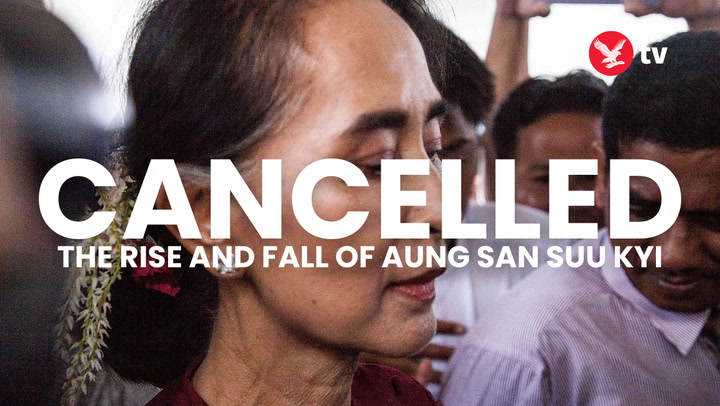
The military’s coup in 2021 came after the generals judged that the West had fallen out of love with Suu Kyi, despite her second landslide election win in 2020. They correctly calculated that condemnation would be mild, sanctions token, and Moscow and Beijing would back them. As The Independent’s excellent documentary Cancelled demonstrated, the military seized its moment, overturned the 2020 election result and seized power.
Where does the UK stand now? We’ve issued statements and tightened some sanctions. But we are no longer leading the global response as we once did. For many in Myanmar, Britain is yesterday’s friend. That must change.
We have a historic duty – to Aung San Suu Kyi, to the 20,000 other political prisoners and to the millions who still hope for a democratic future. The UK should step up and cajole its allies to increase humanitarian aid, push relentlessly for the release of all political prisoners, and urge all international partners to reject the junta’s upcoming sham elections.
The world once celebrated Aung San Suu Kyi. It’s time to remember what she represents for democracy and to stand with Myanmar again.
Andrew Heyn was a UK diplomat for over 30 years. He was British consul-general in Hong Kong from 2016-20 and British ambassador to Myanmar between 2009 and 2013
Join our commenting forum
Join thought-provoking conversations, follow other Independent readers and see their replies
Comments
Bookmark popover
Removed from bookmarks