Is Angela Rayner, Queen of the North, really ready to march on Starmer’s Westminster?
With furious Labour MPs – and the country – baying for blood over Lord Mandelson’s connection to Jeffrey Epstein, the only thing keeping Keir Starmer in post has been uncertainty over his replacement – but that could be set to change, writes Sonia Sodha


In recent days, the question overhanging Keir Starmer has morphed from if he will be forced to step down to when. Revelations that Peter Mandelson was sharing market-sensitive knowledge with convicted paedophile Jeffrey Epstein during the financial crisis have cast the prime minister’s decision to appoint Mandelson as US ambassador, despite his known close friendship with Epstein, in an even more troubling light. Labour MPs – many of whom were already deeply unhappy with Starmer – are furious not just at the fact of Mandelson’s appointment, but the way the fallout has been handled by No 10.
There is much to be said about what this reveals about Starmer’s weaknesses, not least the way his claim, as a former director of public prosecutions, to understand the plight of sexual assault survivors jars with his apparent obliviousness to the close professional connections of the men he has chosen to elevate to high office with child sex offenders. Starmer recently nominated his close former adviser Matthew Doyle to the Lords, even though Doyle campaigned for a friend he knew had been charged with child sex offences in local elections. Women in the parliamentary Labour party are particularly angry; it’s seen as yet another example of the Labour boys’ club overlooking each other's flaws and bad judgment.
But the next question after “when” is “who” – and the role Angela Rayner has played this week in extracting concessions from No 10 to avoid defeat on a Conservative motion to force the government to release documents relating to Mandelson’s appointment has not gone unnoticed. No 10 wanted the disclosure process to be run by the Cabinet Office; Rayner has effectively ensured that it will be Parliament’s Intelligence and National Security Committee that gets to decide which documents can be held back on national security grounds. The ramifications are huge: the scope of the communications that Labour ministers and advisers could be forced to disclose is very broad indeed.
Rayner has long been talked up as a frontrunner to succeed Starmer – and, clearly, she is not part of the Labour boys’ club. Her rise from child carer and single teen mum to deputy prime minister shows what an exceptional – and well-liked – politician she is. Alongside Greater Manchester mayor Andy Burnham, she was very much the favoured soft-left candidate and had the advantage over Burnham of actually having a seat in Parliament. But she was abruptly forced to resign last September after it emerged she had failed to pay enough tax on an £800,000 flat she owns in Hove. The prime minister’s ethics adviser found she had, albeit unintentionally, breached the ministerial code. Rayner is now awaiting the outcome of an HMRC investigation into her underpayment of stamp duty, which could result in a fine.
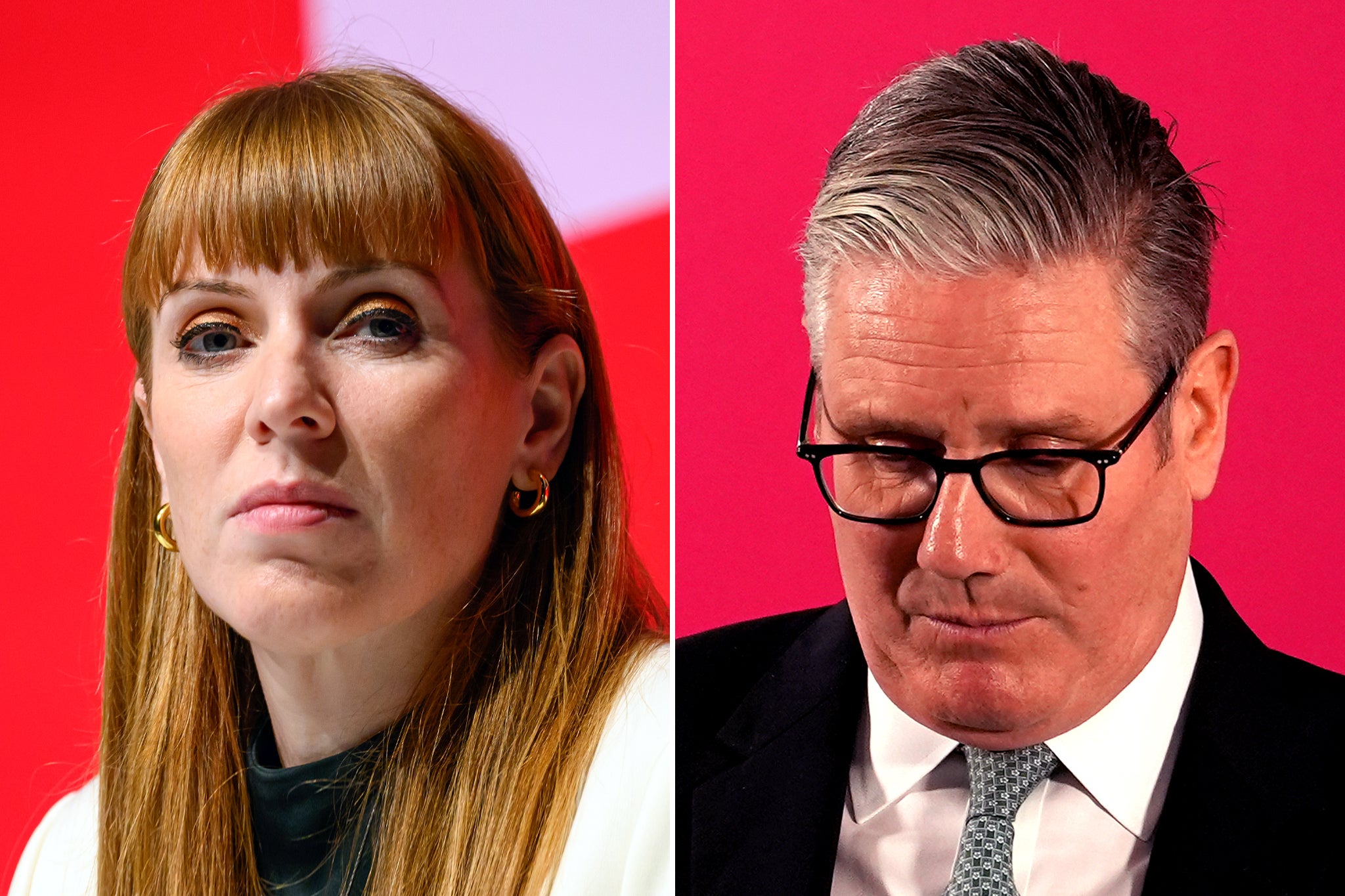
Given the important finding by the prime minister’s ethics adviser that she “had acted with integrity,” her allies believe that she could, in time, certainly make a Cabinet comeback and yet win a leadership contest. The fact that she chose this week to publicly and effectively put pressure on Starmer signals that perhaps that time is coming closer.
In the event of a leadership contest where Rayner was the soft-left candidate in a members' ballot, she would very likely beat any colleague from the right of the party, like health secretary Wes Streeting, given the left-leaning nature of Labour’s membership. But a lot needs to happen for that situation to arise. While many MPs are now of the view that Starmer cannot lead them into the next election, they also worry about the electoral consequences of Labour descending into a weeks-long, messy and divisive leadership contest, while it is also supposed to be running the country.
Some would much prefer for there to be a coronation of Starmer’s successor amongst MPs, rather than for the ultimate decision to go to a ballot of members. To get there, though, the majority of the parliamentary Labour Party would need to rally behind a single person, and who that person is would depend on the outcome of backroom negotiations between different party factions. There is no question that Rayner would be in a stronger position in those negotiations had the HMRC investigation already concluded with any potential fine settled.
It’s not just in Rayner’s interests for Labour MPs to hold off any leadership contest, or handover, for at least a few more months, however. There are good political reasons to do so: the May elections are widely anticipated to be a bloodbath for Labour, and it is seen as better for Starmer to take the rap for them rather than handing the poisoned chalice over to a new prime minister.
There are even stronger substantive reasons to delay a while. The Starmer premiership is beset by two big issues: Starmer himself is a wooden communicator who has struggled to ever connect with voters. But the problem is more fundamental than that. Labour was elected without a clear governing agenda, following public disaffection with the Conservatives. It fought a vanilla election campaign designed to mop up that disaffection as efficiently as possible without committing to too much, and this has shown up in government.
The party now needs a sense of its future direction: what is it in government to achieve? This is the homework that should have been done in opposition, and there are no shortcuts for any new leader. The roster of potential replacements for Starmer – Rayner, Burnham, Streeting and home secretary Shabana Mahmood – are all undoubtedly better communicators than Starmer. But for Labour to take on Reform at the next election while also minimising the flow of its voters to other left parties, it needs more than that.
The biggest risk in moving to a leadership contest or coronation imminently is that there’s a “not-Starmer” honeymoon bounce that ultimately dissipates well before the next election. A second leadership switch is inconceivable: this is a one-shot opportunity for Labour to get it right. And the various party factions all need more time to develop their thinking in relation to where Labour should be on key issues like economic policy, housing and public services.
This is why, despite all the fevered speculation about when MPs might act, a leadership election is unlikely to be imminent unless Starmer himself decides he no longer wants to carry on. Leadership contenders will certainly be building support behind the scenes, and we can also expect them to put down public markers to show they are in the running, as Rayner did this week. But they also all know that timing is key and that a full-blown leadership contest that sees senior MPs focused on their internal pitch to party members rather than talking to voters could be terrible for the party and thus skewer their potential premiership before it has even begun. The phoney war may continue for some time yet.
Join our commenting forum
Join thought-provoking conversations, follow other Independent readers and see their replies
Comments
Bookmark popover
Removed from bookmarks