TSA to charge $45 for travelers without Real ID from next month
The fee covers a 10-day travel period, applying to both departure and return flights
Beginning on February 1, travelers flying within the United States who arrive at TSA checkpoints without a Real ID or other acceptable identification will face a new $45 fee.
Since May 2025, some airports have accepted IDs other than Real ID but starting next month, the TSA will charge a fee to travelers 18 and older without proper identification.
Under the updated policy, travelers without a Real ID‑compliant driver’s license or another accepted form of ID - such as a passport, passport card, military ID, or DHS Trusted Traveler card- will be referred to TSA’s alternative identity verification system, TSA Confirm.ID, and required to pay the nonrefundable $45 fee to proceed through security.
The fee option is intended to cover a 10‑day travel period, meaning a single payment can apply to both departure and return flights within that time frame. Travelers who pay in advance online can present proof of payment at the checkpoint to help reduce delays.
The TSA advises travelers without proper identification who haven’t prepaid the $45 fee online to arrive earlier at the airport as the verification process can take 30 minutes or longer. The agency warns that even if a traveler completes the online identity verification process, they may still be denied entry at the security checkpoint if their identity cannot be confirmed.
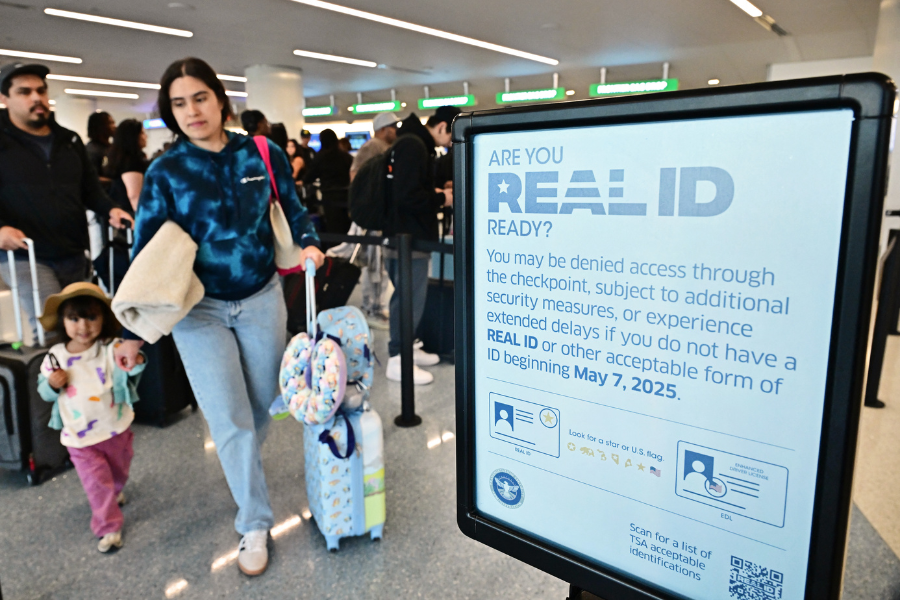
According to the TSA, paying the fee is a last-resort option and does not replace having a proper ID. Real ID costs vary by state, usually matching standard ID fees if renewed together, or slightly higher if issued separately, with some states adding extra charges.
The Real ID is optional for driving, but it can simplify air travel for those who don’t have a passport or other accepted form of identification. Real IDs look nearly identical to standard IDs, but will have a star, or a bear or flag in some states, in the top right corner.
Minors traveling in the U.S. with parents don’t need ID, but those traveling alone should carry some form of identification, such as a passport, state ID, or birth certificate. A Real ID is not required.
The Real ID Act, passed in 2005 following the 9/11 Commission’s recommendation, set federal standards for issuing identification like driver’s licenses. Full enforcement of the Real ID Act began on May 7, 2025, after multiple delays due to the pandemic.
Join our commenting forum
Join thought-provoking conversations, follow other Independent readers and see their replies
Comments
Bookmark popover
Removed from bookmarks