The Independent's journalism is supported by our readers. When you purchase through links on our site, we may earn commission.
Is Herefordshire experiencing a Hamnet boom? The quiet corner of England that’s been cast into the spotlight
How the award-winning motion picture could help Herefordshire rival the Cotswolds when it comes to rural escapes
When adapting Maggie O’Farrell’s hit historical fiction novel Hamnet into a film, the obvious choice was to use the real-life locations where William Shakespeare’s family lived in Stratford-upon-Avon.
Yet any fan of the venerated playwright will know that the West Midlands market town has become somewhat of a hotspot due to the flow of tourists keen to visit heritage sites connected to the Bard.
To be able to capture the essence of Elizabethan-era England without the crowds, the location scouts set out on a search for other well-preserved Tudor towns in the country.
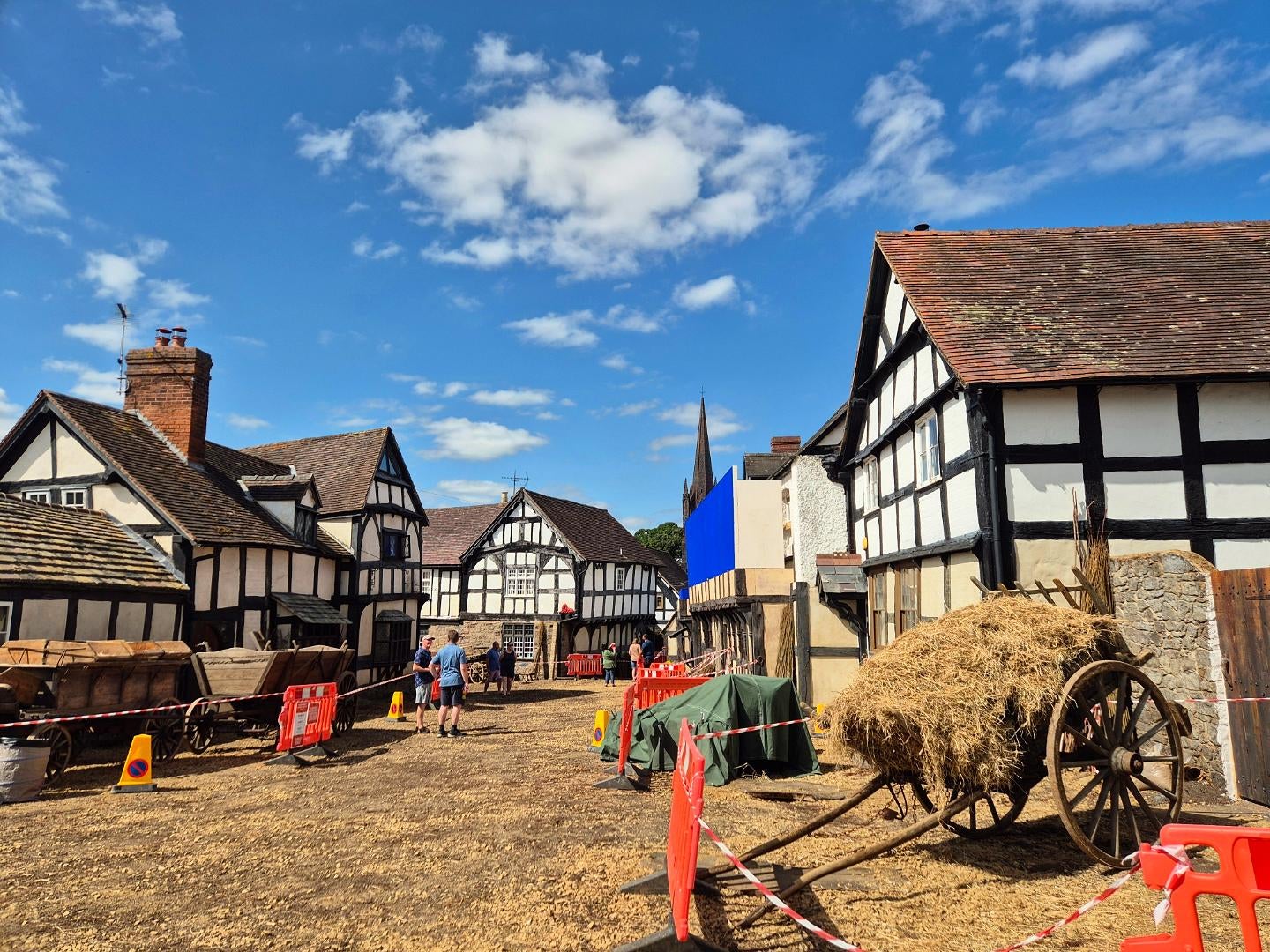
Enter Weobley, Stratford’s somewhat quieter twin, tucked 60 miles away in Herefordshire. The town is renowned for its Tudor timber-framed buildings that won over the production team, leading it to become the setting for the 16th-century tale.
“It was a serendipitous sliding doors moment when the [location scout] needed to have all the Shakespearean stuff, but they couldn't possibly go to Stratford, because it's too modern and has too much going on,” chair of Visit Herefordshire, Jo Hilditch, told The Independent.
“Whereas in the sleepy little village of Weobley, it was possible to come in and transform it into something historic.”

“There isn't so much traffic, and there aren't so many people, but there are still these amazing landscapes which you don't necessarily get in the rest of the country.”
Production in Weobley began in the summer period in 2024, with the crew masterfully transforming Broad Street, Bell Square and Church Road by laying down straw and mud, as well as covering modern features, ahead of Jessie Buckley (who plays Agnes Hathaway) and Paul Mescal’s (Shakespeare) arrival on set.
Weobley is one of the many “black and white” villages in the county, named after its half-timbered houses.
Ms Hilditch said she has already heard of tourists heading to Weobley, one of the many “black and white” villages in the county, to piece together the real-life location with scenes shot for Hamnet.
.jpeg)
One particular cafe, the Wobbly Badger, served as the exterior of Shakespeare’s family home in the film.
“When I opened the Wobbly Badger Café just before Christmas, I never imagined we would be welcoming so much interest so quickly,” owner Hannah Richards explained.
“The door next to us became a main location in the film, as Agnes’s front door. Seeing key scenes filmed here was thrilling. It has brought a buzz to the village, making such a difference, especially through the winter months.”

Outside of Weobley, the production team chose a National Trust property to depict Hewlands Farm, Anne Hathaway’s family farmhouse. (Anne is also referred to as Agnes in historical documents, and was the name O’Farrell chose for the story).
While the real farmhouse can still be visited in Stratford today, now known as Anne Hathaway’s Cottage, the filmmakers chose this Cwmmau farmhouse to stand in instead.

Found close to the border of Wales, the Grade-II listed building was constructed sometime between 1600 and 1632 AD and was restored in the 20th century.
Inside, visitors can find a well-preserved kitchen with bread ovens and stoves, while huge oak beams, stone, oak and elm floors and leaded windows make up other key features of this 400-year-old house.

A stay can be booked on the National Trust website from March 2026, but reservations are likely to be in high demand, as Ms Hilditch said there have already been people passing down the small country lane it is situated on to catch a glimpse following the film’s release.
The Hamnet Hollywood effect
Herefordshire is hoping to capitalise on the “Hamnet effect”, especially since the production that has already been a hit with critics and is picking up awards.
While Herefordshire has all the key characteristics of a popular English retreat – with its rural charm, historic villages and rolling hills – the county is often overlooked in favour of its more famous neighbour: the Cotswolds.
The Cotswolds says it welcomes approximately 25 million visitors every year, while Herefordshire reports six million visitors.

Yet its quiet disposition should not be underestimated.
Reports from Cotswolds residents and visitors alike say overcrowding in the quaint villages has been breaking the spell of its storybook charm, with views of honey-coloured houses and babbling brooks often blocked by crowds bussed in by the coachload.
Ms Hilditch said comparatively uncrowded Herefordshire is hoping to increase its visitor numbers off the back of Hamnet. “I really think that we can look forward in the future to people who really want to soak up that Shakespearean atmosphere of what Herefordshire offers, from the timber-framed buildings to the bucolic landscapes” she said.
Scenes from the film capture characters galloping across fields, playing in meadows and wandering through woodland. “Much of that resonates with what Herefordshire is, it's a lot of meadows and pastures,” Ms Hilditch explained.
“It's not just Weobley, but it's the feeling of the whole county that is going to resonate with the viewer.”
In celebration of the film's release, the tourism board has been working hard to provide fans with activities that resonate with Hamnet’s characters.

Visitors can follow in the footsteps of Agnes and partake in the popular Tudor sport of falconry at Wye Valley Falconry, or carry out a plant medicine course with Herefordshire herbalist Rowam McOnegal to learn about homoeopathic remedies like the ones Agnes creates in the story.
Only time will tell if this tale of love and heartbreak will have an everlasting effect on visitors in this bucolic patch of England.
Where else to visit in Herefordshire
A self-described “hidden gem”, Herefordshire has plenty to offer beyond Hamnet locations.
Ms Hilditch recommends visitors embark on the Black and White Villages Trail, which winds around timber-framed towns such as Pembridge, Eardisland and Leominster for a Tudor tour of Herefordshire.
A Hamnet-inspired walking trail has also been created, starting in Weobley and winding through green fields, down country lakes and over flowing streams. The trail will lead walkers through some of the best Tudor-era villages in the region, ending in Pembridge.

Other trails include the popular Wye Valley Walk, following 136 miles of rivers and hills from source to sea. The route starts at Hay on Wye, a town on the Welsh-English border that is best known for the Hay Festival that attracts writers, book lovers and plenty of big names from the arts.
Described as the “town of books” for its abundance of secondhand book shops, it has become a meeting point for bibliophiles seeking something new to read.
Not after page-turner? The county is well regarded for its cider production thanks to its acres of orchards that cover the countryside. Here you will find Weston’s Cider Mill in Ledbury to sample the latest flavours, or you can head to the many smaller producers such as Artistraw and Gwatkin.
Read more: Where is Hamnet filmed? The real-life locations behind the Shakespeare story
Join our commenting forum
Join thought-provoking conversations, follow other Independent readers and see their replies
Comments
Bookmark popover
Removed from bookmarks