Can my friend claim €200 taxi fare after her flight was diverted?
Simon Calder answers your questions on missed connections and drunkenness on flights


Q A friend travelled to Gibraltar, but due to the weather, the flight diverted to Malaga. There were no coaches available to take them forward and she had to pay €200 to get a taxi. Can she claim this back?
Matt D
A Gibraltar airport is one of the trickiest in Europe, if not the world. The runway straddles the narrow neck of terrain linking Spain with the British overseas territory and extends at either end into the Mediterranean. Pilots need special training to land at Gibraltar. Given the effects of the Rock on the winds, landings can be lively; there are several viewpoints that aviation enthusiasts use to view aircraft coming in – and sometimes choosing to “go around” instead.
Pilots will always err on the side of safety. The standard diversion airport is Malaga, where a well-rehearsed operation takes effect. Sometimes the plane will simply wait on the ground for conditions to change in Gibraltar and fly on after a pause. But if there is no sign of an improvement in the weather, the crew will disembark the passengers. In this event, coaches are almost always provided.
Airlines have contracts with bus companies that allow them to summon up the vehicles at short notice. Inevitably, though, there will be occasions when coaches and drivers are in such high demand that they cannot make the two-hour trip from Malaga airport to Gibraltar. In that case, it’s down to taxis. With perhaps 150 other people all trying to get to Gibraltar, airlines will expect passengers to share taxis.
With four passengers in each taxi, the cost works out at €50 per person. Those passengers could then claim the money back, most easily with each of them paying their share with a credit card and getting a receipt. If your friend was on her own, it will be harder to argue for full recompense – unless there are extenuating circumstances, such as other passengers melting away, for example, because they have friends coming to collect them.
Should the claim be disallowed, the best remedy could be alternative dispute resolution (ADR) – which is free to any airline passenger with a reasonable case for recompense. Additional cash compensation for the delay is not payable, because inclement weather is regarded as an “extraordinary circumstance” and therefore lets the airline off the hook.

Q We travelled on Iberia from London Heathrow to San Juan in Puerto Rico via Madrid in March. As we were seated waiting to leave Heathrow, the pilot said there was a problem with the front tyre. We left late and missed our connecting flight from Madrid to San Juan. We were put up in an airport hotel, but arrived in Puerto Rico 24 hours late. We lost a night in a hotel that we had paid for in advance, and a full day in San Juan. We tried to claim compensation from Iberi, but they say it wasn’t their fault. Are there any other avenues worth pursuing?
Lorraine A
A Under air passengers’ rights rules, the presumption is that an airline is responsible for paying cash compensation in the event of a passenger arriving at the final destination on the ticket three hours or more behind schedule. In your case, the 24-hour delay to the long-haul destination of Puerto Rico means you should be entitled to £520 each – unless the airline can demonstrate that “extraordinary circumstances” caused your initial flight from Heathrow to Madrid to be late.
The “extraordinary circumstances” get-out covers a wide range of issues from disruptive passengers to air-traffic control problems. Iberia is likely to say that “unexpected flight safety issues” prevented the timely departure of the plane. But saying so is not sufficient. The airline must provide proof, in the form of extracts from log books, maintenance reports, etc. The crucial point is that the airline must show the problem was unexpected rather than a run-of-the-mill technical failure.
If you are not satisfied, you can escalate your claim. According to the Civil Aviation Authority, Iberia does not have an alternative dispute resolution (ADR) provider, which means the next step will either need to be Money Claim Online or going through a claims handler such as Bott & Co. Many people opt for the latter. If you are successful, the legal intermediary will keep about one-third of the cash. But trying to claim from an overseas airline without legal back-up can be difficult and frustrating, so you may regard it as a fair reward.
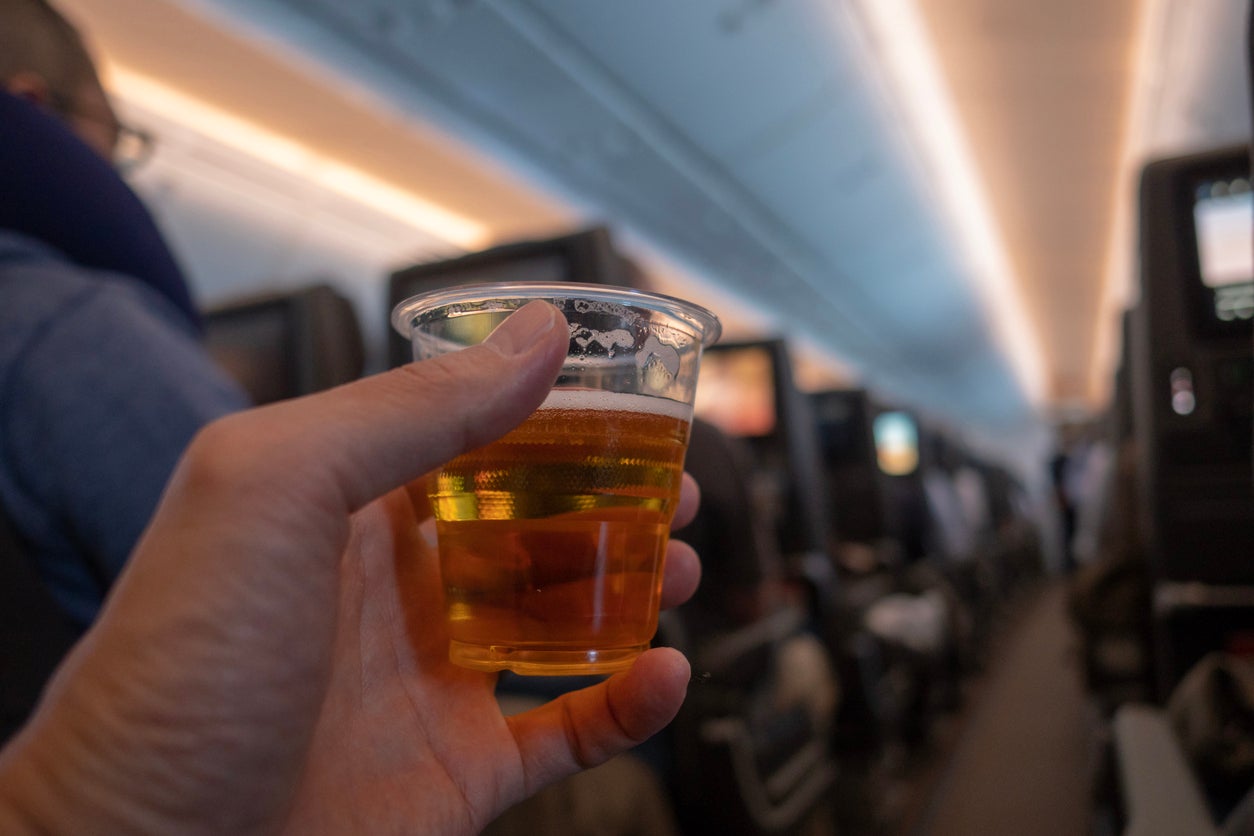
Q What would it take for budget airlines to introduce short-haul flights that do not serve alcohol? I had my worst flight ever recently. It was massively spoilt by adults binge drinking, and not caring for their young children.
Phil D
A I pray I am being unnecessarily pessimistic, but the worst-case cause for a debate on inflight drinking would be some sort of tragedy on an aircraft involving passengers and excess alcohol. The International Air Transport Association says air rage is occurring on a record number of flights: one in 400 departures, according to the latest figures. Incidents such as the diversion of a Montego Bay–Manchester flight last week – when the pilot landed in Nassau to offload an unruly passenger – show flight crew take the issue seriously.
The captain did not want to risk a transatlantic crossing with a volatile drunk on board. But prevention is better than diversion. Far better to engage with the airlines, airports and passengers about the role alcohol plays in fuelling disruptive behaviour. The commercial imperative is strong. Budget airlines see alcohol as both a profitable source of revenue and a passenger benefit: plenty of people, including me, enjoy a drink on board. But those of us who have witnessed inflight air rage realise that a confined cabin is no place for violent or obnoxious behaviour, and could support a drinking ban if it leads to more orderly flights.
I believe there is a parallel with the airline smoking ban. In the 1980s, the US led the way with a ban on cigarettes on flights of two hours or less. British Airways tested no-smoking flights to destinations such as Vienna and Los Angeles. BA was careful to choose routes with alternative smoking flights available on the same day. Yet the airline soon discovered that even many smokers preferred clean cabin air. It will be a brave airline that trials a ban on drinking for shorter flights, but the idea could prove popular. In both an online social media poll I conducted, and a question in our Travel Tips newsletter, a narrow majority of respondents voted in favour of alcohol-free flights. The next step: alcohol-free airports, which could prove much more controversial.
Email your question to s@hols.tv or tweet @SimonCalder
Join our commenting forum
Join thought-provoking conversations, follow other Independent readers and see their replies
Comments
Bookmark popover
Removed from bookmarks