High-speed enterprise on the railways of France and Germany
Train Talk: Recovering cash on ‘non-refundable’ no-frills French trains – and 44 hours of wanderlust for younger passengers in Germany
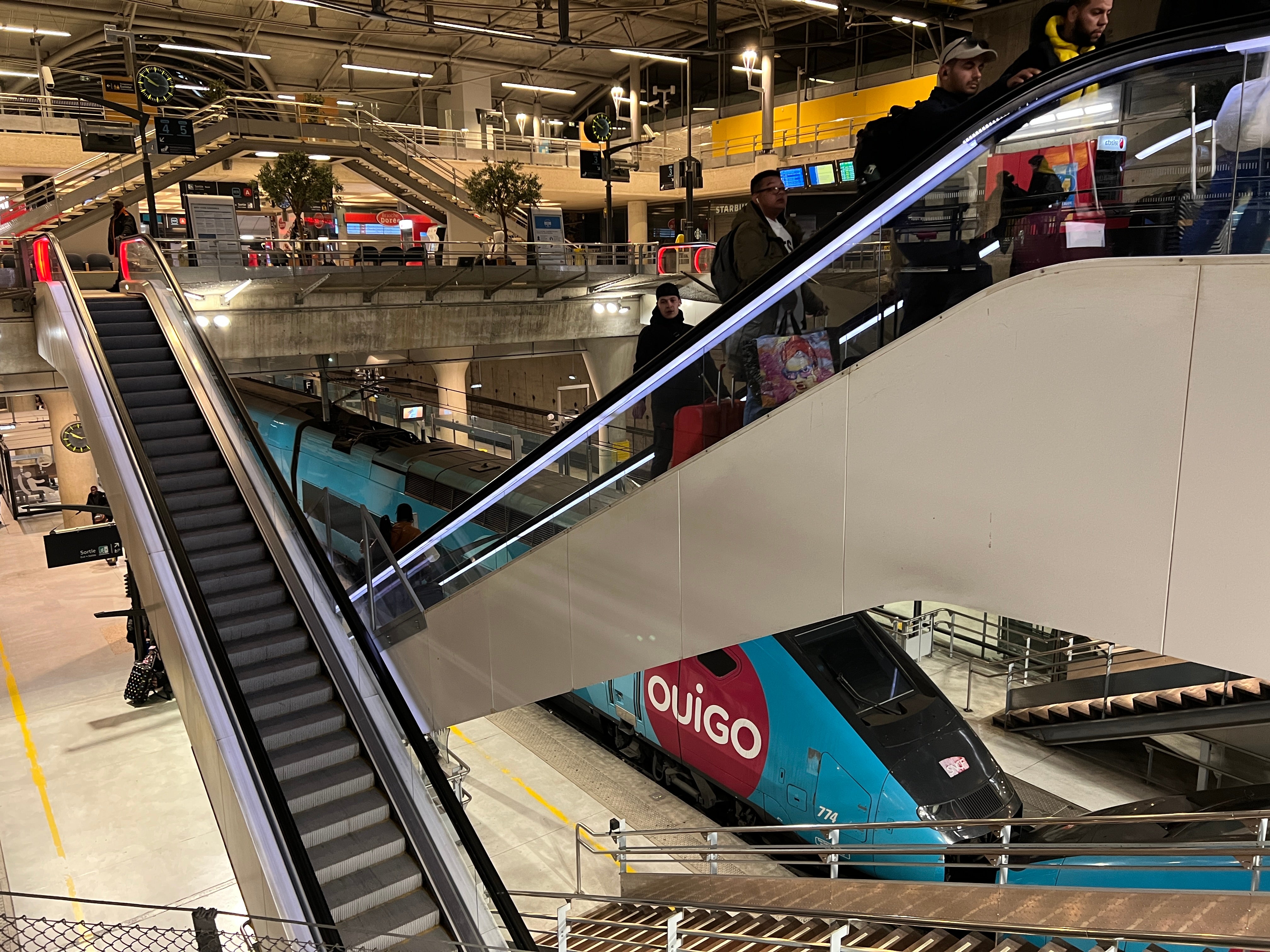
While the UK has seen ambition for a high-speed rail network collapse due to meddling politicians, in France and Germany the state-run railways are making train travel more appealing. SNCF and Deutsche Bahn respectively are seeking to attract more travellers out of their cars and planes and onto fast trains – using very different techniques.
French Railways’ budget brand Ouigo is aimed squarely at price-sensitive travellers. Some high-speed TGVs and “classic” conventional trains have been reconfigured with high-density seating. Other cost-saving measures and restrictions are deployed straight from the no-frills airline playbook.
Ouigo has strict luggage limits (a small backpack plus rollalong case). You must be ready on the platform at least five minutes before departure. And both the origin and destination stations may be many miles from your final target.
I grabbed a bargain €13 (£11.34) ticket from “Aix-en-Provence” in the south to “Paris” in the north. They were, respectively, a station miles out of the seductive Provencal city in the south, and Marne-la-Vallée – the stop for Disneyland Paris – way beyond any sightline of the Eiffel Tower.
Additional Ryanair-esque elements include:
- Tickets are only sold online, and you pay extra for selecting a specific seat.
- Passengers must prove their identity.
- Railcards are not accepted, although children travel for a flat €8.
- No refunds.
Yet on this last point, French Railways has now brought in a feature called Ouigoswap. The principle is spelt out by the organisation like this: “Got a fever, a tummy bug, or have sudden back pain just when you were planning to hop on a Ouigo? With Ouigoswap, you can resell your train ticket! Even if you can barely crawl out of bed, just grab your phone, open the app and you can put your Ouigo ticket up for sale.”
That sounds easy, but successfully selling a ticket depends on the train being fully booked: the company is not interested in “cannibalising” its revenue by allowing passenger refunds if seats are still available.
Each seller needs a buyer, of course, and Ouigo believes in allowing people to buy tickets on apparently full trains. “Previously, if the train you wanted to catch was fully booked, you had no choice but to choose another time or travel on another day,” the company says. Now, prospective passengers may find a secondhand ticket is available – or they can join a waiting list. In the latter case: “If a ticket is listed for sale by another passenger, you will be notified immediately by email and/or a push notification, so you can proceed with the purchase.”
The buyer pays the original fare; the seller gets an 80 per cent refund in the form of an Ouigo voucher, valid for a year. Not quite recouping your losses, but potentially a lot better than nothing – and a model that low-cost train operator Lumo may like to test.
I can envisage Ryanair and Jet2 trying something similar. Neither overbooks flights, meaning that there is some unsatisfied demand: if a passenger cannot use their ticket, there is currently no mechanism for someone desperate to travel to take that empty seat.
In Germany, meanwhile, Deutsche Bahn has a tempting deal for anyone aged under 27: the chance to travel far and wide on high-speed ICE trains for a flat rate of €44 (£38.40) for 44 hours.
The aim is to fill empty seats between 6pm on a Friday and 2pm on a Sunday in February and March. “Valid for any number of long-distance journeys within Germany,” the rail firm says. “No need to book in advance. Simply get on board.”
German trains are currently something of a shambles, with widespread delays and cancellations. But it is good to see some innovation. Meanwhile, for travellers of any age who aren’t in too much of a hurry, the Deutschland Ticket remains the best public transport deal in Europe – outside, of course, Luxembourg, where tickets are so last decade.
Read more: The best affordable sleeper train journeys to take in 2026
Join our commenting forum
Join thought-provoking conversations, follow other Independent readers and see their replies
Comments
Bookmark popover
Removed from bookmarks