Opulence is out, wellness is in: How yacht-life is being reinvented for a new generation
Yachts used to be the preserve of world’s wealthiest but Annabel Grossman discovers that we’ll be seeing more ‘quiet luxury’ on the water in 2026 than ever

If you thought sailing across the Med on megayachts was all about quaffing Dom P and snaffling caviar, you’d be mistaken, as it seems that the 0.01 per cent are more about Technogyms and serenity at sea than all-night parties moored in Monaco.
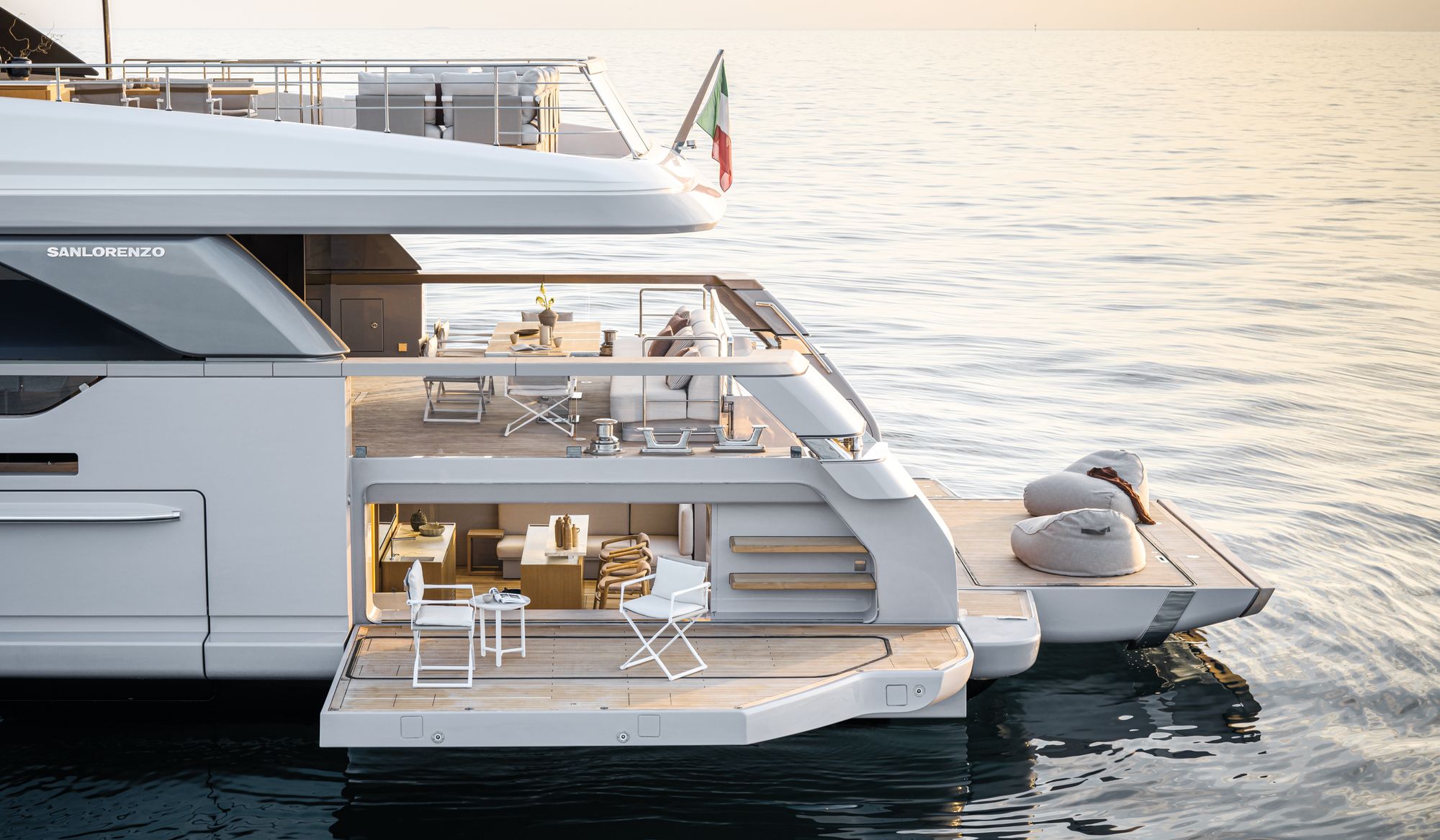
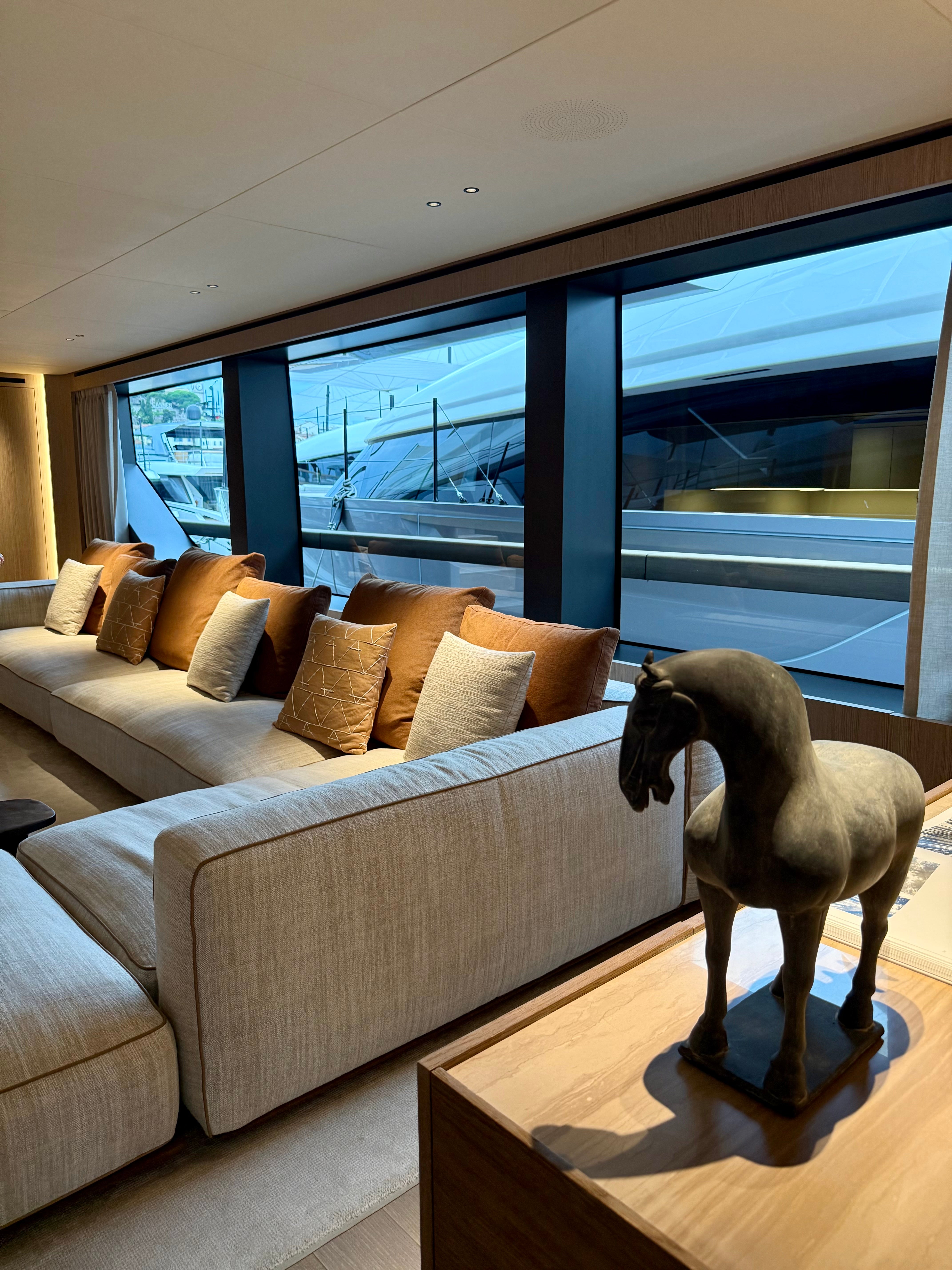
At the Cannes Yachting Festival, the most high-end brands were showcasing a rather more pared-back look on their boats, with “quiet luxury” taking the place of extravagance. Instead of lavish finishes and over-the-top decor, the most expensive yachts showed sleek, Scandi-style interiors with clean lines. Where crystal chandeliers, bars and hot tubs were once prominent, you’re now more likely to find massage rooms, spa-style bathrooms and fold-down terraces.
To gain some insight into this elite and often closed-off world, I spoke with Nick Hatfield, managing director of Sanlorenzo UK, while wandering the decks of some of the company's newest models. This Italian shipyard is where ultra-high-net-worth individuals come to shop for their boats. These aren’t your starter yachts; they’re the ones you graduate onto when your bank balance is comfortably swollen.
At Sanlorenzo, clients don’t buy a yacht; they build it. All the yachts are custom-made for the owner, with the interiors shaped around their desires. Hatfield tells me that clients “tend to prefer understatement over anything showy, elegance rather than glitz”. He adds: “These are people who value discretion and authenticity, and who really enjoy being involved in creating something that feels genuinely theirs.”
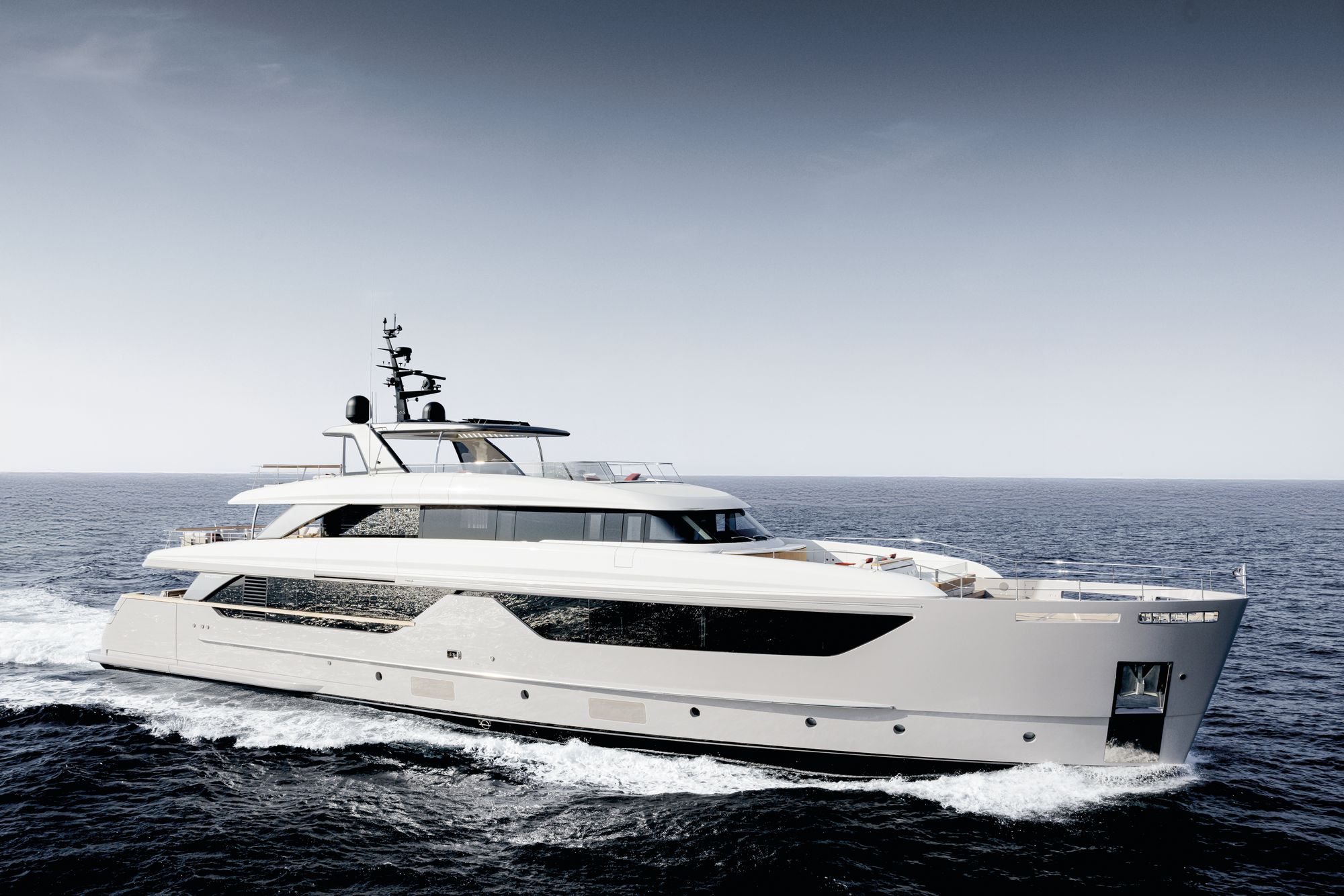
At Cannes this summer, Sanlorenzo was showcasing its three newest models: the 36.6m SX120 with a fully glassed swimming pool, the architectural asymmetrical SL110A, and the sleek SD132, which was making its maiden public debut. On these yachts, several trends emerged.
Wellness
While there will always be a cohort of owners who will use their yachts as the ultimate party venue with Veuve-stocked bars and flashy swimming pools, increasingly – especially with the wealthiest clients – buyers are looking for a place they can relax and connect with the ocean.
This is reflected in yacht design, and Hatfield says that buyers are now “intentionally” including wellness in the build. He explains: “Large windows, fold-down terraces, open layouts and generous beach clubs mean there’s always light, air and water around you.”
Wellness might also mean yoga on your deck, a gym decked out with TRX equipment and a Peloton, or even a massage room and Hammam spa. Hatfield adds: “The yacht isn’t just somewhere to travel or entertain any more – it’s become a private retreat where switching off and looking after yourself really matters.”

Serenity at sea
“One of the greatest things about owning a yacht is the freedom it gives you,” Hatfield says. “You’re not tied to one place, and you can anchor in quiet bays, remote islands or places that simply aren’t accessible any other way.”
It seems that rather than showing off their superyacht in St Tropez or mooring up in Portofino, the ultra-wealthy are using them as a means to enjoy complete isolation.
Hatfield points out that technology is playing a big part in allowing yacht owners to get away from it all, “whether that be connectivity or the advances in propulsion, and energy systems which mean yachts are becoming quieter and more efficient, with far less noise at anchor”.
He adds: “That calm makes a real difference.”
Starlink has been a particular blessing for yacht owners who can now travel far out to sea, but are still able to be completely connected. Hatfield says: “With reliable connectivity (like Starlink), working from a yacht is now very realistic, and many owners ask for dedicated offices or discreet desks onboard. That’s opened yachting up to a younger generation who are still professionally active.”
Water toys
When ship designer Bernado Zuccon refers to a ‘party boat’ at Cannes, he’s talking about playing with ‘toys’ in the water rather than a booze-fueled all-night banger. The desire to play in the ocean has been around for as long as yachts have, and toys are a staple of any vessel – but they’re getting bigger and fancier.
Along with the usual jet skis, Seabobs, paddleboards, kayaks, e-foils and inflatable slides, in 2026, Hatfield says we may increasingly see personal submarines and high-adrenaline options like Jetlev Flyers (a type of jetpack).
Family time
When you have billions in the bank, the one truly priceless thing is family time – and yachts are being designed to accommodate this. We’re talking plenty of space to ensure everyone – including children, partners and grandchildren – can stay comfortably on board.
Hatfield says: We’re seeing more owners using their yachts with extended families - with children, grandchildren and friends coming onboard together, often for longer periods of time.”
He adds: “Design is key here. Flexible layouts and accommodation options, large, shared spaces, safe and welcoming beach clubs, and a clear separation between guest and crew areas all help create a relaxed atmosphere.”
Sailing ‘green’
Although a sustainable superyacht might seem like an oxymoron, Hatfield assures me that this is something that Sanlorenzo clients are demanding – and the company is responding to. While acknowledging that this can never be a green industry, the yachting world has been working on projects to reduce its carbon footprint.
.png)
Hatfield says: “Clients are well-informed and genuinely want to reduce the environmental impact of their yachts.” It’s worth noting that this is followed by: “without compromising on performance or comfort”.
He points me in the direction of Sanlorenzo’s 50Steel yacht, which uses a green methanol fuel cell system, as an example of what greener sailing could look like.
Hatfield adds: “Looking ahead, we can expect to see more hybrid and multi-source energy systems, smarter energy management and continued progress in sustainable materials becoming standard rather than by request.”
Going further
The improved range and self-sufficiency of yachts mean that owners are able to travel further, which has fuelled a desire for adventure and exploration at sea. Explorer or expedition yachts mean that owners can travel to places as far flung as Antarctica or the South Pacific islands, while still enjoying absolute luxury.
Hatfield points me to Sanlorenzo’s expedition style range, including X-Space and EXP lines, with yachts that have “garages” for tenders, as well as the ability to land your helicopter.
He says: “The ability to carry large tenders, multiple tenders, submarines and features like touch-and-go helicopter platforms, really expands what’s possible in terms of exploration.”
Join our commenting forum
Join thought-provoking conversations, follow other Independent readers and see their replies
Comments
Bookmark popover
Removed from bookmarks