Should I be compensated for a surprise Brazil layover?
Simon Calder answers your questions on EES queues, Malta Air and destinations for older travellers

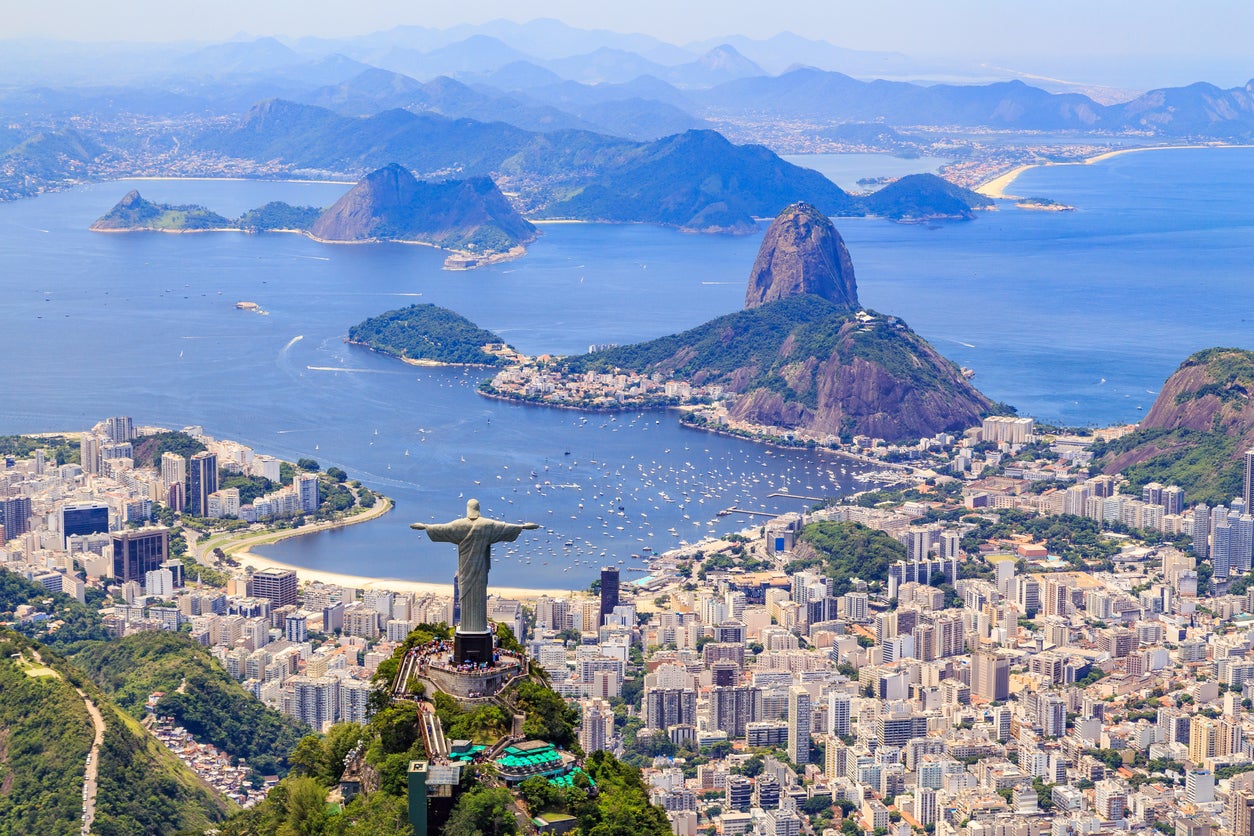
Q We paid extra for a direct flight to Buenos Aires compared with the fares for changing planes in Amsterdam or Madrid. Then, when we turned up at Heathrow airport, we discovered the plane was going to refuel in Rio. We sat on the ground there for about 90 minutes, which was made all the more tedious because the in-flight entertainment was switched off. I feel I was mis-sold the flight and wonder if I have any grounds for compensation?
Jane H
A All non-stop flights are direct, but a direct flight can include one or more intermediate landings. For example, British Airways and Qantas fly direct from Heathrow to Sydney, but both touch down along the way in Singapore. And, as you found, the BA flight to Buenos Aires is scheduled to stop to refuel and change crew in Rio – just three hours short of the Argentinian capital. British Airways makes it clear online that the Boeing 777 stops along the way. I surmise, therefore, that you booked through an agent: either human or online.
If you have something in writing indicating you were going non-stop on BA (the airline) to BA (the city), then you might have a claim. On a journey like that, the typical premium for a genuine non-stop runs to hundreds of pounds. But perhaps it is more likely that the term “direct” was mentioned? Understandably, with no further information, you inferred that the trip would be “goodnight London, good morning Buenos Aires” without a frustrating interlude on the ground at Rio.
Coincidentally, I flew in to Buenos Aires last week on the last leg of an Air Canada flight from Toronto, via Sao Paulo in Brazil, to the Argentinian capital. This turned out to be stretching the definition of “direct” to the limit. Passengers on flight AC90 who had made the overnight longhaul from Toronto actually had to leave the aircraft they’d arrived on and change planes at Sao Paulo to continue the journey. But as it was all under one flight number, I guess Air Canada could sell it as direct.
The moral of your story, and theirs: always check if the plane is scheduled to stop anywhere along the way.
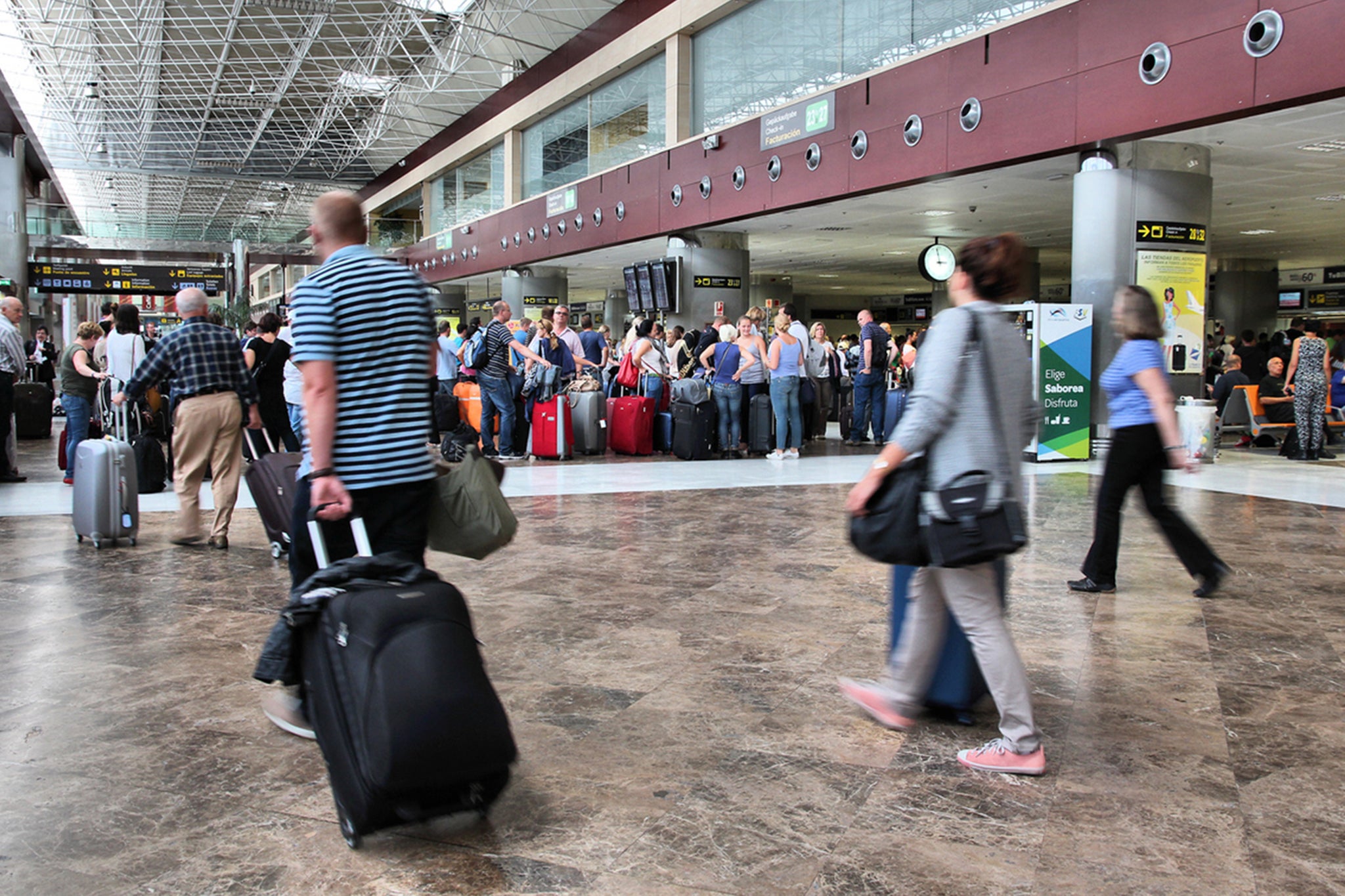
Q After the latest warning about long airport queues due to the entry-exit system, it would be interesting to know what percentage of EES registrations are Britons, and how much extra pressure that is putting on a system which perhaps wasn’t designed to cope with it? Tenerife would scarcely need any EES machines at all were it not for the huge numbers of British tourists.
Kate W
A When the entry-exit system was first conceived a decade ago, the UK was a paid-up member of the European Union and fully involved in developing the EES. A digital borders scheme involving fingerprints and facial biometrics seemed appropriate for “third-country nationals” from the rest of the world. The assumption was that the 2016 EU referendum result would be to remain in the EU. When the UK voted to leave, the government subsequently negotiated to be a third country and therefore subject to the entry-exit system.
The prospective pressure more than doubled. I took a snapshot of the numbers and nationalities of people who crossed Schengen area frontiers in July 2025. Almost two-thirds (65.5 per cent) were European Union citizens who are not subject to the EES. Of the remaining third, roughly 55 per cent were British. While the exact proportion will depend on the time of year and the numbers crossing with residency permits or visas, it is fair to say that more than half of the travellers subject to the entry-exit system are from the UK. At key hubs such as Amsterdam, Frankfurt, Paris and Rome, the proportion of British passport holders is lower. But at holiday airports serving Spain, Portugal and Greece, almost all arriving and departing third-country nationals are from the UK.
The national government of each of those countries provides what it regards as an appropriate level of equipment and staffing. But, in the case of Tenerife South airport, the Spanish authorities are not inclined to invest in infrastructure and people to the extent necessary to allow a smooth arrival and departure experience for passengers at peak times. Yesterday, for example, no ex-UK planes were due to arrive before 11am. In the three hours after that, 19 arrivals touched down carrying more than 3,000 people. Choosing to leave the EU and expecting a consistently smooth passage through passport control are mutually exclusive.
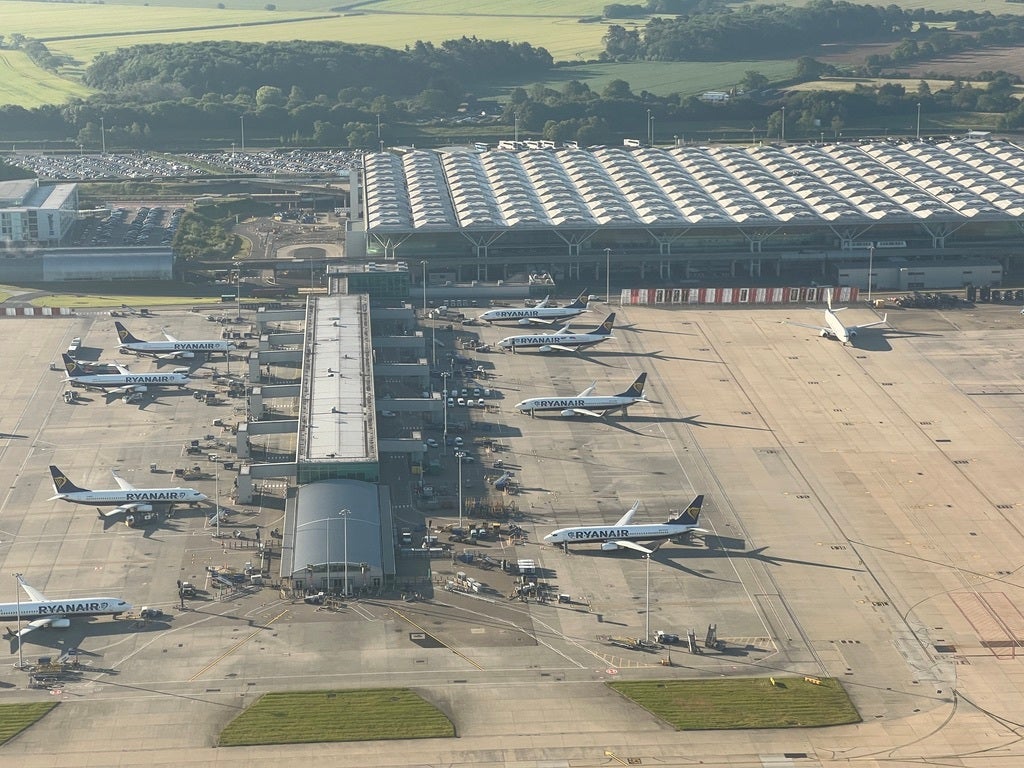
Q We have booked a package holiday with Tui in May from London Stansted to Rhodes. The flights were originally supposed to be on Ryanair. But we have now been told the flights will be with Malta Air. I’d never heard of them. Are they similar planes to Ryanair or just older ones? And will they be Ryanair crew?
Geoff T
A You are unlikely to notice anything different from “normal” Ryanair. Malta Air is one of several subdivisions of Europe’s biggest budget airline. The carrier’s main operating division is Ryanair DAC of Ireland; the acronym stands for “Designated Activity Company”, a term under Irish corporate law. In addition, some of the airline’s planes are operated by Buzz of Poland, Ryanair UK, Lauda and Malta Air. This complex structure is the result of acquisitions and national aviation rules. For example, Ryanair UK was set up after the Brexit vote as a British carrier to enable domestic flights and links with non-EU nations to continue. Malta Air was originally set up as a joint venture with the Maltese government.
What does this mean for you and other passengers? In terms of the operation and on-board service, nothing. The aircraft is likely to look like every other Ryanair plane, though some Malta Air aircraft have a different livery. The staff will have the same uniform. Safety standards are in full compliance with European rules. And the policies are exactly the same. Which begs the question: why bother to tell you in the first place? It is simply a legal requirement. The same applies to easyJet flights that are operated by the carrier’s Austrian subsidiary, easyJet Europe (which was also set up as a necessity after Brexit).
For completeness, Lauda is the one division that is clearly distinct from the rest of the Ryanair empire. In contrast to the Boeing 737s flown by the rest of the airline, it has a fleet of Airbus A320 aircraft. These are slightly wider and have a bit more elbow room. But the Ryanair product remains the same: safe, usually punctual and often cheap.
Q I am 82 and my wife, Val, is coming up to 80. We realise that we will not have many more travel opportunities. What one or two places would you suggest in Europe for a week or a fortnight? We are keen on photography, but Val has limited mobility. We have been to Prague a few times, and Budapest, Salzburg and Vienna and Porto, as well as Ireland and the Swiss mountains. We live in south Northumberland so flying from Newcastle would be good.
Pat J
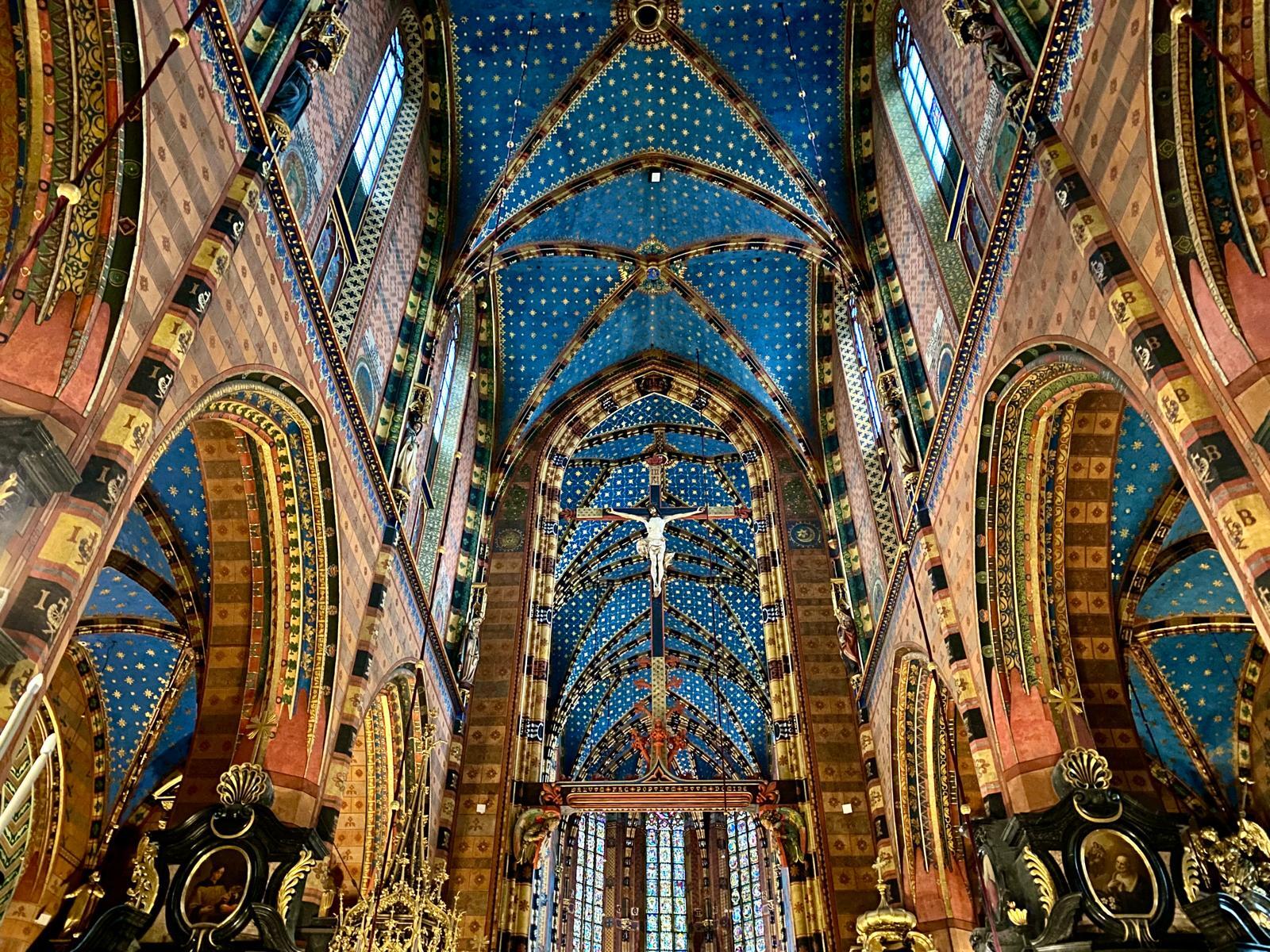
A So: which European locations offer a benign setting with accessibility and plenty of photographic interest? I infer from your previous travels that you appreciate fine cities. Krakow in southern Poland looks to me to be the “missing” candidate on your list. Ryanair offers cheap flights from Newcastle. The Old Town at the heart of the city is level, well-paved and highly photogenic. Taxis are easily available and inexpensive. In summer, you can spend the day enjoying the atmosphere of the vast main square, Rynek Glowny.
Set-piece tourist attractions include the excellent Underground Museum beneath the square to understand the layers of history, though access may be an issue. The ornate St Mary’s Basilica at the western corner of the main square is worth exploring. To the south of the Old Town, Wawel Hill is home to Krakow’s 14th-century cathedral and the Royal Castle. Sadly, the latter involves lots of stair climbing and descending.
Beyond the Old Town, the horror of the holocaust during the Second World War is set out in two contrasting locations. Go first to the Galicia Jewish Museum, which describes the vibrant community that thrived in the area until the Nazi genocide began. Then visit Oskar Schindler’s enamel factory to understand how the Nazi spy-turned-industrialist saved the lives of 1,200 Jewish people. Both are reasonably accessible. You might also enjoy visiting the suburb of Nowa Huta (“New Steel Mill”), designed during the communist era as a model community and architecturally fascinating.
One more thought: Villefranche on the French Riviera is a lovely resort just to the east of Nice, with easyJet flights from Newcastle and plenty of interest to visit – and photograph – in the area.
Email your question to s@hols.tv or tweet @SimonCalder
Join our commenting forum
Join thought-provoking conversations, follow other Independent readers and see their replies
Comments
Bookmark popover
Removed from bookmarks