Inside the Netherlands art museum where wolves roam outside and you’ll find one of the world’s largest collections of Van Gogh
Helene Kroller-Muller was one of the wealthiest women in the Netherlands and believed that art seen in nature had a more profound effect on the viewer. Michael Hodges explores the national art museum and sculpture park she opened with her husband, and finds an incredible collection in a unique and wondrous landscape

The wolves are mainly nocturnal,” says the park ranger at the entrance to the Kroller-Muller Museum. “You probably won’t see them, but they can see you.” I’ve come for the art but other things, it seems, might be watching me.
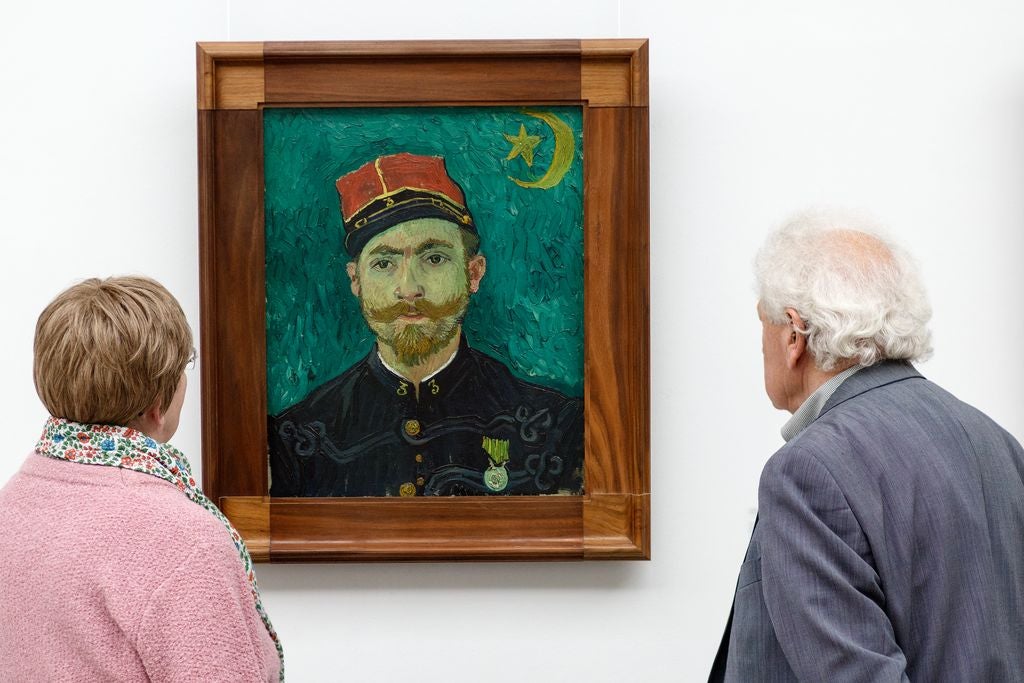
And there are many paintings to see. The Kroller-Muller Museum in the Gelderland region of the eastern Netherlands, opened by the German philanthropist Helene Kroller-Muller and her Dutch industrialist husband, Anton Kröller, in 1938, holds the world’s second largest Van Gogh collection.
There is also a fabulous array of early modern art, especially from Neo-Impressionist artists, often called Pointillists, who used dots and dashes to build colour effect. The movement emerged in 1880s in France and two of its leading exponents, Georges Seurat and Paul Signac – whose work the visionary Kroller-Muller made a point of buying – are at the heart of the museum’s loan to the National Gallery in London for what promises to be a revelatory show this September: Radical Harmony: Helene Kroller-Muller’s Neo-Impressionists.
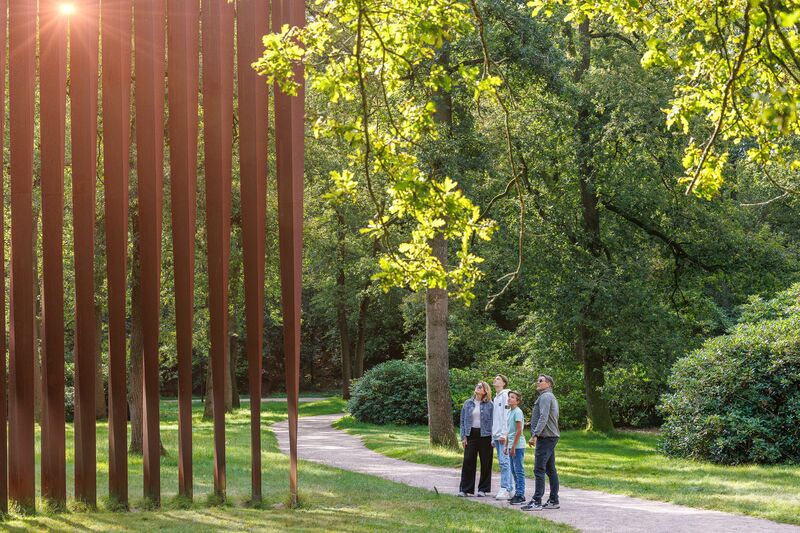
But the fabulous collection isn’t the only noteworthy thing about the Kroller-Muller Museum; it also happens to be inside the De Hoge Veluwe National Park. This is a unique landscape of ancient deciduous woodland and heath, home to wild boar and mouflon sheep, red deer and, as I’ve just been told, wolves.
Getting here means a Eurostar or ferry from Hull or Harwich to Rotterdam, then just over an hour by train to Arnhem (you shouldn’t wait long – there are 62 trains a day). Then take a 20-minute journey on the 105 bus from the central station, which will take you to the park entrance in the village of Otterlo. On the way, it passes through comfortable hamlets of narrow brick villas nestling in rich woodland, a precursor to the wilder forested landscapes ahead. At Otterlo, the lampposts are hung with the photographs of British and Canadian soldiers who fell here in the Second World War – a reminder that this region, hard against the Rhine and the German border, was once a crucible of conflict.
Read more: Follow in Van Gogh’s footsteps on an off-the-beaten-track Netherlands tour
No visitor’s cars are allowed in the park but at the Otterlo entrance, there are hundreds of White Bicycles (the Dutch invented bicycle-sharing in the 1960s), free to use, as long as you return your bike. So I ride through woods carpeted with late wild garlic, guarded by stands of purple and pink foxgloves before the trees open out to reveal an idyllic scene: the original 1938 museum building by the Dutch architect Henry van de Velde and, next to it, Wim Quist’s light-as-air glass and steel extension from the 1970s.
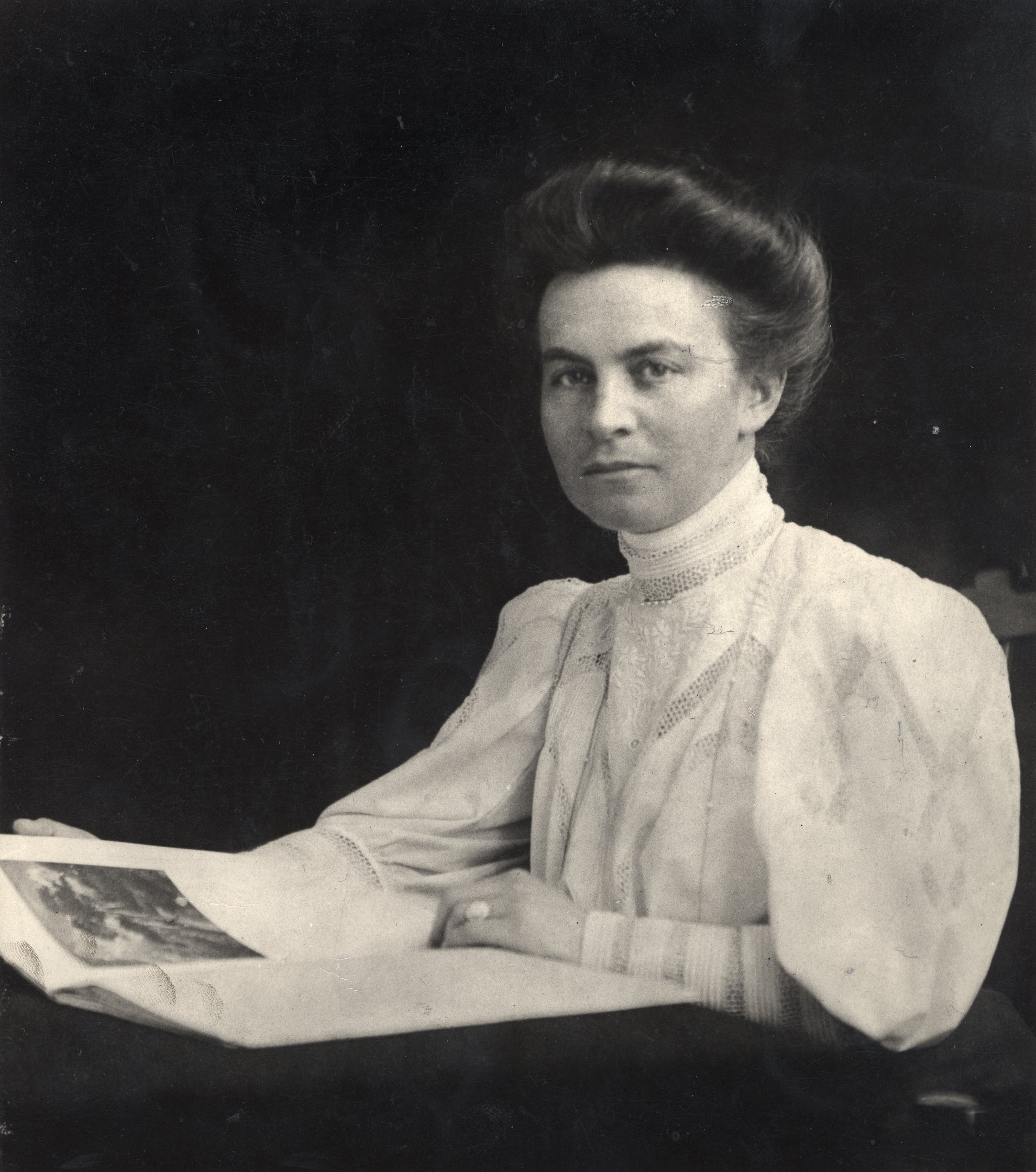
Inside, there is an almost overwhelming array of art. Famous Van Goghs abound – The Lover is here and Café Terrace at Night – and there are works by Mondrian, Renoir, Picasso and more. Helene Kroller-Muller believed that art seen in nature had a more profound effect on the viewer, and in that spirit, the museum spills over into a sculpture park carved out of the woodland.
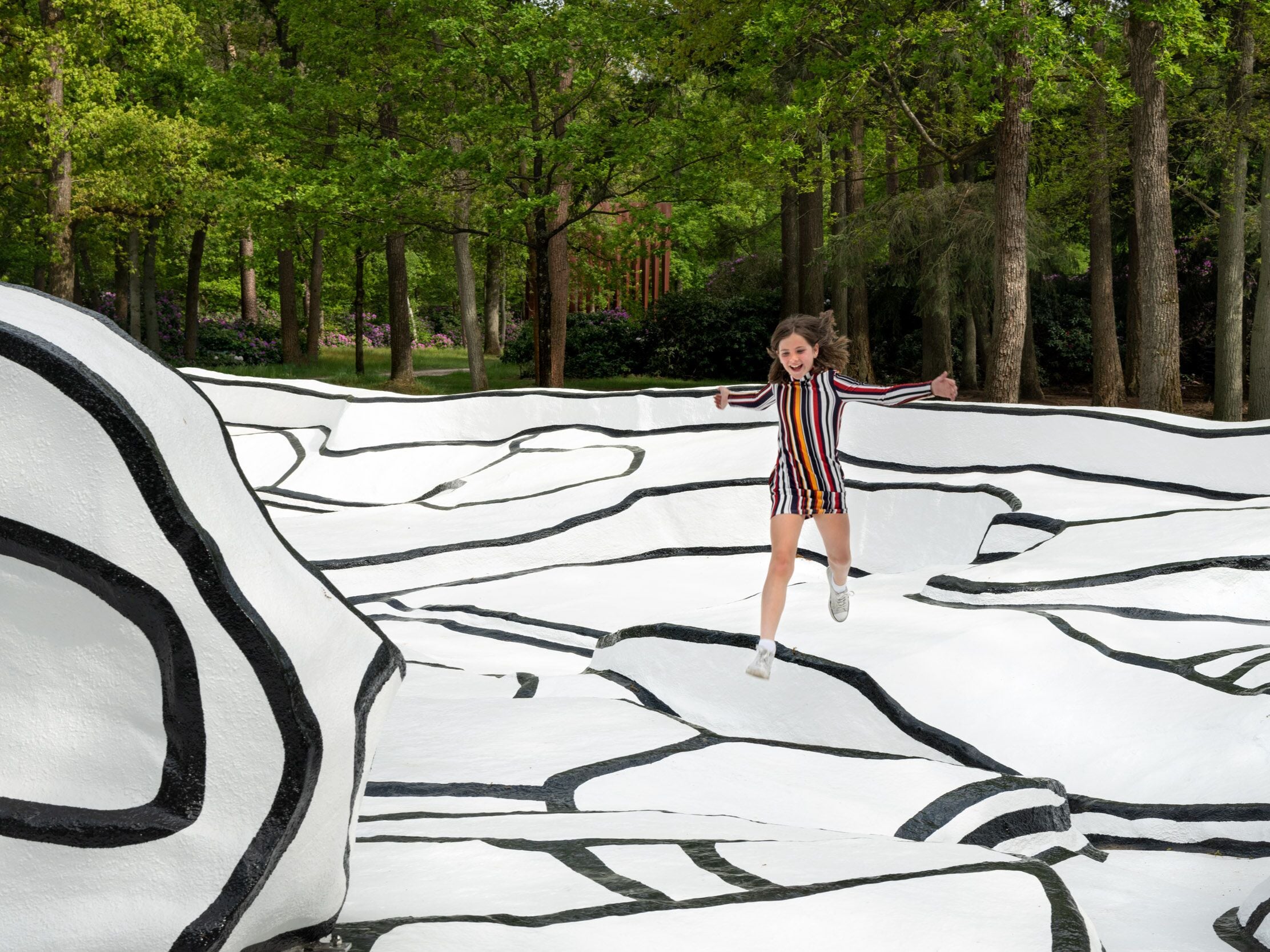
Following the pathways, I encounter Henry Moore’s Animal Head, the intersecting lines and planes of Gerrit Rietveld’s 1954 sculpture pavilion, one of the high altars of modernist architecture, and Auguste Rodin’s Squatting Woman. Deeper into a woodland glade, I come across the Art Brut pioneer Jean Dubuffet’s fantastical concrete and fibreglass Jardin d’émail, an invented white landscape of frozen animation.
Away from the main walkways, there are smaller, unpathed tracks that disappear into the trees. One takes me along a precipitous (for the Netherlands) ridge called the Franse Berg (French mountain), a sand moraine pushed here during the Ice Age, over which the forest grew. Among boughs that creak and whisper with the wind, it is hard to conceive that Allied tanks once thundered through here or that I am in one of Europe’s most heavily populated places: 17.88 million Dutch are just outside the fence; a few kilometres away, 5 million Germans are on the Ruhr.
Read more: ‘We’re here to disturb the algorithm’ – inside Dubai’s surprising art scene
Walking across heathland where sand lizards bask and the only noise is the cry of a buzzard overhead, I repeat the ranger’s reassuring mantra to myself: the wolves are mainly nocturnal. But the only thing that unnerves me today is one of the strangest buildings in the Netherlands, the Jachthuis Sint Hubertus. Built for the Kroller-Mullers as a hunting lodge by the architect Hendrik Petrus Berlage (he is also responsible for Holland House in the City of London), it is an early modernist essay in brickwork-cum-arts and crafts castle that hunches below a domineering tower built because the Kroller-Mullers wanted a view.
Everything is a totality of design – even the lake at the front of the house was created to mirror the building. Inside, there are glazed brick ceilings depicting sunset and sunrise, perhaps reflecting Helene Kroller-Muller’s search for spiritual enlightenment. Kroller-Muller died in 1939, just before the darkness of Nazi occupation, but her legacy survives that grim interlude – much of the art, which would have been considered degenerate by the Nazis, was hidden in a bunker in the woods and the main gallery space became a Red Cross hospital – and it continues today.
Work is due to begin on a new underground gallery that will connect the 1930s and 1970s wings. One strong contender for this new display space, according to Kröller-Müller director Benno Tempel, is the museum’s series of six giant triptychs by Gilbert and George, With Us in Nature, painted in the early 1970s, that show the two suited men at leisure in fields and forests. In this case, you’d be wise to follow where Gilbert and George lead or, if you really are scared of wolves, go to the National Gallery this September and join the dots.
Radical Harmony: Helene Kroller-Muller’s Neo-Impressionists is at the National Gallery from 13 September 2025 to 8 February 2026
Join our commenting forum
Join thought-provoking conversations, follow other Independent readers and see their replies
Comments
Bookmark popover
Removed from bookmarks