Will the EU entry-exit system apply if my cruise ends in Barcelona?
Simon Calder answers your queries on allowing time at the airport for new EU rules, visiting Cambodia, and taking ‘the world’s longest flight’


Q I am worried about the impact of the new EU entry-exit system on our return home from a cruise, which ends on 6 November in Barcelona. Airlines never seem to let us check in more than two hours before the flight departure. Will we really have enough time to go through the new procedures? And will the airlines adapt their procedures to accommodate these new requirements?
Tony L
A Since Covid no single subject has dominated the electronic mailbag so heavily as the entry-exit system. Also, we are only slowly finding out what it will mean for travel. So I make no apology for returning to the issue. Happily, several hours of investigation at Prague airport – where EES has been introduced – have given me some clarity on how the system is likely to work. The headline for you is: don’t worry.
As a reminder, the European Union and wider Schengen area has started collecting fingerprints and facial biometrics from “third-country nationals” such as British passport holders. These are captured on arrival in the Schengen area. But it was not at all clear how the system would work for departing passengers. From what I have observed, the authorities are far more relaxed when people are leaving. I have seen no evidence that travellers will be asked to register for the first time on departure from a country.
This is crucial: only on initial registration will you be required to provide your fingerprints. Having gone through the process a few times, it is fingerprinting that really slows things down. In Prague, the authorities want the four fingers of each hand, which is an awkward performance on the part of the weary and slightly befuddled passenger.
To complete the procedure took me three minutes. Were this to happen on departure, with 10 people in the queue ahead of you, the process would erode available time before the flight. My interpretation now, though, is that there will be a much lighter touch for departing passengers. They may get their photo taken, to be compared with the image on file. But at first even that biometric check may be dropped. There will be no material increase in the time it takes for you to clear departure formalities, so just enjoy your cruise.

Q Friends have come back from Cambodia raving about the place as a backpacker destination. In your opinion, what highlights should I absolutely not miss?
Alex M
A Allow plenty of time to savour Phnom Penh, Cambodia’s beautiful capital, and encounter its charming and welcoming people. It is half a century since the Khmer Rouge, led by Pol Pot, tried to drag the city and nation back to the stone age – murdering one-quarter of the population in the process. Citizens were forced out to rural labour camps or marched to the “killing fields” and executed.
You would not imagine such a tragic time from the way the capital has been revived. Along the broad Tonle Sap river, gleaming high-rises share the skyline with Buddhist temples and relics from the French colonial age; France held control over Cambodia for 90 years to 1953.


Besides excellent local cuisine, you might want to take temporary comfort in the Western-focused cafes and restaurants, such as the Backyard Cafe. If you are feeling emotionally strong enough, visit the former secondary school in the southern suburbs that became Security Office 21 – S-21, a torture camp. It now houses the Tuol Sleng Museum of Genocide, detailing the appalling acts of inhumanity.
After that, you will need an island escape. Koh Rong, easily reached from Sihanoukville, is the obvious choice – with Police Beach getting good reviews. Then on to Siem Reap, base camp for visits to Angkor Wat. This is a location that caters for backpackers, with lively markets and a dedicated strip of bars nicknamed Pub Street in the old French quarter. I am glad to see the cheap and cheerful Golden Apsara guesthouse is still in business.
The temples of Angkor Wat – rescued from the jungle and the worst excesses of the Khmer Rouge – are best explored with an expert guide in the course of a long day. Ask other travellers for their recommendations of someone who can help you make sense of this vast Unesco World Heritage Site, which dates back nine centuries.
From Angkor Wat, the natural next stop would be by road across the Thai border to Bangkok. But the Foreign Office currently warns against all but essential travel to the Cambodia-Thai frontier zone due to hostilities between the two nations. So either fly across on Air Asia, or make your way back to Phnom Penh.
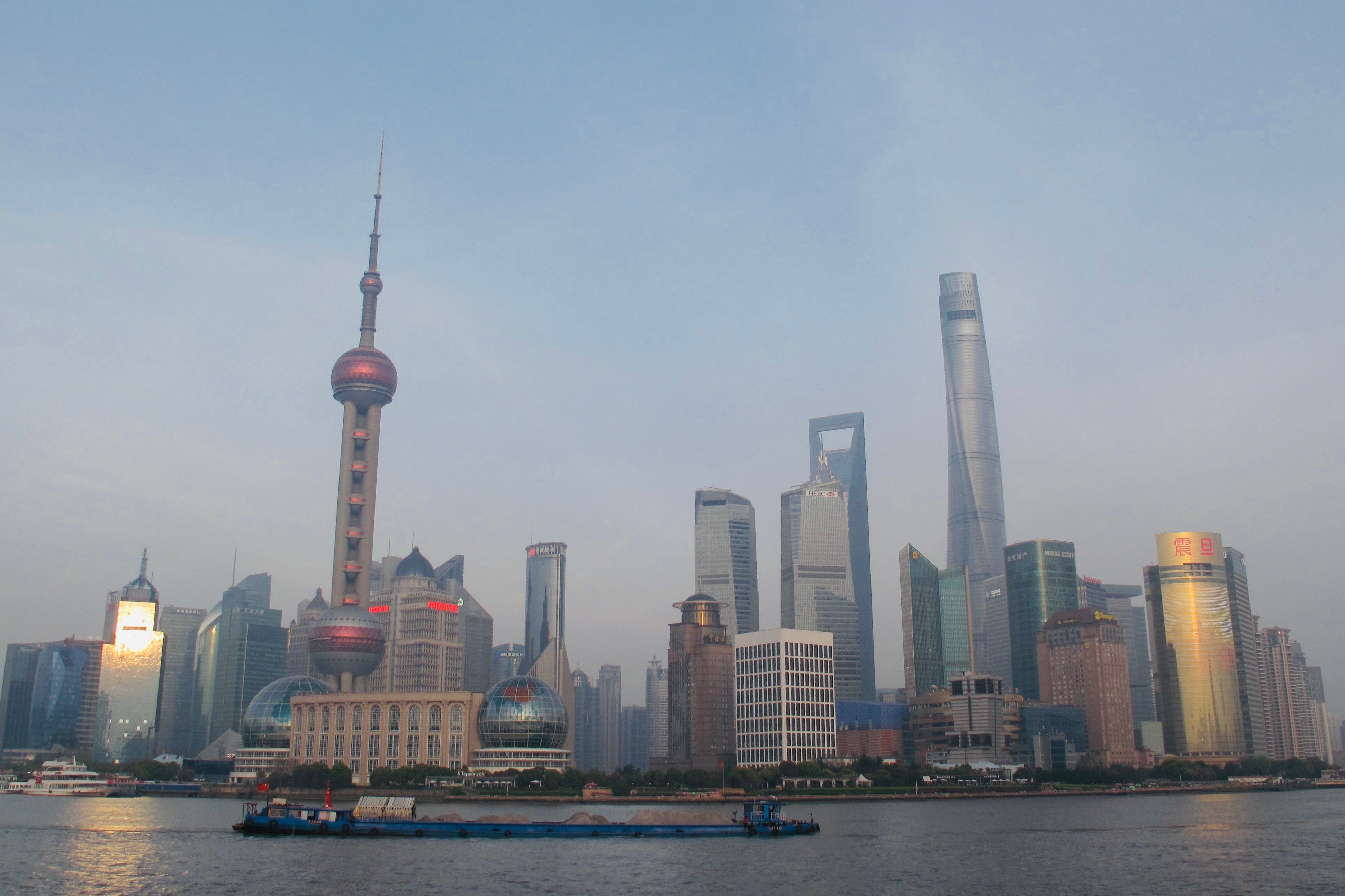
Q I am intrigued by the new “world’s longest flight” between Shanghai and Buenos Aires. Would it be possible (and sensible) to build it into a round-the-world journey?
Emily R
A Starting in December, China Eastern will launch direct flights from its hub at Shanghai to Buenos Aires. The flight will operate twice a week, taking 26 hours going east (from Shanghai) and 29 hours in the opposite direction. But in aviation parlance, “direct” is not equivalent to “non-stop”. The Boeing 777 stops to refuel, replenish and change crew in New Zealand’s biggest city, Auckland, before continuing to the Argentinian capital.
This flight is not really about shuttling Chinese people to Buenos Aires and flying Argentines to the Far East. China Eastern – a respectable airline – has its eye on two separate markets. A minority of passengers will be on board for the whole never-ending journey. But it’s mainly a flight of two halves: Shanghai to Auckland, and onwards to Buenos Aires.
On the first leg, there will be plenty of British and Kiwi passengers taking advantage of low fares and fast connecting journeys between London Heathrow and Auckland, on China Eastern with a single connection at Shanghai. Also, some Chinese people travelling for business or leisure to New Zealand.
The second half will see a completely different mix of passengers. China Eastern has been granted “fifth-freedom” rights on the Auckland-Buenos Aires leg. In other words, the Chinese carrier can sell tickets between two foreign countries. (Ethiopian Airlines does the same from Manchester to Geneva, incidentally.)
The airline will be catering for a large cohort of people who want to cross the South Pacific between Australasia and the eastern part of South America. Air New Zealand ended its own Auckland-Buenos Aires link as the Covid pandemic struck, and currently the only trans-South Pacific links serve Santiago.
For a round-the-world trip, the second half will add a really useful option: you could fly from Auckland to Buenos Aires and then move north through Uruguay and Brazil – perhaps flying on from Rio. A good agent can offer prices that include the China Eastern flight. But to do the whole straight-through flight? In my opinion, it would be a scandalous waste not to break the journey in New Zealand.
Email your question to s@hols.tv or tweet @SimonCalder
Join our commenting forum
Join thought-provoking conversations, follow other Independent readers and see their replies
Comments
Bookmark popover
Removed from bookmarks