How should I break up my flight to Buenos Aires?
Simon Calder answers your questions on South American stopovers, European rail travel, and magical Mexico


Q I have a work trip to Buenos Aires in February. Previously, I flew nonstop from Heathrow on British Airways, but I see they have added a stop in Rio, which annoyingly extends the journey. If I have to stop somewhere, I would prefer to actually break the journey for a day. Is there an interesting routing that you can suggest? I am self-employed and funding the trip myself, so keeping the cost down is important.
Anthony R
A You are right about the Rio stop adding time. The total journey from London Heathrow to Buenos Aires on British Airways, including 90 minutes on the ground in Brazil, is scheduled to take a gruelling 16hr 45min. That is five minutes longer than the Qantas nonstop flight from Heathrow to Perth, Western Australia, which is over 2,000 miles farther. So it is wise to stop along the way.
Madrid is the main European hub for Buenos Aires, with onward flights on Aerolineas Argentinas, Air Europa and Iberia. A morning flight to the Spanish capital, followed by lunch and an afternoon/evening there, appeals before the 13-hour night flight to Buenos Aires. Two issues: Madrid is only a couple of hours from the UK, so the flight lengths are highly unbalanced, and it could be chilly.
A more southerly stopover makes sense. The two obvious choices are Rio and Sao Paulo in Brazil. Both options allow you to take a nonstop night flight from Heathrow and arrive hopefully in good shape to enjoy the day. Only British Airways flies down to Rio, with both BA and Latam serving Sao Paulo.
Which city to choose? I advise Sao Paulo. For a very short stopover, even with a hotel, Rio may be overwhelming. While Sao Paulo has the biggest population of any city in South America, it has plenty of open space and quieter areas where you can relax – as well as some outstanding cultural attractions, notably the newly completed Sao Paulo Museum of Art (Masp).
Whichever you choose, there is a fair spread of onward flights to Buenos Aires, taking around three hours. Choose one that flies into the Aeroparque, practically in the centre of the Argentinian capital, rather than the more distant international airport. A good specialist travel agent will help find the best options at the lowest price.
Q Where do you see travel costs heading over the next six months? Particularly rail travel in Europe, and flights to Europe and beyond?
Susan L
A Let me start with flights, because the picture is reasonably clear. Between now and the first Sunday in January, airfares will peak – particularly to sunny, longhaul destinations departing shortly before Christmas and returning early in the New Year. Prices for many European flights will also surge, though if you are flexible on destination and timing you can get return flights to Spain and Italy for under £100 return.
Once people are back at work or school in January, European fares will sink once more and stay low for the following few months – except for a surge around Valentine’s weekend (14 February is a Saturday in 2026), the half-term week that begins for many schools on the same date, and the Easter holidays.
With less economic confidence among the travelling public, airlines are struggling to fill flights. Capacity, though, is lower than usual because of slow deliveries and technical problems with certain aircraft. That is affecting longhaul capacity too, and fares are generally at least as high as they were in 2024 – except perhaps to the US, which has experienced a decline in UK tourism.
Rail travel in Europe is so unevenly priced that it is impossible to present a simple picture. Anyone heading for Germany for more than a couple of days of exploration should invest €58 (£51) in a Deutschlandticket, allowing unlimited travel on rail (except the fastest express), trams and buses for a calendar month. At £1.65 a day, that makes rail travel almost free (as it is across the border in Luxembourg).
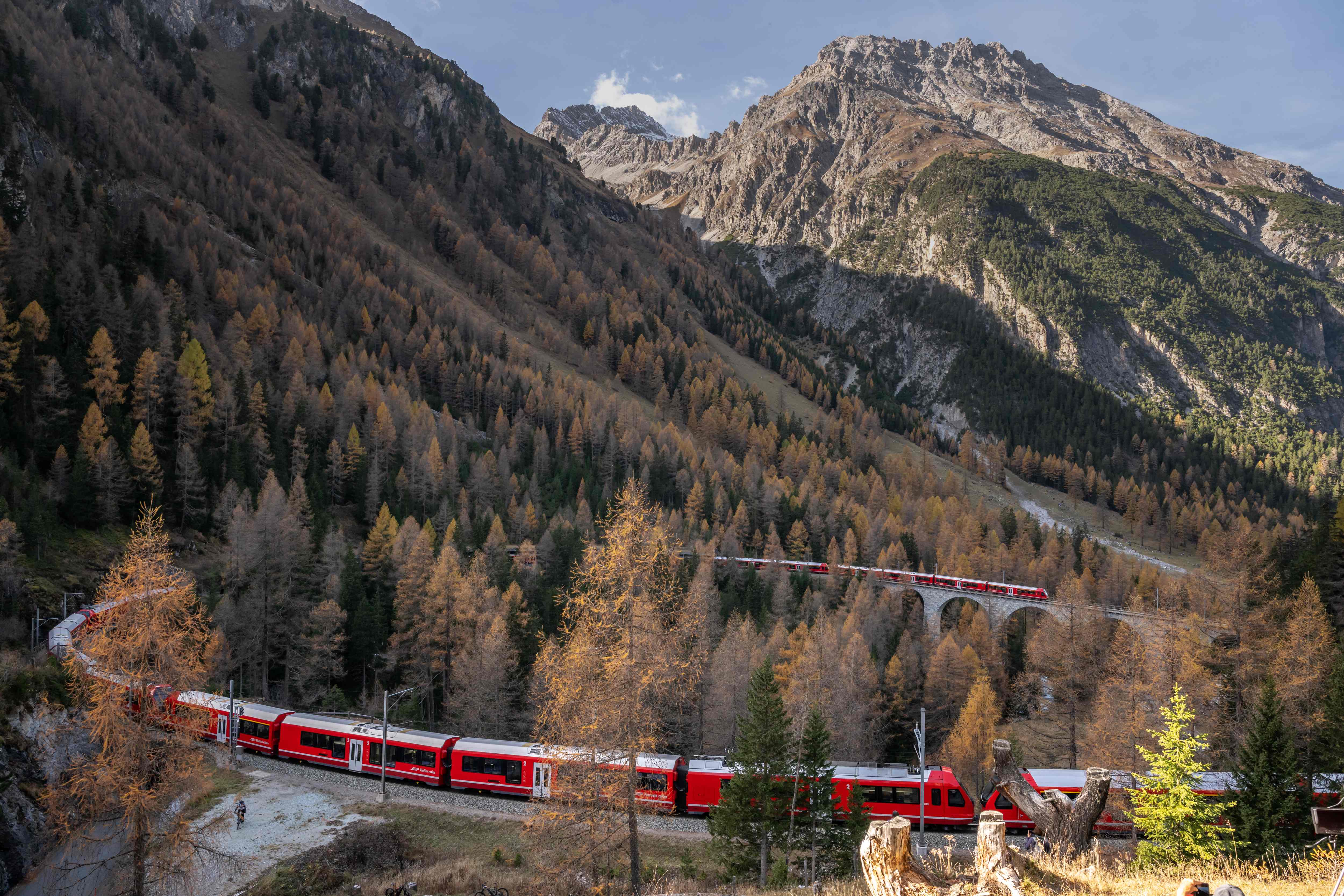
At the other end of the spectrum, Switzerland can be extremely expensive. Generally it is best to buy an Interrail ticket, which will also entitle you to cut-price Eurostar trains to Paris or Brussels and high-speed trains onwards to Switzerland. A sale that ends on 17 December gives 25 per cent off standard prices, so is worth booking now. Note, though, that expresses in France, Spain and Italy usually demand supplements of €10 or €20.
Q We have three or four weeks in January and early February and are looking at Mexico. Could you recommend a mix of city, culture and beaches?
Dawn L
A Three or four weeks provide plenty of time to make the most of Mexico, a nation I adore for its people, history, landscapes and cuisine.
Some quite sizeable chunks are on the Foreign Office no-go list; the FCDO travel advice says: “Some areas of Mexico have a high crime rate due to fighting between rival organised crime gangs. In these areas, there is a risk of being caught in the crossfire or of being mistaken for a gang member.” But all my highlights are within “permitted” areas where your travel insurance will remain valid.
Start at the southern tip of Baja California by flying in to Cabo San Lucas, which you can reach via various US hubs or Mexico City. Enjoy the marine scenery and nightlife of this fun resort, then travel around the coast to Todos Santos. My notes describe this dreamy town as “where the Tropic of Cancer meets the Age of Aquarius”.
Take the ferry across the Sea of Cortez to Los Mochis, an unremarkable city whose only touristic purpose is as the southern terminus of the Copper Canyon Railway, which is simply one of the best train rides in the world. The other end of the line, Chihuahua, is worth a day before you fly on to Mexico City.
Distances are long and road travel dangerous; fortunately domestic flights are cheap and reliable. The intense and energetic Mexican capital has an atmospheric heart and a wide range of cultural attractions dotted around. A three-day stay feels about right.
Then book a bus to head along the Pan-American Highway to the attractive colonial city of Puebla, and onwards to Oaxaca. This is the spiritual heart of Mexico, with exquisite architecture and a scattering of ancient civilisations.
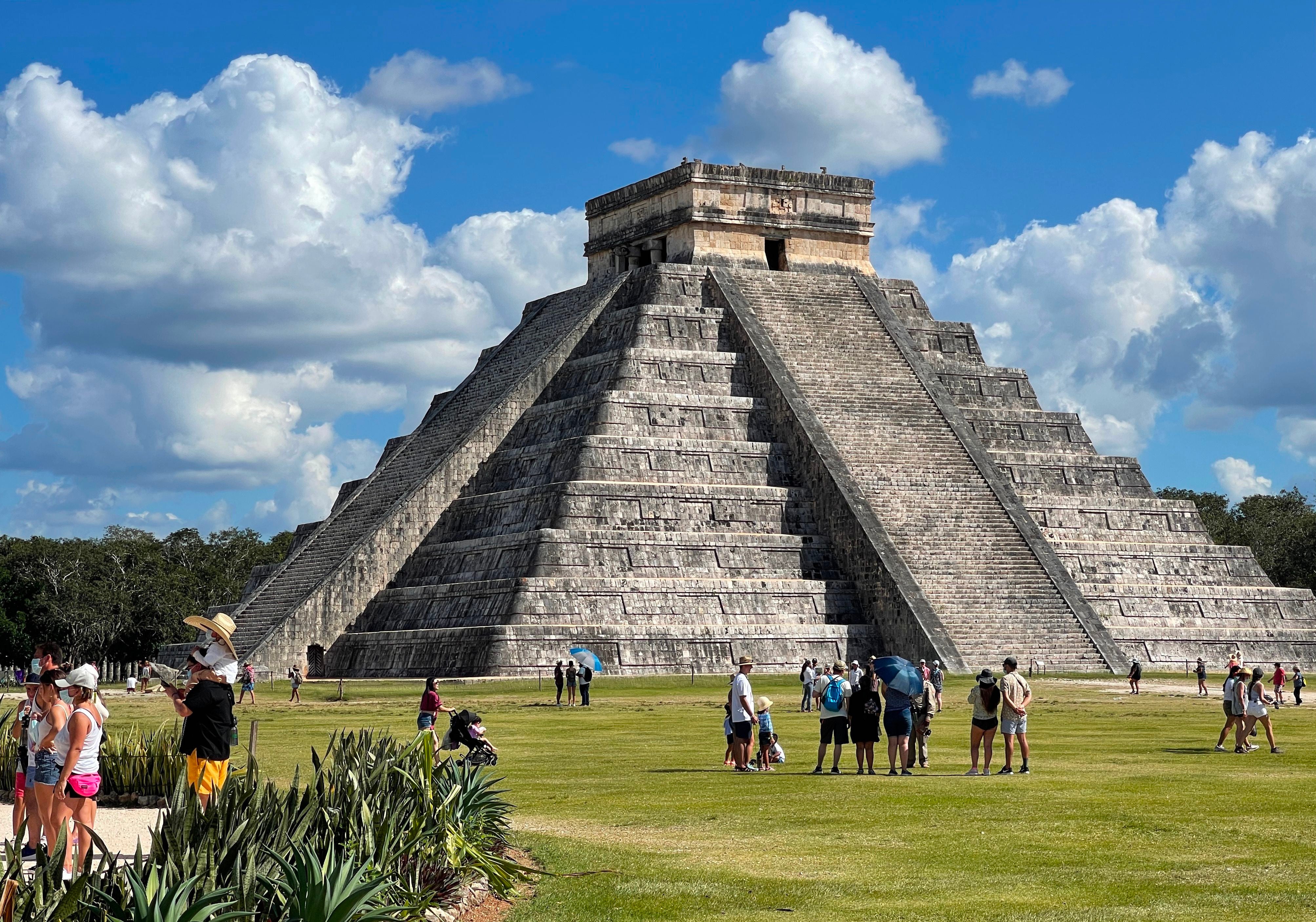
To come to terms with the magnificence of the Mayan world, fly to Mexico’s leading resort, Cancun, and explore the Yucatan peninsula. From the airport go south to Tulum, site of a Mayan seaside city, then inland to Chichen-Itza, the greatest of Mexico’s Mayan sites. Back on the bus for a Caribbean finale beside the beach in Cancun and a nonstop flight home.
Email your question to s@hols.tv or tweet @SimonCalder
Join our commenting forum
Join thought-provoking conversations, follow other Independent readers and see their replies
Comments
Bookmark popover
Removed from bookmarks