Australia’s hidden gem with exhilarating wildlife experiences and exquisite seafood
It’s one of Australia’s lesser-known tourist destinations, but Michael Owens finds the Eyre Peninsula in South Australia has much to offer, from eating oysters taken freshly out of pristine bays to swimming with sea lions and dolphins

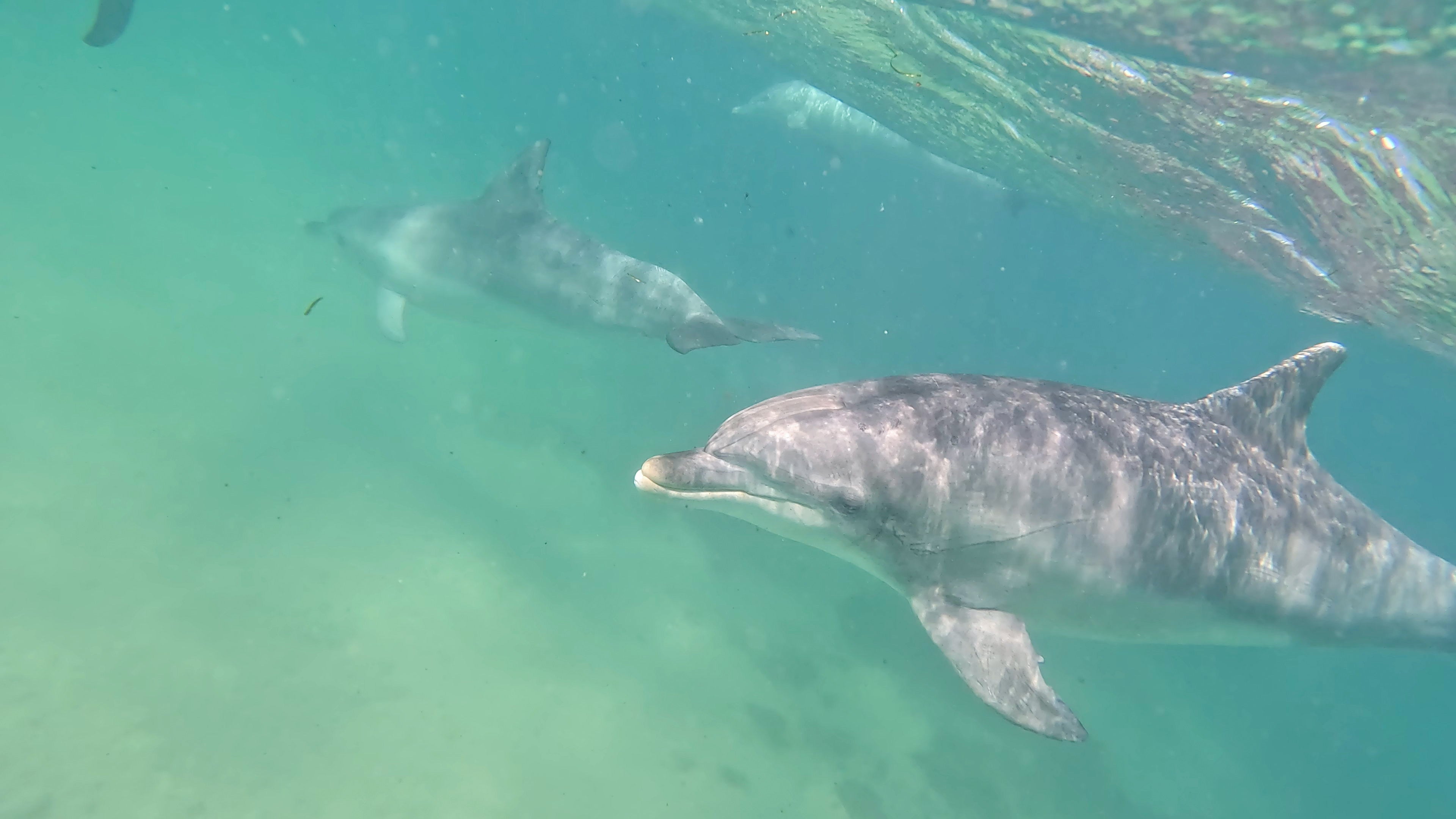
We’re sitting in a small boat, bobbing on the swell of the Southern Ocean, when we get the nod. Six of us in pull on our goggles and snorkels then step to the boat’s edge and down into the water, still chilly despite our 5mm wetsuits. The skipper points towards the edge of the bay and we see them – about half a dozen dolphin fins heading our way.
Before this trip there would have been few things to entice me into the Southern Ocean, which surely brings the word “shark” to mind for most non-Australians, but this is one of them. It’s the culmination of a five-night trip through a region home to striking scenery, exhilarating wildlife experiences and exquisite seafood too – often with barely another person in sight.
South Australia may be one of the country’s less-visited states – New South Wales, Queensland, Victoria and WA all see more tourists – and those who do touch down in Adelaide are perhaps more likely to have a wine tour on their mind in the stunning valleys around the city. But across the Spencer Gulf and Gulf St Vincent lies the Eyre Peninsula, surely one of the country’s hidden gems with more than 2,000km of coastline, much of it stunning and pristine.
Read more: I'm from the UK and this is what Christmas in Australia is like
Our trip begins in Port Lincoln on the peninsula’s eastern coast, seven hours’ drive from the state capital of Adelaide but just a 50-minute hop by plane across the water. The area was charted by British explorer Matthew Flinders in 1802, who named landmarks after his Lincolnshire birthplace – hence “Port Lincoln”, as well as Boston Island and Donington Point. Today the city declares itself Australia’s seafood capital, and with good reason as the home to the southern hemisphere’s largest fishing fleet. As we explore the city on mountain e-bikes, we can see dark circles of tuna rings in the bay, while the fleet of trawlers used by “prawnies” fills the marina. (Despite the phrase “throw another shrimp on the barbie”, Australians, it seems, are in fact more likely to say “prawns”.)
While Flinders put the area on Western maps, its Aboriginal history of course stretches back long before. Through Untamed Escapes we do a cultural tour with Emmalene Richards, a member of the Barngarla people local to the area, who know it as “Galinyala”. We meet her at the point where European settlers landed. They initially believed the white visitors were the spirits of their ancestors, and helped the first settlers find fresh water. Emmalene shows us sites sacred to her people, as well as the darker side of local history as indigenous people were exploited and deprived of the land that had been theirs for thousands of years.

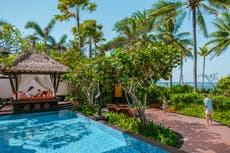

We stay at the Deco Beach Apartments, spacious art deco-style accommodation overlooking the bay, and there’s plenty to explore in the city, including L’Anse, a French bakery with the state’s best croissant, a tap room for Jump Ship Brewing, whose beers we were served across the region, and the Teakle and Boston Bay wineries.
But beyond the city there is plenty of untouched scenery to see. We head to the Lincoln National Park with Australian Coastal Safaris, which also provided our e-bikes, and our guide, Doug, who first takes us to West Wanna point, where we look back across miles of untouched sand. It’s a known beauty spot – Doug had recently played host to Robert Irwin, son of “crocodile hunter” Steve, filming a Tourism Australia advert in the dunes. But despite this, he says, on some beaches you can go for a walk, return a week later and your footprints are still the only ones to be seen.
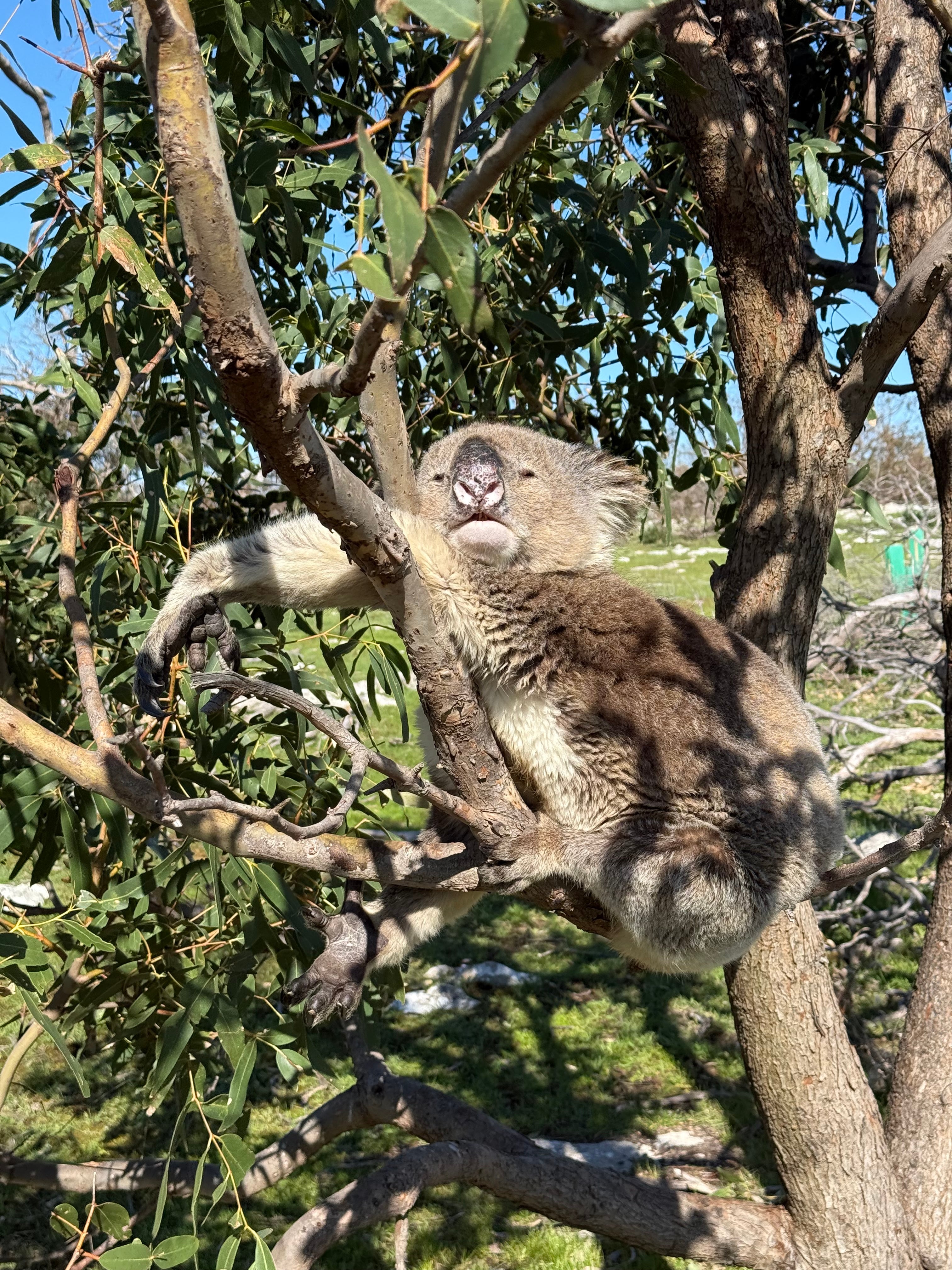
From this spot you can often see southern right whales as they make their way from Antarctica to warmer climes, but our chances of a sighting are dashed by choppy seas. Instead, after some 4x4 offroading across the dunes, we head to Mikkara Lodge, famous for the chance to get up close with koalas in the wild.
Koalas are common in the wild in Australia – like kangaroos, and both are at Mikkara – but they are usually are found in the eucalyptus trees tens of metres of the ground. At Mikkara, battered by the strong winds sweeping in from the ocean, the trees have adapted and are far smaller, meaning the chance to get face to face with koalas at eye level.
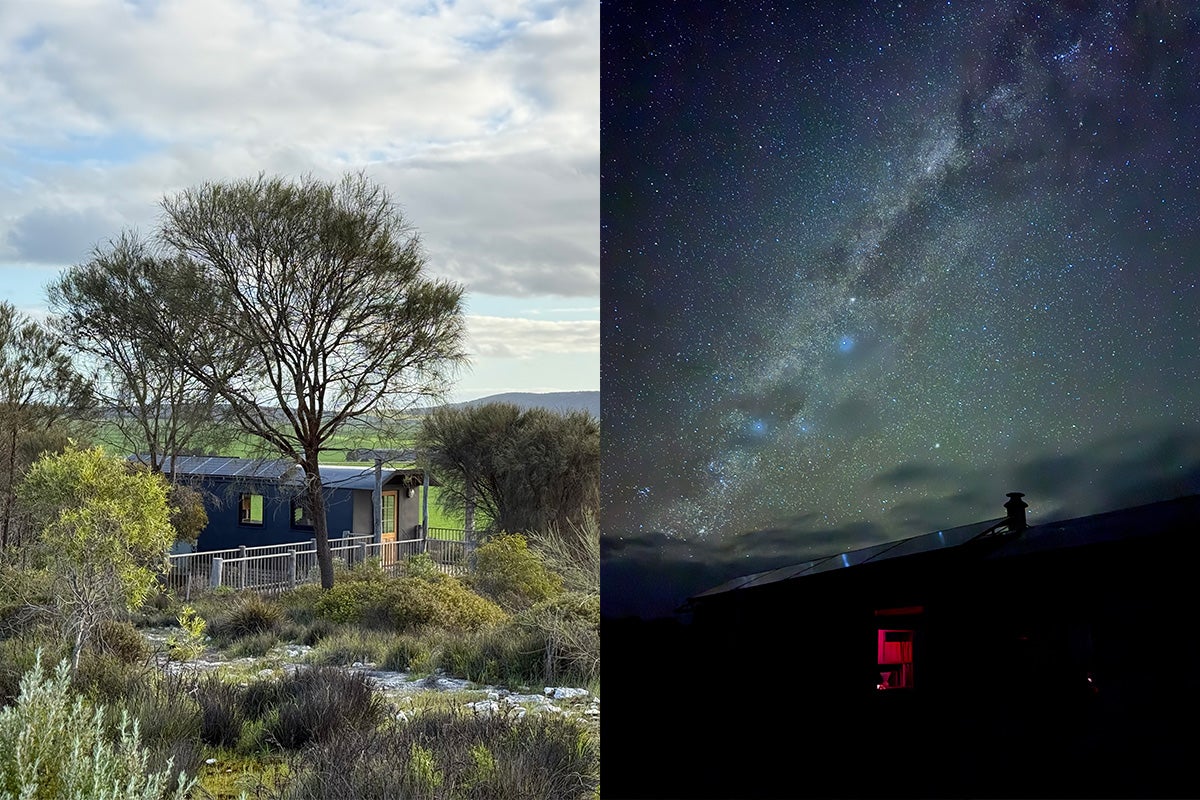
With the first wildlife ticked off our list, we head into the wilderness, driving southwest to stay at Greenly Carriage, a train carriage that has been restored into an off-grid cabin with stunning views down the rolling countryside to the ocean. As the sun sets, we start a fire and, with no light pollution, can marvel at the milky way above.
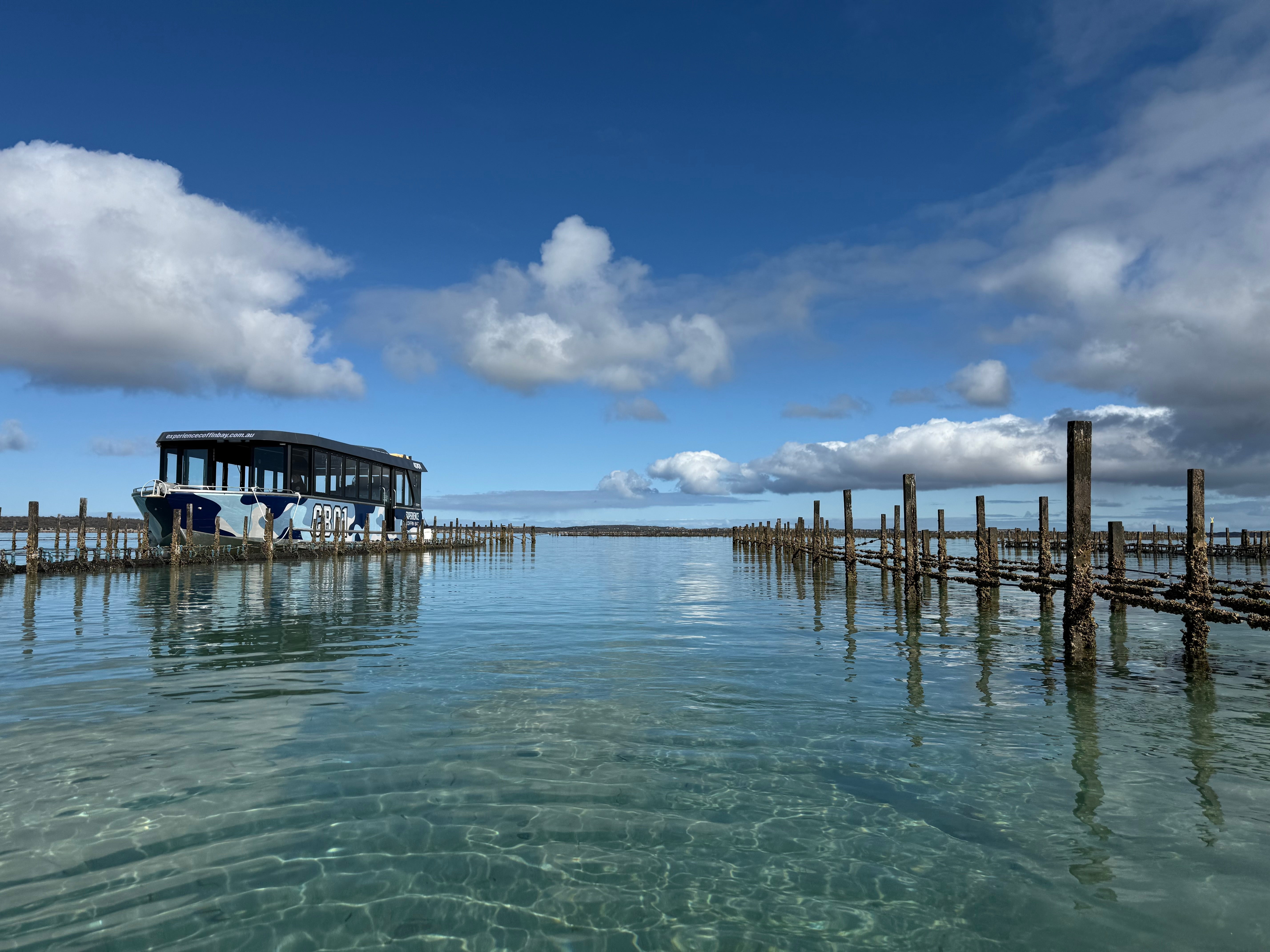
Our next stop is nearby Coffin Bay, for an oyster farm tour, boarding a flat-bottomed boat to head out 18km across the shallow, pristine blue waters of the bay. Oysters here, we’re told, are sold for 12AUD a dozen (about £6), but in restaurants a Coffin Bay oyster can set you back north of 12AUD for one if you order at a restaurant in Sydney or Brisbane, and they’re even air-freighted to Germany.
Read more: The lesser-known region of Australia that the crowds haven't discovered yet
We arrive at lines upon lines of wooden poles, oysters hung up on rope between them, and are given waders to walk between the oyster lines in the waist-high water and see them up-close. We’re then served a dozen oyster each, fresh out of the bay, with a slice of lemon as our boat cruises back, spotting seals and dolphins on the way.
Finally we head to Baird Bay, a tiny fishing village a few hours’ drive up the coast. We arrive via the beach, waiting for pelicans to move out of our way as we park the car, with glittering waters running along the sand and into the southern ocean.
Stood opening out on to the sand are two luxurious villas – one three- and one four-bed – that open out on to the beach, with a swimming pool between them. They‘re equipped for self-catering but meals either fireside or in the restaurant can be added on. After unpacking we’re beckoned out on to the beach where a fire has been lit and we drink cocktails and eat oysters as the sun sets, before dining on the beach by firelight.
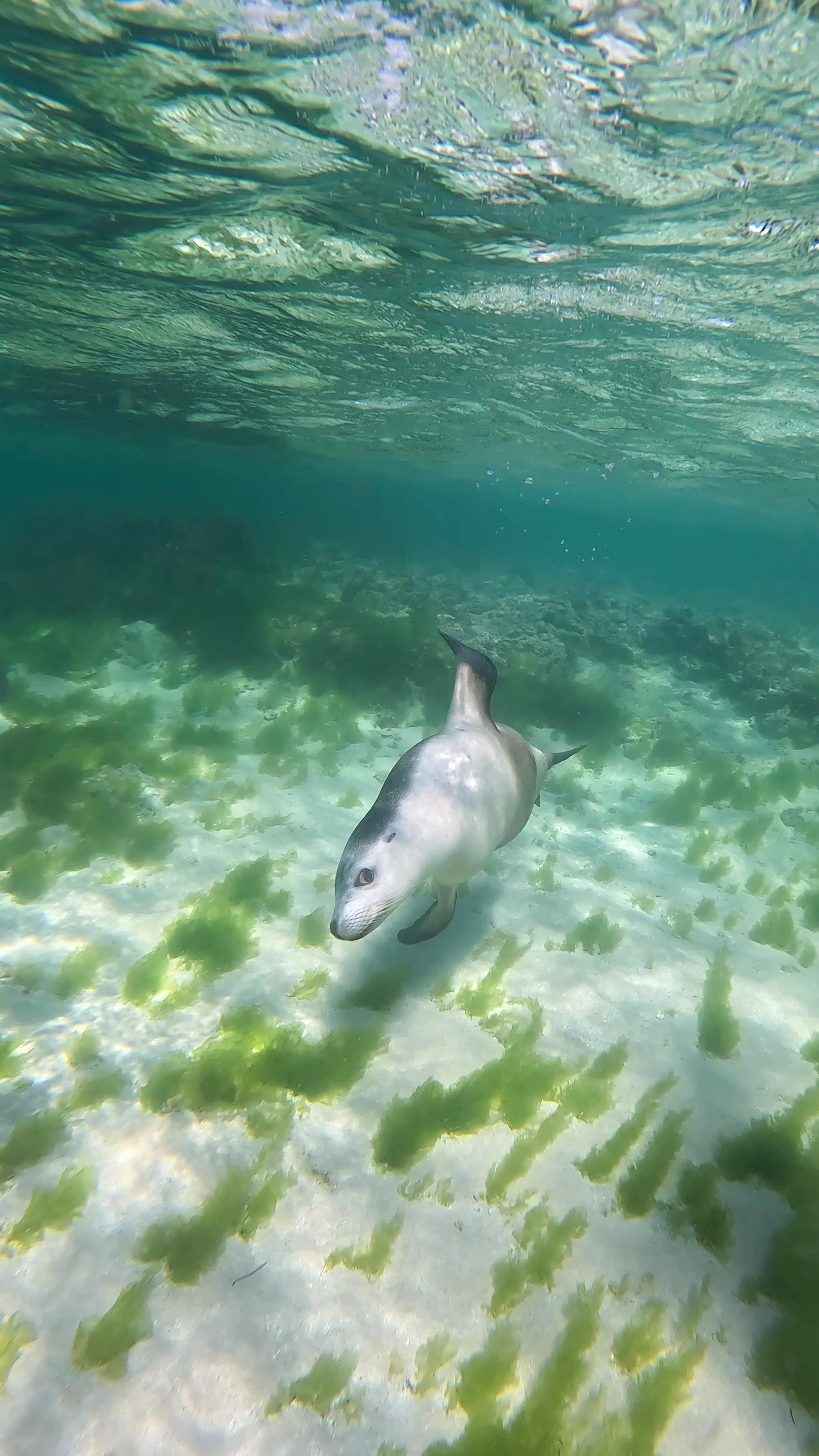
The main reason we’ve come to Baird Bay Experience, though, comes the next day: the chance to swim with sea lions and dolphins in the wild. We set off in the morning on the experience, which can be booked separately, taking a short trip by boat to Jones Island, a natural habitat for sea lions. As we make our way through the chest-high water, staying as low as possible, they spot us and several younger sea lions come out to swim among us and play, while others watch on from the land. Then we head across the bay to where the dolphins may be. Once they’re spotted we’re in the water and they dart backwards and forwards past us at touching distance. The whole exhilarating experience is captured on waterproof GoPro cameras we’re able to borrow and download our footage later.
Safely back on the boat, we head back to Baird Bay for lunch, an oyster followed by local fish and triple cooked chips, then take a stroll along the immaculate beach – still not another tourist in sight.


How to get there
A number of major airlines including British Airlines, Emirates and Qatar fly to Adelaide. From here, take a 50-minute flight to Port Lincoln with Qantas or Rex airlines.
Where to stay
Stay in Deco Beach Apartments on the waterfront in Port Lincoln.
Book The Greenly Carriage in Coulta.
Stay at Baird Bay Experience from 450AUD a night or book sea lion experiences separately.
Michael was travelling as a guest of the South Australia Tourism Commission.
Read more: This region boasts some of Australia’s best beaches, wine and wildlife
Join our commenting forum
Join thought-provoking conversations, follow other Independent readers and see their replies
Comments
Bookmark popover
Removed from bookmarks