AI collar allows stroke victims to speak again
‘Revoice’ device uses the same technology as ChatGPT to avoid the need for invasive brain implants
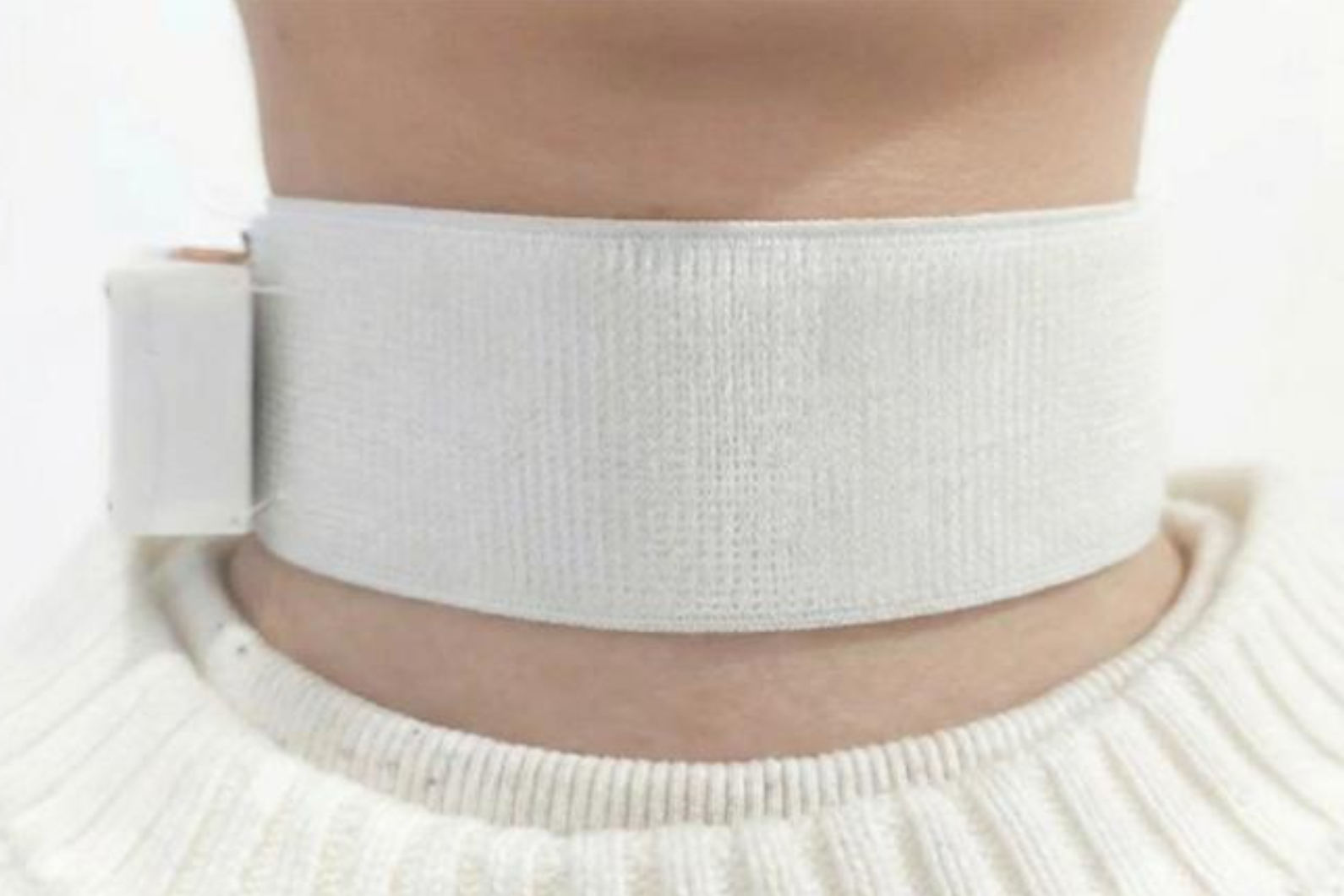
Scientists from Cambridge have invented a wearable collar that uses artificial intelligence to enable stroke patients to speak again with their natural voice.
The AI collar, dubbed ‘Revoice’, decodes the speech signals and emotional cues of the wearer in order to reconstruct words from fragments of silently mouthed speech.
The device marks a significant improvement from existing assistive speech technologies, which are either inefficient or require invasive brain implants.
“[Stroke] patients can generally perform the repetitive drills after some practice, but they often struggle with open-ended questions and everyday conversation,” said Luigi Occhipinti, a professor at the University of Cambridge’s Department of Engineering, who led the research.
“And as many patients do recover most or all of their speech eventually, there is not a need for invasive brain implants, but there is a strong need for speech solutions that are more intuitive and portable.”
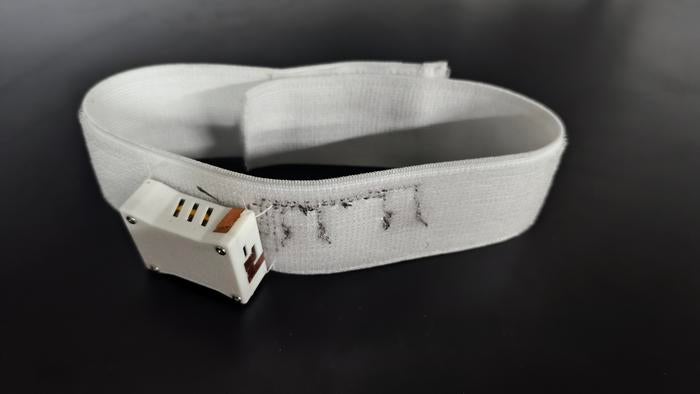
A trial involving five patients suffering from dysarthria, a common type of post-stroke speech impairment, saw the Revoice device deliver a sentence error rate of just 2.9 per cent.
It achieved this through sensors that capture subtle vibrations from the wearer’s throat as they attempt to speak, as well as pulse signals that infer their emotional state.
An embedded large language model (LLM), which is the same AI technology used in popular chatbots like ChatGPT, helps to predict full sentences.
It is hoped that the technology could also be used for people with other neurological conditions, including Parkinson’s and motor neuron disease.
“When people have dysarthria following a stroke, it can be extremely frustrating for them, because they know exactly what they want to say, but physically struggle to say it, because the signals between their brain and their throat have been scrambled by the stroke,” said Professor Occhipinti.
“That frustration can be profound, not just for the patients, but for their caregivers and families as well.”
The researchers hope to develop a multilingual device in the future that is capable of decoding a broader range of emotional states, though extensive clinical trials will be required before it can be made widely available.
The breakthrough was published in the scientific journal Nature Communications on Monday in a paper, titled ‘Wearable intelligent throat enables natural speech in stroke patients with dysarthria’.
Join our commenting forum
Join thought-provoking conversations, follow other Independent readers and see their replies
Comments
Bookmark popover
Removed from bookmarks