What are the lights on curling stones? Explaining Winter Olympics sport
Great Britain have high hopes for Milano-Cortina on the ice
Great Britain goes again in the curling in the Winter Olympics 2026 with Milano-Cortina offering up genuine medal opportunites.
A gold and a silver in both the women’s and men’s tournaments at Beijing 2022 set the bar for British hopes in Italy.
But Team GB’s hopes start in the mixed doubles pair with Bruce Mouat and Jen Dodds in action early on
The sport has captivated British fans for years, with its peculiarities proving captivating through the Games.
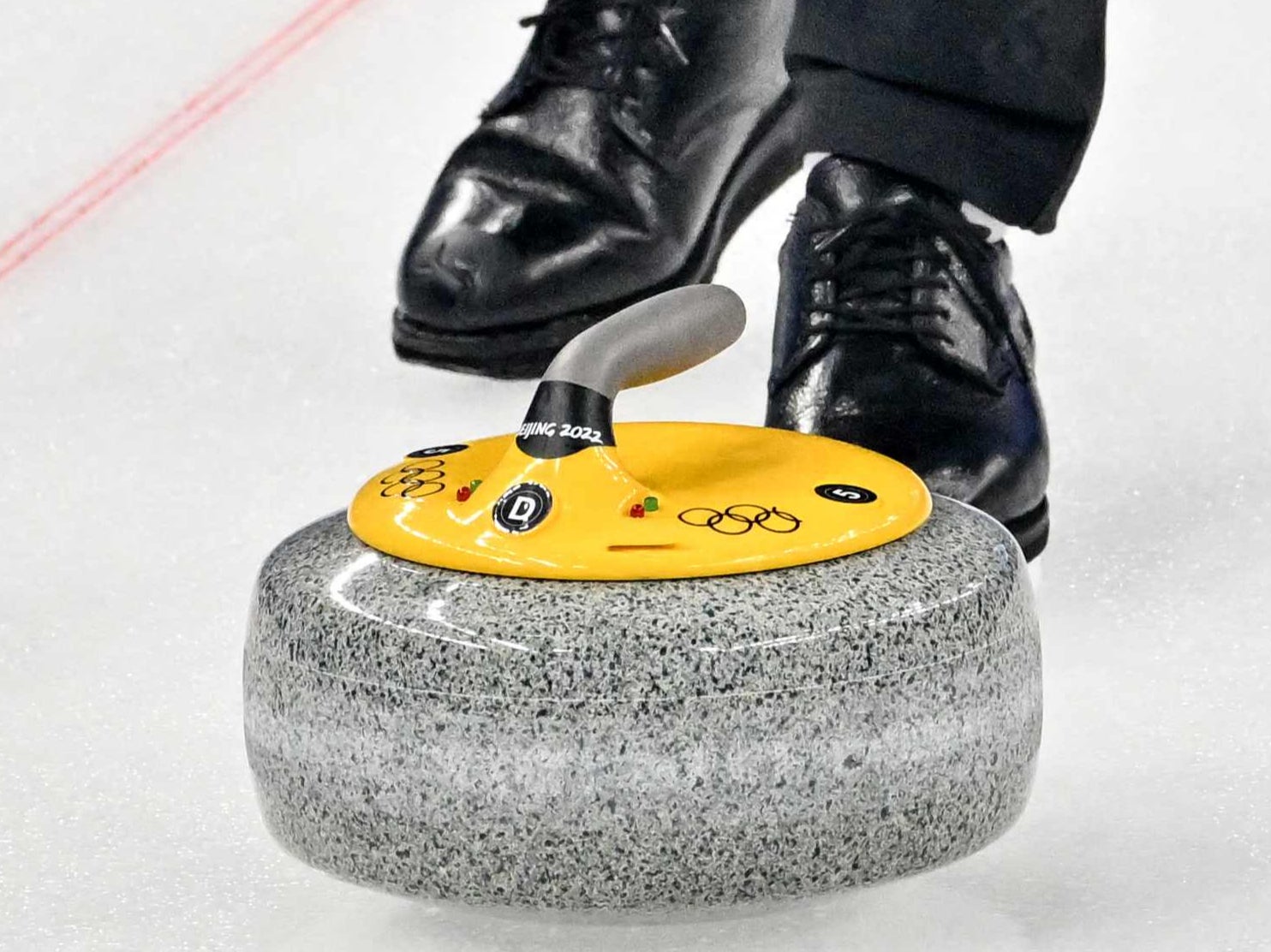
For example, during games, fans will see lights on top of the stones. Here is what they mean:


What are the lights on curling stones?
The lights are a tracking system to ensure the athletes release the stone before the first hog line - the red line at both ends, where both teams must release the stone before passing it.
A heat sensor is embedded into the ice and will be triggered if your hand continues to hold onto the handle while breaching the line, meaning each stone has batteries to power these sensors.
Failure to release your hand before the line will turn the lights red and that team will be forced to remove it from play.
It rarely happens at this elite level, but such is the pressure at the Winter Olympics, it can occasionally happen.
How much does the stone weigh and what is it made of?
The official USA Curling rulebook states that each curling stone cannot be greater than 44 pounds (19.96kg) in weight, and no less than 38 pounds (17.24kg). The handle is included as part of the weight.
The stone’s circumference cannot exceed 36 inches (91.4cm) and cannot exceed 4.5 inches (11.43cm) in height.
The stones are made of a special type of granite, which is found on the island of Ailsa Craig in Scotland.
The hammer is a crucial part of curling. The team that has the hammer is able to throw the final stone of each end, generally a significant advantage, with all other stones thrown and the current scoring situation clear.
Whichever team doesn’t score during an end will get the hammer in the next round - this sometimes causes teams to avoid scoring just a single point, instead preferring to retain the hammer and score more heavily in the next end.
It is retained if neither team scores.
Before a game of curling begins, teams decide who will have what is also known as Last Stone Advantage. In championship curling the hammer is decided by a draw to the button with two players from each team delivering a stone as close as possible to the centre of the house – one stone is delivered clockwise and the other counter-clockwise – and the distance from the stone to the centre being measured.
This process is called the Last Stone Draw or LSD.
In the men’s and women’s events, the final two stones of each end are generally thrown by the skip.
This is the de facto captain of each rink, who shapes their team’s strategy and must execute calmly under pressure.
In mixed doubles, in which five stones are played, the same team member throws the first and last stones of each end.
Their teammate throws the middle three stones: teams begin every end with one stone, per team, pre-placed therefore it’s possible to score six points in an end.
Join our commenting forum
Join thought-provoking conversations, follow other Independent readers and see their replies
Comments
Bookmark popover
Removed from bookmarks