Sports super-accountant on athlete shame, bad Rolex buys, and the future of Saudi boxing
Interview: Oriana Morrison has worked with top football clubs, UFC stars, and former boxing champion Anthony Joshua
“That Anthony Joshua fight, in the US, bought me a kitchen. I call it ‘the Anthony Joshua kitchen’.” A fitting name. To the point. And for Oriana Morrison, a preeminent sports accountant and tax strategist, getting to the point is key.
“There’s still lots of stigma around money,” she says, from across the table of a bustling Italian restaurant in Fitzrovia. “Clients can talk to me freely about money, and some don’t. I don’t want to say it’s ‘shame’, but it’s such a UK thing. They’re almost embarrassed they did well and are considering what to do with their money. In the US, the attitude is completely different; that’s why they’re generally more entrepreneurial.”
As much as Morrison can be to the point, her advice typically comes from a caring place – delivered with a Brazilian accent that ripples with inflections, due to years studying economics in Edinburgh and a decade-plus living in London.



“I try not to be judgemental,” the 41-year-old says of her clients, including Liverpudlian UFC star Paddy Pimblett, his recently-retired fighting friend Molly McCann, and Portuguese football clubs Benfica and Porto. British boxing icon Joshua is among Morrison’s previous clients, thus the kitchen. “I tell them: ‘It’s good to make money and want more, when your time to make it is short.’”
Morrison attributes her career trajectory to a classically Brazilian obsession with sport, plus gripes with the “unfairness on fighters”; an occasional message to clients is: “The numbers don’t cut it, buddy, we need to talk.”
“Nobody understands what economists do, but they understand that – come hell or high water – they’ll have to pay tax, so I pivoted,” says Morrison. “It’s rewarding when clients understand what I’m trying to do for them, and keep that understanding. They’re less likely to get f****d over, in a world that’s trying to f*** them over.

“I put things in basic terms. To you, what’s a fair price for this?” She takes my biro. “Err... 50p?” I half-ask, stretching the syllables as I try to gauge whether that’s sensible. “I mean, I’d buy it for 50p; I’d rather sell it for £1,” I add.
Morrison’s response is somewhat relieving: “You kinda get it. If you want 50p, ask for £1. If you want £100,000, aim for £1m; if you fail making £1m, you could get £100,000. And as my husband says: ‘If you want your first £1m, you’ve got to make £2m, because half of it goes to tax.’”
Her husband Jamie, drummer in Stereophonics, has quite the business acumen in music. Still, as Oriana notes: “Maths is highly conceptual. Everyone has their own mental accounts. ‘Oh, I made £100,000,’ but some don’t include tax.”
So, what’s the plainest advice she would give athletes?

“Don’t buy that watch,” she says quickly. “Some deem it a rite of passage, or do it for other people’s opinions – which won’t pay the mortgage. Even if the watch appreciates beautifully, you have to pay for insurance and maintenance. Also, there’s stuff I find out my clients invested in through Instagram. Everyone’s susceptible to advertising.”
Some athletes have it right, though. Morrison notes how Joshua earned $10m in that disastrous 2019 defeat by Andy Ruiz, but how – although that sum was “a big jump, technically his biggest payday then” – he was “such a corporate darling, he was already making much more from sponsorships”.
That fight brings us onto an intriguing fixture of the current sporting landscape.
“It changed the course of sporting geo-political, geo-economic history,” explains Morrison, “because interest waned on that US deal, and the Saudis scooped up.” In the last few years especially, Saudi Arabia has become the hub for elite boxing, as the Gulf state tries to diversify its income streams.
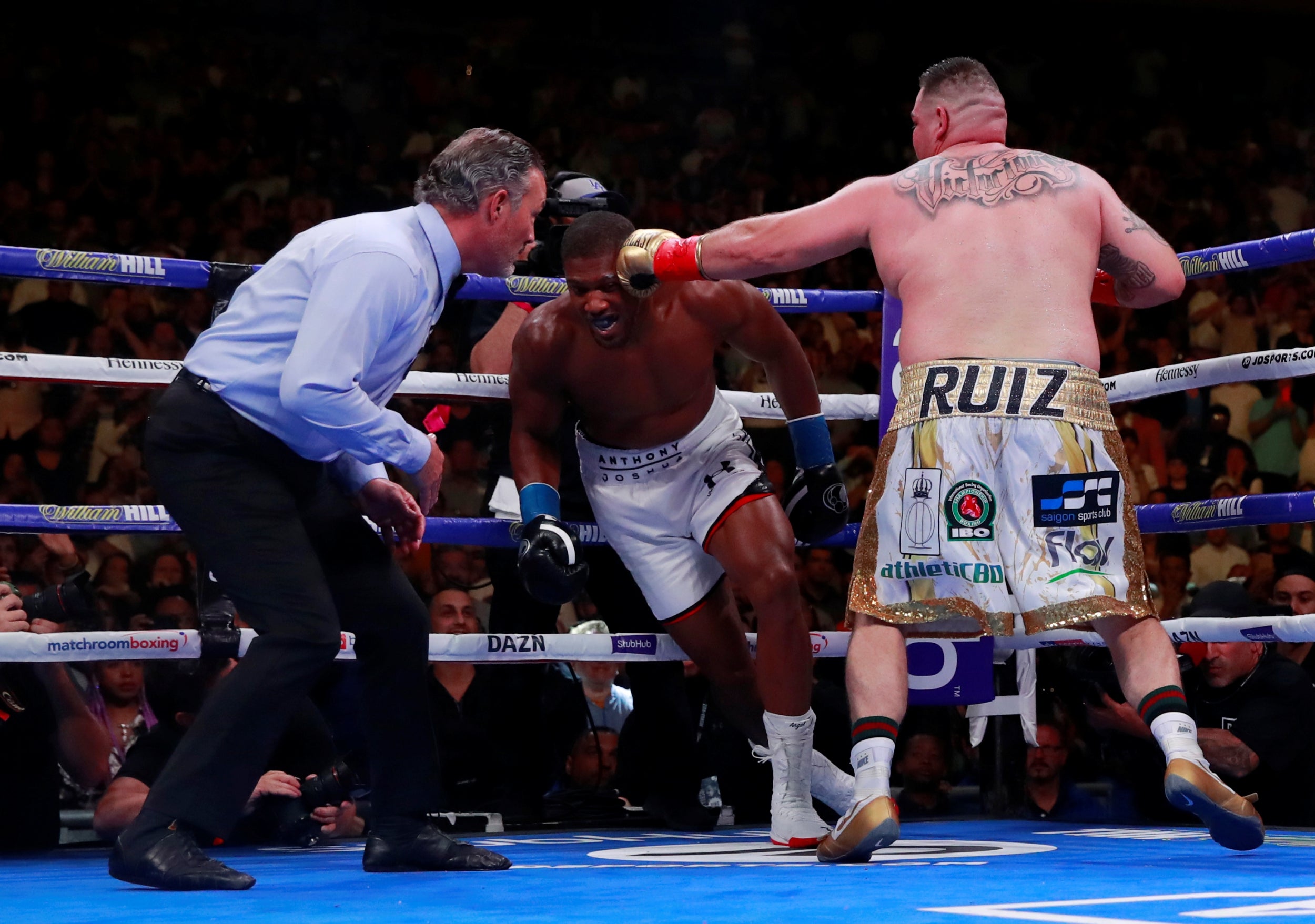
“You have to spend money to make money,” Morrison says, but Saudi Arabia might not have reached the second part.
“Technically, they’re in economic recession,” Morrison says. “If you pay Joshua $10m to fight in the US, you'll get a return on investment, because American pay-per-view income is still the bread and butter of heavyweight boxing. Because [Saudi Arabia] has a different timezone and such, they lost that revenue.”
And still the Saudis, hosts of Fifa’s 2034 World Cup, plough on.
“Sometimes the market creates supply first, to generate demand – like with the iPhone. But there’s a whole department at Fifa that looks into how audiences will perceive partnerships; it was a little more optimistic, but now [Saudi involvement] is seen for the economic exercise that it is.
“You have to consume sports to have a return on investment; you spend tons on an arena, what else are you gonna use it for? At some point, you need to make your money back. It was an expensive jolly.”

Indeed, fighters’ futures may not lie in Saudi Arabia, but rather the US. Morrison is seeing an exodus of British fighters, like those joining Jake Paul’s Most Valuable Promotions, which has signed numerous women’s boxers this year.
“Payouts are bigger in America, they pay less tax, you have more sponsorship opportunities – especially female boxers. Who’s gonna sponsor a female boxer in Saudi, put their money and name to that?” Morrison asks, referencing cultural differences there. “Half the people who buy sports gear are women, so they lost advertiser, pay-per-view and sponsorship revenue.
"That’s why fighters tend to go to America now more than Saudi, especially with a Republican in power; generally, that means taxes are lower and the economy does well. People feel more confident and spend more money on entertainment. Sport reflects a nation’s psyche.”
We also discuss UFC fighter pay, long derided alongside the promotion’s perceived lack of transparency. “I’m not criticising anyone,” says Morrison, “but any secrecy only benefits people with capital. We need an open exchange of each athlete’s value, like companies on the stock exchange. But just because an athlete wins [financially], doesn’t mean the promotion doesn’t.”

And what of athletes who face tax-fraud charges, like Lionel Messi, who pleaded ignorance and whose suspended 21-month prison sentence was reduced to a hefty fine in 2017.
Simply put by Morrison: “Generally speaking, lots of tax advisers don’t know their s***, or only superficially understand. ‘This law says X.’ Yeah, but chapter 1, paragraph B, option 3 says: ‘Everything aforementioned is null and void in this event.’
“Tax is the government giving you a positive or negative incentive to do something they want you to do. The other side is equally nefarious: a government can say, ‘Tax breaks for X are legal,’ and say two years later, ‘Actually that wasn’t legal,’ and retroactively prosecute you, because they didn’t understand their own laws.”
I certainly leave our encounter with a greater understanding. And yet, “If you only rely on the labour on your back, you’ll never be wealthy,” Morrison says, her eye contact making this feel like a pointed jab at me. “It’s okay. You can give me a call.”
Join our commenting forum
Join thought-provoking conversations, follow other Independent readers and see their replies
Comments
Bookmark popover
Removed from bookmarks