Inside the mind of George Ford – and a rebirth that defines England rugby
The fly half found himself drifting to the periphery of England’s squad but, as Harry Latham-Coyle explains, a mind that makes him a candidate to one day coach his country reinvented himself to thrive as Test rugby has evolved


In November last year, in an otherwise innocuous, anodyne pre-match press conference, Steve Borthwick made a prediction. The England head coach is not prone to emphatic declarations – a logic-driven thinker, equivocation and ambiguity can be useful tools of his trade, each concrete thought eventually uttered after a period of consideration. This, though, was a truth of which he was certain. “I wouldn't be in any way surprised to say he'd be England coach at some point in the future,” Borthwick began, before a more emphatic flourish. “I think he will be, if that's where he chooses to go.”
The individual in question was George Ford, a fly half in the midst of a career renaissance and proving himself again England’s man for all seasons. Ford’s analytical mind has long been a subject of wonder, even among colleagues in camp, with his ability to distil and define the trends of the game key to his side’s success over an international career that will reach 12 years of age at the start of March. The 32-year-old has had to ride the rhythms of Test rugby in that time; picking his brains this week about the latest tactical trends, with contestable kicking ever more key, it is clear why he has made it to 106 caps and counting.
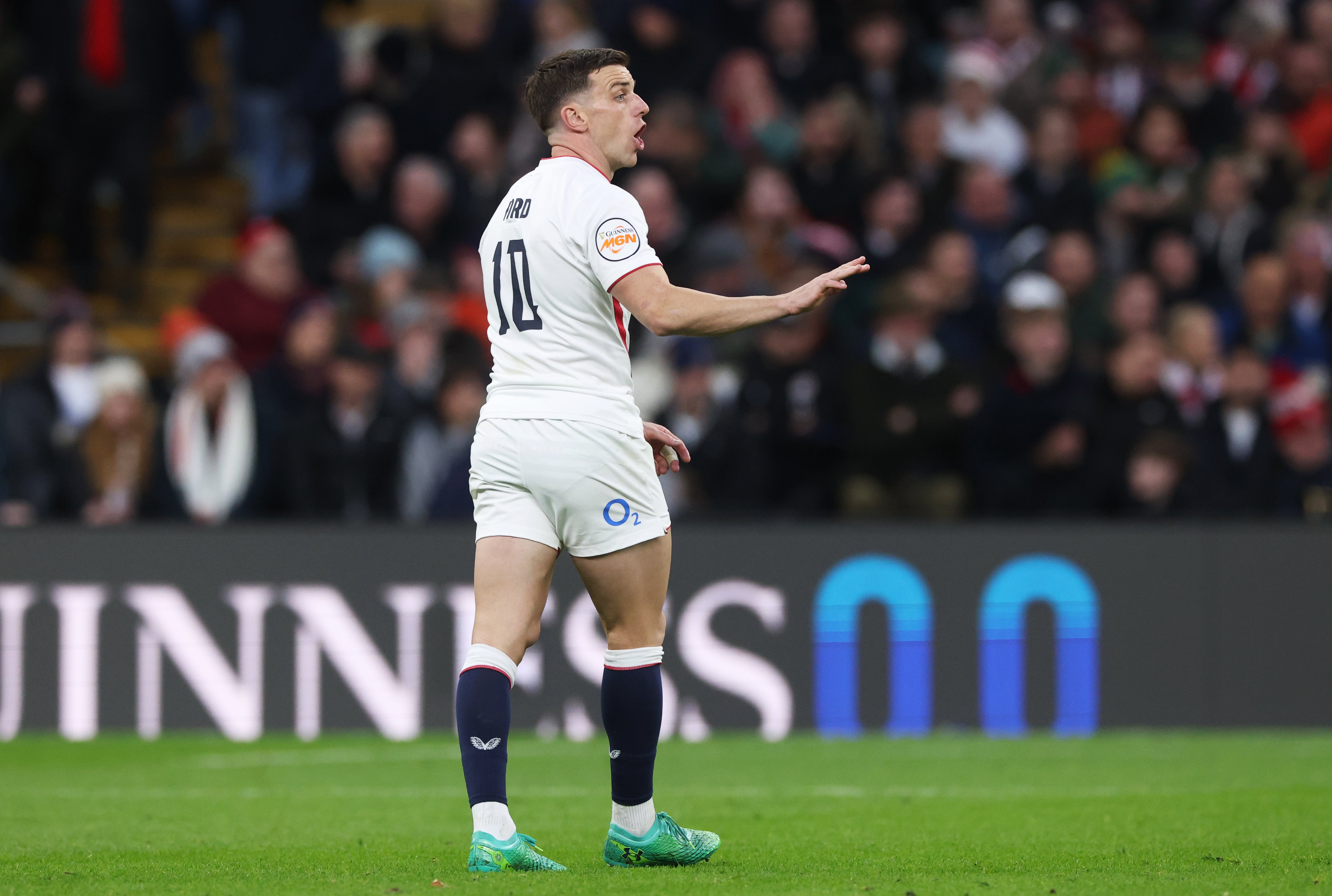
“I think they key shift has been what you do when you get it back,” Ford explains with trademark depth. “Are you getting an opportunity to? Because there's no point just kicking the ball and getting the ball and not doing anything with it and kicking it again, for example.
“I must say, that has been a big mindset shift in the world of rugby, but for us especially. The reason we are kicking so much is to then go on and attack and score tries and move the ball and give our X-factor players some space to go and entertain because that's what we want to do, entertain and score tries. The key thing being the mindset shift of why we're doing it and more importantly, you've still got to be good enough to go and do the next bit which is going to be dangerous, and I think we are carrying on to improve that area.”
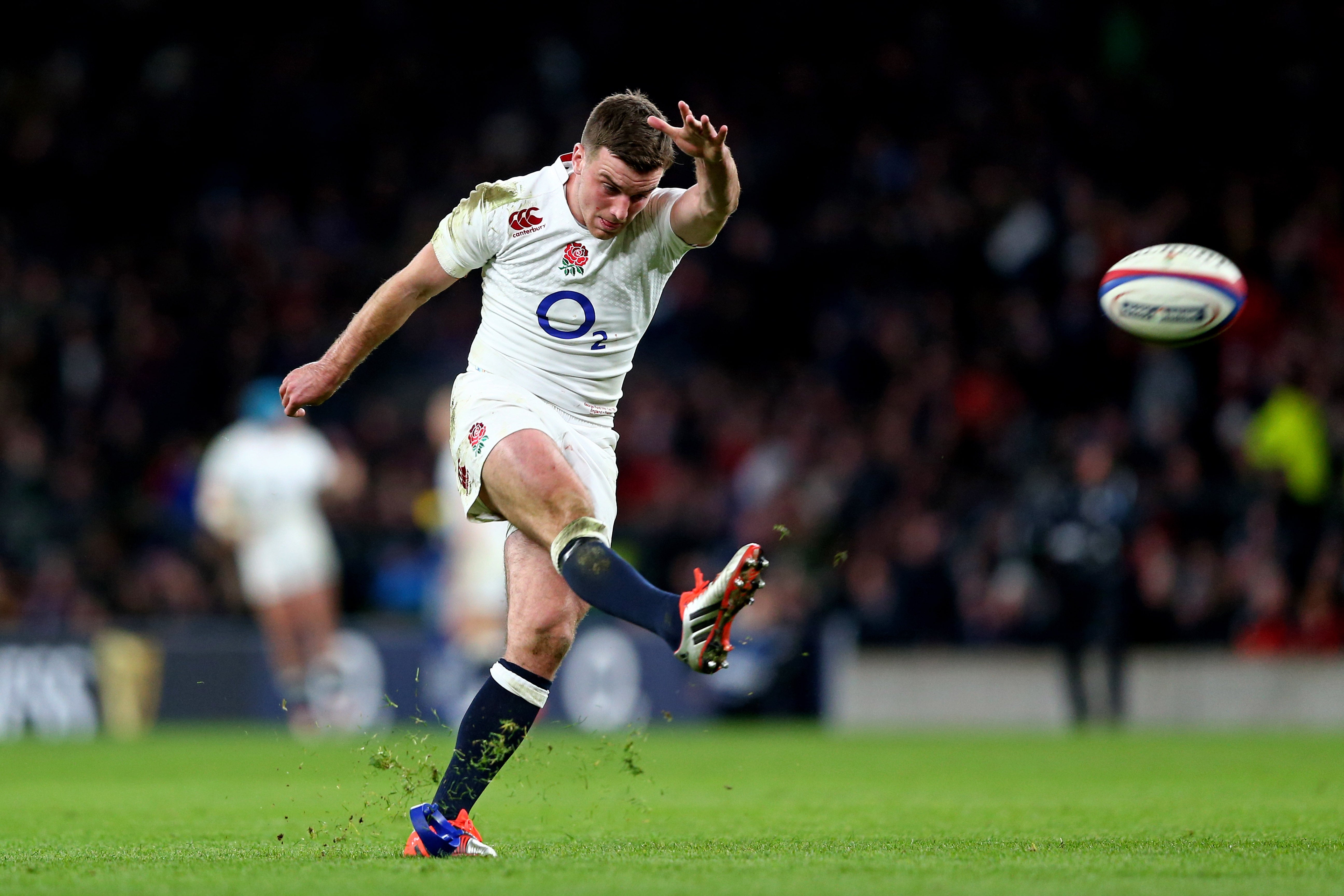
The Ford of today still carries the fresh face of the 20-year-old debutant of all those years ago — though a recent taking up of pilates reflects a body beginning to feel its age. It has been a strange 12 months where Ford has fought back from the fringes to a central role, having largely been overlooked in last year’s Six Nations for Fin and Marcus Smith. Even then, though, Borthwick was underlining his importance in preparing and setting an example to the squad. If his place on the periphery meant missing out on the British and Irish Lions tour, it nonetheless proved a catalyst for Ford’s rebirth; the absence of the Smiths, who toured Australia with the Lions, gave him a clear run at the starting shirt in Argentina and the USA last July, and he has barely relinquished it since.

There is a certain clarity of communication that comes with Ford, on and off the pitch. “When you get around to game day, you always bring it back to that but we are a team that thrives off that mindset or mentality,” he says. “We want to be on the front foot, we want to go at the opposition on both sides of the ball, at set-piece time and with our kicking game. That’s what we feel brings the best out of us.”
That communication is not always verbal. “When you’re playing in front of 80,000 at Twickenham or a packed Murrayfield, it’s impossible to hear someone on the other side of the field. We’re kidding ourselves if we think that. A lot of it is around the connection we can build... eye contact, Henry Arundell on the wing putting his hand up so we know we can go to him, understanding where each other is going to be and how we can use each other.

“In the close-quarter stuff, the communication is massive. When you’re around people defensively or when I’m in and around the ruck you can obviously give really good communication but anything a bit further out is a bit more challenging. The relaying of information is important...someone like Fraser Dingwall is amazing at that. He’ll listen to Tommy Freeman or Henry or Freddie [Steward] or Tom Roebuck and then relay it in. What the good teams do is then go and execute off the back of it.”
That tactical clarity is where Ford feels the side has improved most on this run of 12 consecutive wins. A trip to Murrayfield will provide another test of their progress, at a ground that has provided unique challenges to England in Ford’s time. In 2018, Scotland flanker Ryan Wilson threatened to, he would later reveal, break the bones of the England fly half in a pre-match tunnel must-up, with Owen Farrell forced to intervene. It set the tone for a Scottish performance that swung the Calcutta Cup narrative.
“Long time ago that,” Ford says, dismissing the incident. “I can’t remember that to be honest.” But is there a need to expect the unexpected? “The most important thing is the game. Our learning would be how engaged can we be to be ready for anything? They’re a team that can be unpredictable and have threats across the field. In terms of our concentration and engagement this week, we’ve got to be at 100 per cent. We’ve got to be alive.
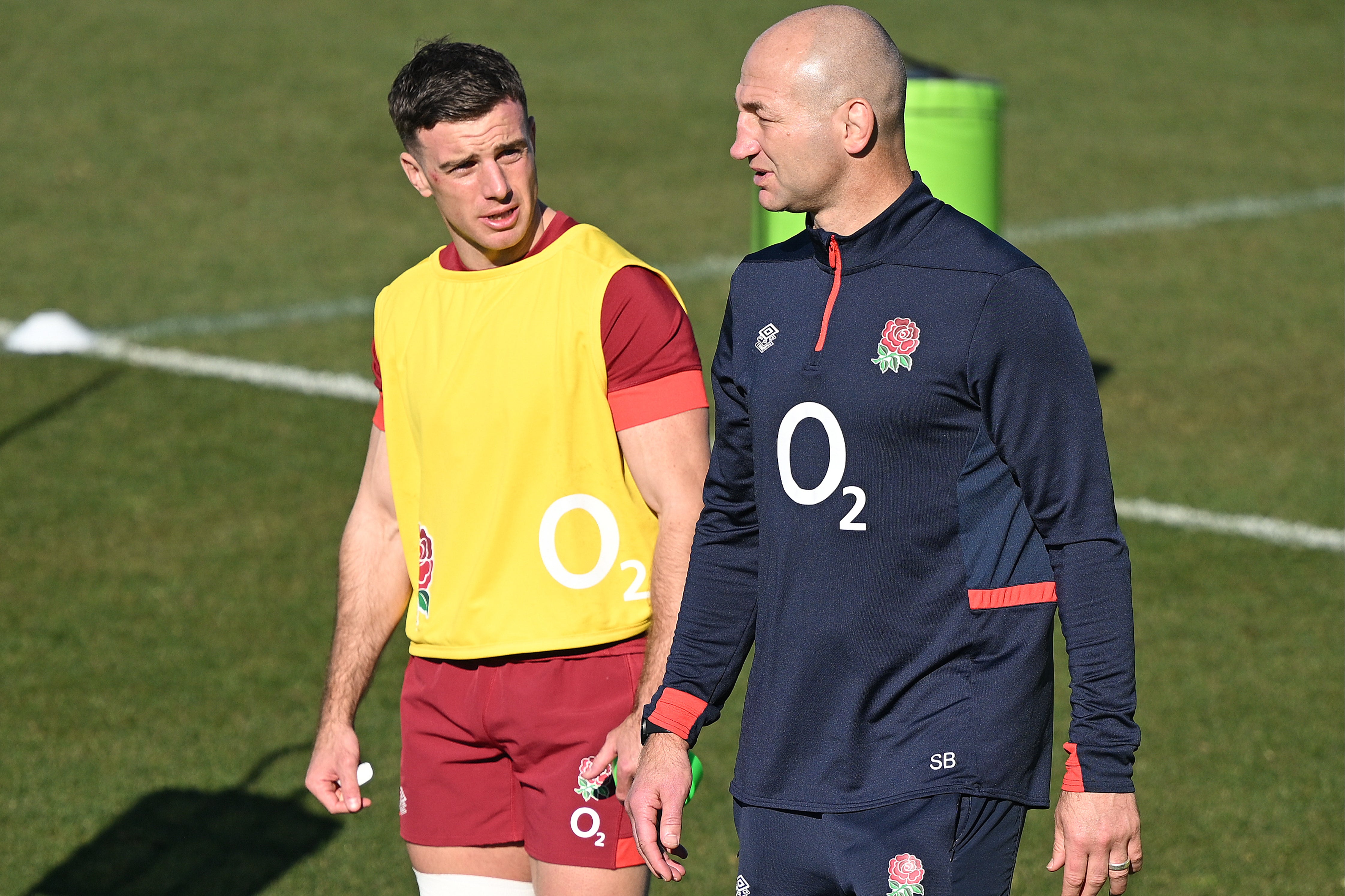
“Since Steve came in, he’s always thrown situations and scenarios at us in training. He wants us to think clearly of what we would do in those moments, but then most importantly, how can we get that message across to go and execute that as a team. With the scenarios in training, the likelihood of that exact scenario happening in a game is not that high. But because you are thinking that way and practicing, it does give you a better chance of doing it in the game.”
Join our commenting forum
Join thought-provoking conversations, follow other Independent readers and see their replies
Comments
Bookmark popover
Removed from bookmarks