Winter Olympics 2026: Samba in Stelvio snow, penis injections and British glory
The Milan and Cortina Games will serve as a blueprint for future editions for how to host a Games without losing its essential snow-bound setting.
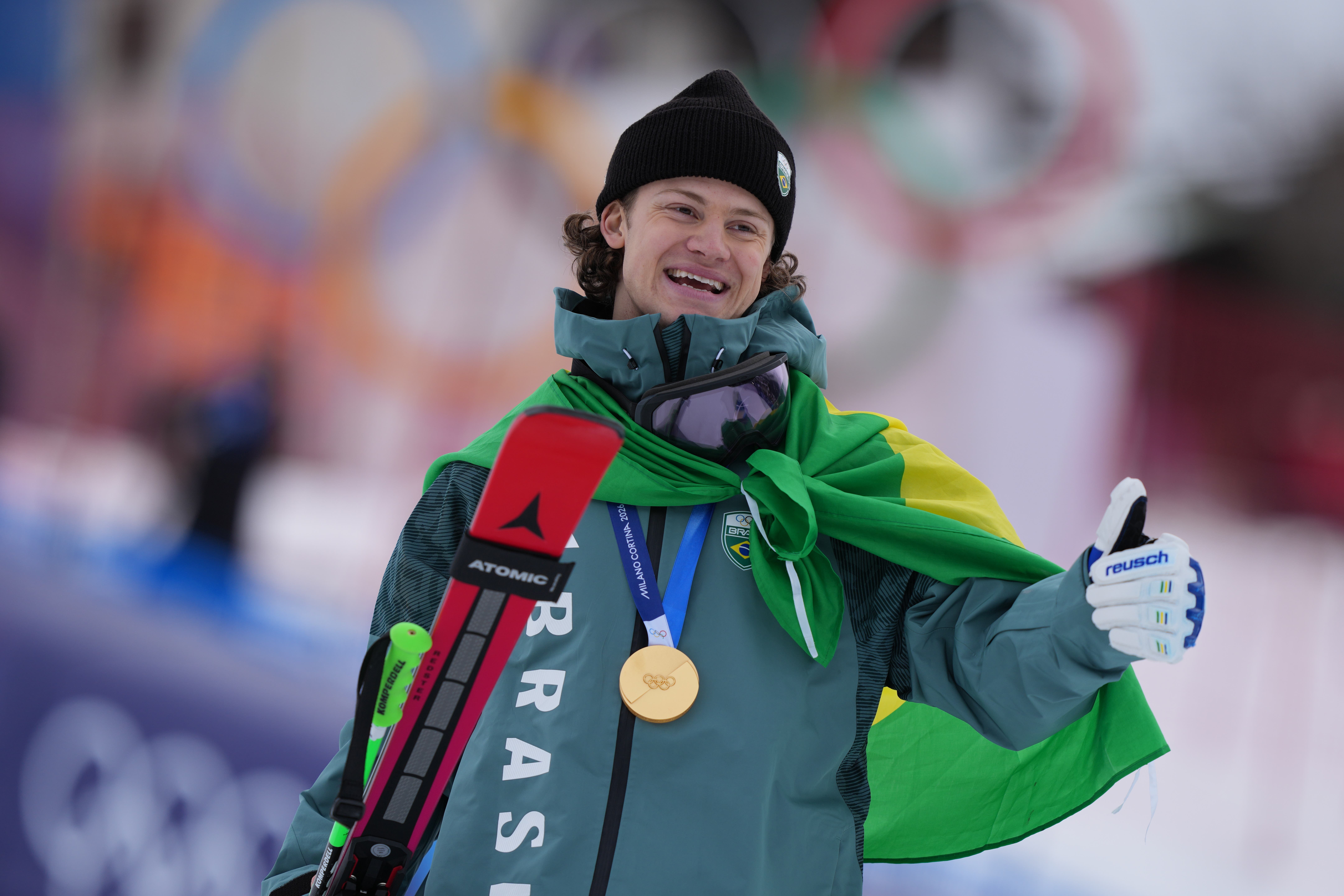
The sight of Brazil’s Lucas Pinheiro Braathen celebrating his country’s first Winter Olympic gold medal by dancing a samba on the Stelvio snow was all it took to emphasise the success of the far-flung Milan and Cortina Games.
Ambitiously staged in so many different locations, they will serve as a blueprint for future editions – starting with the French Alps in four years’ time – for how to host a Games without losing its essential snow-bound setting.
Moreover, with Braathen’s win and Great Britain’s belated emergence as a bona-fide snow sports nation, the Games showed how far they have evolved from the era of upturned Jamaican bobsleds, hapless Kenyan skiers and a certain ski-jumper with fogged-up glasses.
In short, they illustrated why proposals to include more summer sports in the Winter Games programme – an option being investigated by an International Olympic Committee working group – are flawed and unnecessary.
As a global sporting spectacle, the Winter Olympics are undeniably unique, and those who pine for a programme packed with high-octane, jeopardy-filled, elite-level snow and ice sports got their answer in Milan and Cortina.
Purists called Lillehammer in 1994 the last great Winter Games, before its increasing size and skyrocketing commercial interests made small alpine settings unworkable, sending it to a slew of relatively sultry city bases like Vancouver, Sochi and Beijing.
In 2026, the Winter Olympics went back to the future. Livigno, piled with snow and accessible only via precarious alpine passes, and Bormio, with its winding, ice-streaked cobbled streets, felt like a throwback to a less corporate time.
Yet the sport itself remained unaffected by logistical issues. Superstars like Eileen Gu and Chloe Kim revelled in the wintry conditions, while NHL stars brightened up the grey skies that lumbered over Milan by returning for the first time in 12 years.
As usual, the Winter Games also revelled in an off-beat array of news stories, topped with allegations that ski jumpers were using penis injections in order to fly higher, and Norwegian Sturla Holm Laegreid’s tearful post-medal admission that he had cheated on his girlfriend.
Celebrities were also out in force, with Jake Paul in Milan to cheer Dutch fiancee Jutta Leerdam to speed skating gold, Snoop Dogg as ubiquitous as ever as a roving correspondent for NBC, and Flavor Flav in town as chief cheerleader of the United States bobsleigh team.
It was a historic Games for Team GB, which might have scraped into its broad medal target of four to eight, but did so with three golds, two of which came within hours of each other on an inevitably entitled ‘Super Sunday’.
Matt Weston became the first British Winter Olympian to win two medals at the same Games – and two golds – in skeleton, while Charlotte Bankes and Huw Nightingale combined for a scarcely fathomable mixed snowboard-cross gold on an exhilarating afternoon in Livigno.
It was only in the context of those remarkable highs that there was a touch of disappointment about the final weekend’s haul, Bruce Mouat’s curlers falling short against Canada, and Zoe Atkin landing freestyle bronze after leading in qualifying.
There were plenty of what-might-have-beens, not least a record five fourth places, including two for Aberdeen freestyle skier Kirsty Muir, and Mia Brookes, who crashed and burned in slopestyle but felt all the better for having given it a shot.
They might have left Italy medal-less, but Muir and Brookes epitomise the exciting, gung-ho approach with which kids will take to the indoor slopes and snow-domes in the wake of their sport’s fleeing, quadrennial moment in the spotlight.
“If it ain’t broke, don’t fix it”, is the message Milan and Cortina ought to have rammed home to the IOC.
Just give us snow, and never mind sambas: the Winter Games deserves to continue dancing to its own, uniquely exhilarating beat.
Bookmark popover
Removed from bookmarks