Three ways Manchester United will line up under Michael Carrick
Ruben Amorim’s exit and the arrival of Michael Carrick marks a clear shift to possession-focused back-four tactics at Old Trafford this season – but don’t be surprised to see the back five return in tough games
Michael Carrick is the new man in charge of Manchester United after signing a contract until the end of the season.
Interestingly, there was no mention of the word “interim” in United’s confirmation statement, announcing Carrick instead as simply “head coach”. That suggests that while the club are looking for a permanent manager to take over in the summer, Carrick is not entirely out of the frame to stay on beyond the next six months.
He takes over a club sitting seventh in a congested Premier League table, only three points behind Liverpool in fourth, but only six points above 15th-placed Bournemouth, and his task is simple: finish in the Premier League’s top five.
There is no European competition to distract his team and no cup involvement either. Carrick has 17 games, starting with the visit of Manchester City to Old Trafford on Saturday, in which to qualify for next season’s Champions League.
So how will Carrick set up his Manchester United team?
4-2-3-1
Carrick’s preferred system is 4-2-3-1, with two central anchors behind a No 10 – and that immediately fits with the idea that Bruno Fernandes would fill the attacking midfield role after spending most of the season in a deeper pair under Ruben Amorim.
Carrick deployed 4-2-3-1 for the majority of his three-season spell at Middlesbrough, steering the club to fourth, eighth and 10th in the Championship before his departure last summer, and this was also the system Man United predominantly used while Carrick was an assistant coach under Ole Gunnar Solskjaer.
Carrick is reported to have laid out clear tactical plans in his interview with executives Jason Wilcox and Omar Berrada, and Wilcox will no doubt be pleased to see ideas around a back-four shape after falling out with Amorim over his preference for wing-backs.
Carrick likes his team to play with one high attacking full-back holding width, and the other full-back tucked in to make a back three in build-up play. It means his side can look more of a 3-2-5 shape going forwards.
He also likes his team to dominate the ball – Boro averaged 55% possession in the Championship under Carrick. In his final season, Boro ranked third for short passes attempted and second for short passes completed (91%), while they ranked 20th for long passes attempted, which paints a picture of the type of controlled football Carrick prefers – a team built in their manager’s image.
It is patient football but that does not necessarily mean it will be dull to watch. Boro were one of the most attacking teams in the Championship in Carrick’s final season, ranking second for expected goals, shots and touches in the penalty area, despite finishing 10th in the league.
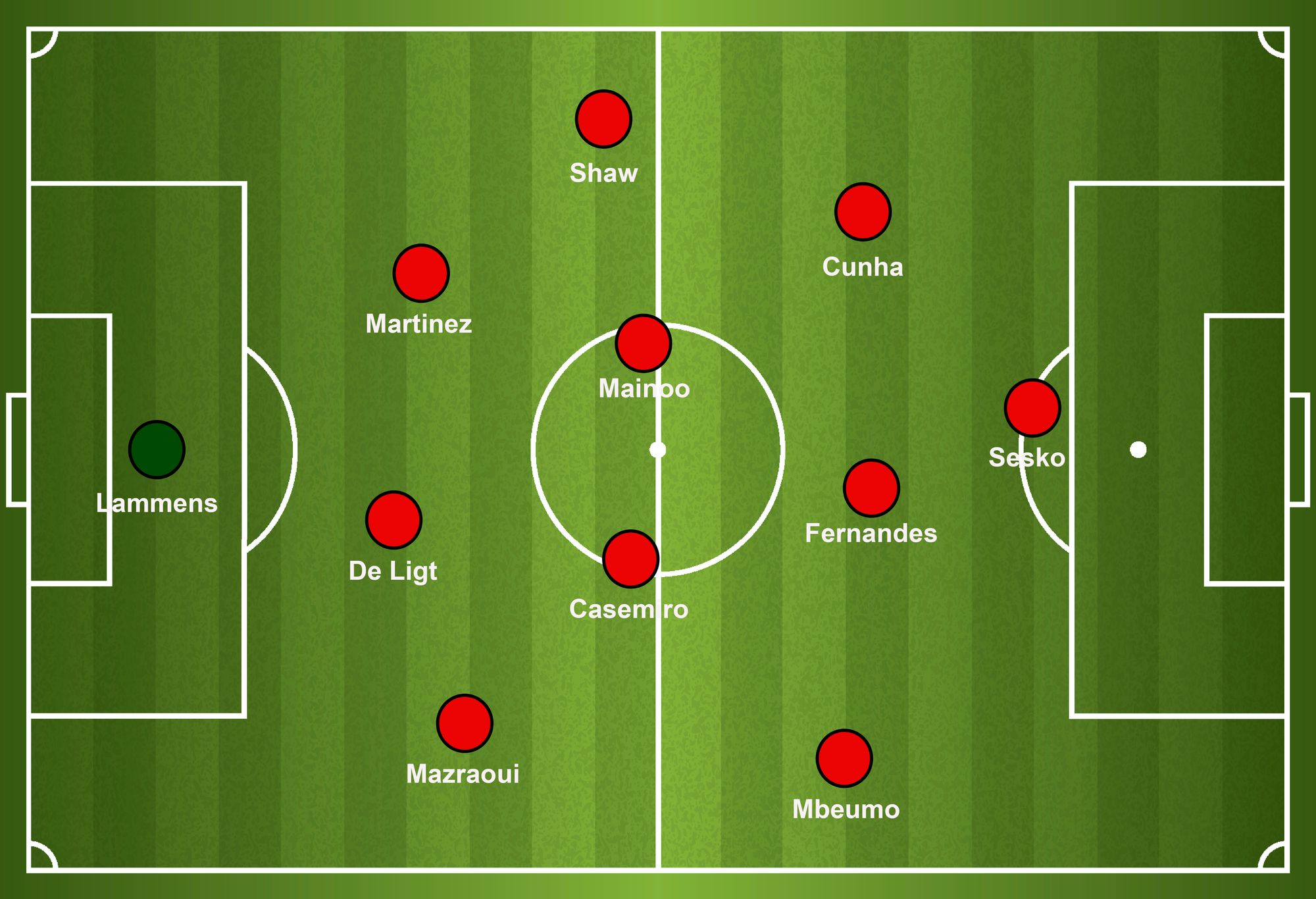
Who stands to benefit from Carrick’s arrival? Kobbie Mainoo may be given opportunities in central midfield, while Bruno will get to play a more attacking role.
Who stands to lose out? Amad Diallo impressed as Amorim’s wing-back and may find he is relegated to Bryan Mbeumo’s deputy on the right wing under Carrick. And if Lisandro Martinez and Matthijs de Ligt become first-choice centre-backs then minutes may be more limited for Harry Maguire, Leny Yoro and Ayden Heaven.
4-3-3
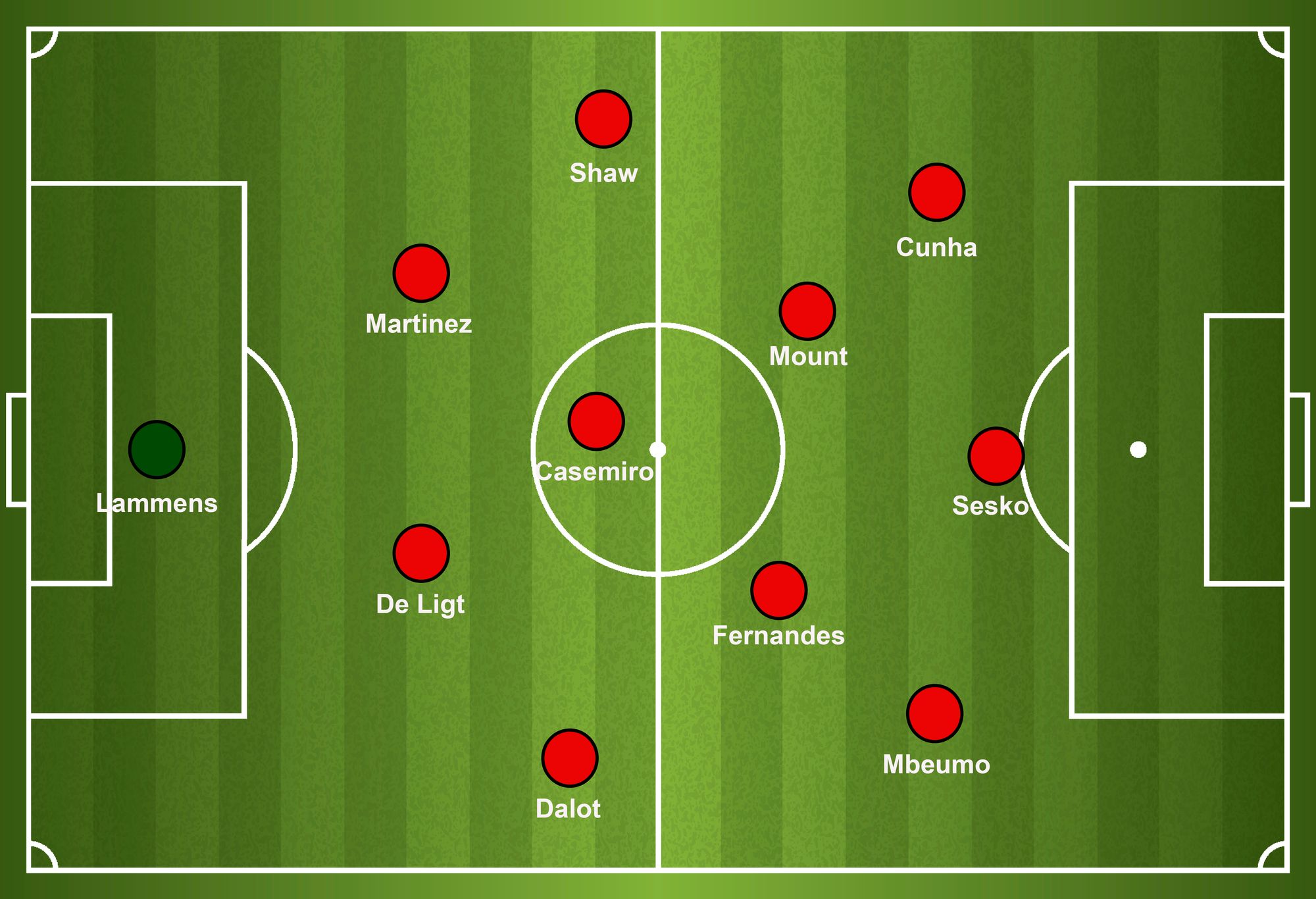
The distinction from 4-2-3-1 may be relatively minor, but if United play patient, possession football under Carrick then choosing a flatter three in midfield with only one holding player might allow a trio such as Mount-Casemiro-Fernandes, for example, to set about breaking down a stubborn defence, with two attacking No 8s in tandem.
Matheus Cunha could be another who fills one of these roles when United are chasing a breakthrough.
3-4-1-2
While Carrick is predominantly a back-four coach, Boro did line up with a back three on a few occasions under his management. The four times they did so during the back end of the 2023/24 season, Boro won the game.
Carrick’s chosen shape was slightly different to Amorim’s, usually using two strikers and having wing-backs who knew how to operate as full-backs on their chosen side. As a result, Boro played in much the same way as they did with a back four, with a slight tweak to their shape.
Ironically, Carrick’s first two games in charge of United – against Man City and Arsenal – could be the right fixtures to play a back five and try to contain their opponents, especially given the United squad has been drilled in that shape all season under Amorim.
United did occasionally switch to a back five under Solskjaer, when his assistants Carrick and Kieran McKenna were known to have a significant say in tactical approach. Usually it was reserved for the toughest opponents, so do not be surprised to see a five-man defence deployed at times this season.

Join our commenting forum
Join thought-provoking conversations, follow other Independent readers and see their replies
Comments
Bookmark popover
Removed from bookmarks