Astronomers shocked as inexplicable ‘wave’ comes out of dead star
‘We found something never seen before and, more importantly, entirely unexpected,’ scientist says
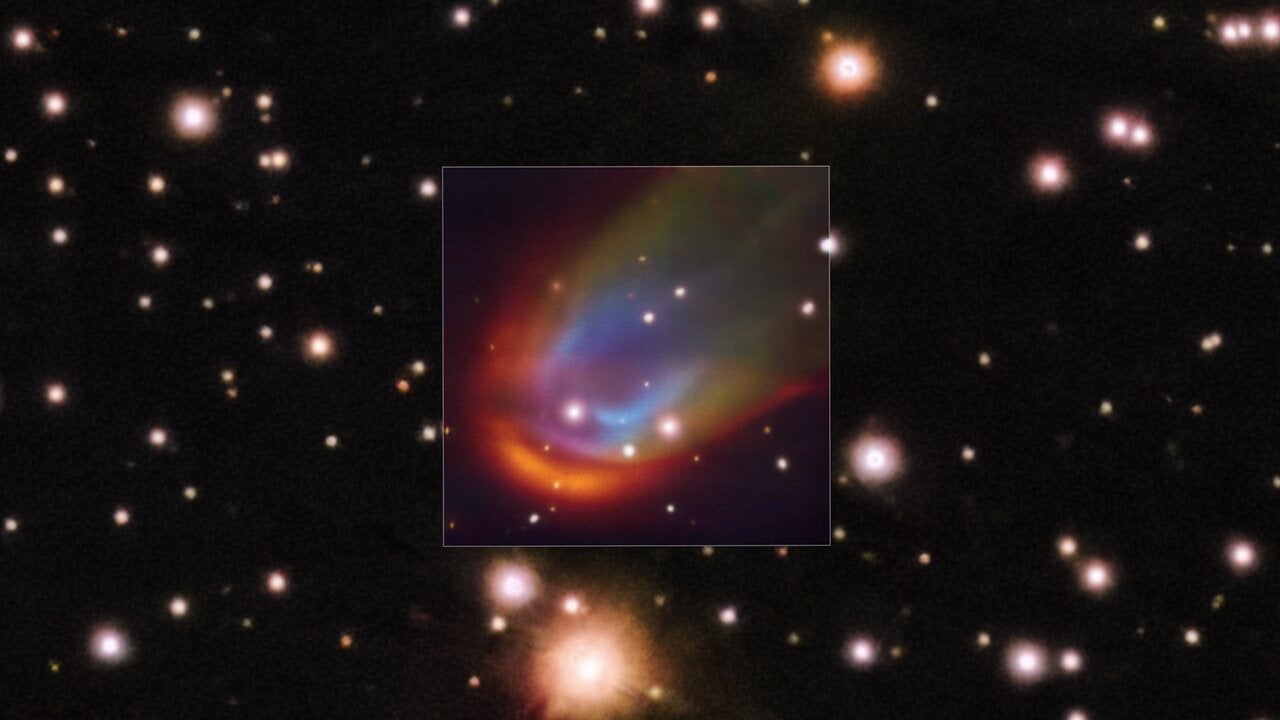
Astronomers have been shocked by an inexplicable and unprecedented wave that came out of a dead star.
Occasionally, the gas and dust that flows out of stars can crash into the material around the star itself and send a shockwave through the universe.
But now scientists have watched as a beautiful one of these shock waves emerged from a dead star – something that has never been seen before, previously thought impossible and for which they have no good explanation.
“We found something never seen before and, more importantly, entirely unexpected,” said Simone Scaringi, from Durham University, who led the new work.
“Our observations reveal a powerful outflow that, according to our current understanding, shouldn’t be there, said Krystian Ilkiewicz from the Nicolaus Copernicus Astronomical Center in Warsaw.
The work focused on a star 730 light years away and known as RXJ0528+2838. It orbits around the centre of our galaxy, like our own Sun.
As it moves around, it makes a shock wave – akin to the wave that can be seen in front of a boat as it moves through the water. Usually, the material to make the wave comes out of the star, but this star shouldn’t be producing material in that way, scientists believe.
“The surprise that a supposedly quiet, discless system could drive such a spectacular nebula was one of those rare ‘wow’ moments,” said Professor Scaringi.
The wave suggests that the dead star has been sending out material for at least 1,000 years. Researchers don’t know how that would be possible – but they believe it hints that there is some sort of hidden energy that they have not found.
“Our finding shows that even without a disc, these systems can drive powerful outflows, revealing a mechanism we do not yet understand. This discovery challenges the standard picture of how matter moves and interacts in these extreme binary systems,” said Ilkiewicz.
Researchers hope to find more such examples that could shed light on how the process works. They hope that the upcoming Extremely Large Telescope will allow them do that – and help reveal that mysterious energy source.
The work is described in a new paper, ‘A persistent bow shock in a diskless magnetised accreting white dwarf’, published in the journal Nature Astronomy.
Join our commenting forum
Join thought-provoking conversations, follow other Independent readers and see their replies
Comments
Bookmark popover
Removed from bookmarks